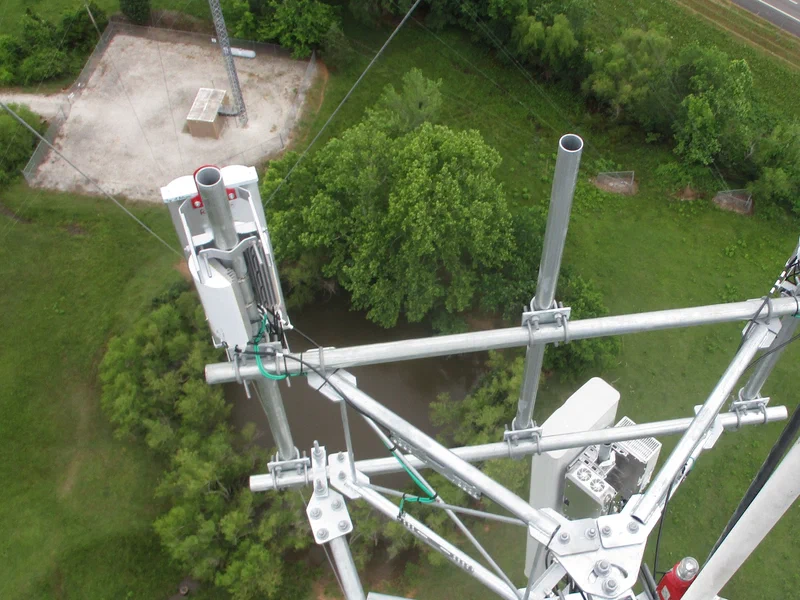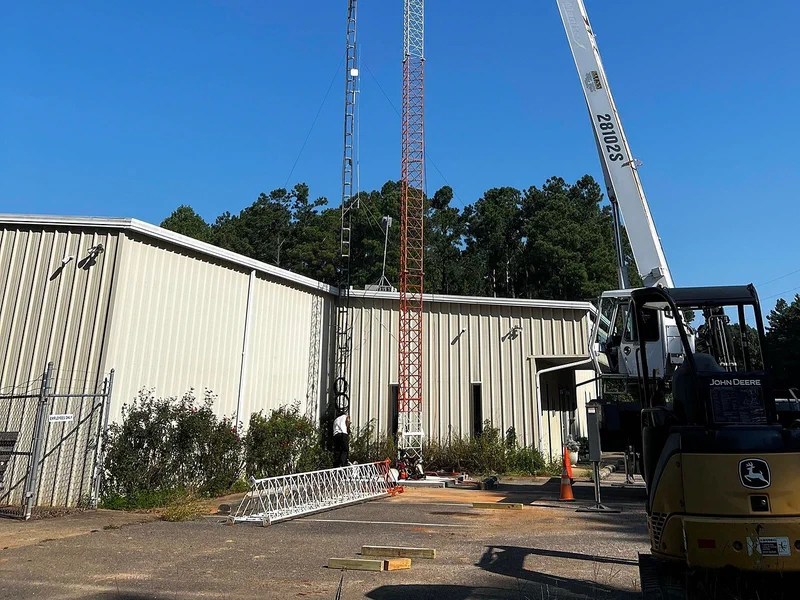
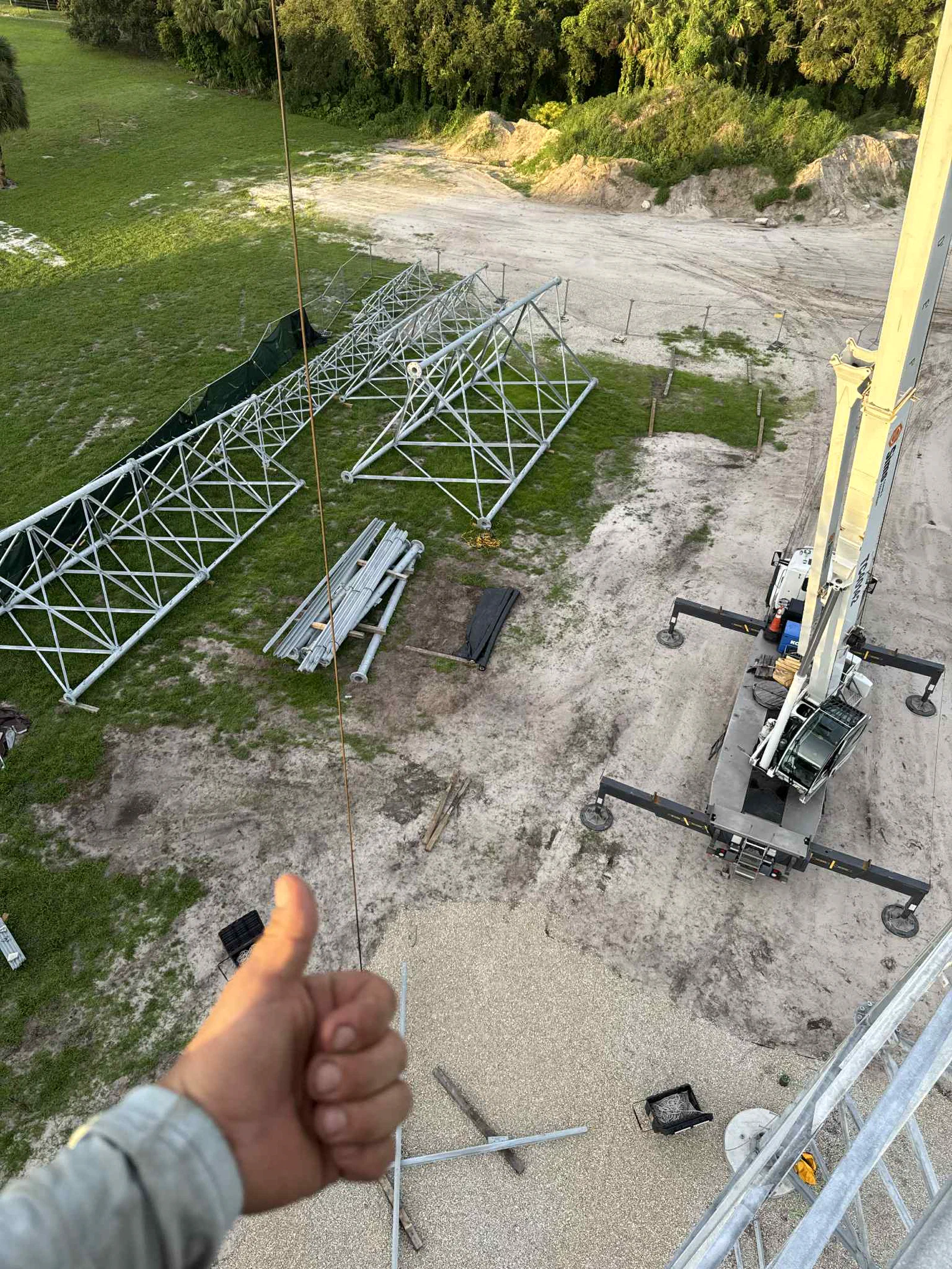
Crews ready to roll today in AL & TX Crews ready today in AL + TX Nationwide mobilization
24-hour on-call

Tower down?
We roll.

Storm damage, lightning strikes, NOTAM-open beacons, failed revenue backhaul, partial structural failure. Call our line, leave a message, we return it and roll as crews free up. And for critical-uptime fleets, a Priority Response Retainer that reserves a climber and a rigged team at a guaranteed response window, every month, forever.

Pay-per-incident model
Callback
Fastest retainer tier
4 hr
FAA NOTAM reporting rule
30 min
Crews ready today
AL + TX

Two ways to get a crew on your tower.

Most owners call us after the storm. The ones who can’t afford to wait sign a retainer before it hits. Both paths end with a rigged climber on your compound. The difference is the clock.

Right now

Your tower is down.

You have a structural event, a NOTAM-open obstruction light, a failed backhaul link on revenue traffic, or visible storm damage.

Call (763) 280-6050 and leave a message. Without a retainer, we don’t staff a 24/7 live-answer line. We return calls as crews come free, scope the event, and assign the closest rigged crew. For sites inside the Alabama and Texas crew radius we can often be on-site same-day once the call is returned. Elsewhere in the lower 48, 24-hour mobilization is standard.

No retainer. Pay-per-incident. Fair rates, but the queue is first-come, first-served and there’s no SLA behind it.
Call now
Before the storm

You can't afford to wait in the queue.

Your fleet has revenue traffic, public-safety traffic, SCADA, or grant-reporting uptime requirements. Best-effort callback isn’t good enough.

Priority Response Retainer. Fixed monthly fee. We reserve capacity for you. Retainer clients get a direct, live-answer line into the account rotation (not voicemail), and when a storm hits, you skip the queue: a rigged climber and support crew are guaranteed on-site inside your contracted response tier (4, 12, or 24 hours), every time. Fixed on-site labor rates. Pre-positioned spares. A dedicated account contact.

Quoted per fleet against site count, response tier, and geography.

Price the retainer

Emergency response. One call.

What triggers an emergency climb, what happens after you call, and what you get back. No retainer required.

A tower emergency is anything that will get worse by Monday morning if it’s not stabilized. The list is short and bloody: named storms, lightning, blacked-out obstruction beacons, snapped guy wires, and failed revenue links. Every one of those has a clock. We start running it when you call.

What triggers it.

Named storms, tornadoes, derechos, hurricanes

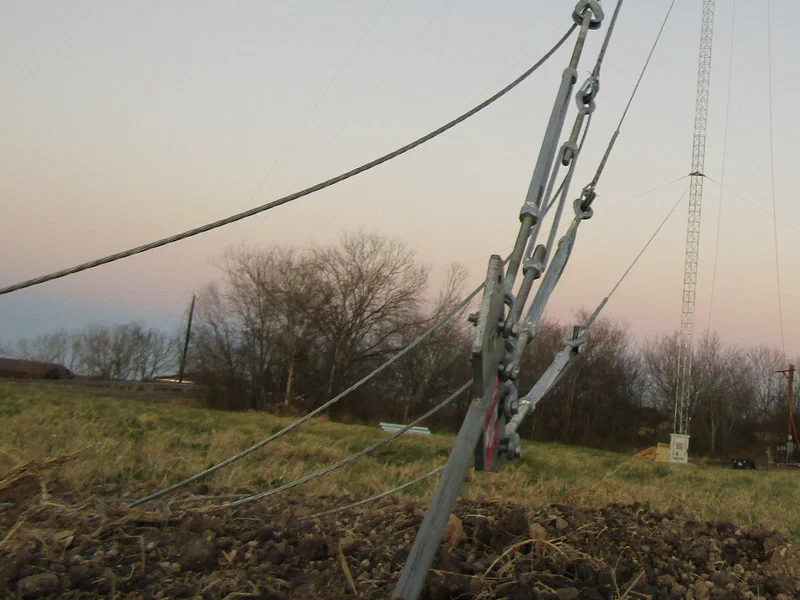
Plumb displacement, guy-wire damage, foundation settlement, anchor pullout, equipment shift. Post-event plumb-and-tension verification, anchor inspection, and corrective tension work to return the structure to service.

Lightning strikes

Visible strike damage, post-strike radio and lighting failures, bonding integrity review. Inspect strike point, replace burned surge suppressors, verify ground-ring continuity, re-energize after clearance.

NOTAM-open obstruction lights

Failed beacons, failed strobes, failed side markers on a registered structure. 30-minute FAA reporting rule is already running. We coordinate the NOTAM filing, climb for lamp or module replacement, verify photometric output, and cancel the NOTAM on restoration.

Revenue-link failure

Microwave backhaul, sector radio, or CPE outage on production traffic. On-radio spectrum scan, RSL and sweep validation, swap to spare where staged, cutover and re-align to RF design.

Partial structural failure

Snapped guy, bent member, compromised connection plate, anchor movement. Immediate rigging stabilization, structural PE coordination, repair or emergency modification work to return the structure to load.

Climbable access failure

Broken safety climb, damaged step bolts, compromised ladder continuity. Out-of-service hazard for your own maintenance crews. Inspect, replace, re-certify before anyone else climbs.

What happens after you call.

1

Callback and triage

You leave a message. We return the call, typically within a few hours (fast during daytime, slower overnight and on weekends since we don’t staff a 24/7 live line for non-retainer work). On the return call we scope the event (site address, ASR if lit, what failed, what compliance clock is running, access notes). If it’s a NOTAM-open light, we start the filing on your behalf if authorized. Retainer clients skip the callback and reach dispatch live.

2

Crew assignment

Closest rigged crew tasked. For regional events inside the Alabama or Texas radius, a crew is typically rolling within a few hours of the return call. Elsewhere in the lower 48, a 24-hour mobilization window from the return call is standard. Storm events get a multi-crew surge from our Minneapolis HQ if the footprint calls for it.

3

On-site stabilize and document

First priority: make the site safe and the hazard stopped. Rigging lockdown on partial failures, NOTAM filing on lit structures, bypass on revenue links where spares are staged. Photo record of pre-work condition for your engineer and insurance.

4

Repair or scope follow-up

If the scope is within our field capability (lamp / module / radio replacement, guy tension, anchor adjustment, surge swap), we fix it same trip. If it needs a structural PE review, crane, or specialty rigging, we scope and schedule the follow-up visit in-hand before we demobilize.

5

Handoff

Signed service report: measured values, photos, parts used, NOTAM cancellation (if applicable), follow-up scope and pricing (if any). Your NOC, engineer, insurance auditor, and ASR filings agent all have what they need.

Call (763) 280-6050 now Leave a message with the site, what failed, and a callback number. We return calls as crews come free. Retainer clients get a live line instead.

Can't afford to wait in the queue next time?

A Priority Response Retainer reserves a crew and a response window for you every month. Quoted per fleet.

Priority Response Retainer.

An insurance policy for your fleet. You pay a fixed monthly fee. We reserve response capacity at a guaranteed response tier, reserved ahead of ad-hoc callers. Pre-staged spares. Fixed labor rates. Dedicated account contact. The next storm doesn’t put your sites in a first-come queue.
Call it what it is: an insurance policy against the worst-case day. The monthly number is small next to the annual value of the revenue, SLA, or grant-reporting obligation it’s protecting. Large WISPs, public-safety networks, electric utilities, oil and gas operators, and BEAD-funded broadband programs carry these for the same reason you carry tower insurance. Because “we’ll try to get someone there” isn’t an answer to your SLA auditor.

Response tiers.

Three starting tiers. Priced per fleet against site count, footprint, and response window. Hybrid tiers possible if your fleet has a mix of critical and non-critical sites.

Standard

24-hour response

Lower 48 coverage

Contracted response on-site within 24 hours of your call, anywhere in the lower 48. Right tier for distributed WISP fleets, municipal broadband, and mid-size operators where a day’s outage is inconvenient but not catastrophic.

Right fit for:
  • Regional WISPs with 20 to 100 sites
  • BEAD / ReConnect grant networks
  • Municipal broadband programs
  • Oil and gas remote-facility comms
Quote Standard

Critical

4 to 6-hour response

Regional (AL, TX, adjacent states; contract-extended elsewhere)

Contracted response on-site within 4 to 6 hours inside our ready-today crew radius, with negotiated extended coverage elsewhere. For critical-uptime sites with regulatory or revenue obligations that can’t tolerate a full day down.

Right fit for:
  • Carrier-grade transport with SLA penalties
  • Public-safety dispatch and 4.9 GHz rings
  • Utility teleprotection and SCADA backhaul
  • Tribal nation broadband with TBCP grant uptime
Quote Critical

What's included, every month.

Direct live-answer line

A dedicated number into the account rotation, answered live, day or night. No voicemail, no callback queue. This is the single biggest reason fleets sign the retainer; it’s also the single thing we can’t offer on pay-per-incident.

Priority dispatch queue

Your call skips ad-hoc scheduling. Reserved crew capacity is pre-allocated to retainer clients first during storm-season surges (Atlantic hurricane window, Midwest tornado season).

Guaranteed response window

Contracted tier time, on paper, in your agreement. Miss it and we credit the next month. That’s the teeth.

Fixed on-site labor rates

No surge pricing. Weekend, holiday, 2 AM storm-response: same hourly rate as a Tuesday afternoon site visit. Budgetable as operating expense.

Pre-positioned spares

Inventory matched to your platforms: LED beacon retrofit kits for your lighting plant, common sector and backhaul radios, R56 cadweld consumables, surge suppressors, common coax / Heliax jumpers. Rolling inventory on the response truck so dispatch doesn’t wait on parts.

Dedicated account contact

A named point of contact on the Vertical Axis side who knows your fleet, your sites, your platforms, your preferred NOC protocols, and your escalation path. Not a ticket queue.

Quarterly fleet health check

On larger fleets: rotating non-emergency inspection visits across the fleet. Catch drift before it becomes an outage. Included in the retainer at no extra trip charge.

Annual ASR lighting / TIA-222-H structural audit

Your regulatory compliance package, prepared once a year by the same crews that respond to your emergencies. Satisfies most insurance and grant-reporting audits.

Cross-service discount

Retained clients get preferred rates on scheduled work: new site builds, RF modifications, obstruction-lighting LED retrofits, routine plumb-and-tension. The retainer buys priority; the discount is the loyalty return.

NOC integration

Alarm-contact bridge from your lit sites into our dispatch. When a light fails or a backhaul drops, we know before you have to call us. Reduces the average outage-to-crew-mobilized time significantly.

How it's priced.

Fixed monthly fee per fleet, quoted against three variables:

  • Site count. More sites, more reserved capacity, higher base.
  • Response tier. Critical (4 to 6 hr) costs more than Rapid (12 hr) costs more than Standard (24 hr).
  • Footprint. Regional fleets inside the ready-today crew radius price differently than nationally dispersed fleets.

Ranges: small-fleet Standard tier lands in the low four figures per month; large-fleet Critical-tier engagements land in low-to-mid five figures. Custom hybrid tiers (Critical on your top 20% of sites, Standard on the rest) are common.

Send us your fleet and you’ll have a line-itemed retainer proposal inside a week.

Who signs these.

The buyer profile is consistent: you have sites where downtime costs real money, or triggers a compliance penalty, or both.

Large WISPs and fixed wireless ISPs

50+ towers, production subscriber traffic. A storm-downed sector that lingers 48 hours is a refund conversation with subscribers and a churn risk. Retainer eliminates the wait. Fluent across Ubiquiti, Tarana, Cambium, Mimosa, Nokia.

Public safety and county dispatch

4.9 GHz PTP rings, county dispatch repeaters, statewide interop. Downtime is not an SLA conversation, it’s a response-time conversation with a safety outcome. Rapid or Critical tier is standard.

Electric utility SCADA

Distribution automation and teleprotection backhaul. Utility uptime expectations are statutory, not contractual. Critical tier with Part 101 licensed-microwave expertise on the dispatched crew.

Oil and gas operators

Wellhead SCADA, pipeline monitoring, remote-facility comms. Production-sensitive schedules mean a single downed link can halt field operations. Rapid tier typical.

Tribal nations and BEAD / ReConnect grantees

Grant programs often carry explicit uptime-reporting obligations. Retainer coverage gives the grant administrator a clean compliance answer. Standard or Rapid tier typical.

Broadcast and tall-tower operators

High-intensity lit structures over 700 ft with L-856/L-857 strobes carry significant lighting-compliance exposure. Retainer includes ongoing lighting health, NOTAM coordination, and priority-climb access.

How a retainer starts.

Four to six weeks from first conversation to live coverage. Most fleets go live before their next storm season.

1

Fleet intake call

We walk through the fleet: tower count, geography, platforms, current RF and lighting posture, known structural condition, traffic criticality per site. Goal: size the retainer tier to the actual risk, not a template.

2

Site inventory and access audit

We build (or import) a site register: coordinates, ASR status, tower type, height, access notes, escort requirements, existing lighting plan, structural drawings on file. Gaps flagged. Critical missing documentation (no stamped drawing, no ASR filing) gets scoped for correction.

3

Platform spares staging

You tell us the gear you run. We inventory the retrofit modules, radios, beacons, and consumables that map to your fleet and stage a dispatch kit so the first-call crew is never hunting for a part.

4

SLA contract

Response tier, fleet scope, term (typically 12 months, auto-renew), fee schedule, credit terms on missed response. Clean paper, enforceable, sharable with your auditor or grant administrator.

5

Live dispatch line

You get a direct number and a named account contact. The dispatch rotation knows your fleet is under retainer and applies the contracted tier before anything else.

6

Check-ins and audits

Quarterly fleet health visits on larger fleets. Annual regulatory audit for ASR lighting and TIA-222-H. Joint review each year on fleet changes, add-ons, and tier adjustment.

Every response, to the same standards.

Emergency work is held to the same engineering and safety framework as scheduled work. The difference is the clock, not the craft.

FAA AC 70/7460-1M

Current advisory circular for obstruction marking and lighting. Every NOTAM-response climb photometrically verified against the designator (L-810, L-864, L-865, L-856, L-857, L-866).

14 CFR Part 77 / FCC Part 17

Federal rules for structures requiring FAA marking and FCC ASR registration. 30-minute FAA Flight Service reporting rule followed on every lit-structure outage.

TIA-222-H

ANSI structural standard for antenna-supporting structures. Post-storm plumb-and-tension verified to L/1500 tolerance. Guy pre-load measured with load cells, not by feel.

Motorola R56 / IEEE 80

Grounding and bonding. Post-lightning ground-ring continuity verified and surge suppressors replaced per NFPA 780 and the manufacturer’s published spec.

OSHA 1926 / ANSI A10.48

Safety at height. 100% tie-off, authorized rescue on every crew, site-specific safety plan on every climb, including emergency and storm-response. Wind and icing holds respected. Full safety program →

Structural PE coordination

Any finding outside our field-repair envelope stops at structural PE sign-off. Emergency stabilization yes; load-bearing correction only after the engineer of record authorizes.

Coverage

Crews rolling from
every time zone.

Crews running out of Alabama and Texas ready to roll today. Minneapolis HQ coordinates dispatch and storm-surge mobilization. Anywhere else in the lower 48, 24-hour mobilization is standard; faster regionally. For retainer clients, the window is whatever your contract says, full stop.
2 Crews ready today
24hr Nationwide window
Live Retainer-only line
Crew ready today Headquarters Mobilization reach

Emergency FAQ.

How do I call for an emergency right now?

Call (763) 280-6050 and leave a message. Include the site location, what failed, any active compliance clock (NOTAM, SLA, safety hazard), and a callback number. We return calls as crews come free: fast during daytime, slower overnight and on weekends since we don’t staff a 24/7 live-answer line for non-retainer work. On the return call we scope the event and route it to the closest rigged crew.

Retainer clients have a direct live-answer line into the account rotation and skip the callback entirely.

Do you have a 24/7 live dispatch line?

For retainer clients, yes. Priority Response Retainer accounts get a direct line into the account rotation, answered live, day or night. That’s part of what the monthly fee pays for.

For non-retainer pay-per-incident callers, no. We publish one line and return messages as crews come free. If you need a live-answer commitment, the retainer is what provides it.

What counts as a tower emergency?

Anything that gets worse by Monday morning if it’s not stabilized. The typical list:

  • Named storm or severe-weather structural event. Visible tower movement, guy damage, anchor pullout, foundation settlement.
  • Lightning strike with visible damage or downstream radio/lighting failures.
  • Blacked-out obstruction lighting on a registered structure (NOTAM clock is running).
  • Revenue backhaul or sector failure on production traffic.
  • Partial structural failure: snapped guy, bent member, compromised plate, damaged safety climb.
  • Post-incident inspection where the tower has to come off-air until cleared.

If you aren’t sure whether it’s an emergency, call the dispatch line and we’ll tell you.

What's the difference between the one-call response and the retainer?

One-call pay-per-incident is callback-model, best-effort queue. You leave a message, we return the call as crews come free, assign the closest available crew, and roll within a 24-hour nationwide mobilization window from the return call (often faster regionally). Fair standard rates. Works well if your sites are non-critical and the occasional outage is tolerable.

Priority Response Retainer is a monthly-fee subscription. You get a direct live-answer line into the account rotation (no voicemail, no queue), and capacity is reserved for you ahead of ad-hoc callers. Your response tier (4, 12, or 24 hours) is contractually guaranteed, and we credit the next month’s fee if we miss it. Labor rates are fixed, spares are pre-staged, a named account contact knows your fleet. Built for critical-uptime sites that can’t afford to wait.

How fast can you actually be on-site?

Depends on the geography and whether you have a retainer.

  • Regional events (Alabama, Texas, and immediately adjacent states): once the callback happens and the crew is assigned, a rigged crew is typically rolling within 2 hours. On-site times of 4 to 6 hours are common in-region from the return call.
  • Lower 48 ad-hoc: 24-hour mobilization window from the return call is standard. Callback time itself depends on queue and time of day.
  • Retainer clients: whatever your tier says. Critical tier (4 to 6 hours) in-region, Rapid tier (12 hours) nationwide, Standard tier (24 hours) nationwide. Clock starts at first call because the line is answered live.

Active named-storm events sometimes outrun the transportation system itself. We mobilize as fast as the roads, the airports, and local curfews allow. That’s true for us and for every other contractor.

Do you charge a premium for emergency or after-hours response?

Pay-per-incident: yes, modestly. Standard after-hours and weekend rates apply to the on-site labor. Storm-surge rates apply during active named-storm dispatch windows when crews are working consecutive 14-hour days. Mobilization and per-diem billed at cost plus our standard margin.

Retainer clients: no. Fixed on-site labor rates across the board. The whole point of the retainer is that you’re paying ahead of time for the predictability. No surge pricing, no holiday premium, no 2 AM multiplier.

How much does the retainer cost?

Fixed monthly fee, quoted against your fleet. Three variables drive it: site count, response tier, and footprint.

Ranges to set expectations:

  • Small fleet, Standard tier (24 hr): low four figures per month.
  • Mid-size fleet, Rapid tier (12 hr): mid four to low five figures per month.
  • Large critical fleet, Critical tier (4 to 6 hr): mid-to-upper five figures per month.

Hybrid tiers (Critical on your top 20% of sites, Standard on the rest) are common and typically price between tiers. Send us your fleet and you’ll have a line-itemed proposal inside a week.

What's covered in the retainer? And what's not?

Covered: priority dispatch, contracted response window, reserved crew capacity, fixed on-site labor rates, pre-positioned platform spares, quarterly fleet health checks, annual ASR lighting and TIA-222-H structural audit, NOC alarm bridging, dedicated account contact.

Not covered, billed separately: replacement parts and consumables beyond the pre-staged inventory (we invoice at our cost on pass-through); crane and heavy-rigging specialty gear if the emergency scope needs it; structural PE engagement on out-of-envelope damage; scheduled non-emergency work (new builds, major mods, full LED retrofits) bills at the retainer-client discount rate rather than being included.

The goal is a clear line between “insurance coverage” and “separately priced work.” Your CFO can budget this.

Is the retainer month-to-month or annual?
Typically 12-month auto-renewing term with a 60-day opt-out window. The annual term is what lets us reserve capacity and stage platform spares. Month-to-month is available at a premium, but most fleets quickly move to the annual for the lower rate and the stable team. Retainer terms are plain-English on paper, sharable with your auditor or grant administrator.
Can I get retroactive retainer coverage mid-storm?
No. Retainer capacity is reserved ahead of time; we can’t invent it during a named-storm event. If you’re calling us in the middle of a storm without a retainer, you go into the standard response queue at ad-hoc rates. After the event, if you want to sign a retainer for the next storm, we’d be glad to scope it.
What if I miss the response window on the retainer?
We credit the next month’s fee. That’s written into the agreement, not a goodwill gesture. In practice, our miss rate on contracted tiers is well under 5% across the retainer book, and the misses that do happen are almost always transportation-limited during active named-storm events (roads closed, airports grounded). Those are the edge cases the credit clause is designed for.
Do you coordinate NOTAMs for me if a light fails?
Yes, with your authorization on file. For retainer clients, NOTAM filing and cancellation are standing authorizations as part of the agreement. For pay-per-incident, we coordinate with your NOC to file. The 30-minute rule starts at failure, not at call, so any automation here shaves real time off the compliance clock.
What if the damage is beyond your field-repair scope?
Emergency stabilization first: rigging lockdown, hazard isolation, NOTAM filing if applicable. Then we hand off to your structural PE (or our partner PE network if you don’t have one on retainer) for the engineered correction scope. We stay engaged on rigging and field execution, the engineer drives the load-bearing call. Nothing load-critical happens without PE sign-off.
What brands and gear do your emergency crews carry?

Rigged for the breadth of what’s actually on towers in the field:

  • Obstruction lighting: LED retrofit modules and spare lamps for Hughey & Phillips, Flash Technology, Dialight, Drake, Unimar, and SPX Flash systems.
  • RF: spare radios and CPEs across Ubiquiti, Tarana, Cambium, Mimosa, Nokia, and RF Elements.
  • Microwave: alignment tools and common spares for Aviat, SAF Tehnika, and Siklu.
  • Structural: guy-wire hardware, grips, thimbles, turnbuckles, and connection-plate bolt inventory (A325 / A490).
  • Grounding: R56 cadweld kits, surge suppressors, ground rods and conductor.
  • Rigging: full A10.48 rescue kit, load cells, total stations, plumb targets.

If your fleet runs gear not on that list, we stage it into the retainer kit during onboarding.

Can you handle multi-site storm events across a region?
Yes. Storm-surge events trigger a multi-crew mobilization from Minneapolis HQ into the affected footprint, coordinated against the retainer book first and the pay-per-incident queue second. A large retainer client with 50+ affected sites after a hurricane gets a dedicated rotating crew allocation for the duration of the event. The logistics are not inventive; we’ve run this playbook across multiple named-storm seasons.
How do I get started on a retainer?

Send us your fleet: site count, rough geography, the platforms you run, current lighting and structural posture, and your target response tier. A stamped fleet spreadsheet is ideal but not required for a first-pass quote.

Request a retainer quote or call (763) 280-6050. First conversation is free, scopes in a week, onboarding in 30 to 45 days.

Scope that isn't on the list? Call (763) 280-6050. We scope every event on the first call.

Tower down?
Call now.

Leave a message on the main line and we return calls as crews free up. For guaranteed response with a live-answer line, the Priority Response Retainer is what provides it. Send us your fleet and you'll have a line-itemed proposal inside a week.