Crews ready to roll today in AL & TX Crews ready today in AL + TX Nationwide mobilization
Industries we serve

Different industries.
Same crew book.

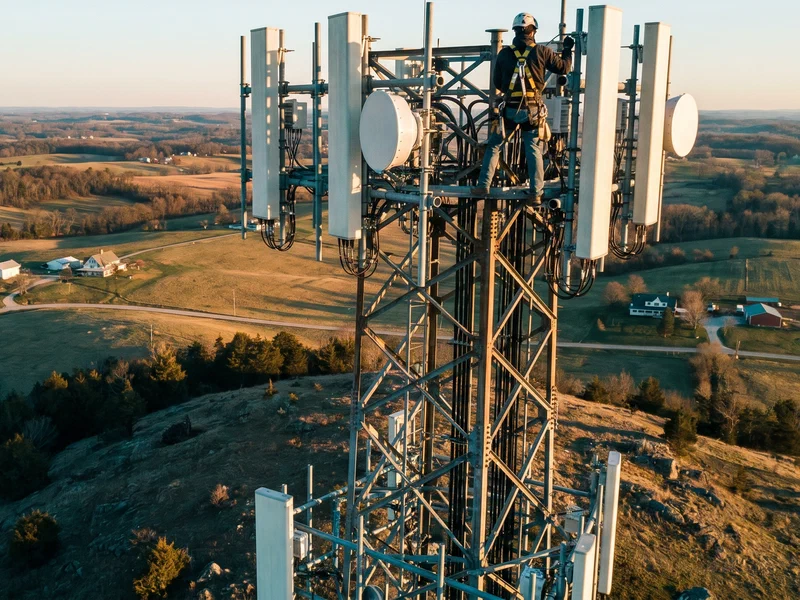
Tower work looks the same in the photos. On the ground, it doesn’t run the same. A WISP wants a WISP crew at WISP prices, not a carrier team billing carrier hours. A tribal broadband build runs through a tribal council and federal historic review before anyone pours concrete. An electric utility wants crews who can work next to a live substation without becoming the outage. Same codes, same climbers. Different paperwork, different people on the job, different pace.

Industries actively served
6
WISPs served since 2018
300+
Tribal broadband ready
TBCP
Service area
Lower 48

One contractor. Six kinds of customers.

Vertical Axis runs civil, steel, and RF crews in-house on one service catalog that works for every customer. What changes from one industry to the next is the paperwork, the people you have to answer to, and how fast the work has to move.

A WISP wants the radios installed right and the quote priced like a WISP quote, not a carrier quote with an extra zero on the end. A tribe building broadband on its own land wants a contractor who understands sovereignty, NEPA Section 106, and NTIA TBCP reporting. An electric utility wants IEEE 80 grounding, licensed microwave for teleprotection, and crews who know how to work around an energized substation. An oil and gas operator wants fast-deploy poles on a remote pad with a crew that respects production uptime. A county sheriff or 911 center wants 4.9 GHz PTP experience and a path that stays up when the weather turns ugly. A municipal or co-op broadband program wants BEAD-compliant paperwork and milestone dates that don’t slip.

Same standards. Same craft. Different industry, different conversation.

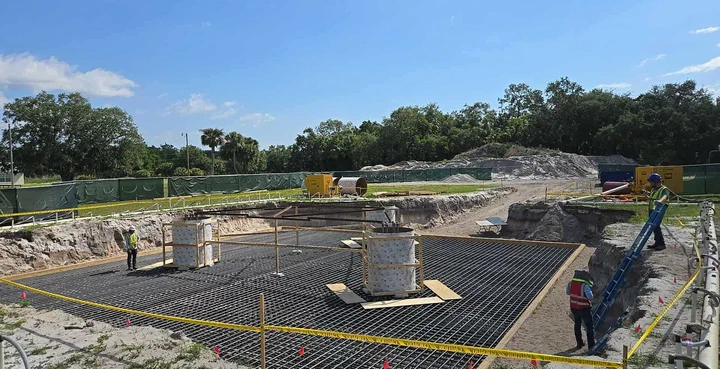
Vertical Axis crew setting the rebar cage and form boxes for a tower foundation, caution tape and dirt piles staged around the pad

Don't see your industry?

We also work with carrier tower owners, broadcast stations, and private industrial networks (mining, rail, large agriculture). Send us the scope and we'll tell you straight whether we're a fit.

What each customer usually orders.

The catalog is the same. The mix is different. Here is what each kind of customer typically buys out of our 15-service catalog. Click through to the full industry page, or straight to a service if you already know what you need.

WISPs and fixed-wireless ISPs

300+ ISPs served. Fluent in Ubiquiti, Tarana (G1 and G2), Cambium, Mimosa, Nokia, Baicells, and RF Elements. We don't price carrier rates for prosumer work.

New site builds, direct embedment monopoles, sector and backhaul, antenna and radio install, microwave backhaul, plumb and tension, maintenance and inspection, decommissioning.

Tribal nations

Sovereign broadband buildouts on tribal lands. Scoped for NTIA Tribal Broadband Connectivity Program (TBCP) milestones, Section 106 THPO consultation, and tribal land-use paperwork.

Site design, new site builds, foundations and civil, tower erection, sector and backhaul, microwave backhaul, maintenance, decommissioning.

Electric utilities

Substation comms, SCADA backhaul, distribution automation. Utility-grade grounding and licensed Part 101 microwave for teleprotection traffic.

New site builds, foundations and civil, tower erection, direct embedment monopoles, microwave backhaul (TDM / teleprotection), grounding and cadwelding (IEEE 80 / 837), maintenance and inspection.

Oil and gas operators

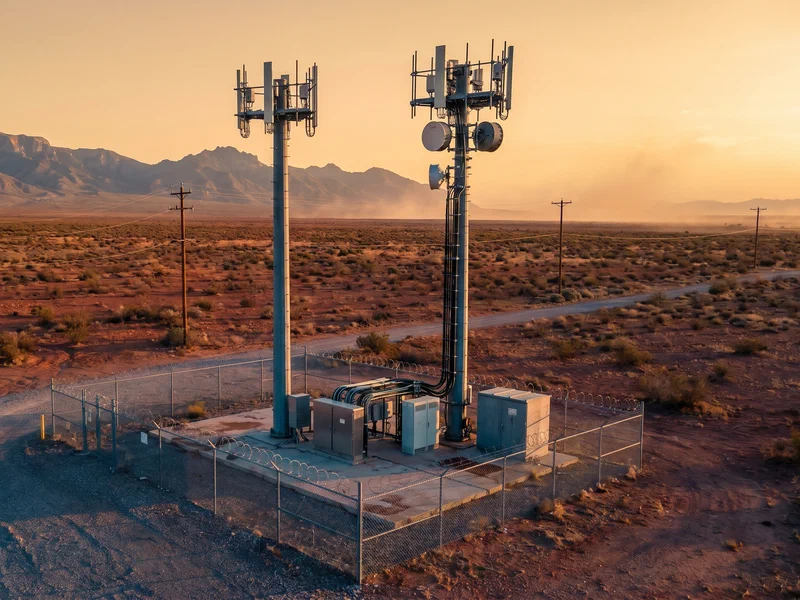
Wellhead SCADA, pipeline monitoring, remote facility comms. Fast-deploy monopoles for production-sensitive schedules on remote pads and pipeline corridors.

New site builds, direct embedment monopoles, microwave backhaul, antenna and radio install, obstruction lighting, maintenance, decommissioning.

Public safety and first-responder networks

County-scale PTP rings, 4.9 GHz public-safety band, dispatch and repeater aggregation. Redundant paths and carrier-grade equipment for traffic that can't go down.

New site builds, tower erection, microwave backhaul (ring topology), sector and backhaul, grounding and cadwelding, obstruction lighting, maintenance.

Municipal and rural broadband programs

BEAD, USDA ReConnect, and state broadband grant scopes. Grant-compliant paperwork, milestone schedules, and speed-tier coverage verification.

Site design, new site builds, foundations and civil, tower erection, sector and backhaul, antenna and radio install, maintenance.

Every industry, same code book.

The engineering is the same across every customer. What changes is the audit trail: who has to sign off, who is reading the as-builts, and who the inspector is.

TIA-222-H

ANSI structural standard for antenna-supporting structures. Plumb tolerance, guy pre-load, bolt torque, and ice / wind loading on every tower we build, modify, or inspect.

FAA AC 70/7460-1M

Current advisory circular for obstruction marking and lighting. L-810 / L-864 / L-865 / L-856 / L-857 / L-866 / L-885 designators, photometric output, dual systems.

14 CFR Part 77 / FCC Part 17

Federal rules for which structures need FAA marking and FCC ASR registration. Covers which towers need to be lit and how outages get reported.

FCC Part 101 / Part 15 / Part 96 / Part 90

Licensed microwave (Part 101), unlicensed RF (Part 15), CBRS (Part 96), and Private Land Mobile / 4.9 GHz public safety (Part 90). We file, coordinate, and install to the right framework for your link.

ITU-R P.530

International recommendation for terrestrial line-of-sight microwave availability. Rain-fade, fade-margin, and availability modeled per P.530 on every licensed link.

Motorola R56 / IEEE 80 / IEEE 837

Grounding and bonding. R56 default on WISP and commercial work; stricter IEEE 80 and 837 on utility-grade and substation sites.

NHPA Section 106 / SHPO / THPO

National Historic Preservation Act consultation. State Historic Preservation Office or tribal THPO review coordinated on federal-land, historic, and tribal-jurisdiction sites.

NTIA TBCP / BEAD / ReConnect

Federal broadband program paperwork. Milestone reporting, speed-tier coverage verification, and grant-compliance scopes on tribal (TBCP), state (BEAD), and USDA (ReConnect) programs.

OSHA 1926 / ANSI A10.48

Federal and industry safety standards for communication-tower work. 100% tie-off, authorized rescue, site-specific safety plan on every climb.

How the job changes from one industry to the next.

What industries do you serve?

Six that we publish pages for, and a handful of related industries we also work.

We also work with carrier tower owners on modification and maintenance scope, broadcast stations on tall-tower antenna work, and private industrial networks (mining, rail, large agriculture) on remote comms buildouts. If your industry isn’t on the list, send the scope.

How does the job actually change from one industry to the next?

Three things change: the paperwork, the people on the job, and the pace.

  • The paperwork. A WISP build ends with a stamped drawing, sweep reports, and an as-built. A tribal build ends with all of that plus federal historic review records (Section 106 THPO), environmental paperwork, and TBCP milestone reports. A utility build ends with all the WISP paperwork plus IEEE 80 grounding verification, Part 101 license grants, and documentation the utility’s compliance office can file.
  • The people on the job. A WISP usually has one person calling the shots: the owner. A tribal broadband build answers to a tribal council, a THPO, a NEPA reviewer, and sometimes an NTIA program officer. A utility build answers to the operations engineer, the RF engineer, the SCADA team, and the substation operations lead. We sequence our crew against whoever has to sign off.
  • The pace. A WISP wants it fast. A utility wants it safe. A tribal program wants it documented. An oil and gas operator wants it done before the next production window. A public-safety agency wants it redundant.

Same codes, same crew. Different job.

Do you work on grant-funded programs?

Yes, on three federal programs:

  • NTIA TBCP (Tribal Broadband Connectivity Program). Broadband grants direct to tribes.
  • NTIA BEAD (Broadband Equity Access Deployment). State-administered, the biggest federal broadband program in U.S. history.
  • USDA ReConnect. Rural broadband grants direct to operators and co-ops.

Grant-compliance paperwork, milestone schedules, and speed-tier coverage verification are part of standard scope on any grant-funded build. We’ve done it before, and the paperwork is usually the harder part of the job.

Can you work as prime to the owner, or only as a sub to a GC?
Both. We run as prime direct to the owner on most WISP, tribal, utility, and oil-and-gas work. We run as sub to a general contractor on larger prime contracts (state DOT, federal building, carrier RFP). We carry our own insurance, our own safety program, and our own tooling either way.
What kind of work are you not a good fit for?

Honest list:

  • Small-cell street densification in major metros. Not our typical customer and not where we’re the cheapest option.
  • Offshore or marine comms. Our equipment, our safety program, and our crew experience are land-side.

Outside those two, we’re probably a fit, including carrier macro-cell new builds and carrier tower modifications. Send the scope and we’ll say so honestly.

What if my project spans more than one industry?
Common. A tribal WISP is both a tribal broadband project and a WISP build. A county public-safety network may run over a municipal-broadband-owned backhaul ring. A utility contracting its SCADA comms to a regional WISP is both utility and WISP. We scope to the strictest rule that applies, and we document to whichever grant or audit has the most demanding paperwork. Tell us which programs your project is funded or regulated under, and we’ll line up the scope to match.
How do I get started?

Send us the site (address or coordinates), the tower type and height, and what you’re trying to do. If you’re on a grant-funded program, tell us which one (TBCP, BEAD, ReConnect, or a state-specific program). If you’re on a regulated utility or public-safety framework, tell us which (Part 90, Part 101, IEEE 80, NERC CIP).

Request a quote here or call us at (763) 280-6050. Most scopes get a line-itemed quote back inside a week. Grant-funded builds typically take two weeks because the paperwork review takes the time, not the steel.

Different kind of project? Send it over. We answer every scoping call.

Tell us the site.
We'll bring the steel.

Send the location, tower type, scope, and timeline. We come back with a quote, a crew, and a schedule you can build a business around.