

Tower Construction & Communications for Electric Utilities
Substation comms, SCADA backhaul, distribution automation, and the inspection contract that covers the whole fleet. One site or a multi-state program. Built to utility standards, grounded to IEEE 80, inspected to TIA-1019-A, commissioned without taking the bus offline. Licensed Part 101 microwave for teleprotection. Direct embedment monopoles for hundreds of DA sites. Multi-year inspection programs (base year plus option years) that run every comms site on a published calendar. Crews who know the difference between a substation yard and a WISP tower and who work accordingly.
Working next to energized equipment without becoming the outage.
A utility tower job is not a WISP tower job. The substation on the other side of the fence is carrying live 69 or 138 or 345 kV. Your ground grid under that yard is bonded to every steel member within arm’s reach. An unplanned fault anywhere on the bus lifts the earth potential under your boots by hundreds of volts for milliseconds at a time. One crew member on the wrong side of a transient ground-potential-rise event is how utility tower contractors end careers and injure people.
We scope utility work against the actual site, not against a generic tower template. That means: ground-grid bonding to IEEE 80 on every new communications site adjacent to a substation yard. Arc-flash hazard assessment under NFPA 70E before crews enter the substation fence. Switching-schedule coordination with your operations center for any work that has to happen near a live bus. NERC CIP-004 personnel risk assessments completed, badging carried, FAC (Facility Access Credential) procedures followed. Our tooling, our PPE, our safety program, and our paperwork are all tuned for utility work, not downgraded from one.
The utilities that hire us usually have one or two in-house climbers and outsource the bigger scope. We slot in as the heavy-lift contractor for new communications sites, microwave paths, substation comms builds, and fleet-scale distribution automation. Not the cheapest contractor you can find. Competitive on work that has to pass a NERC audit.
IEEE 80 grounding: the utility layer on top of R56.
Commercial communications sites are built to Motorola R56. It’s a good, common-practice standard for bonding at WISP and carrier sites. Utilities need a layer above that.
IEEE Std 80 (Guide for Safety in AC Substation Grounding) governs grounding design at high-voltage substations. It calculates the touch voltage, step voltage, and ground potential rise that the yard will see under fault conditions, and specifies the ground-grid geometry needed to keep those voltages below body-tolerable thresholds. IEEE Std 837 adds the permanent-connection spec for the conductors in that grid.
On a communications site adjacent to a substation yard, the communications ground must be bonded to the substation ground grid. Otherwise a fault on the substation side will create a lethal potential difference between the two. We build to IEEE 80 / 837 as the default on any utility-owned or utility-adjacent tower, with exothermic welds (cadweld) at every connection and inspection documentation for your compliance file. Our grounding and cadwelding service runs the full scope.
Switching coordination, FAC badging, and CIP-004 personnel posture.
Utility tower work that touches the substation fence line typically requires coordination with your system operations center for a planned outage window or a switching order that isolates equipment near the work zone. We scope our crew’s days on site against that switching window, not against a default workday. If operations needs the bus back by 14:00, we’re off the yard by 13:00.
Personnel access is its own layer. Under NERC CIP-004-7 (Personnel & Training), utilities with BES Cyber Assets must complete personnel risk assessments on anyone with unescorted physical access. Our climbers and civil leads carry the background checks, security awareness training, and access-authorization records your compliance office needs on file before we step onto a CIP-designated site.
On the physical side, NERC CIP-014 (Physical Security) applies to transmission stations that, if rendered inoperable, could cause instability or cascading outages. Work on or adjacent to a CIP-014 substation means respecting the site’s physical security plan. Approach routes, visitor logs, monitored access, tool inventory controls. As part of scope, not as contractor overhead we pass back.
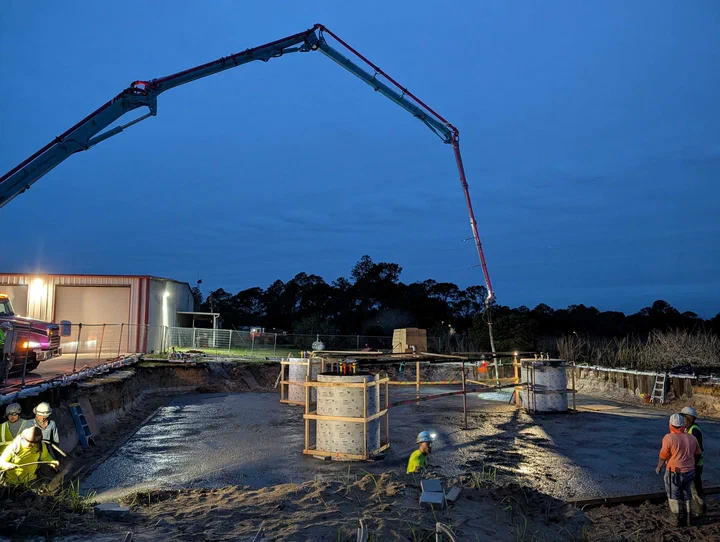
Direct embedment monopoles solve the distribution automation math.
Modern distribution grids run distribution automation (DA) at scale: reclosers, capacitor-bank controllers, voltage regulators, fault circuit indicators, and AMI head-ends that need a reliable radio path back to the SCADA master. Most utilities are talking about tens to hundreds of comms sites across their service territory, not three or four. The economics are different.
A spread-footing self-supporting tower at every DA comms site is not the answer. Four to six weeks of concrete cure per site, multiplied by a hundred sites, is a program schedule that breaks against any modernization deadline. A direct embedment monopole on the same site is one to three days from auger rig to pole set.
The structural engineering is real, not a shortcut. An engineered embedment depth (typically 10 to 15 percent of pole height) carries the overturning moment via passive earth pressure against the pole wall, backfilled with flowable fill, structural concrete, or compacted native material per the stamped detail. Our direct embedment monopole service has the full scope, process, and soils trade-offs worked out.
For utility distribution automation specifically, we see direct embedment called out on: 60-to-120 ft poles, small compound footprint adjacent to existing substation or distribution access, IEEE 80 ground-grid tie-in to the utility’s existing ground, and antenna loading sized against the comms platform (900 MHz Anterix + SCADA radio + obstruction light). For a 50-or-100-site DA modernization rollout, the direct embedment approach can pull months out of the overall program timeline and deliver spec-stamped utility-grade structural compliance at every one.
Why DA comms tower programs look different than WISP programs.
A WISP runs 5 to 50 towers typically and cares about covering subscribers. A utility distribution automation program runs 50 to 500 comms sites and cares about radio-path reliability to every field-deployed RTU, recloser, and cap-bank controller inside the coverage footprint.
That drives different site-selection math:
- Coverage-driven, not customer-driven. The comms sites exist to reach the field devices, not a subscriber density. The RF design starts from the field-device locations and works backward to hub placement.
- Reliability-driven. Each site typically carries SCADA control and monitoring traffic the utility can’t afford to lose. That argues for redundant backhaul paths, ring topology where feasible, and carrier-grade radio gear (not prosumer).
- Long-duration asset horizon. Utility infrastructure is planned on 30-plus-year horizons. A pole installed for DA in 2026 is expected to still be carrying comms in 2056 with minor refresh. Structural and grounding design decisions follow that horizon.
- Regulatory filings in the scope. Utilities under RUS financing (for rural co-ops), PUC oversight, or NERC CIP rules have documentation obligations that run through the communications infrastructure.
For a DA program at any meaningful scale, a tower contractor who can batch the permit, the pole order, the civil, the grounding, the steel, and the RF install into a single per-site price with a rotating crew is the right fit. That’s what this service looks like from our side.
Multi-state utilities don't buy one tower. They buy a program.
Holding companies and multi-state IOUs don’t send a one-off PO for a single comms site. They send a territory: a DA modernization across two or four operating companies, a teleprotection ring that crosses a state line, a 900 MHz private-LTE overlay with a common radio stack and a different CIP posture on each legal entity.
That’s a different contractor conversation than a municipal utility with three substations.
- One crew book, several operating companies. Same structural spec, same IEEE 80 grounding, same radio platform. Different switching calendars, different CIP-004 onboarding packets, different RUS vs. PUC closeout. We keep the steel identical and the paperwork local.
- Program rate, not per-site mobilization. A rotating crew staged in the footprint beats flying a new crew at each operating-company border. Poles, radios, and grounding material staged against the program sequence, not against whoever called last.
- One program manager. The utility’s telecom director shouldn’t have to re-explain the stack to a new foreman in the next state. Named contact, shared site list, shared as-built format.
If your service territory crosses state lines and the comms work is the same job fifty times, send the site list. That’s the work this page is for.
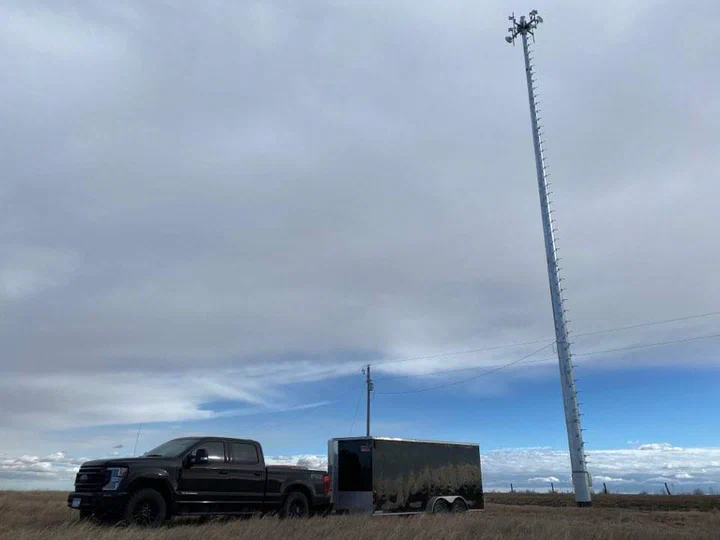
The inspection contract is how a utility actually keeps a fleet honest.
A lot of the utility work that shows up on this page is construction: a new DA pole, a teleprotection path, a 900 MHz overlay. The call that actually repeats, year after year, is different.
Inspect every comms site. Same report format. Same crew book. Base year, then option years. One-year term with four additional one-year options is a normal utility buy. Three-plus-two is another. The telecom group does not want to re-bid a climbing contractor every spring, and they do not want 80 PDFs in 80 templates from 80 one-off visits.
That is TIA-1019-A condition inspection run as a fleet program, not as a stack of single-site POs. Tower register, published rotation, year-over-year comparison, prioritized punch list across the whole footprint, CIP-004 onboarding done once per legal entity and kept current for the option years. Red findings quoted as remediation on the same document so the capex conversation is not a second contractor.
Construction still matters. The inspection contract is what tells you whether last year’s steel is still the steel you think you have.
What 'inspect all the sites' actually means.
Every registered and unregistered comms structure in the territory. Substation towers, DA monopoles, relay sites, SOC backups, generation-plant sticks. Full-height climbing inspection to TIA-1019-A. Lighting function against the ASR. Grounding continuity, IEEE 80 tie-in condition on substation-adjacent sites. Compound, climb system, mounts, transmission plant.
One template. Severity graded the same way in operating company A as in operating company D. Open items from last year closed or carried with a reason, not lost.
Option years are the point. Not a nice-to-have.
Year one is onboarding, the first full rotation, and the baseline report. Years two through five are the comparison: section loss that moved, a cadweld that was green and is now not, a lighting plant that failed twice. A contractor who only wants the first year is a contractor you will replace. We price and crew the program as a multi-year rotation so the option is easy to exercise.
CIP-004 packets, ISNetworld / Avetta, site-access badging: done in year one, maintained through the options. You should not re-explain the stack to a new vendor every April.
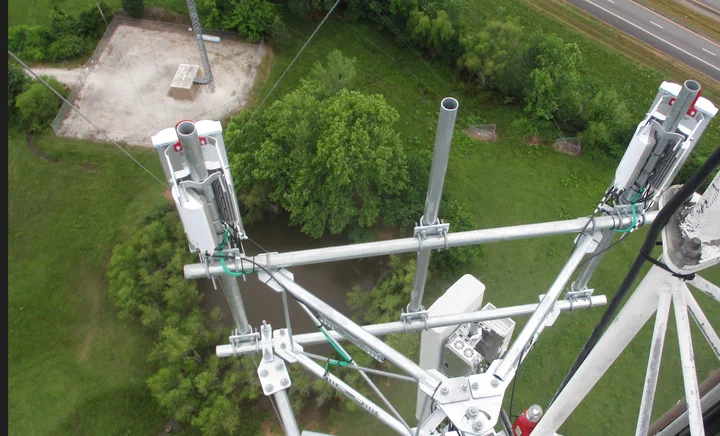
Teleprotection and substation WAN: carrier-grade microwave, not prosumer PTP.
Distribution automation can run on prosumer radio gear and often does. Teleprotection is a different job entirely.
Teleprotection is the communications layer that carries protective-relay signaling between substations. The messages that say “trip this line within 12 milliseconds of a fault detected at the other end” and similar current-differential, phase-comparison, or direct-transfer-trip traffic. Loss of teleprotection for a few milliseconds at the wrong moment can prevent a protective trip from happening, which means the fault stays on the line longer than designed, which means equipment damage, wider outages, and potential safety events.
The communications requirements for teleprotection are ruthless:
- Latency under 12 milliseconds round-trip, end-to-end across the backhaul path.
- Jitter tolerance measured in sub-millisecond terms.
- Availability target of 99.999% minimum (5 minutes per year), often higher on critical paths.
- Failover to protection paths within milliseconds. Typically 1+1 hot-standby or ERPS ring protection with <15 ms healing.
- EMI-hardened equipment certified to IEC 61850-3 and IEEE 1613 for substation environments.
- Protection-signaling compliance with IEC 60834-1 / IEC 60834-2.
That’s licensed FCC Part 101 microwave territory. Aviat WTM / CTR / Eclipse, SAF Tehnika Integra / CFIP, Siklu EtherHaul, or Nokia licensed microwave depending on the band, path, and vendor preference. Not prosumer unlicensed PTP. Not best-effort IP over a carrier link. Our microwave backhaul service runs the full Part 101 licensing, path coordination, and commissioning scope.
Our substation work includes TDM / E1 / legacy circuit emulation where the utility is running legacy teleprotection over inherited copper or SONET and the modernization path requires compatibility during cutover. Aviat WTM and SAF Integra both support native TDM emulation on top of packet backhaul, and we commission to the actual teleprotection equipment’s circuit expectations.
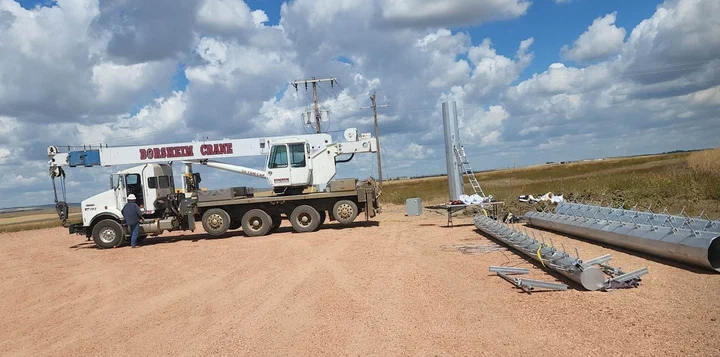
The Anterix 900 MHz era is here.
Utility comms in 2026 is being reshaped by 900 MHz private LTE on utility-dedicated spectrum. The FCC voted unanimously on February 18, 2026 to expand the 900 MHz broadband segment from 6 MHz to 10 MHz, enabling a 5x5 MHz LTE channel with peak throughput around 37.5 Mbps. That’s meaningful capacity on a spectrum band reserved by rule for utility and critical-infrastructure use.
Anterix is the nationwide licensee, and the deployment ecosystem has scaled fast: the AnterixAccelerator initiative launched March 2025 with 15-plus utilities actively participating, including Evergy, Lower Colorado River Authority (LCRA), and Xcel Energy. Ericsson, GE Vernova, Nokia, and 125-plus technology companies are in the Anterix Active Ecosystem. In November 2025, Anterix and Crown Castle launched TowerX as a turnkey tower service, attaching 900 MHz private LTE radios to qualified tower sites with site-development support.
What this means for the tower-construction side: utilities deploying 900 MHz private LTE need new communications sites, upgrades to existing sites, and RF infrastructure sized against a dedicated private-LTE radio stack (typically Ericsson or Nokia RAN, sometimes GE Vernova). The site scope is recognizable (mount, alignment, cable plant, grounding, commissioning), but the RF design and the compliance layer are utility-specific.
We work into Anterix-deployed networks through the tower-construction and RF-install scope. Whether you’re adding 900 MHz radios to existing utility comms sites, building new communications towers for 900 MHz coverage expansion, or coordinating with Crown Castle’s TowerX on specific locations, we bring the construction crew, the IEEE 80 grounding expertise, and the NERC CIP-compliant personnel posture. Paired with licensed microwave backhaul for SCADA and teleprotection on the wired-ish side, a utility can run a clean sovereign-controlled communications stack on its own spectrum, end-to-end.
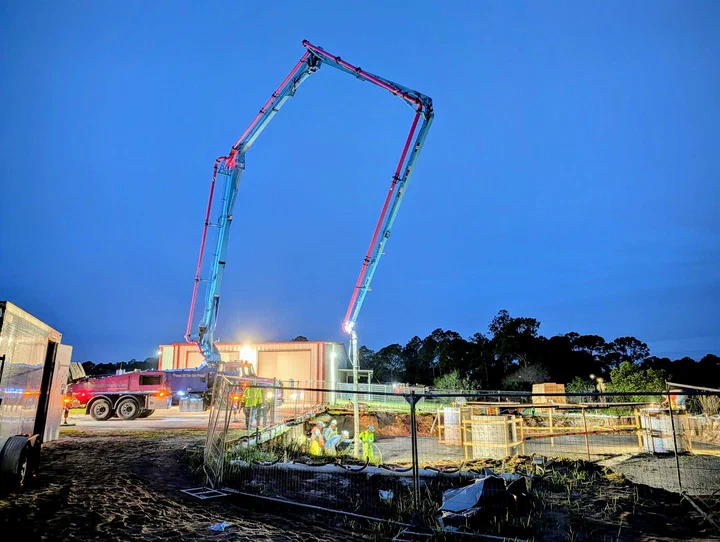
What we build — and inspect — for utilities.
The full tower and RF catalog, filtered to the scope electric utilities, electric co-ops, and municipal utilities actually buy. Construction, RF, and the multi-year inspection contract that covers the fleet.
- Multi-year fleet inspection programs. TIA-1019-A condition inspection across every comms site. Base year plus option years. One report template, year-over-year comparison, prioritized remediation across the territory
- Substation communications towers with IEEE 80 ground-grid tie-in and EMI-hardened cable plant
- Distribution automation (DA) comms sites at fleet scale. Direct embedment monopoles, compound, antenna, and radio
- Transmission-line relay communications sites with teleprotection-grade microwave paths
- SCADA backhaul from field RTUs to master control, DNP3 / IEC 60870-5 / Modbus protocol compatibility at the comms layer
- Teleprotection microwave paths on licensed FCC Part 101 spectrum (6, 11, 18, 23, 32, 38, 42 GHz)
- 900 MHz Anterix private LTE site construction, radio install, and RF commissioning
- Ring topology deployments with ERPS / α-Ring protection for substation WAN and teleprotection networks
- 1+1 hot-standby on critical single-path backhaul where diversity routing isn’t feasible
- AMI (Advanced Metering Infrastructure) backhaul to mesh-network head-ends
- Wildfire mitigation communications for PSPS (Public Safety Power Shutoff) coordination and fire-weather monitoring
- Substation WAN and station-bus coordination for IEC 61850 GOOSE / Sampled Values traffic
- Generation plant communications. Dam, hydroelectric, thermal, wind farm, solar farm aggregator, battery storage
- System operations center (SOC) comms infrastructure
- Direct embedment monopoles for remote SCADA repeater sites, corridor distribution comms, and infill
- Guyed and self-supporting tower erection for hub comms sites and aggregation points
- Fiber plant down-tower with armored OSP fiber to substation control building, EMI-hardened terminations
- IEC 61850-3 / IEEE 1613 compliant equipment installation and commissioning
- Grounding and bonding to IEEE 80 / IEEE 837 with exothermic welds and ground-grid integration documentation
- NERC CIP-014 physical security coordination on transmission-critical sites
- NERC CIP-004 personnel risk assessment records and access-authorization paperwork on BES Cyber Asset sites
- Commissioning documentation: path drawings, license records, alignment logs, grounding inspection, as-builts for the compliance file
Scoping a fleet inspection contract, a DA rollout, or a multi-state program?
Send the site list, the term (base year plus options), the switching-window constraints, and your NERC CIP posture. One operating company or several. We come back with a rotation calendar or a construction plan, and a line-itemed quote.
Services utilities buy most.
The services below are the mix utility engagements typically run through. Click any card for the full scope, process, standards, and pricing.
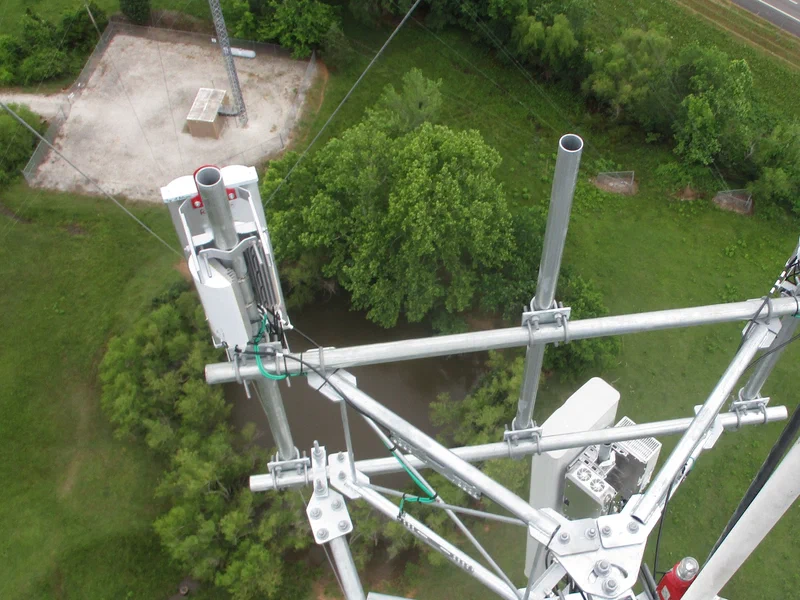
Maintenance & Inspection
Inspections, repairs, and post-storm response for a 20-year asset.
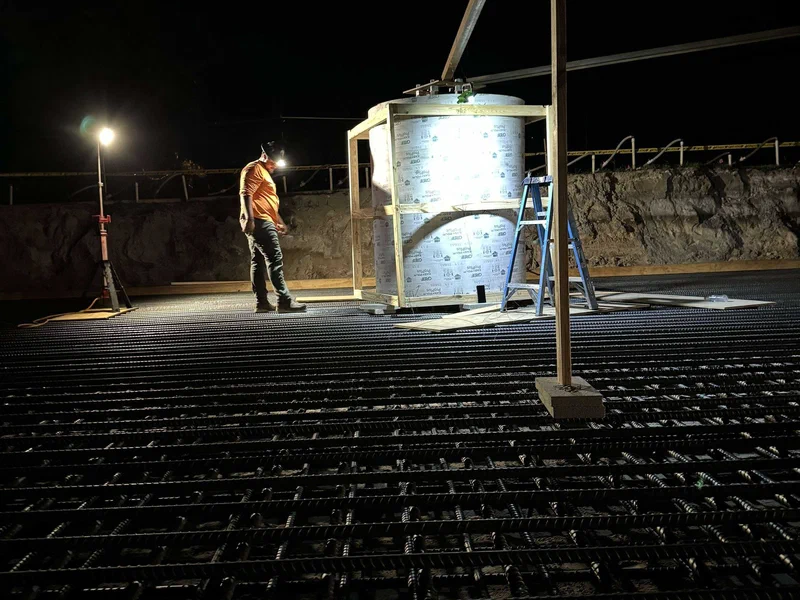
New Site Builds
Empty dirt to operational tower, one crew, one point of contact.
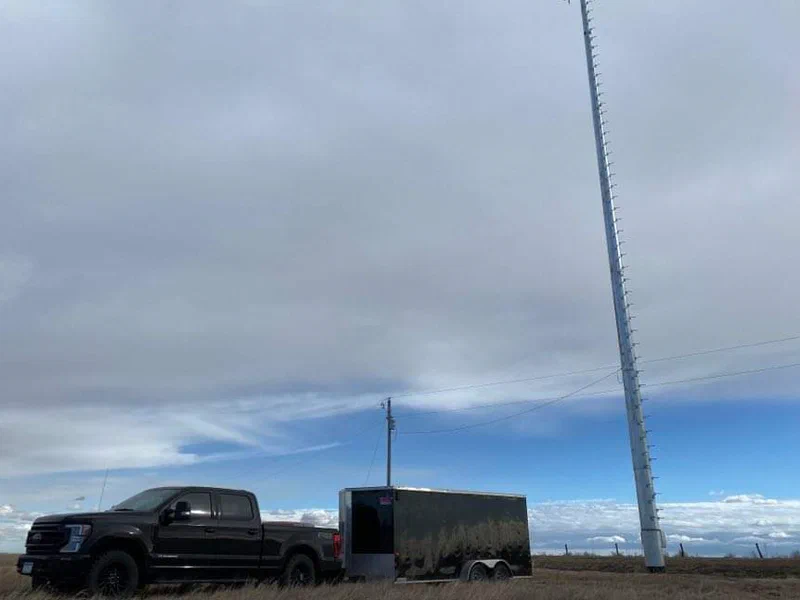
Direct Embedment Monopoles
Foundation-free monopoles set into augered holes. Fast to deploy.
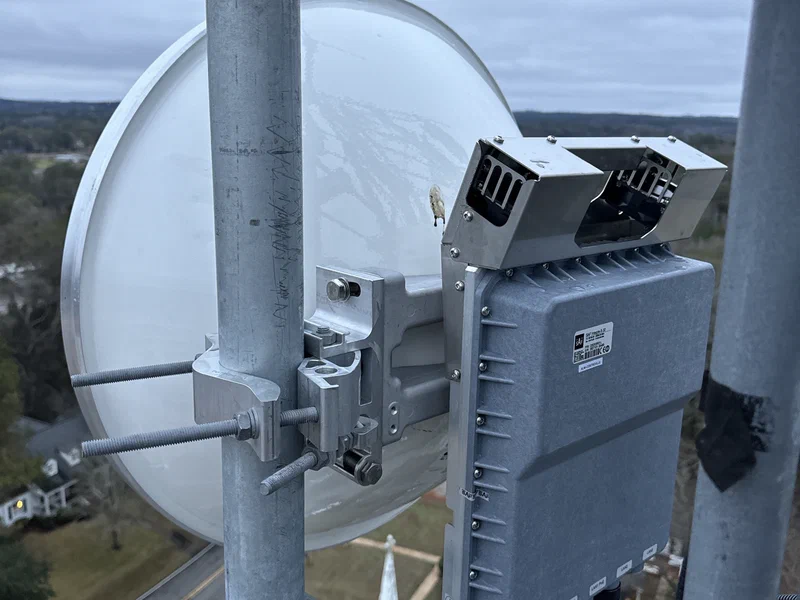
Microwave Backhaul
Point-to-point links, redundant rings, licensed and unlicensed.
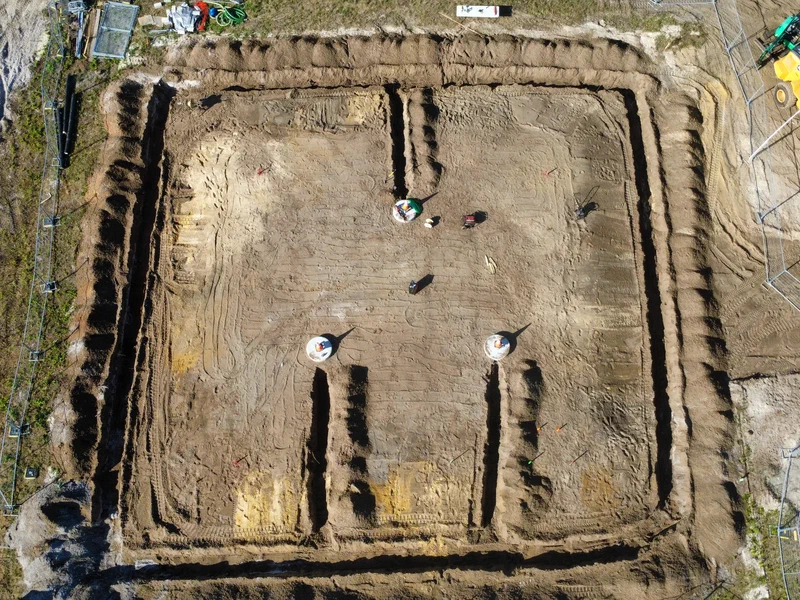
Grounding & Cadwelding
Ground rings, exothermic welds, bonding to NEC and manufacturer spec.
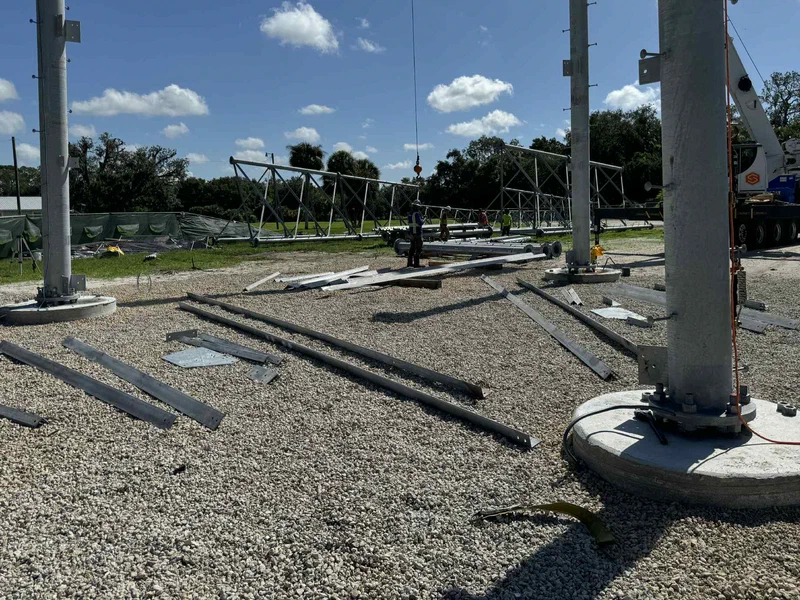
Tower Erection
Guyed, self-supporting, and monopole structures up to 300ft.
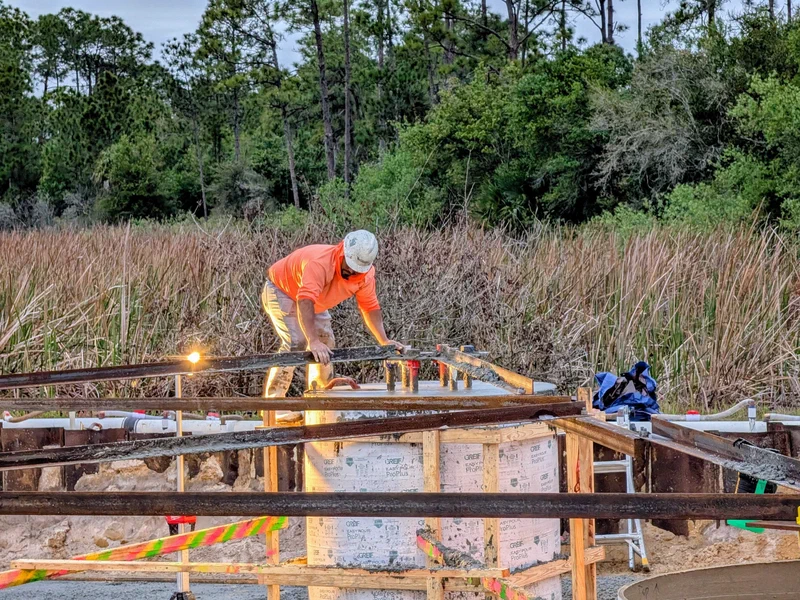
Foundations & Civil
Excavation, rebar, concrete, grading, fencing, and ground rings.
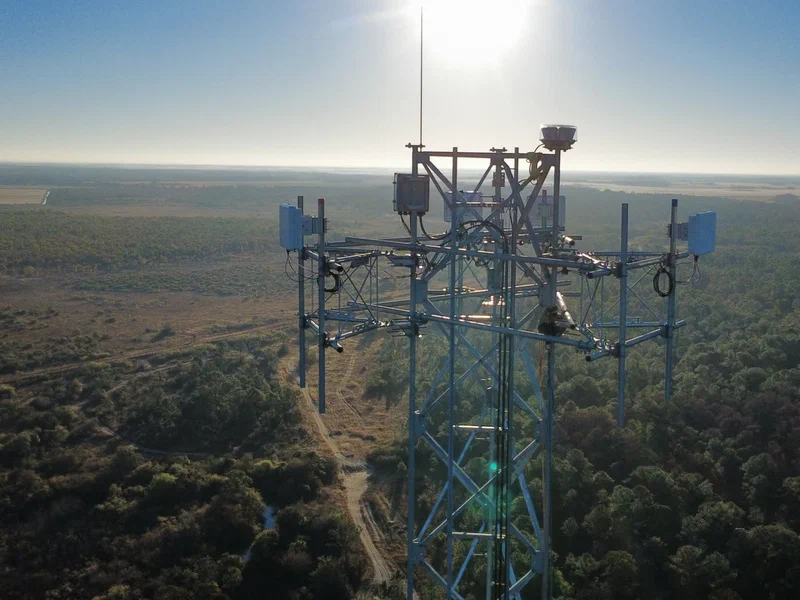
Sector & Backhaul
Sector antennas, backhaul dishes, horn arrays, aligned and sealed.
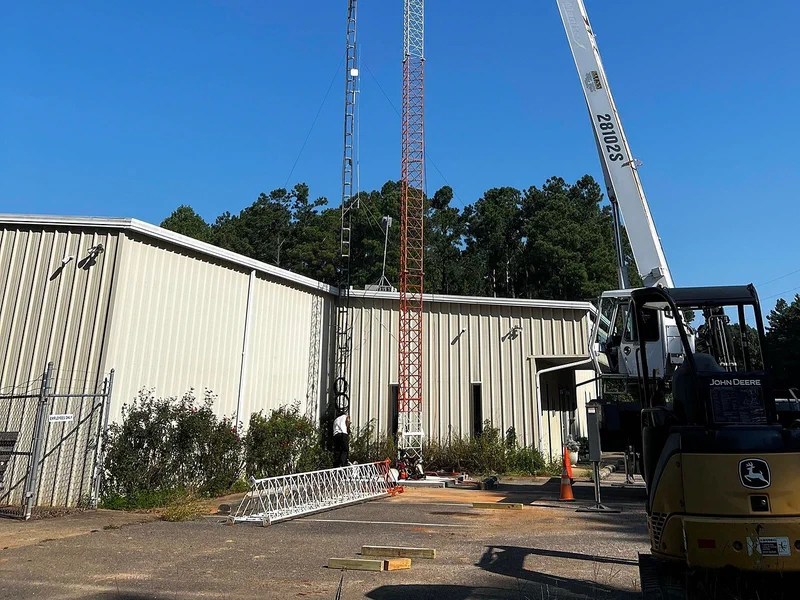
Tower Modifications
Antenna swaps, feed-line replacement, load-bearing upgrades.
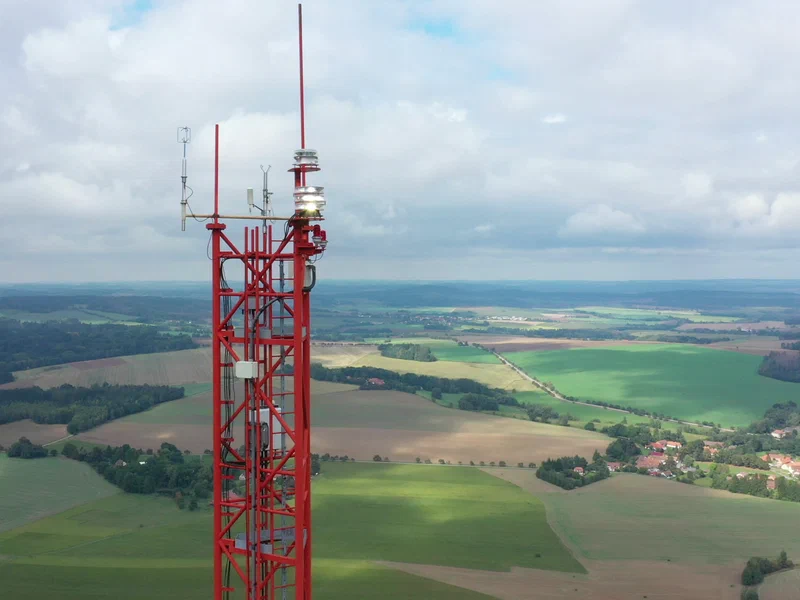
Obstruction Lighting
FAA-compliant beacon, strobe, and side-light repairs. Bulb and LED replacement.
How an engagement flows.
A utility engagement runs the same engineering as any tower build, plus a safety, compliance, and outage-coordination layer unique to utility work. Here is how an engagement flows from first call to commissioning.
Pre-qualification and contractor onboarding
Most utilities run a formal contractor-prequalification program (ISNetworld, Avetta, PEC, or an in-house equivalent). We maintain active enrollments in the major platforms and complete utility-specific onboarding. Insurance, EMR, OSHA 300 logs, safety program documentation, and background-check records. Before a site walk. If this is our first engagement with your utility, plan on 4 to 8 weeks of onboarding in parallel with scoping.
Site walk and grounding-study coordination
Foreman and electrical lead on site. Existing substation ground grid tied out where we can reference the utility’s grounding drawing. Site soil conditions reviewed for ground-rod and conductor sizing. Coordination with your protection engineer on IEEE 80 design at the new communications compound. For sites near energized equipment, arc-flash and touch-potential analysis coordinated through your electrical engineering team.
Structural and RF engineering coordination
Stamped structural drawing from your utility’s structural engineer (or from our partner PE network). Tower type selected against site conditions and loading. Direct embedment monopole, self-supporting, or guyed. RF design from your comms or integrator team. We install to the stamped design. For teleprotection paths, path study against ITU-R P.530 and availability verified against your SLA target.
NERC CIP personnel and physical security
For sites inside CIP-004 scope, personnel-risk assessments completed on the on-site crew (background checks, security awareness training, access authorization records). For CIP-014 physical-security sites, approach routes, visitor logs, and tool-inventory procedures coordinated with the substation operations team before mobilization.
Switching-schedule and outage coordination
For work requiring planned outages on substation equipment (bonding tie-ins, cable-entry penetrations, work near live bus), we coordinate the switching window with your system operations center. Our crew schedule gets built around the switching calendar, not the other way around. Unplanned outages because a tower contractor didn’t plan the work are how utility tower contractors lose the account.
Mobilization, civil, and steel
Crew roll from Alabama or Texas to the site. Civil. Auger rig on direct-embedment poles, spread-footing excavation on self-support. Executed against the stamped foundation drawing. Steel erection with crane sized to pole weight. Ground grid installed with exothermic welds at every connection, integration-tested against existing substation grid where applicable.
RF install, cable plant, and commissioning
Antennas, radios, ODUs installed to manufacturer spec. Fiber and DC / Cat6 cabling down-tower into the utility’s comms cabinet or control-building rack with EMI-hardened terminations. For teleprotection paths, RSL measured, BER tested against the protection-equipment threshold, and commissioning run with your protection engineer present. For 900 MHz Anterix paths, SAS-equivalent registration (where required) and RF commissioning with your private-LTE integrator.
Documentation handover
As-built drawings, grounding inspection record, alignment and link-budget logs and fiber insertion-loss reports, teleprotection commissioning report (where applicable), NERC CIP access logs, and photo record delivered. Your RF engineer, your protection engineer, your substation operations team, and your NERC CIP compliance office all have what they need. For RUS-borrower utilities, closeout paperwork aligned with RUS bulletin requirements.
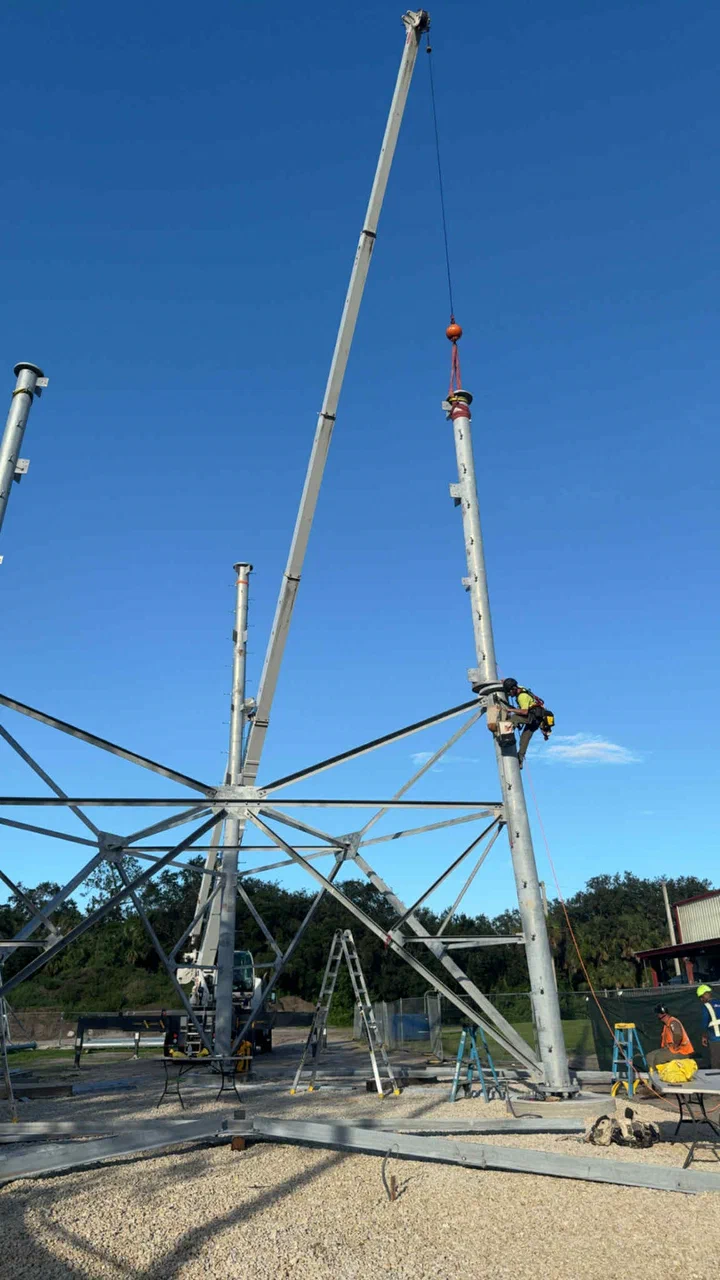
Built to utility code. Not just to tower code.
Same TIA-222-I, Part 101, and OSHA baseline as any tower contractor. Plus the utility-specific layer your compliance team actually has to file.
IEEE Std 80. Guide for Safety in AC Substation Grounding
Governs ground-grid design, touch / step voltage, and ground potential rise at substations. Our default grounding standard on any utility-owned or utility-adjacent tower site.
IEEE Std 837. Qualifying Permanent Connections for Substation Grounding
Permanent-connection specification for conductors in a substation ground grid. Exothermic welds verified to the 837 qualification on every underground tie-in.
IEEE Std 1613. Communications Networking Devices in Electric Power Substations
Environmental testing and rating requirements for networked devices in substations. Governs equipment selection and install on substation-adjacent comms infrastructure.
IEC 61850-3. Communication Networks for Power Utility Automation (Environmental)
International standard for EMI immunity, vibration, and environmental performance of substation electronics. Commonly specified alongside IEEE 1613 for station-bus and process-bus devices.
IEC 60834-1 / IEC 60834-2. Teleprotection Equipment
International standards for teleprotection communication. Command protection (60834-1) and analog comparison protection (60834-2). Teleprotection-grade microwave paths commissioned against the performance requirements defined in these standards.
NERC CIP-014. Physical Security
Physical security for transmission stations and substations that could cause instability or cascading if damaged. Risk assessments, third-party reviews, and physical security plans coordinated on applicable sites.
NERC CIP-004. Personnel & Training
Personnel risk assessments and access-authorization requirements for staff with physical or cyber access to BES Cyber Assets. Our lead crew maintains current background checks, security awareness training, and access-authorization records.
NFPA 70E. Electrical Safety in the Workplace
Arc-flash boundary, PPE category, and approach-distance requirements. Governs crew posture on any work inside a substation arc-flash boundary.
FCC Part 101
Licensed fixed microwave (6, 11, 18, 23, 32, 38, 42 GHz). Every teleprotection microwave path filed, coordinated through an FCC-approved frequency coordinator, and operated under a granted license before on-air.
FCC 900 MHz broadband segment (Anterix)
Private-LTE spectrum reserved for utility and critical-infrastructure use. Expanded to 10 MHz (5x5 LTE channel) in February 2026. Deployment coordination through the Anterix Active Ecosystem and partner integrators.
TIA-222-I
ANSI structural standard for antenna-supporting structures. Governs plumb tolerance, guy pre-load, bolt torque, and ice / wind loading on every tower we build.
TIA-1019-A
ANSI standard for installation, alteration, and maintenance of antenna-supporting structures. Default framework for fleet condition-inspection programs: scope, interval, and the evidence a qualified inspector produces. Year-over-year comparison against this standard, not against whatever template last year’s vendor used.
RUS Bulletin compliance (for rural co-op borrowers)
Rural Utilities Service loan-borrower technical and construction standards. Closeout documentation aligned with RUS bulletin requirements on co-op projects where RUS financing applies.
OSHA 1926 / ANSI A10.48
Safety at height. 100% tie-off, authorized rescue, site-specific safety plan on every climb. Plus NFPA 70E arc-flash boundaries on any climb inside the substation fence.
Questions utility engineers and reliability officers ask.
What's actually different about a utility tower job vs. a commercial WISP tower?
Three things, in order of importance.
- Grounding. A WISP tower grounds to Motorola R56. A good spec for commercial work. A utility communications tower on or near a substation grounds to IEEE 80 and IEEE 837, with the communications ground bonded to the substation ground grid so a fault on the substation side doesn’t create a lethal potential difference between the two. That’s not optional, and it’s not a retrofit. It’s the design premise.
- Safety. A WISP tower sits on a leased pad with no energized gear within a mile. A utility tower may sit 20 feet from an energized 138 kV bus. NFPA 70E arc-flash boundaries, touch-potential protocols, approach-distance restrictions, and switching-coordination procedures all apply. Our crew PPE, tooling, and procedures are tuned to that.
- Compliance. WISP work ends with an as-built. Utility work ends with an as-built plus NERC CIP-004 access records, CIP-014 physical-security documentation on applicable sites, IEEE 80 grounding inspection, teleprotection commissioning against IEC 60834 thresholds, and RUS closeout paperwork on co-op projects. The documentation layer is the real difference in scope, and it’s also the real difference in price.
Do you do direct embedment monopoles for distribution automation sites?
Yes, and this is where direct embedment earns its keep for utilities. A typical DA modernization program is 50 to 500 comms sites. At that scale, the four-to-six-week concrete-cure window on a spread-foundation self-support tower is what breaks the program schedule.
A direct embedment monopole on the same site is one to three days from auger rig to pole set, with an engineered embedment depth (10 to 15 percent of pole height) carrying the overturning moment via passive earth pressure against the pole wall. Backfilled with flowable fill, structural concrete, or compacted native material per the stamped detail. Ground grid installed with cadwelded copper ring at the pole base, tied into the substation grid where applicable.
For a 50-site or 100-site DA program we rotate a dedicated crew through the footprint with poles staged in rotation. Program-rate pricing, not per-site mobilization. Our direct embedment monopole service has the full engineering scope and soils trade-offs.
Can you handle teleprotection-grade microwave paths?
Yes. Teleprotection is the 12-millisecond-round-trip communications layer that carries protective-relay signaling between substations. Any ordinary microwave path won’t hit those performance targets.
Our teleprotection scope:
- Licensed FCC Part 101 spectrum (6, 11, 18, 23, 32, 38, 42 GHz). Full path study, FCC coordination, and license filing.
- Carrier-grade radio gear. Aviat WTM / Eclipse, SAF Tehnika Integra / CFIP, Siklu EtherHaul, Nokia licensed microwave.
- 1+1 hot-standby on critical single paths; ERPS / α-Ring protection with sub-15 ms healing on multi-site rings.
- Adaptive modulation with robust QPSK fallback under rain fade, so the link drops capacity but not the teleprotection channel.
- TDM / E1 legacy circuit emulation where you’re running legacy teleprotection on inherited copper or SONET and need compatibility through a modernization cutover. Aviat WTM and SAF Integra both support it natively.
- Commissioning to IEC 60834-1 / -2 with your protection engineer on-site.
Our microwave backhaul service has the full Part 101 scope and vendor-selection walkthrough.
Are you ready for 900 MHz Anterix private LTE work?
Yes. The 900 MHz broadband segment was expanded to 10 MHz (5x5 LTE) by FCC vote on February 18, 2026, and utility deployments are scaling fast through the AnterixAccelerator initiative and the Anterix TowerX turnkey tower service (joint with Crown Castle, launched November 2025).
Our lane on 900 MHz Anterix work is the tower construction and RF-install layer. New comms sites sized for the private-LTE radio stack, 900 MHz radio install and alignment, cable plant down to the utility’s comms cabinet, IEEE 80 grounding, and commissioning. Whether the RAN is Ericsson, Nokia, or GE Vernova, the install fundamentals are the same and our crews are experienced on the relevant vendor platforms.
On coordinated Anterix TowerX locations specifically, we work into Crown Castle’s site-development process as needed. For utility-owned sites outside TowerX, we run the full scope direct to the utility.
Do you work with electric cooperatives under RUS financing?
Can you help with DOE GRIP or SPARK-funded projects?
Yes. The DOE Grid Resilience and Innovation Partnerships (GRIP) program has obligated $7.6 billion across 105 projects in all 50 states and DC through two rounds, and $1.9 billion in new SPARK funding was announced March 12, 2026 for reconductoring and advanced transmission upgrades. Communications and cybersecurity integration is an explicit scope element across the program.
We run the tower and RF-install layer of grid-modernization projects. The communications sites, microwave paths, and distribution automation infrastructure that modernization scopes typically include. Grant-program reporting (milestone closeout, schedule-to-plan variance, audit-trail documentation) is part of standard scope on federally-funded work. Send us the grant-project scope and we’ll align the construction deliverables to the program milestones.
Do you coordinate with our system operations center for switching windows?
What about NERC CIP personnel and physical security?
Covered in standard scope on applicable sites.
- CIP-004-7 (Personnel & Training). Our lead climbers and civil leads maintain current personnel risk assessments (background checks, security awareness training) and unescorted-access authorization records. For first-time engagements we plan 4 to 8 weeks of compliance onboarding in parallel with scoping to get our crew cleared before mobilization.
- CIP-014 (Physical Security). On transmission-critical sites, approach routes, visitor logs, monitored-access procedures, and tool-inventory controls are coordinated with your substation operations team before crews enter the fence.
For utilities new to us, the first CIP-designated site takes longer because of the onboarding. After that, the same crew rotates through your portfolio with continuous compliance maintained.
Do you handle wildfire mitigation infrastructure?
What spectrum and radio platforms do you install for utilities?
Across the utility RF stack:
- Licensed Part 101 microwave (6, 11, 18, 23, 32, 38, 42 GHz). Aviat, SAF Tehnika, Siklu, Nokia for teleprotection and substation WAN.
- Lightly-licensed E-band (70 / 80 GHz). Short-range high-capacity hops where rain-zone physics allow it.
- 900 MHz Anterix private LTE. Ericsson, Nokia, GE Vernova RAN, sized to utility coverage footprint.
- 30–50 MHz FCC Part 90. Legacy utility SCADA bands, narrowband SCADA radios for field-device backhaul.
- Unlicensed 5 GHz / 900 MHz. Where the use case tolerates it (non-critical telemetry, AMI head-end infill).
- Fiber-to-the-RTU where fiber plant already exists and a radio path isn’t the right answer.
If your standard platform isn’t listed, we’ll learn it. The install fundamentals (grounding, weatherproofing, commissioning) are the same vendor-to-vendor.
How much does utility tower and comms work cost?
Fixed fee on defined scope, with unit rates and change orders for field conditions. Quoted against scope, tower type, site access, switching constraints, and NERC CIP layer. Rough order-of-magnitude:
- Direct embedment monopole DA comms site (100 ft, small compound, IEEE 80 ground-grid tie-in): upper five to low six figures per site, program-rate discounts on 20-plus-site rollouts.
- Substation communications tower (new build with ground-grid integration): low to mid six figures.
- Licensed Part 101 teleprotection microwave path (single licensed link, carrier-grade radio, 1+1 hot-standby): mid to upper six figures per path, driven by antenna size and licensing complexity.
- 900 MHz Anterix site radio install and alignment (existing tower, adding 900 MHz to a utility site): mid five to low six figures per site.
- Ring-topology teleprotection backhaul across 4 to 8 substations: high six to low seven figures, depending on path count and redundancy.
- Multi-site DA modernization program: program rate per site, batched across the portfolio.
NERC CIP compliance overhead (personnel onboarding, CIP-014 coordination, access logs, access-authorization records) is priced into the quote, not billed separately. RUS closeout paperwork for co-ops is standard scope. Send us the project and you’ll have a line-itemed quote inside two weeks.
Do you run multi-year inspection contracts across a utility comms fleet?
Yes. That is a core utility buy, and it is the maintenance and inspection service run as a program, not as a pile of single-site POs.
Typical shape: one-year term with four additional one-year options, or three-plus-two. Inspect every comms site in the territory — substation towers, DA monopoles, relay sites, generation sticks — to TIA-1019-A. Same report template every visit. Year-over-year comparison. Open items from last season closed or carried with a reason. Red findings quoted as remediation on the same document.
Year one is onboarding (ISNetworld / Avetta, CIP-004, site access) plus the baseline rotation. Option years are why you signed: the same crew book, the same template, the delta from last year. We price and crew it that way so exercising the option is the easy decision.
Multi-state holding companies get one program manager and a per-operating-company onboarding packet, not a new vendor story in each state.
Can you run a multi-state utility program, or only single-site work?
Multi-state is the more natural fit for how we already crew. Alabama and Texas hubs, nationwide mobilization, and a rotating crew that lives on the road. A 40-site DA overlay across two or three operating companies is the same job as a 40-site overlay inside one co-op, plus a CIP onboarding packet per legal entity and a switching calendar per ops center.
What we actually do on a multi-state program:
- One program manager and a dedicated crew rotation staged in the footprint.
- Per-operating-company onboarding (ISNetworld / Avetta / in-house, CIP-004 personnel, site-access badging) run in parallel so the first state isn’t blocking the second.
- Shared as-built and grounding-inspection format so the holding-company telecom group can file one package, not four contractor templates.
- Program-rate pricing. Per-site mobilization dies on a 20-plus-site list. We quote the program.
Single-site substation work is still in scope. The difference is we don’t treat a 50-site, three-state PO like fifty separate quotes.
Can you run as prime to the utility, or only as a sub to an EPC?
What's your service area for utility work?
How do I get started?
Send us:
- The project. Fleet inspection contract (site list, last-inspection dates, term and option years), substation comms site, DA program, teleprotection path, 900 MHz Anterix site, or a mix. Site list with coordinates.
- The CIP posture. Which sites are CIP-014 designated, which are CIP-004 scope, and whether we need to run contractor prequalification before scoping.
- The funding. Utility capex, GRIP / SPARK grant, RUS financing, or a mix.
- The outage constraints. Switching-window availability, planned outage calendar, on-peak restrictions.
- Your protection, RF, and SCADA engineering contacts. So our engineering coordination can start in parallel with scoping.
Request a quote here or call us at (763) 280-6050. Utility scopes typically take two weeks to quote because the compliance and engineering coordination is the harder part of the scoping, not the steel.
Don't see your question? Ask us directly. We answer every scoping call.
Adjacent industries.

Oil & Gas
Wellhead SCADA, pipeline monitoring, and remote facility comms. Built for harsh conditions and production-sensitive schedules.
Federal & Military
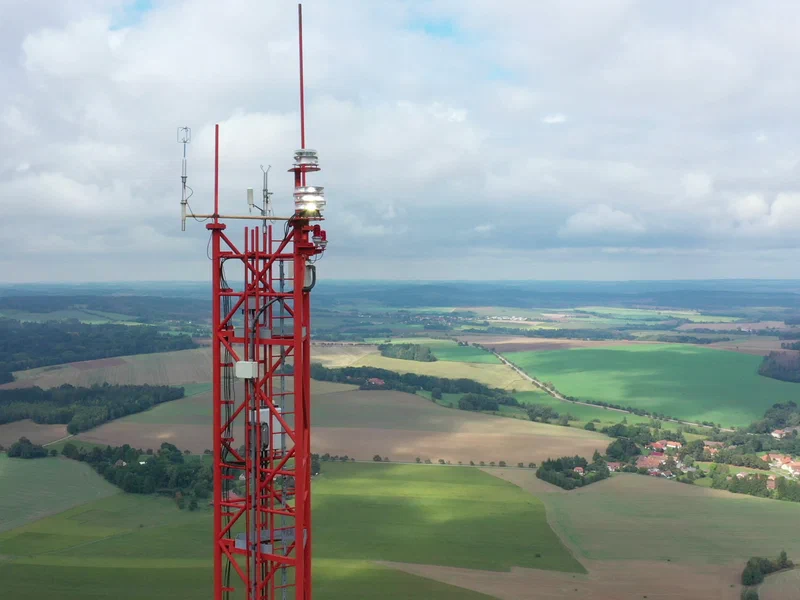
Obstruction lighting on airfields and ranges. Training-tower and rappel-tower takedowns. Comms builds inside the fence.

Public Safety
Two-way and broadband infrastructure for counties, municipalities, and emergency agencies. 4.9 GHz public safety band experience.
Municipal & Rural Broadband
Co-ops, municipalities, and federally-funded broadband buildouts. BEAD, ReConnect, and grant-compliant project scopes.
Page last updated August 21, 2026.
Inspect the fleet. Or build the next site.
Same crew book, utility-grade code book.
Send the project. Multi-year inspection contract, substation comms, DA program, teleprotection path, or 900 MHz Anterix site. Along with your NERC CIP posture, your term (base plus options), and your switching-window constraints. We come back with a line-itemed quote and a rotation calendar or a construction plan.