
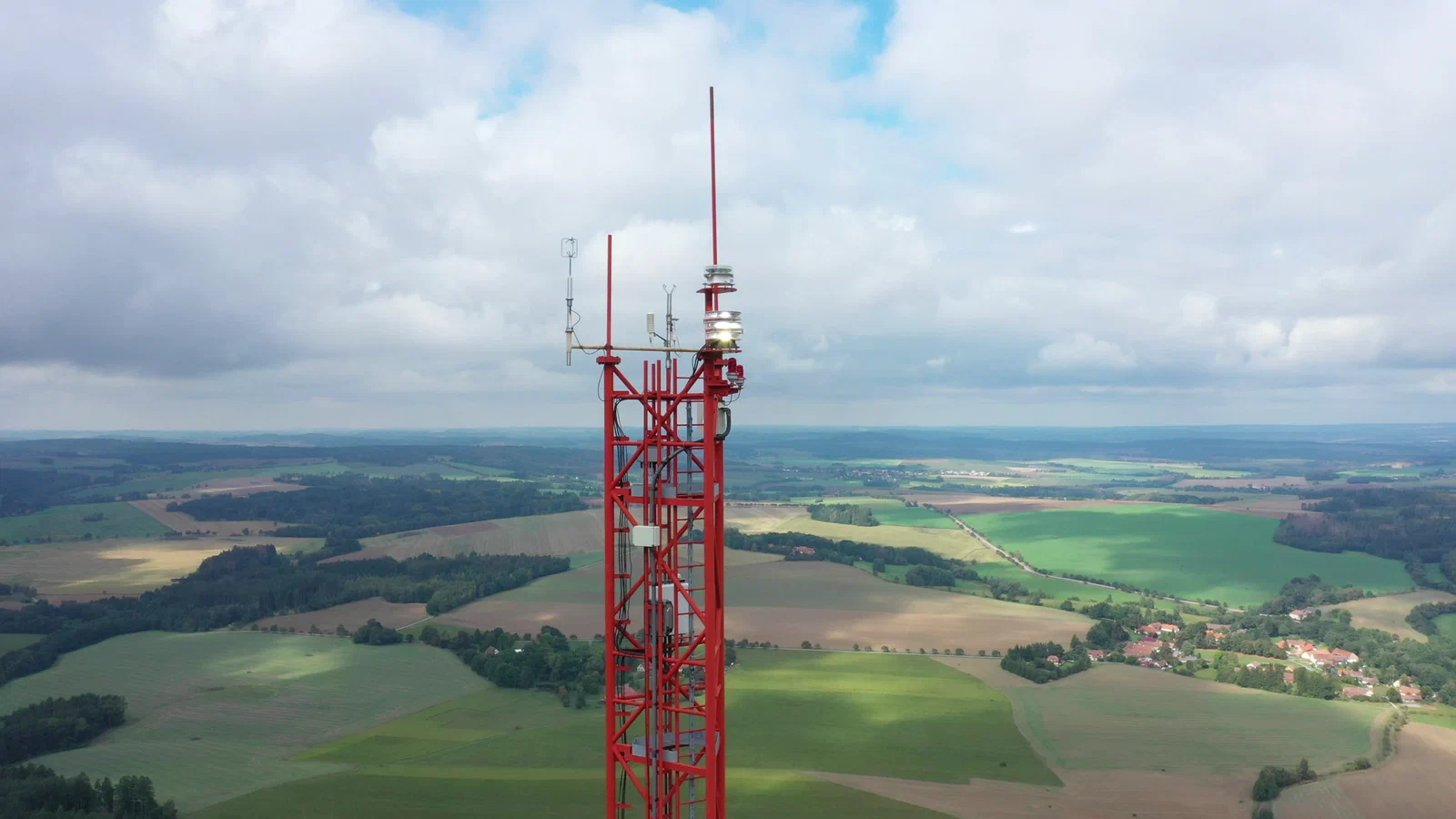
Tower Construction & Decommissioning for Federal, Military, and Government Sites
Installations, airfields, launch ranges, and federal facilities call when a light is out, a training tower has to come down, or a comms site has to go up inside the fence. Same civil, steel, and RF crews. Different access, different drawing, different person signing. We badge in, we work to the spec on the sheet, and we leave the site the way the installation required.
The steel is familiar. The installation is not.
A lighting plant is a lighting plant. A monopole is a monopole. A teardown is a teardown. What changes on federal and military work is everything around the steel.
Access. DBIDS, installation passes, escorts, gate hours, tool inventories, no-phone zones, photography rules. A crew that shows up assuming they can drive to the compound and start climbing does not start climbing. Badging and escort time belong in the mobilization plan, not in a change order on day one.
Who owns the outage. On a commercial tower the NOC calls, we climb, Flight Service gets the NOTAM. On an airfield or a range the call comes from facilities, civil engineering, airfield operations, or range safety. Their clock is not 47 CFR § 17.48. Their clock is night ops, a launch window, or a training cycle. We sequence the work against that tree.
The drawing. Sometimes there is an FAA determination and an ASR. Sometimes the spec is a UFC, an installation design standard, or a prime’s package, and the structure was never in the FCC database. We work from whichever sheet is binding. We do not invent a commercial closeout on a site that does not have one.
Direct to the installation when the contracting vehicle allows it. Sub to the prime when that’s how the job is bought. Same crews, same tooling, same safety program either way.
We do not pretend this is a WISP pad off a county road.
Commercial tower work is a leased compound, a combination on the gate, and a landowner who wants you gone by Friday. Installation work is a backgrounded crew, an escort, a drop zone the airfield can live with, and a restoration spec written by someone who is still on that base after we demob.
If your job is inside the fence, say so on the first call. We will ask about badging lead time, escort requirements, photography, and who signs the restoration before we talk about crane days.
Primes, work orders, and direct hire.
A lot of this work never hits a public SAM solicitation. Facilities issues a work order. A prime (the one that already holds the base contract) needs a tower crew. A range contractor needs a lighting plant restored before the next window.
We run as sub to the prime on installation contracts, and direct to the facility when they can buy us that way. We do not advertise a facility clearance we do not hold, and we do not put a CAGE code on this page that is not on file. If your vehicle requires SAM / UEI registration to be the vendor of record, say so. If you need a tower crew under an existing prime, that is the more common path.
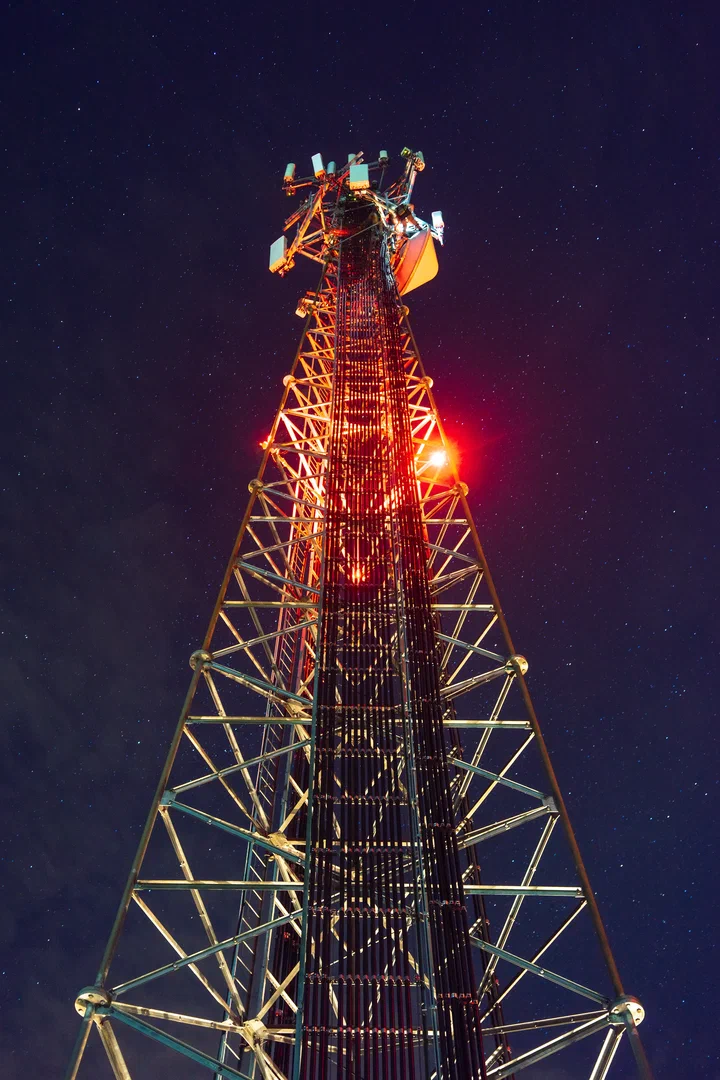
Obstruction lighting next to a runway or a range is the same catalog on a shorter fuse.
L-810 side markers. L-864 red beacons. L-865 white strobes. Dual red/white. LED retrofits of Hughey & Phillips, Flash Technology, Dialight, Drake, Unimar. Controllers, photocells, alarm contacts. That is the obstruction-lighting service. It does not change because the structure sits inside a Part 77 surface.
What changes:
- Height thresholds drop. Inside an approach, transitional, or horizontal surface, lighting can be required well below the 200-ft AGL default. The FAA determination — or the installation lighting plan — is the spec, not a generic catalog page.
- The notification tree is local. Airfield operations, range safety, or the facilities shop may need the light restored on their clock, with their escort, before anyone talks to Flight Service. Some of these structures are not in the ASR database at all.
- Night ops and windows. A climb that would be a Tuesday morning on a WISP tower may have to happen in a maintenance window between flying periods, or after a range goes cold.
We pull Part 77 against the coordinates when the determination is not in the package. We stage OEM parts before the crew badges in so the climb is a repair, not a parts run. Emergency outage response is the same 24-hour rotation we already run for commercial NOTAMs, with the access plan in front of the climb plan.
Launch-range and airfield structures still fail the same way.
Failed top beacon. Dead photocell. Tripped controller. Corroded alarm contact. LED module that looked fine from the ground. The failure modes are not special. The cost of a dark structure next to a runway or a range corridor is.
Send the ASR number if there is one, the lighting-plan sheet if there isn’t, and who we coordinate the outage with. We quote the plant, the climb, and the access as one scope.
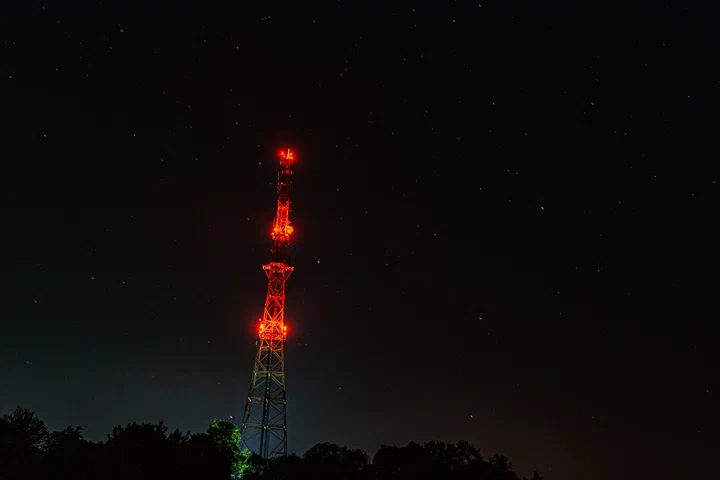
Training towers and rappel towers come down like any other structure. The drawings usually don't.
Tower decommissioning on this site is written around communications structures because that is most of the catalog: antennas off, feedlines out, ASR cancelled, site restored. A lot of the structures federal and military customers need taken down were never in that catalog.
Rappel towers. Confidence courses. Training towers. Range towers. Met towers. Legacy stubs on a facility that stopped using them. No radios. No ASR. No Form 854R. Often no trustworthy drawing. Field-welded additions, replaced members, undocumented guy changes, fasteners that have been there since a different contractor’s different decade.
Taking those down is still a rigging and sequencing job. Measure the structure in front of you. Plan the teardown against the steel, not against a shop drawing from 1994. Progressive detensioning on guys. Top-down unbolt on self-support. Crane-down or controlled felling on monopoles and welded training towers, with a drop zone the airfield, the range, or the training calendar can live with.
Hazmat is still in scope. Older training structures pick up the same lead paint, the same mystery coatings, and the same “we think that’s just paint” problem as old aviation-marked comms towers. We test before we cut.
The drop zone is the design constraint.
Closeout is whatever the installation files. Not whatever FCC files.
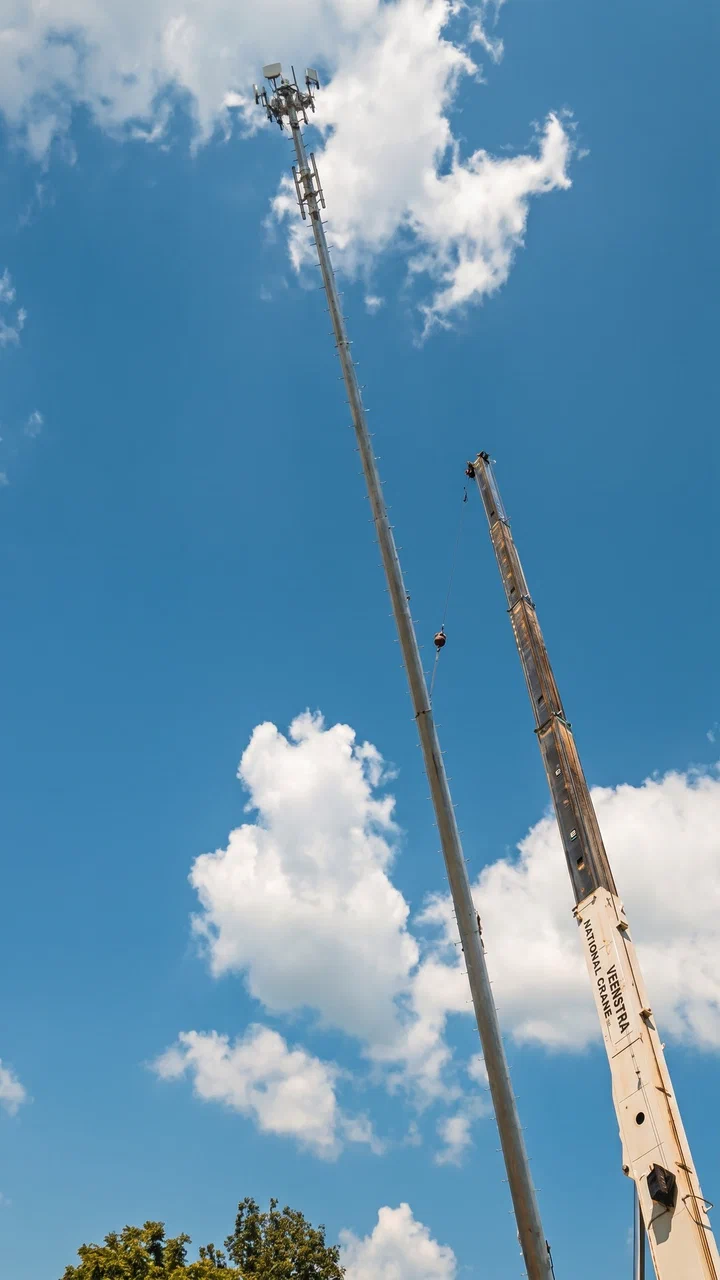
What we do on federal and military sites.
The same 15-service catalog, filtered to what installations, primes, and federal facilities actually buy. Access and closeout sized to the site, not copied off a WISP quote.
- Obstruction lighting on airfield-adjacent, launch-range, and installation structures. L-810 / L-864 / L-865 / dual systems, LED retrofits, emergency outage climbs
- Training-tower, rappel-tower, and range-tower decommissioning. Non-registered structures, missing drawings, installation drop-zone constraints
- Communications-tower decommissioning on registered structures, including FCC ASR cancellation and NOTAM closeout when they apply
- New comms sites on installations. Direct embedment monopoles, self-support, guyed. Built to the stamped spec, including UFC or installation design standards when they’re on the drawing
- Tower modifications and antenna swaps on existing installation and federal structures
- Maintenance and TIA-1019-A inspections on government-owned towers
- Plumb and guy tension post-storm or post-incident, sequenced against airfield or range windows
- Grounding and cadwelding to the spec on the sheet (R56, IEEE 80, or the installation standard)
- Microwave and RF install when the site carries radios, not just steel
- Base access as part of mobilization. Badging lead time, escorts, tool inventories, photography rules, in the plan before the crew rolls
- Prime-sub or direct-to-facility contracting, whichever vehicle the job is on
- Davis-Bacon / prevailing-wage documentation when the contract requires it
- Closeout to the PWS. Photos, as-builts, hazmat manifests, restoration. FCC filings only when the structure is actually in that system
Lighting out? Training tower coming down? Comms site inside the fence?
Send the site, the access constraints, and who signs the work. Installation, prime, or agency. We come back with a crew plan that includes the badging, not a commercial quote with 'access' as a footnote.
Services this work usually runs through.
Lighting and decommissioning show up first. The rest of the catalog is in play the moment the site is a comms site, not just a structure.
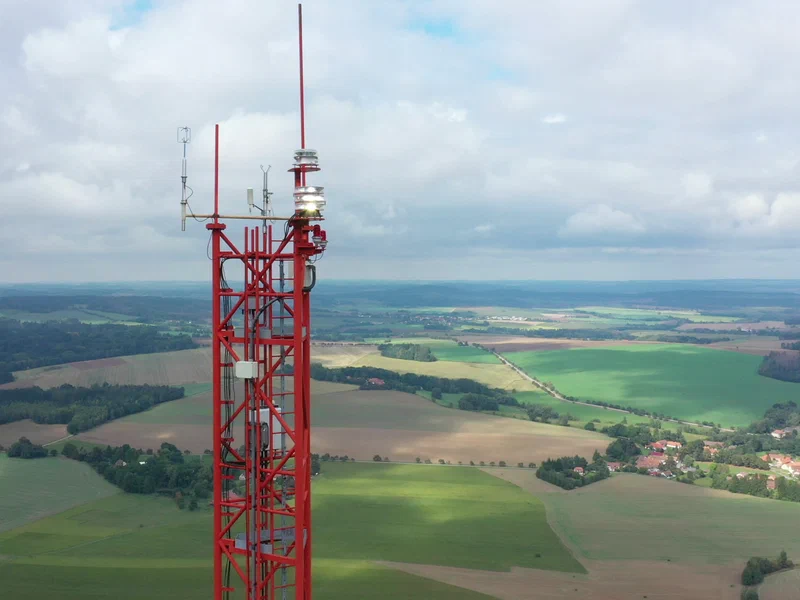
Obstruction Lighting
FAA-compliant beacon, strobe, and side-light repairs. Bulb and LED replacement.
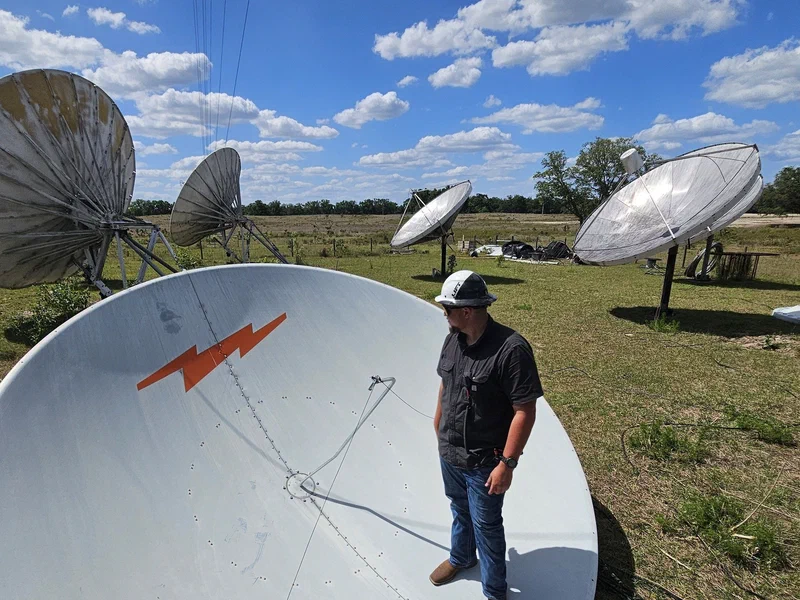
Decommissioning
Full teardown, equipment salvage, foundation removal, and FCC / FAA closeout.
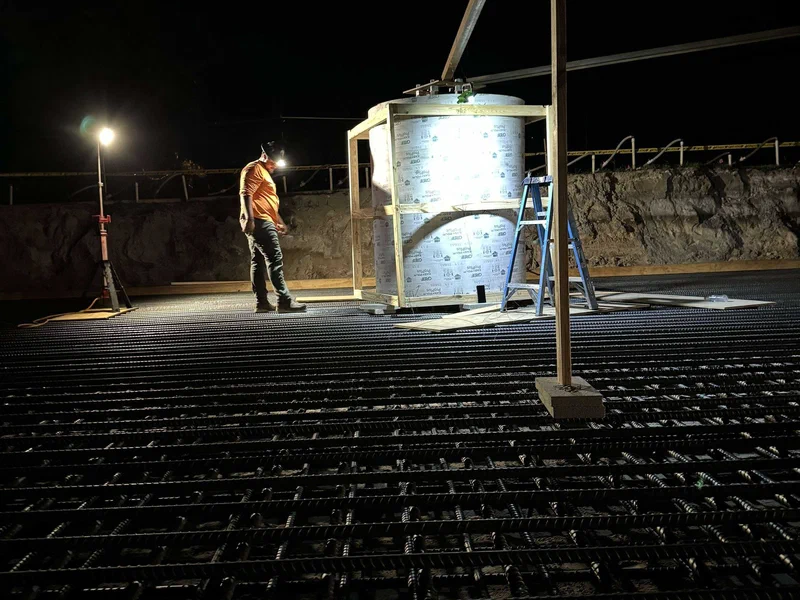
New Site Builds
Empty dirt to operational tower, one crew, one point of contact.
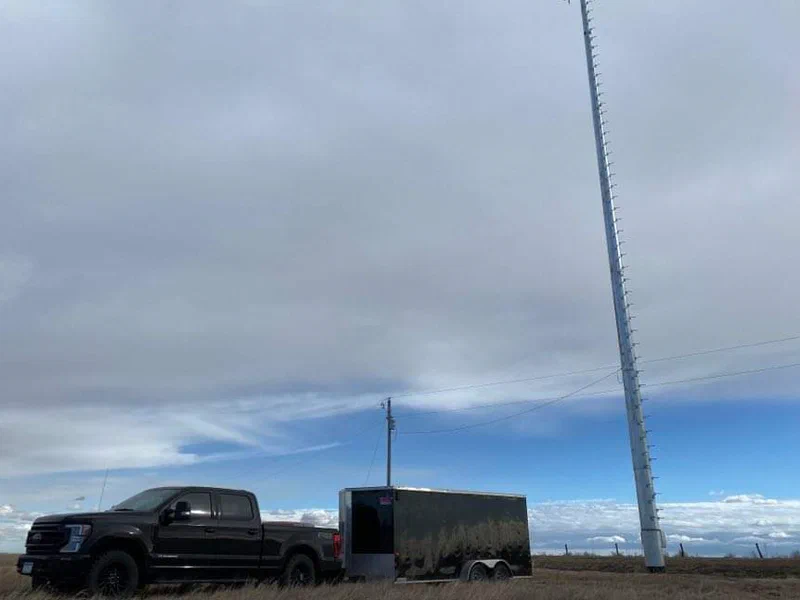
Direct Embedment Monopoles
Foundation-free monopoles set into augered holes. Fast to deploy.
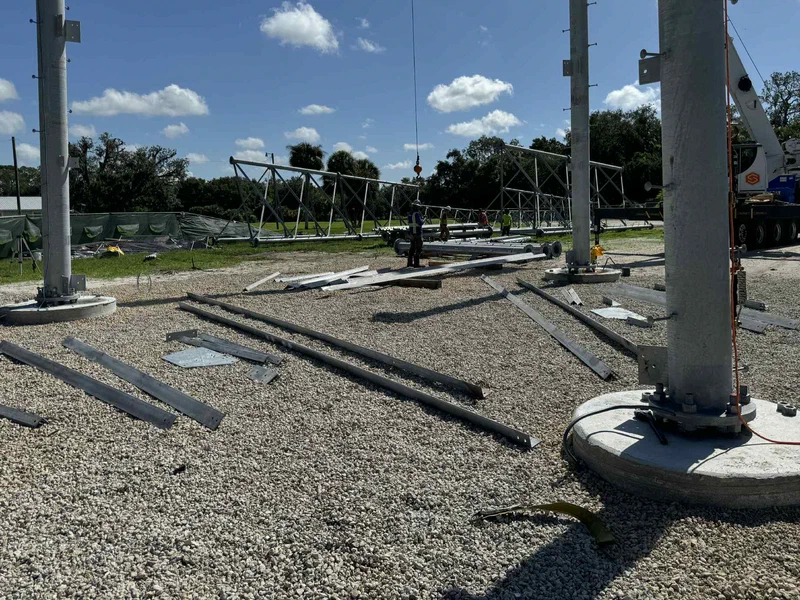
Tower Erection
Guyed, self-supporting, and monopole structures up to 300ft.
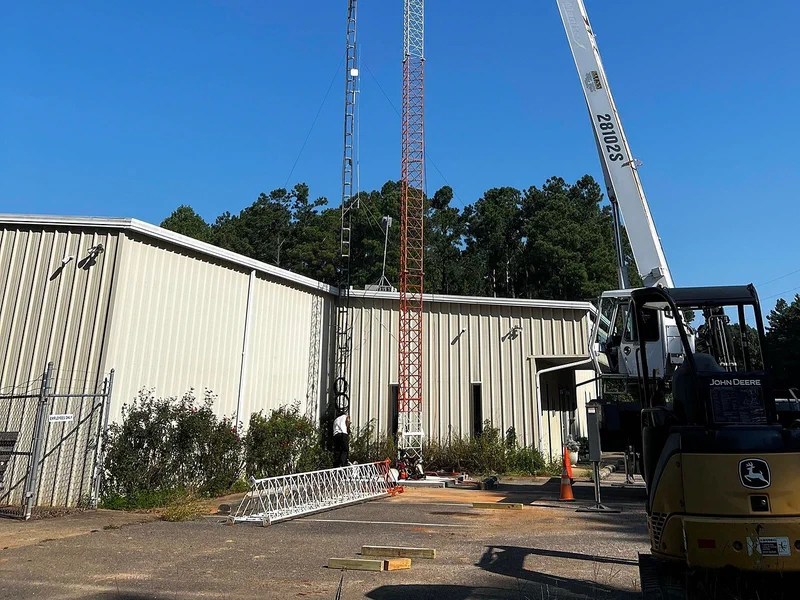
Tower Modifications
Antenna swaps, feed-line replacement, load-bearing upgrades.
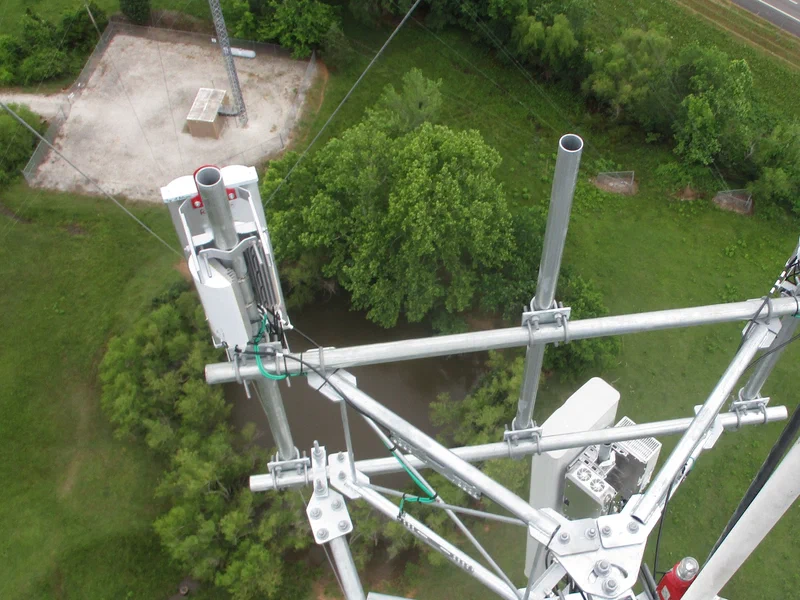
Maintenance & Inspection
Inspections, repairs, and post-storm response for a 20-year asset.
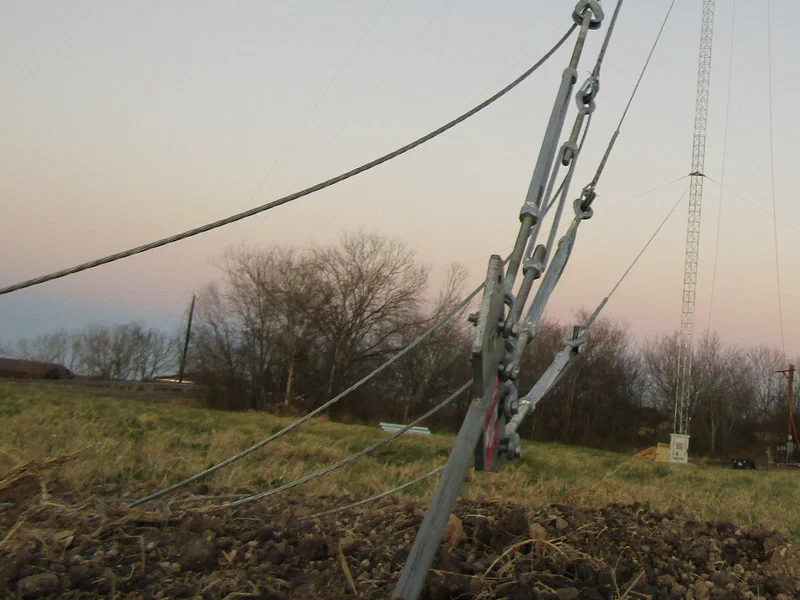
Plumb & Tension
Verify plumb, tension guys, correct storm-displaced structures.
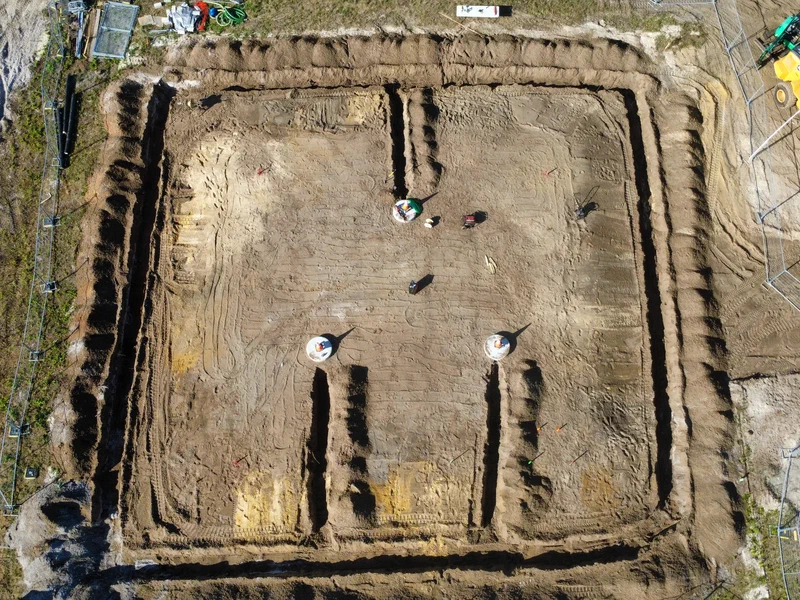
Grounding & Cadwelding
Ground rings, exothermic welds, bonding to NEC and manufacturer spec.
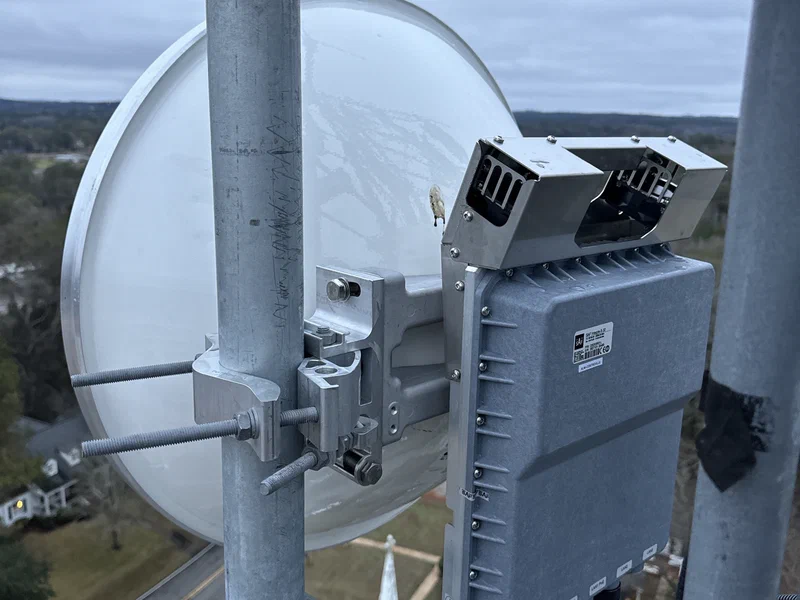
Microwave Backhaul
Point-to-point links, redundant rings, licensed and unlicensed.
How an engagement flows.
Same engineering as any tower job, plus an access and closeout layer that has to be true on an installation. Here is how an engagement actually runs.
Who is buying, and how do we get on the site?
First questions, before crane days. Prime or direct? Work order, PWS, or commercial PO? Badging system (DBIDS, installation pass, visitor), escort required, photography rules, tool-inventory controls, gate hours. If CIP-style or installation security onboarding takes weeks, that clock starts now, in parallel with scoping.
What is the structure, really?
Registered comms tower, training/rappel structure, range tower, lighting-only structure, or something that has been modified so many times the original drawing is a rumor. ASR number if it has one. Lighting plan if it has one. Stamped drawings if they exist. We plan against the steel on site either way.
Spec and method
Lighting: AC 70/7460-1M or the installation lighting plan, Part 77 check against coordinates if needed. Decom: crane-down vs. controlled felling vs. progressive detensioning, drop zone signed off with airfield ops, range control, or the training calendar. New build: stamped structural, including UFC or installation standards when those are on the drawing. We do not substitute a commercial default for a specified standard.
Hazmat and restoration
Lead-paint testing before any cutting. Mercury lamps, coatings, and mystery materials scoped from the test, not guessed. Restoration to the PWS or the land-use spec, not to a generic cap-in-place default.
Mobilization
Crew roll from Alabama or Texas. Badges in hand or escort booked. OEM lighting parts pre-staged so a climb is a repair. Crane or felling plan on paper before anyone lights a torch. Photography protocol briefed if the installation restricts it.
Work window
Sequenced against night ops, range hot/cold, training cycles, or airfield maintenance windows. We do not assume a 7-to-6 civilian workday on a flying installation.
Closeout
Photo record, as-builts, hazmat manifests, restoration. ASR cancellation and NOTAM closeout only if the structure is in that system. Everything the contracting officer, the facilities shop, or the prime’s QC file actually has to hold.
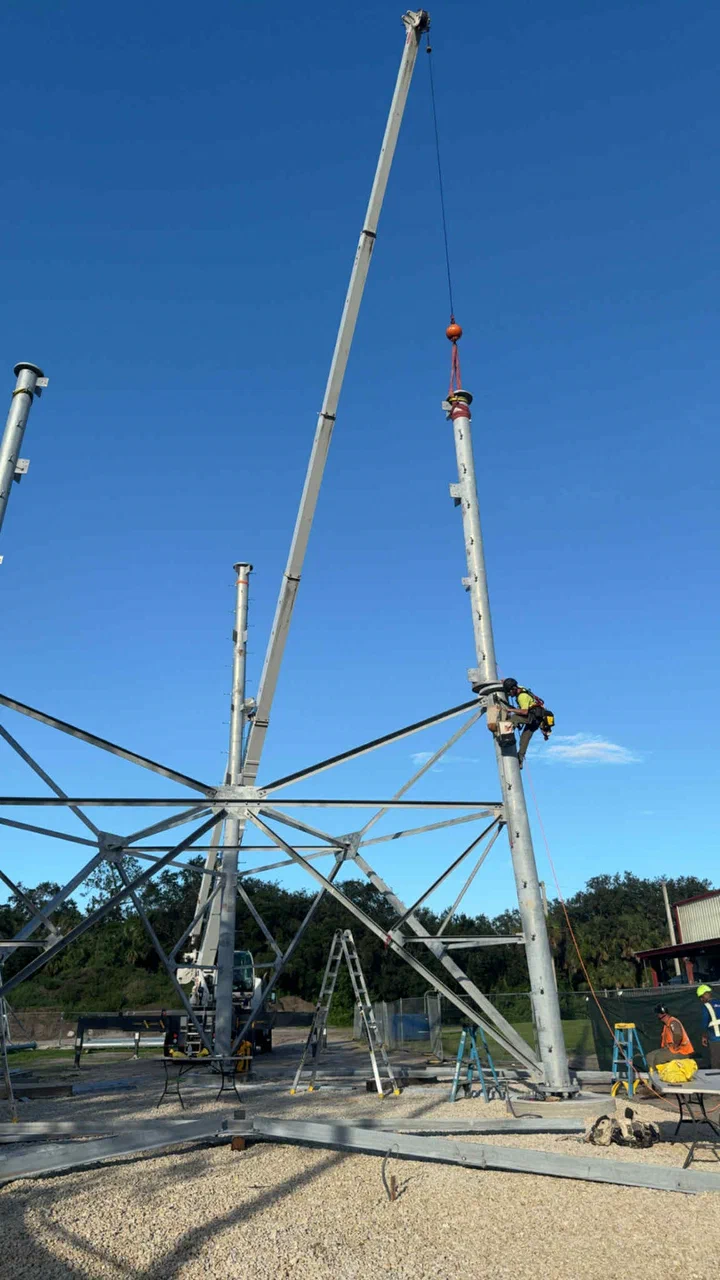
Built to the spec on the drawing. Not to a commercial default.
Same TIA, FAA, and OSHA baseline. Plus whatever the installation, the UFC, or the PWS actually called out.
FAA AC 70/7460-1M
Current obstruction marking and lighting circular. L-810 / L-864 / L-865 / dual systems. Binding on civil-registered structures and the usual reference on installation lighting plants unless the drawing says otherwise.
14 CFR Part 77
Obstruction evaluation around public-use airports, joint-use airfields, and many ranges. Lighting and marking can be required well below 200 ft AGL inside these surfaces. We check coordinates against current surfaces when the determination is not in the package.
47 CFR Part 17 / FCC ASR
Applies when the structure is actually registered. Lighting outage notification, ASR cancellation on decom. Does not apply to a training tower that was never in the database, and we do not file it as if it were.
TIA-222-I
ANSI structural standard for antenna-supporting structures. Default on comms towers. Training structures may never have been designed to it; teardown planning then runs against as-found condition, not against a code the steel never met.
Installation design standards / UFC when specified
When the drawing or the PWS calls a Unified Facilities Criteria or an installation standard, that is the spec. We build and tear down to the stamped sheet, not to a commercial catalog page.
OSHA 1926 / ANSI A10.48
Safety at height. 100% tie-off, authorized rescue, site-specific safety plan. Plus installation rules on escorts, PPE, and photography.
EPA RRP / hazmat
Lead-paint testing and licensed disposal on older painted structures, training towers included. Mercury lamps and other hazmat manifested, not dumped in the scrap stream.
Davis-Bacon / prevailing wage
Certified payroll and wage documentation when the contract requires it. Not every installation job is Davis-Bacon. The ones that are, we document.
NIMS / ICS on incident work
Post-storm or incident-response work on an installation that is under incident command runs under that command, same as our public-safety storm work.
Questions facilities, primes, and contracting shops ask.
Do you work on military bases and other federal installations?
Yes. The work is lighting, decommissioning, new comms sites, modifications, and maintenance inside the fence. Access (badging, escorts, gate hours, photography) is part of the mobilization plan. We run as a sub to the prime that already holds the base contract, or direct to the facility when they can buy us that way.
We do not list a facility clearance or a CAGE code on this page. If your vehicle requires a specific registration to be the vendor of record, say so on the first call.
Can you take down a rappel tower or a training tower?
Yes. That is tower decommissioning against a structure that was often never in the FCC database and may not have a trustworthy drawing.
Method is set on site: crane-down, controlled felling, or sequenced disassembly, with a drop zone the installation can live with. Lead-paint testing before cutting. Restoration to the PWS, not to a generic comms-site cap-in-place. No ASR cancellation because there is usually no ASR.
Do you do obstruction lighting on airfields or launch ranges?
Yes. Same lighting catalog as the obstruction-lighting service (L-810 / L-864 / L-865 / dual / LED retrofit / controller and photocell). The difference is Part 77 surfaces, a local notification tree (airfield ops, range safety, facilities), and access.
Send the determination or the lighting-plan sheet, or the coordinates and we will run Part 77 as part of scoping. Emergency outage climbs are on the same 24-hour rotation as commercial NOTAM work, with the badge plan in front of the climb plan.
Are you a registered federal contractor / SAM vendor?
Do not assume a SAM listing from this page. A lot of the work we do on installations is as a sub to a prime that already holds the contract, or on a facilities work order that does not run through SAM as a new award.
If you need us to be the vendor of record on a SAM solicitation, say that. We will tell you what is currently on file rather than imply a registration this page cannot verify.
How does base access work with your crews?
We ask, on the first call, which badging system the installation uses, whether an escort is required, photography rules, tool-inventory controls, and typical lead time. That goes in the schedule. Crews do not roll hoping to figure out the gate on arrival.
Backgrounds, training records, and access packets that the installation or the prime already requires are the same packets we already keep for NERC CIP-004 utility sites. Different form, same idea: the crew is named and documented before they show up.
Do you work Davis-Bacon jobs?
Can you work as a sub to our prime?
What's the difference between this and your public-safety page?
Public safety is counties, 911 centers, P25, 4.9 GHz, FirstNet, and NG911. Sheriffs and emergency managers. This page is installations, federal facilities, airfields, ranges, and the primes who already hold those contracts. Lighting next to a runway. A rappel tower coming down. A comms site inside the fence.
Some work sits on both (a joint-use airfield with a county radio site). We scope to the stricter access and the binding spec.
What's your service area for this work?
Lower 48. Crews out of Alabama and Texas ready to roll today. Florida, the Gulf, and the Southeast are a short run from those hubs. Nationwide mobilization typically within 48 hours, with badging lead time on top of travel when the installation requires it.
Headquartered in Minneapolis. Paperwork and filings run from there; the crew does not.
How do I get started?
Send:
- The site. Installation or facility name, or coordinates. Inside the fence or not.
- The structure. Lighting plant, training/rappel tower, comms tower, or new build. ASR number if it has one.
- Who is buying. Prime, facilities, agency, work order, or PWS.
- Access. Badging system, escort, photography, typical lead time, if you know it.
- The window. Night ops, range schedule, training calendar, or “as soon as you can badge in.”
Request a quote here or call (763) 280-6050. Access questions on the first call, not after we have a crew in a hotel.
Don't see your question? Ask us directly. We answer every scoping call.
Adjacent industries.

Public Safety
Two-way and broadband infrastructure for counties, municipalities, and emergency agencies. 4.9 GHz public safety band experience.

Electric Utility
SCADA backhaul, distribution automation, and substation communications. Multi-state programs, IEEE 80 grounding, teleprotection-grade microwave.

Oil & Gas
Wellhead SCADA, pipeline monitoring, and remote facility comms. Built for harsh conditions and production-sensitive schedules.
Page last updated August 21, 2026.
Airfields, ranges, training towers, comms inside the fence.
Send the site, the access, and who signs. We come back with a crew plan that treats badging as part of the job, not a surprise at the gate.