
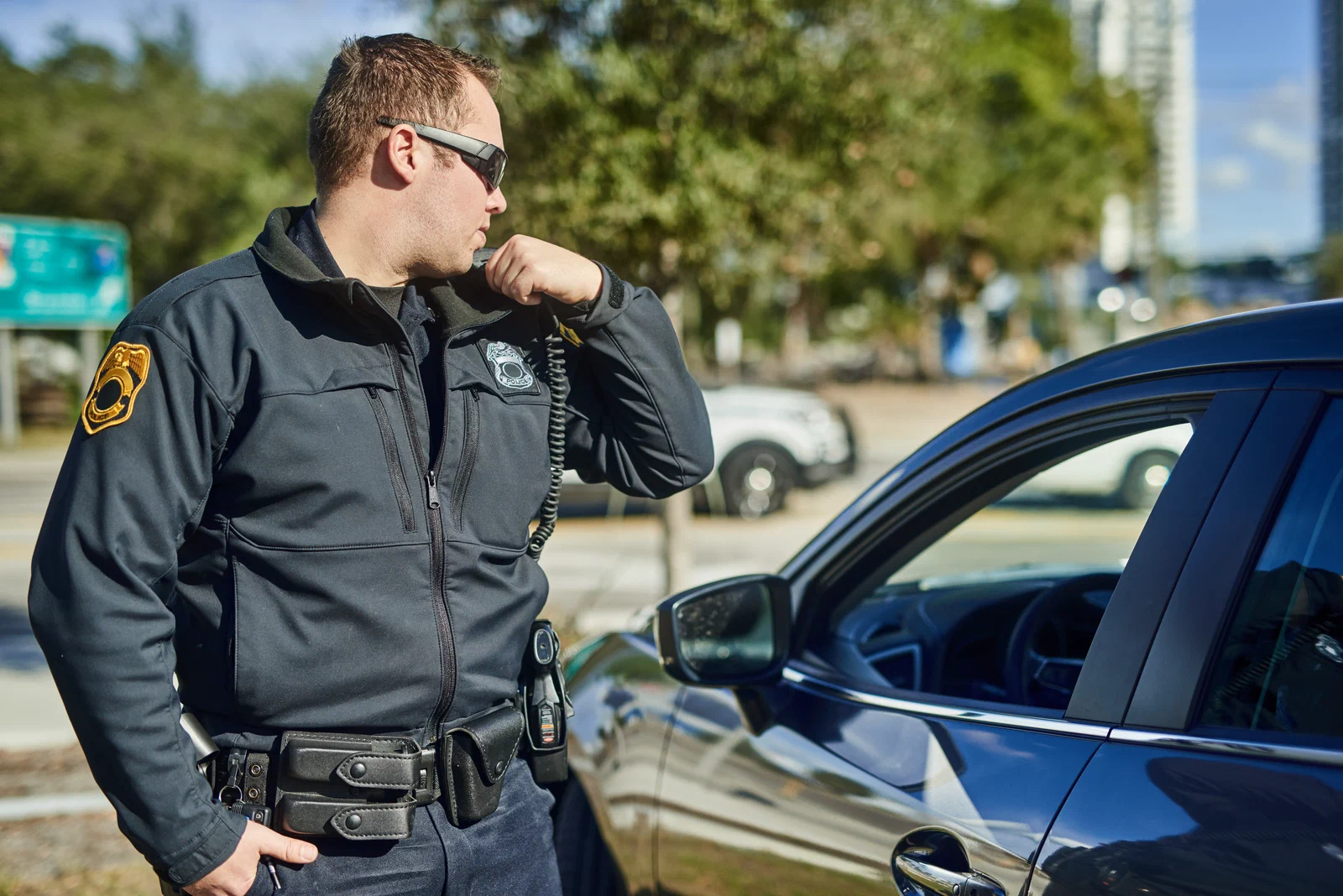
Tower Construction & Radio Infrastructure for Public Safety Agencies
Tower and radio infrastructure for the agencies that can’t afford a communications outage. 4.9 GHz public safety band PTP rings, FirstNet Band 14 coverage extension, P25 LMR site construction, CBRS private LTE for sovereign county networks, and NG911 ESInet backhaul. Documented 4.9 GHz work since January 2019. Full private LTE and 5G deployment capability through our partnership with The Edge Mile. Nokia AZQC sites with Rapid5GS Pro EPC, end-to-end.
The 4.9 GHz band is in the middle of a major rewrite, and most incumbents are caught in the middle.
The FCC handed public safety 50 MHz of 4.9 GHz spectrum (4940–4990 MHz) more than two decades ago. For the first twenty years, a few thousand agencies used it for point-to-point backhaul, broadband-to-the-fleet, and video uplinks, with wide variation in how actively any given agency was actually on-air.
On October 18, 2024, the FCC adopted new rules for the 4.9 GHz band that designated a nationwide Band Manager, allowed the Band Manager to coordinate sharing with the FirstNet Authority, and required all incumbent licensees to file their current site and operational data by June 9, 2025, or risk license cancellation. The goal was to bring the band under more active coordination. The side effect is that every county that’s been sitting on a 4.9 GHz license for a decade is now in a compliance window where under-used licenses can go away, and where agencies that were about to deploy on 4.9 GHz are re-thinking their plan.
This is where real 4.9 GHz build experience matters. We’ve been building 4.9 GHz PTP rings since January 2019. A documented county-wide public safety ring in Georgia, AirFiber 4X radios, crew of Alix Coats and Tanner Bender on-site. Not a band we read about in a trade journal. A band we’ve aligned, commissioned, and documented on real public safety towers.
If your county is scoping new 4.9 GHz infrastructure, re-activating underused licensed coverage to satisfy the filing requirement, or sharing with FirstNet under the new Band Manager framework, the conversation starts with does your tower and antenna infrastructure match what the band is being used for today, not what it was used for in 2005.
What Vertical Axis actually does on 4.9 GHz work.
- PTP ring topology linking county PSAPs, sheriff’s dispatch, fire districts, and mobile command posts with redundant diverse paths. A ring survives a single tower or a single path failure without dropping traffic.
- Ubiquiti airFiber 4X (4.9 GHz public safety PTP). The documented radio platform from our 2019 Georgia build, still a strong-performance choice for public safety PTP where budget matters and license coordination is clean.
- Licensed carrier-grade options on paths where the availability target is stricter (99.999%) and a Part 101 licensed path to 6 / 11 / 18 GHz microwave is the right structural answer.
- Tower construction and upgrades. New structures sized for the 4.9 GHz antennas, retrofit of existing county towers, and mount and bracket fabrication for tight alignment work.
- Hardening for emergency ops. Battery backup, generator tie-in coordination with your facilities team, redundant paths where budget supports it, and site security hardening for critical-infrastructure designations.
- Interference-avoidance alignment against other licensed 4.9 GHz users in the area (growing more relevant as the Band Manager structure takes effect) and against FirstNet’s sharing framework.
- Documentation that passes a state broadband office audit, a FirstNet regional coordinator review, or a federal emergency-management grant auditor.
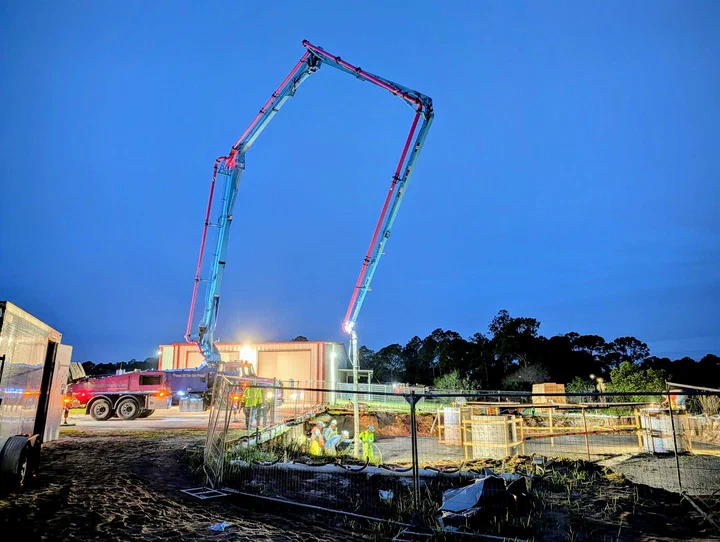
FirstNet Band 14 is 80% deployed. The 20% that isn't is where the work lives.
FirstNet Band 14 is the nationwide public safety LTE network: 20 MHz of dedicated 700 MHz LTE spectrum operated by the FirstNet Authority and AT&T. As of current public reporting, Band 14 has been deployed in 700+ markets, covering 80%+ of the coverage target, with roughly 2.6 million square miles of LTE coverage and growing. Band 14 supports High Power User Equipment (HPUE), which delivers signals roughly six times stronger than standard LTE devices, giving first responders connectivity in basements, elevators, parking garages, and deep rural environments that standard cellular can’t reach.
The math says the last 20% of coverage is the hardest: remote counties, mountainous terrain, tribal jurisdictions, and forest service areas where AT&T’s commercial business case doesn’t close on its own. FirstNet coverage extension work (new towers, existing tower collocations, and hardening of backhaul paths into those structures) is a major ongoing infrastructure scope across rural America.
Our role on FirstNet work is the tower construction and communications backhaul layer. New rural communications towers sized and sited for Band 14 coverage. Licensed Part 101 microwave backhaul where fiber isn’t available or isn’t resilient enough. Grounding to R56 with upgrades to substation-grade IEEE 80 on utility-adjacent sites. Alignment and commissioning verified against the regional FirstNet coverage design. We don’t own the RAN scope (that’s AT&T’s and FirstNet’s), but the structure carrying the radios is where we fit.
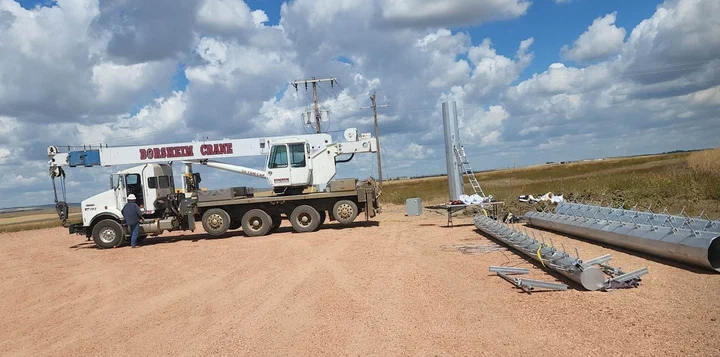
Why more agencies are building their own private LTE instead of relying on carrier networks.
Agencies that depend entirely on commercial carrier networks (FirstNet, Verizon, T-Mobile) run into the same architectural limit: you don’t own it. Priority and preemption on FirstNet are real benefits, but the network is still running over shared AT&T infrastructure with shared fiber backhaul, shared tower concurrency, and shared outage risk. For traffic a county can’t afford to lose. Dispatch, mobile command post data, in-vehicle video uplink, real-time telemetry from body cameras and in-car systems. Agencies are increasingly building their own private LTE network over CBRS spectrum, typically in parallel with commercial coverage.
A CBRS private LTE network for public safety gives the agency:
- Sovereign-controlled infrastructure. The county owns the eNBs, the core network, the SIM provisioning, and the network operations. Outage in the commercial network doesn’t kill the county’s own traffic.
- Lower per-device operating cost. No commercial cellular plan per vehicle, per body camera, per sensor. Devices live on the agency’s own network.
- CBRS spectrum is available everywhere. GAA tier is unlicensed, PAL tier can be acquired county-wide in areas where it’s been auctioned, and SAS registration is handled by the network integrator.
- Fit with NG911 and dispatch center architectures. The private LTE network connects directly into the agency’s own NENA i3 ESInet and CAD systems.
This is where our partnership with The Edge Mile matters. We’ve handled CBRS private LTE deployment scope for a range of customers, and the combination that most commonly comes together on public safety builds is Nokia AZQC 3-sector CBRS site kits paired with a Rapid5GS Pro EPC for the core network, deployed on county or city-owned tower infrastructure.
Nokia AZQC sites (sold through The Edge Mile) come pre-tested with 4T4R RRHs and matched antennas, which is why single-channel reuse works so reliably on them. Combined with the Rapid5GS Pro EPC (a production-ready Open5GS-derived core network that deploys in minutes rather than weeks), a county gets a sovereign-controlled private LTE network without the multi-million-dollar carrier-grade core-network price tag that killed most early agency private-LTE plans.
What we build for public safety.
The full tower and RF catalog, filtered to public safety scope: P25 LMR, 4.9 GHz PTP, FirstNet extension, CBRS private LTE, NG911 ESInet backhaul, and dispatch / PSAP connectivity.
- 4.9 GHz public safety band PTP rings linking PSAPs, dispatch centers, sheriff’s offices, fire districts, and mobile command posts
- FirstNet Band 14 tower construction and coverage extension (new rural towers, collocations, backhaul hardening)
- P25 LMR site construction. New VHF / UHF / 700 / 800 MHz P25 sites, tower erection, and antenna mount work
- P25 ISSI / CSSI interconnect tower and backhaul infrastructure (for counties joining regional networks, e.g., SCICNet-style consolidations)
- CBRS private LTE for public safety through our Edge Mile partnership. Nokia AZQC sites, Baicells eNB, Rapid5GS Pro EPC
- NG911 ESInet backhaul with NENA i3-compliant redundant paths (IP transport to the PSAP)
- Microwave backhaul at carrier-grade availability (99.999%) for dispatch-grade traffic. Licensed Part 101 on the bigger paths, lightly-licensed E-band where applicable
- Ring topology with diverse paths for dispatch, NG911, and CAD traffic that can’t tolerate single-point failure
- Direct embedment monopoles for fast-deploy public safety infill (mobile command sites, incident-response repeater poles, remote cell-on-wheels siting prep)
- Tower modifications and antenna swaps on legacy county public safety towers coming up on modernization
- County-wide multi-site radio program rollouts with dedicated crew rotation
- Grounding and bonding to R56 (default public safety) with IEEE 80 on substation-adjacent co-located sites
- Obstruction lighting install and 24-hour NOTAM-response climbs on registered public safety structures
- Emergency post-storm response on public safety infrastructure (plumb correction, guy retensioning, radio restoration)
- Hardening scope. Battery backup coordination, generator tie-in, site security upgrades for NERC CIP-014-style critical-designation sites
- Documentation for state homeland-security grants, DHS SAFECOM reporting, FirstNet regional coordination, and federal emergency management grant closeout
Scoping a public safety network upgrade, a 4.9 GHz re-commissioning, or a county private LTE?
Send the agency structure, the site list, your FirstNet or 4.9 GHz license posture, and your NG911 ESInet status. We come back with a line-itemed scope, a redundant-path design, and a schedule that respects your 24/7 operational environment.

End-to-end private LTE and 5G through our partnership with The Edge Mile.
Vertical Axis is the primary construction partner for The Edge Mile, a private LTE consultancy specializing in Nokia and Baicells CBRS deployments with the Rapid5GS Pro EPC core network. Edge Mile designs the RAN, configures the EPC, coordinates SAS registration, and hands off network operations. Vertical Axis builds the towers, runs the RF install, pulls the fiber and DC cabling, and commissions the site to radio-design spec.
Edge Mile sells:
- Nokia AZQC 3-sector CBRS site kits 4T4R RRHs, pre-tested, with Rapid5GS consulting bundled for the EPC integration.
- Refurbished Baicells 436Q CBRS eNB Rapid5GS-ready for fast private LTE standup.

“Vertical Axis understands private LTE and 5G RAN deployment at a level very few tower contractors do. They've been in the trenches on every CBRS build we've scoped together: mount fabrication, laser alignment for single-channel reuse on AZQC sites, fiber and DC cabling to our EPC cabinets, SAS coordination on deployment day. I recommend them without reservation to any agency or operator scoping a private LTE buildout.”
Josh Lambert CEO of The Edge Mile
Services public safety agencies buy most.
The services below are the mix county and agency engagements typically run through. Click any card for the full scope, process, standards, and pricing.
New Site Builds
Empty dirt to operational tower, one crew, one point of contact.
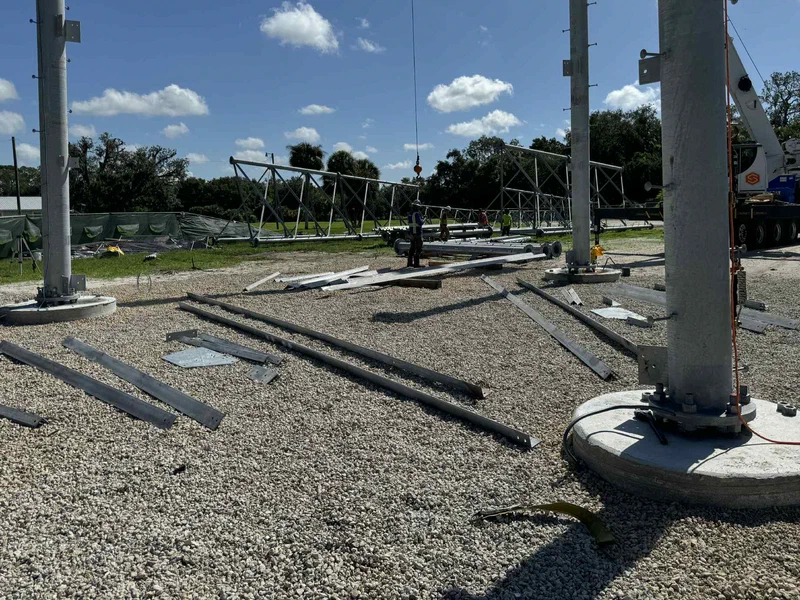
Tower Erection
Guyed, self-supporting, and monopole structures up to 300ft.
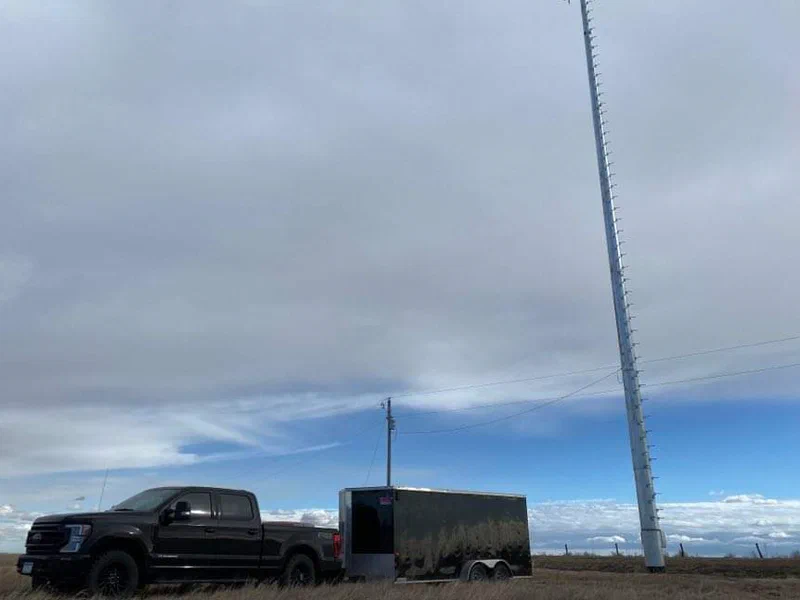
Direct Embedment Monopoles
Foundation-free monopoles set into augered holes. Fast to deploy.
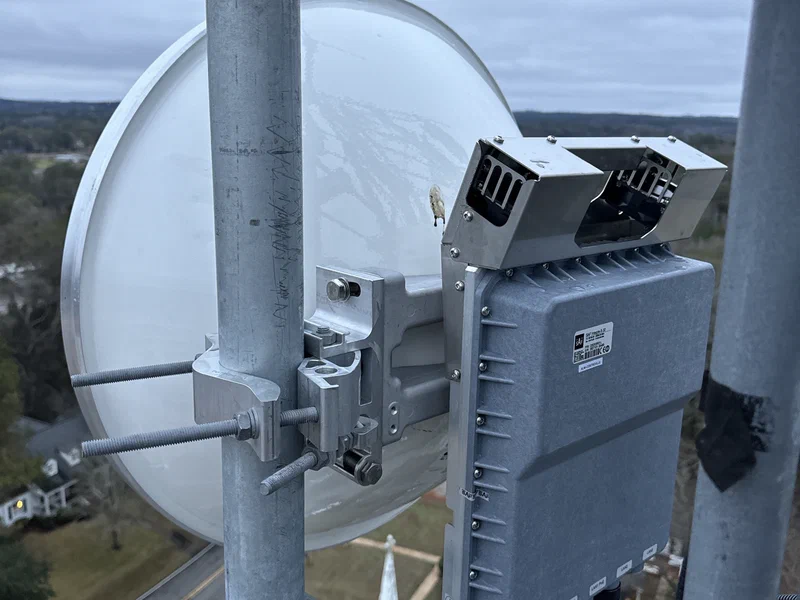
Microwave Backhaul
Point-to-point links, redundant rings, licensed and unlicensed.
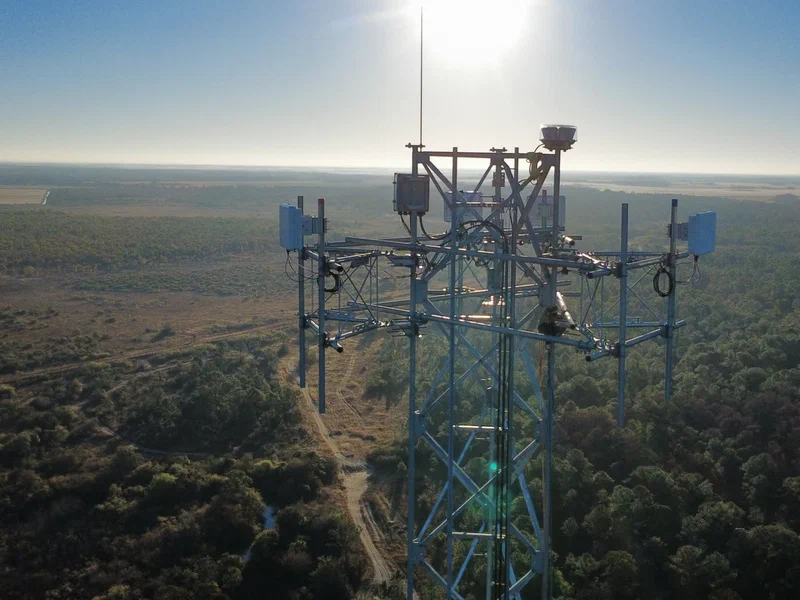
Sector & Backhaul
Sector antennas, backhaul dishes, horn arrays, aligned and sealed.
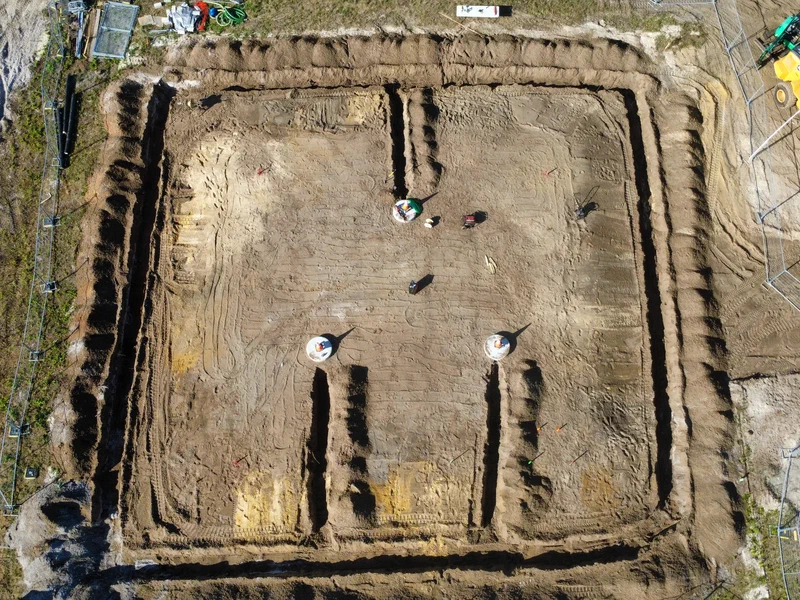
Grounding & Cadwelding
Ground rings, exothermic welds, bonding to NEC and manufacturer spec.
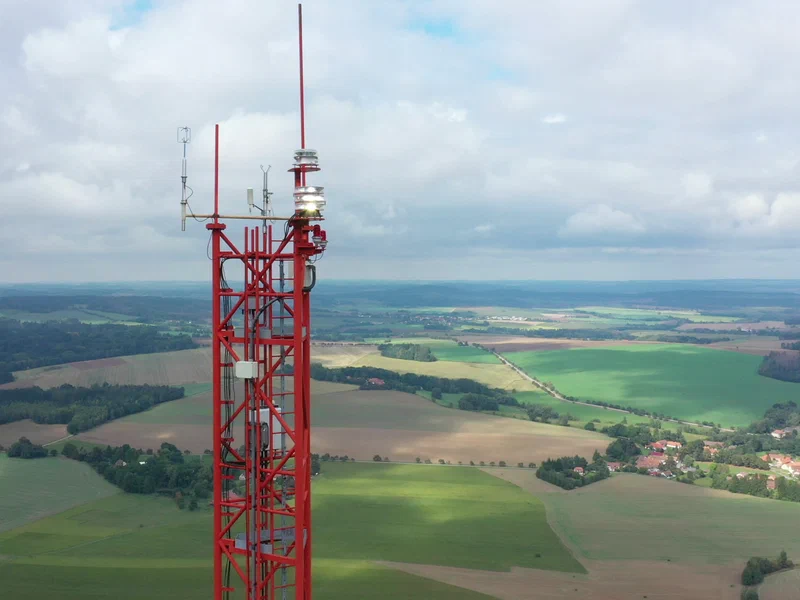
Obstruction Lighting
FAA-compliant beacon, strobe, and side-light repairs. Bulb and LED replacement.
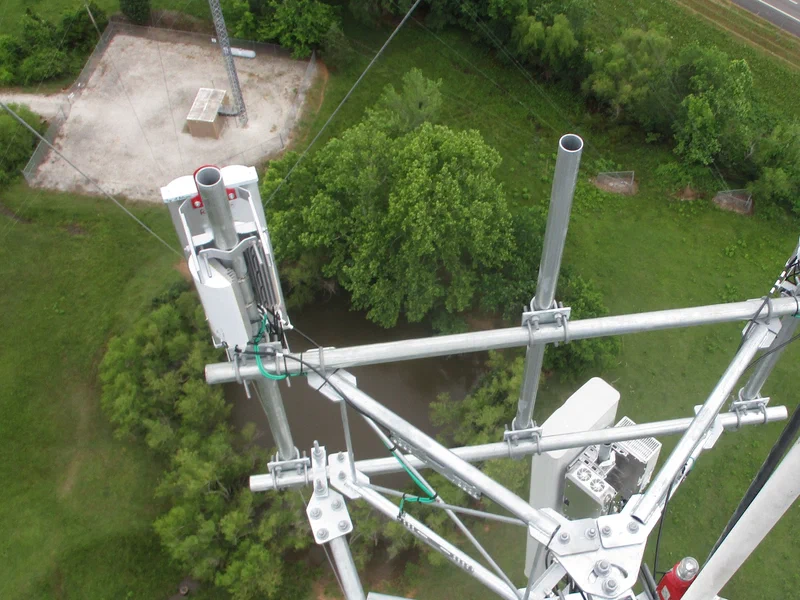
Maintenance & Inspection
Inspections, repairs, and post-storm response for a 20-year asset.
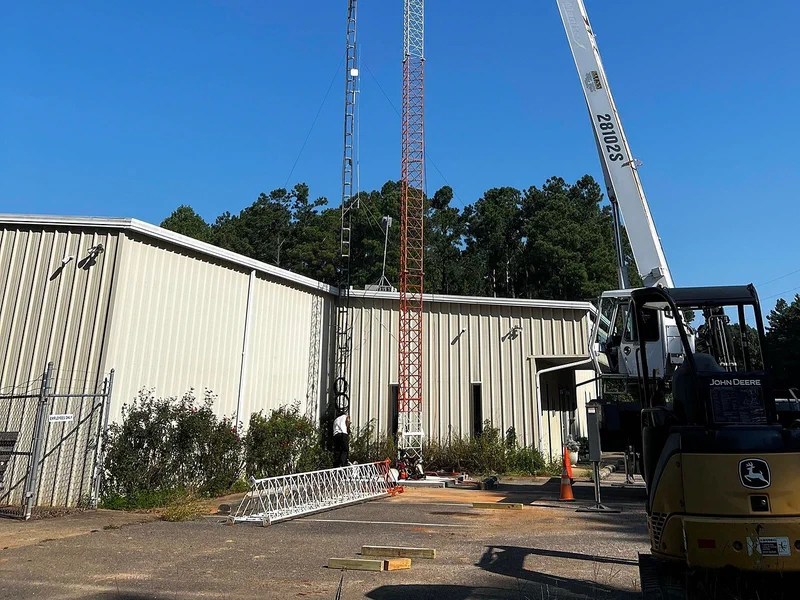
Tower Modifications
Antenna swaps, feed-line replacement, load-bearing upgrades.
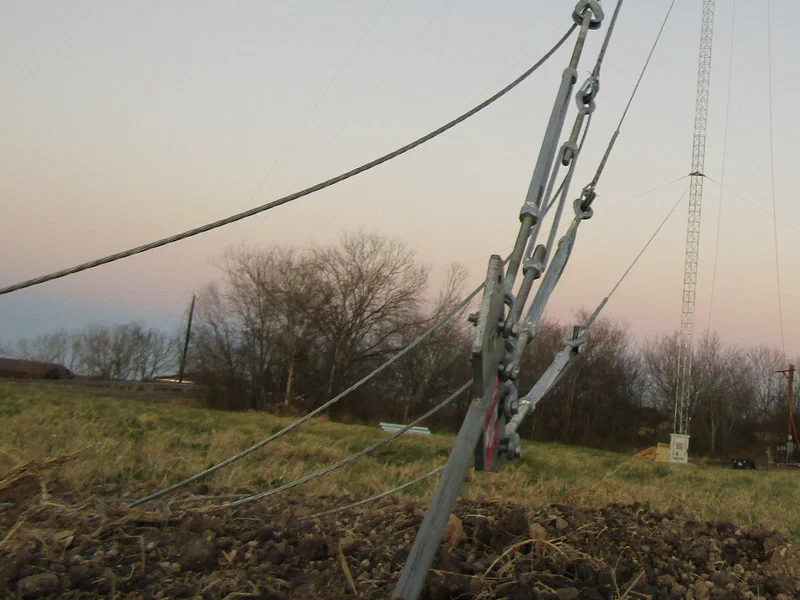
Plumb & Tension
Verify plumb, tension guys, correct storm-displaced structures.
How an engagement flows.
A public safety build runs the same engineering as any tower project, plus a regulatory, interoperability, and 24/7-operational layer specific to emergency services. Here is how an engagement flows.
Agency scoping and coordination
Conversation with the right team at the agency: county IT director, sheriff’s communications officer, 911 director, emergency management coordinator, or the county’s communications consulting firm. Scope definition against the agency’s operational needs (dispatch, mobile data, interoperability with neighboring agencies, NG911 migration, FirstNet extension, or private LTE).
License, frequency, and band coordination
FCC Part 90 licensing coordination for public safety frequencies (VHF, UHF, 700 / 800 MHz, 4.9 GHz). For 4.9 GHz incumbents affected by the October 2024 FCC rules, re-filing assistance and Band Manager coordination sequenced into the scope. For FirstNet extension work, coordination with the regional FirstNet office and AT&T’s FirstNet construction team. For CBRS private LTE, SAS registration through our Edge Mile partnership.
Structural and RF engineering
Stamped structural drawing from your PE or our partner engineering network. Tower type selected against coverage and loading (direct embedment monopole for fast infill, self-supporting or guyed for aggregation sites). RF design from your communications consultant, Edge Mile on private LTE, or a partner RF engineering firm we bring in when the project requires a licensed stamp. Path study per ITU-R P.530 on microwave paths.
Site prep and coordination
BLM, state, or county land-use coordination for rural sites. Tribal THPO coordination on tribal-land or ancestral-land sites. Environmental review under NEPA where grant funding triggers it. For sites on existing county or state property, facilities-team coordination for utility tie-in and access.
Construction and hardening
Civil and steel to the stamped drawings. Grounding installed with exothermic welds. Hardening elements. Battery backup cabinet prep, generator-ready infrastructure, site security fencing, hardened compound for critical-designation sites. Scoped and built per the agency’s resilience spec.
RF install, commissioning, and interop testing
Antennas, radios, and cable plant installed to manufacturer spec. For P25 sites, ISSI / CSSI interop testing with the regional network. For 4.9 GHz rings, alignment verification under load with both ends live. For FirstNet extension, commissioning coordinated with AT&T’s FirstNet team. For CBRS private LTE, SAS grant confirmation and EPC integration with the Edge Mile team. For NG911 ESInet backhaul, IP-layer testing with the agency’s NG911 vendor.
Documentation and grant closeout
As-built drawings, FCC license records, sweep reports, alignment logs, grounding inspection, commissioning report, and hardening verification delivered. For state homeland-security and federal emergency management grants (FEMA, DHS), milestone closeout and audit-trail documentation aligned with the grant’s reporting framework. Your agency, your consulting firm, and your grant compliance office have everything they need.
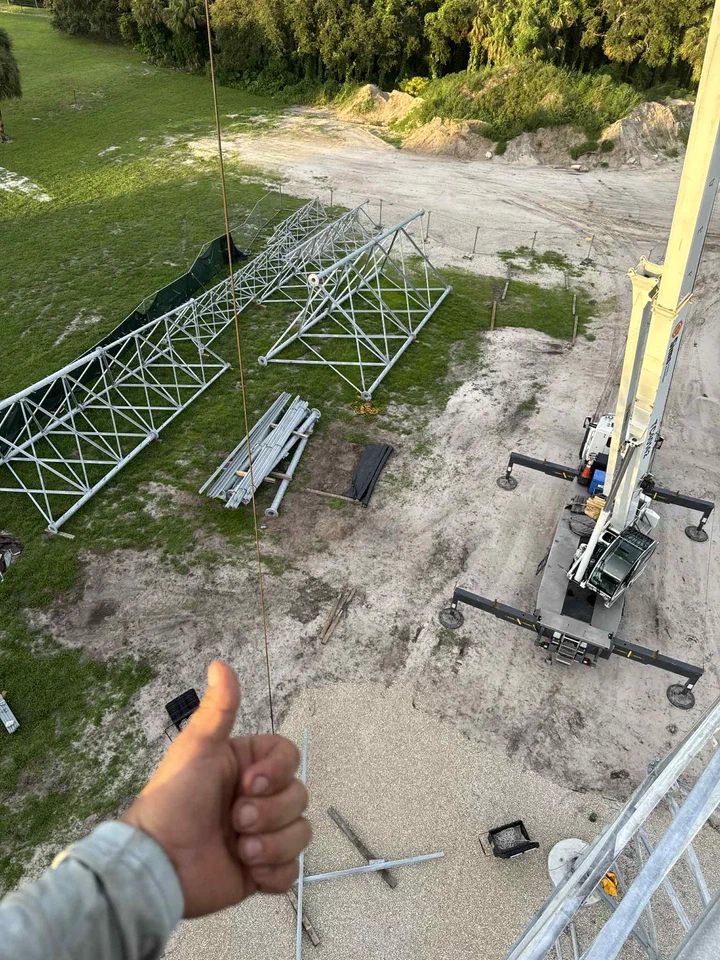
Built to standard. Held to the agency's operational bar.
Same tower and RF engineering baseline as any critical infrastructure project. Plus the public-safety-specific regulatory and interoperability layer.
FCC Part 90
Private Land Mobile Radio Services. Governs the VHF, UHF, 700 / 800 MHz, 900 MHz, and 4.9 GHz public safety bands. License coordination and interoperability channel compliance handled on every Part 90 build.
FCC 4.9 GHz band rules (October 2024 order)
New FCC framework for the 4.9 GHz band establishing a Band Manager, coordinating sharing with FirstNet, and requiring incumbent licensees to file current operational data by June 9, 2025. Incumbent re-filing and new-deployment coordination handled under the current framework.
FirstNet / Band 14 coordination
FirstNet Authority and AT&T operational coordination on public safety LTE extension builds. Tower structure, backhaul, and RF infrastructure sized against FirstNet Band 14 design.
FCC Part 96 (CBRS)
Citizens Broadband Radio Service (3.55–3.7 GHz). SAS registration, PAL / GAA tier coordination, and CPI-certified deployment on CBRS private-LTE public safety networks.
P25 (Project 25) / ANSI TIA-102
Public safety LMR interoperability standards. ISSI (Inter-RF Subsystem Interface) and CSSI (Console Subsystem Interface) coordination for multi-vendor and multi-agency networks.
NENA i3 (NG911)
National Emergency Number Association standard for Next Generation 911. ESInet IP transport architecture, redundancy, and security requirements drive backhaul design on PSAP-feeding paths.
NFPA 1221 / NFPA 1225
NFPA standards for public safety telecommunications systems (formerly 1221, consolidated into 1225 in 2023 revision). Coverage, reliability, and performance requirements for emergency responder communications inside and around buildings and across jurisdictions.
CISA SAFECOM guidance
Department of Homeland Security SAFECOM guidance for public safety communications, including Project 25 compliance, interoperability, and grant-funded program alignment.
TIA-222-I
ANSI structural standard for antenna-supporting structures. Governs plumb, loading, bolt torque, and ice / wind loading on every public safety tower.
Motorola R56 / IEEE 80
Grounding and bonding. R56 default on public safety sites; IEEE 80 on sites co-located with utility substations or in high-GPR environments.
OSHA 1926 / ANSI A10.48
Safety at height. 100% tie-off, authorized rescue, site-specific safety plan. Plus agency-specific protocols where work happens inside an active PSAP or dispatch facility.
NIMS / ICS
National Incident Management System / Incident Command System protocols. For work that spans an active emergency response (post-storm restoration, incident-response tower deployment), we operate under the incident commander’s direction in the NIMS / ICS framework.
Questions public safety agencies ask.
Have you actually built 4.9 GHz public safety PTP infrastructure?
Yes, documented back to January 2019. We built a county-wide public safety PTP ring in Georgia using Ubiquiti airFiber 4X radios on the 4.9 GHz band, with Alix Coats and Tanner Bender on the crew. Described at the time as a “rock-solid point-to-point ring all around the county” supporting sheriff’s dispatch and county-agency backhaul.
Since then we’ve handled 4.9 GHz PTP and hybrid scopes across the southeastern US and south-central plains, including both incumbent re-activation work (to satisfy the June 9, 2025 FCC filing deadline) and greenfield deployments. 4.9 GHz is a real band we’ve worked, not a line item in a marketing bullet.
What's happening with the 4.9 GHz band, and does my agency need to do something?
The <a href="https://www.federalregister.gov/documents/2024/11/20/2024-26794/improving-public-safety-communications-in-the-49-ghz-band" rel="external">FCC adopted new rules in October 2024 that materially rewrote how the 4.9 GHz band is managed:
- A nationwide Band Manager is authorized to apply for a nationwide license for unassigned 4.9 GHz spectrum and coordinate sharing with the FirstNet Authority.
- Existing (incumbent) public safety licensees were required to file current site and operational data by June 9, 2025. Licensees that missed the deadline risk cancellation.
- New radio service codes PB (base / mobile / temporary fixed) and PF (fixed links) were established for incumbent re-filings with granular operational data.
If your agency holds a 4.9 GHz license and is not actively using it, you are in the middle of a window where the license can be challenged. If your agency is actively using 4.9 GHz but hasn’t been actively updating its records, same concern. If your agency wants to deploy on 4.9 GHz under the new framework, coordinate with the Band Manager and FirstNet as part of the deployment plan.
We scope 4.9 GHz builds against the current framework, not the pre-2024 framework. Whether that’s re-commissioning an existing paper-licensed path to satisfy the filing requirement, or deploying new coverage under the Band Manager’s coordination, the conversation is fundamentally different now than it was two years ago.
Does your crew work on FirstNet Band 14 extension projects?
Yes. Our role on <a href="https://www.firstnet.com/coverage/band-14.html" rel="external">FirstNet Band 14 work is the tower construction and communications backhaul layer. New rural communications towers sized and sited for Band 14 coverage, existing-tower modification for Band 14 radio additions, and licensed Part 101 microwave backhaul on sites where fiber isn’t an option. We don’t own the RAN install scope on Band 14 (that’s AT&T’s FirstNet construction team), but the infrastructure carrying the radios is where we fit.
For counties and states with FirstNet coverage gaps (the remaining 20% after Band 14’s 80%+ target hit), coverage-extension tower work is commonly funded through state broadband offices, rural electric cooperatives that host the tower, or direct FirstNet investment. We work into all three funding models.
Can you build a private LTE network for our county, separate from FirstNet?
Yes, through our partnership with <a href="https://theedgemile.com" rel="external">The Edge Mile. Many agencies deploy CBRS private LTE in parallel with FirstNet, not instead of it. FirstNet handles broad commercial-style coverage with priority and preemption, while the private LTE network carries traffic the agency wants sovereign-controlled (dispatch, in-vehicle data, body-camera uplink, sensor aggregation, NG911 backhaul to PSAPs).
The typical public safety private LTE deployment we scope together:
- <a href="https://theedgemile.com/product/nokia-azqc-3-sector-cbrs-site-kit-tested-4t4r-rrhs-antennas-rapid5gs-consulting/" rel="external">Nokia AZQC 3-sector CBRS site kits as the macro-cell infrastructure. Pre-tested 4T4R RRHs with matched antennas, engineered for single-channel reuse across all three sectors to maximize coverage per site.
- <a href="https://rapid5gs.com" rel="external">Rapid5GS Pro EPC as the core network. A production-ready Open5GS-derived EPC that deploys in minutes rather than the weeks a traditional carrier-grade core takes.
- <a href="https://theedgemile.com/product/refurbished-baicells-436q-former-436h-halob-included-rapid5gs-ready/" rel="external">Baicells 436Q eNB as the small-cell complement for specific coverage infill.
- SIM provisioning, device authentication, and SAS registration handled by the Edge Mile team.
- Tower construction, RF install, fiber and DC cabling, alignment, and commissioning handled by Vertical Axis.
The agency ends up with a sovereign-controlled private LTE network on CBRS spectrum, integrated with their dispatch CAD and (where applicable) NG911 ESInet.
Do you do NG911 / NENA i3 ESInet backhaul?
Yes. An <a href="https://www.nena.org/page/ng911_project" rel="external">NG911 ESInet is the IP transport underlying Next Generation 911. The network of routers, switches, core-service functional elements, and security devices that replaces legacy analog 911 trunks. Under NENA i3 standards, ESInets must meet stricter security, resiliency, and reliability requirements than most IP networks, including diverse-path redundancy, hardened physical security, and continuous monitoring.
Our role on NG911 is the backhaul and tower-construction layer. Licensed Part 101 microwave paths to PSAPs where fiber isn’t diversely routed, tower modifications to add ESInet-relevant radios, and hardening of existing infrastructure carrying ESInet traffic. We hand off cleanly to your NG911 vendor (Intrado, Comtech, NGA 911, AT&T ESInet, or similar) for the core-service side.
For counties migrating from legacy 911 to NG911, the backhaul hardening work is often on the critical path, and we sequence it to your go-live date.
What about P25 LMR work?
We handle the tower construction and RF-install layer on P25 deployments and upgrades. New P25 site construction (VHF, UHF, 700 / 800 MHz), tower modifications to add P25 antennas, backhaul paths between P25 sites, and grounding and bonding to R56 or stricter. We work to the stamped design from your P25 system integrator (Motorola Solutions, L3Harris, JVCKENWOOD, Airbus / Tait, or similar).
For counties consolidating onto regional P25 networks (the SCICNet-style multi-county shared-infrastructure model), our scope typically includes tower work across the consolidation, coordinated with the regional network’s operations team. The ISSI / CSSI interconnect testing happens on the vendor side. We deliver the RF-ready site and coordinate commissioning with the network operator.
Can you support emergency / incident response deployments?
Yes. Crews running out of Alabama and Texas are part of our 24-hour on-call rotation for public safety work. Typical incident-response scope:
- Post-storm restoration of damaged public safety tower infrastructure.
- Plumb and guy correction on structures displaced by named storms or microbursts.
- Incident-response tower deployment using fast-deploy direct embedment monopoles where existing infrastructure is damaged or missing.
- Revenue-link restoration on public safety backhaul paths that went down during an event.
For work that happens during an active emergency response, we operate under the incident commander’s direction in the NIMS / ICS framework. Same-day response common in the southeastern US, 24-hour mobilization elsewhere.
Do you work on tribal-jurisdiction public safety projects?
How does hardening work on public safety sites?
Public safety infrastructure has much higher hardening expectations than commercial tower work. Standard public safety hardening elements we scope and deliver:
- Battery backup sized to carry the site for 8 to 24 hours without utility power, depending on the agency spec.
- Generator tie-in. Natural gas, diesel, or propane generator coordination for auto-transfer during utility outages. We scope the tie-in; the generator itself is typically procured separately.
- Site security hardening. Fence specification, gate access control, cameras, intrusion detection, and coordinated integration with the agency’s broader security monitoring.
- Diverse backhaul paths. Ring topology or 1+1 hot-standby on critical backhaul, so a single tower or a single path failure doesn’t take the site off-air.
- Ice-zone structural loading. TIA-222-I with strict ice-load review for agencies in the northeast, Great Lakes, and intermountain West.
- Seismic loading where the jurisdiction requires it.
For agencies pursuing critical-infrastructure designation (state homeland security critical-asset list, DHS CIP sector recognition), the hardening scope increases accordingly.
Can you handle grant-funded deployments?
How much does public safety tower work cost?
Fixed fee on defined scope, with unit rates and change orders for field conditions. Quoted against scope, tower type, site access, and hardening requirements. Rough order-of-magnitude:
- 4.9 GHz PTP node on an existing tower (radio, antenna, mount, alignment): mid to upper five figures per node.
- New direct embedment monopole public safety site (120 ft, hardened, backhaul-ready): mid to upper six figures per site.
- County-wide 4.9 GHz PTP ring (4 to 8 nodes, radios, commissioning): low to mid seven figures depending on path count and hardening.
- FirstNet Band 14 extension tower (new rural structure with hardening and backhaul): high six figures to low seven figures per site.
- CBRS private LTE site (Nokia AZQC via Edge Mile, Rapid5GS Pro EPC integration, county-wide deployment across 6 to 12 sites): mid to upper seven figures for the program.
- NG911 ESInet backhaul hardening (per PSAP path): low to mid six figures per path.
Multi-site programs see program-rate discounts with a dedicated crew rotation. Send us the scope and you’ll have a line-itemed quote inside two weeks.
What's your service area for public safety work?
How do I get started?
Send us:
- The agency structure. County, city, regional consortium, state-level agency, or multi-agency network.
- The scope. P25 LMR upgrade, 4.9 GHz re-commissioning or new deployment, FirstNet extension, CBRS private LTE, NG911 ESInet backhaul, or a combination.
- The regulatory posture. Existing Part 90 / 4.9 GHz licenses (and filing status under the October 2024 rules), FirstNet regional coordination contact, NG911 vendor, CBRS SAS posture.
- The funding. Agency capex, state homeland security grant, FEMA grant, FirstNet extension funding, or mix.
- Your communications consultant or system integrator. So engineering coordination can start in parallel with our scoping.
Request a quote here or call us at (763) 280-6050. Most public safety scopes take two to three weeks to quote because the licensing, interoperability, and grant-compliance coordination is where the scoping time goes, not the tower design.
Don't see your question? Ask us directly. We answer every scoping call.
Adjacent industries.
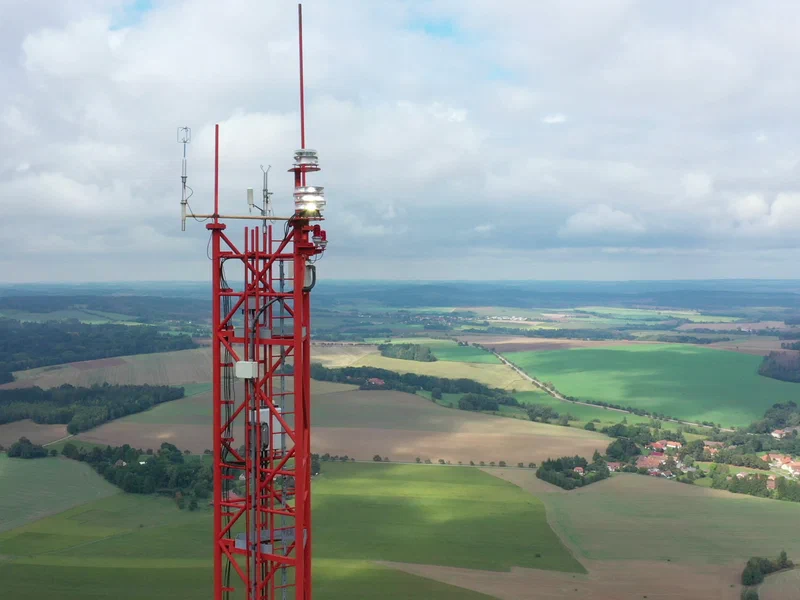
Federal & Military
Obstruction lighting on airfields and ranges. Training-tower and rappel-tower takedowns. Comms builds inside the fence.
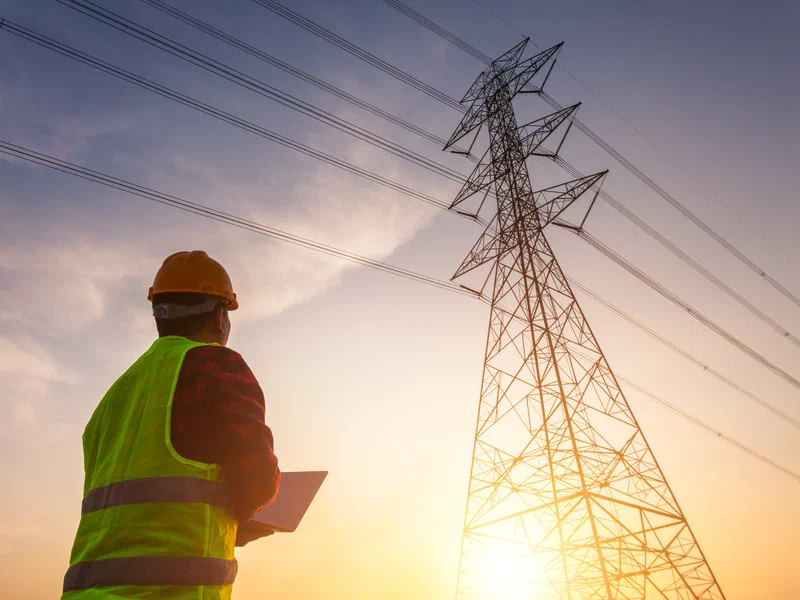
Electric Utility
SCADA backhaul, distribution automation, and substation communications. Multi-state programs, IEEE 80 grounding, teleprotection-grade microwave.
Municipal & Rural Broadband
Co-ops, municipalities, and federally-funded broadband buildouts. BEAD, ReConnect, and grant-compliant project scopes.
Tribal Nations
Sovereign broadband buildouts and tower work on tribal lands. Scoped for NTIA Tribal Broadband Connectivity Program (TBCP) timelines and deliverables.
Page last updated August 21, 2026.
Dispatch, 911, county interop.
Built for traffic that can't go down.
Send the agency scope, the license posture, and your target go-live date. We come back with a line-itemed quote, a redundant-path design, and a schedule built around your 24/7 operational environment.