
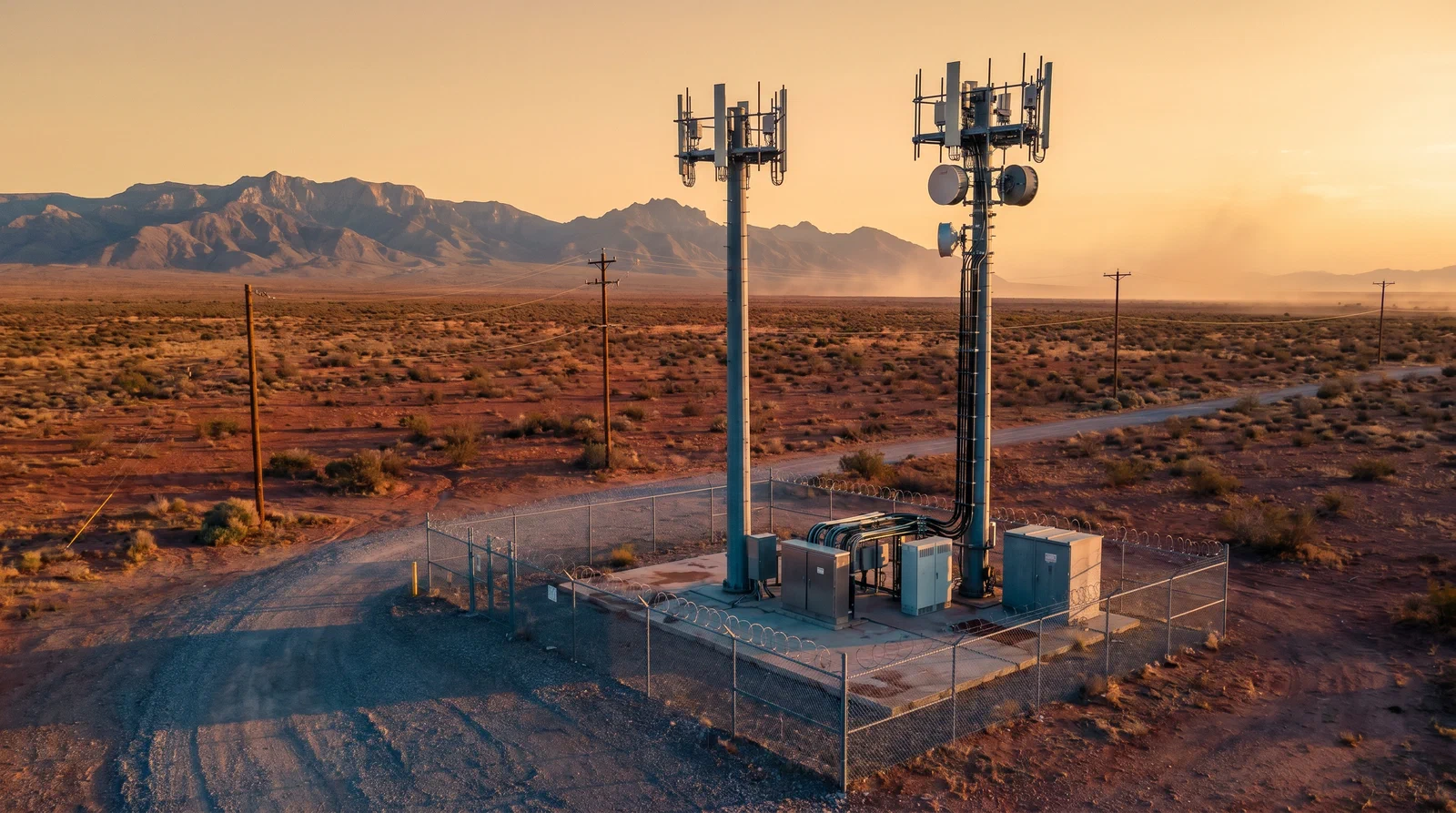
Tower Construction & Fixed-Wireless Infrastructure for Tribal Nations
Tower construction and fixed-wireless infrastructure on tribal lands, scoped against the paperwork that actually governs the work. NTIA TBCP milestone schedules. FCC 2.5 GHz Rural Tribal Priority Window build-out deadlines. Section 106 NHPA consultation through the FCC Nationwide Programmatic Agreement. BIA 25 CFR 169 right-of-way coordination. TERO-compliant contractor plans. The steel is the easy part.
Sovereignty is a contract framework, not a talking point.
Most tower contractors who show up to a reservation for the first time treat tribal sovereignty as a vibe. They sign a standard commercial contract, assume the state permits will apply, assume their insurance waiver reads the same on tribal land as off, and get surprised when the tribe’s attorney hands back a contract with an arbitration venue set to tribal court and a sovereign-immunity reservation the contractor’s underwriter has never seen before.
Sovereignty is a real contract framework. Federally recognized tribes are governments, not customers. The land is held in trust by the United States for the tribe. State law frequently does not apply. Tribal ordinances (including TERO, historic-preservation codes, and environmental codes) do apply. The reviewing authority on environmental and historic-preservation work is the Tribal Historic Preservation Office (THPO), not the state SHPO.
Our posture is simple: we work inside the tribe’s framework, not around it. Contracts structured with sovereign immunity language your tribe’s attorney is comfortable with. TERO compliance plans filed and approved before mobilization, not renegotiated on day one. Tribal ordinances on historic preservation, environmental review, and employment preference respected as binding, not optional. The engineering is the same as any other tower job. The contract layer is the part most contractors get wrong on the first build.
2.5 GHz Rural Tribal Window: the build-out clock is running.
Between February and September 2020, the FCC held the Rural Tribal Priority Window, letting federally recognized tribes apply for 2.5 GHz licenses (formerly Educational Broadband Service, 2496–2690 MHz) over their rural tribal lands at no cost. Roughly 350 tribes filed 400+ applications, and more than 176 tribes have been granted licenses across the initial tranche and subsequent grants.
Those licenses come with real build-out obligations under 47 CFR Part 27:
- Interim deadline: four years from grant. Licensee must demonstrate either 50% population coverage for mobile / point-to-multipoint service, or 20 fixed links per million persons in the license area.
- Final deadline: eight years from grant. The threshold doubles: 80% population coverage, or 40 fixed links per million.
- Miss interim: final pulls in to year four.
- Miss final: the license cancels automatically. No FCC action required. Spectrum gone.
Many licenses granted in the summer and fall of 2020 had interim deadlines hitting October 2024 and through 2025. Tribes that haven’t yet broken ground on their 2.5 GHz buildout are now inside the window where interim compliance defines whether the license survives.
Vertical Axis scopes 2.5 GHz build-out against the deadline, not against a generic schedule. If your tribe is approaching interim, we’ll front-load the site count needed to document compliance, then flow into the full network plan. The spectrum is worth too much to give back.
TBCP, BEAD, and the 2026 federal funding landscape.
Tribal broadband funding in 2026 sits in a window of change.
- NTIA TBCP Round 1. Awarded. Most recipients are in construction or operation.
- NTIA TBCP Round 2. Applications closed March 2024. Approximately $360 million awarded to 48 projects through the Equitable Distribution mechanism, but roughly $980 million remains unobligated. December 2024 award announcements of $294 million were not distributed on schedule, and NTIA paused obligations in 2025 pending program reforms.
- NTIA TBCP restructuring (active). Tribal consultations held January 13 and 20, 2026. NTIA announced reforms to reduce red tape, combine TBCP with the Digital Equity Act Native Entity set-aside, and issue a new Notice of Funding Opportunity in spring 2026. NTIA has signaled that at least $500 million in remaining tribal broadband funding will flow through the new NOFO.
- NTIA BEAD ($42.45B). No tribal set-aside, but states are required to formally consult with tribal governments and obtain tribal consent for any BEAD-funded infrastructure on tribal land. Several state broadband offices are explicitly allocating portions of their BEAD funding to tribal-serving projects.
- USDA ReConnect. Continues, with tribes eligible as applicants.
- FCC high-cost support (formerly Universal Service) and E-Rate for tribal schools and libraries as anchor-institution backhaul.
We scope tribal broadband builds against the specific program that funds them. TBCP milestone schedules, BEAD speed-tier verification (100/20 Mbps default for fixed-wireless), ReConnect funding acceptance paperwork, and anchor-institution coordination each come with their own reporting framework. If your tribe is running multiple programs in parallel (common, and encouraged), we document to the strictest standard.
Section 106, BIA rights-of-way, and the paperwork that actually gates the schedule.
On a reservation build, the paperwork usually takes longer than the steel. The three federal frameworks that most commonly gate the schedule:
- NHPA Section 106 consultation. Every federally-funded tower triggers Section 106 historic-preservation review. On tribal land the reviewing authority is the THPO, not the SHPO. The FCC’s Nationwide Programmatic Agreement (47 CFR Appendix C to Subpart EE of Part 1) streamlines review significantly. Many tower classes are excluded from routine Section 106 review, with defined timelines for consultation where it applies. Knowing which exclusions apply to your site is the difference between a four-week and a four-month review.
- Section 106 off-reservation tribal consultation. A tower built off a reservation but on ancestral homeland or a site with religious / cultural significance to a tribe still triggers tribal consultation. FCC rules require notifying any tribe that may have an interest, even if the site isn’t on tribal land. We run the notification through the FCC Tower Construction Notification System (TCNS) on every project.
- BIA 25 CFR Part 169 rights-of-way. Any tower or cable easement crossing tribal trust land requires a BIA-approved right-of-way grant. The 2015 rule revision established a 60-day BIA review window for ROW applications (30 days for amendments). Pre-application coordination with the tribe, environmental survey, and survey / legal description work usually run the real timeline. Plan on two to six months for a complex corridor ROW, faster for a compact compound on leased tribal land.
- NEPA review. Federally-funded tower builds on tribal land trigger NEPA. Many qualify for a Categorical Exclusion (CatEx) when the site is on previously disturbed ground and below the size threshold. Environmental Assessments are the fallback for anything that doesn’t fit CatEx.
We pre-run the Section 106 screen, the TCNS notification, and the ROW pre-application as part of scoping. On grant-funded programs, we align the filing timeline with the milestone schedule so the paperwork finishes before the mobilization window opens.
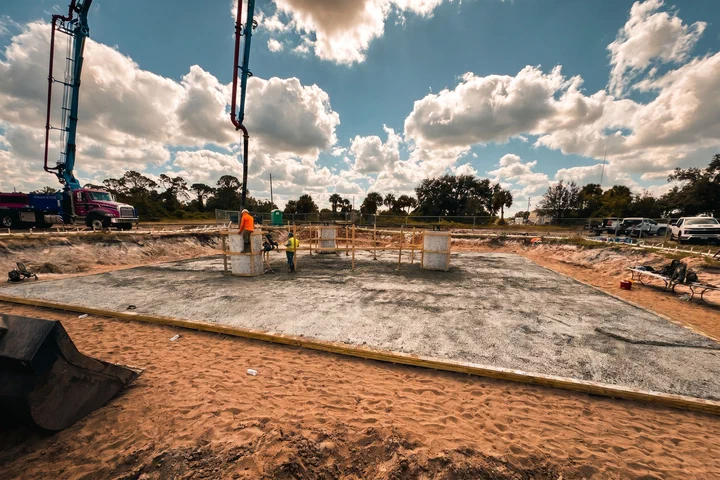
What we build for tribes.
The full tower and fixed-wireless catalog, scoped against tribal ordinances, sovereign contracting, and the federal programs funding the work.
- 2.5 GHz Rural Tribal Window buildout against interim and final FCC performance requirements (four- and eight-year deadlines)
- Turnkey new site builds (site walk, permit, civil, steel, RF, commission) on reservation and tribal trust land
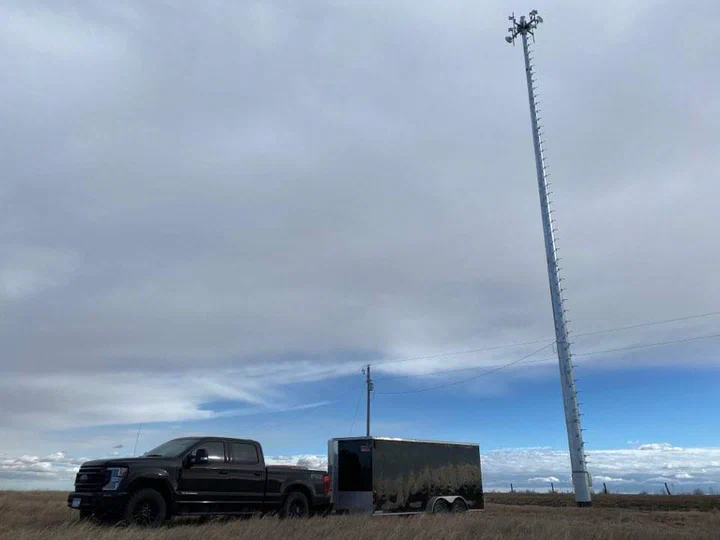
- Direct embedment monopoles for fast-deploy buildouts on remote reservation corridors (pipelines, grazing corridors, housing clusters)
- Guyed and self-supporting tower erection up to 300+ ft for aggregation and long-haul backhaul sites
- Fixed-wireless sector and backhaul install on tribally-owned networks, vendor-neutral across Ubiquiti, Tarana (G1, G2), Cambium, Mimosa, RF Elements, Nokia, and Baicells
- CBRS LTE site deploys (Nokia AZQC, Baicells) on tribal private-LTE networks for sovereignty-sensitive traffic
- Point-to-point microwave backhaul (prosumer through licensed Part 101) connecting reservation sites to regional tribal-owned fiber or carrier handoffs
- Anchor-institution connectivity: tribal government offices, BIE schools, Indian Health Service clinics, tribal colleges, tribal libraries
- Bulk CPE rollout (hundreds to thousands of homes) across dispersed reservation housing
- Tower maintenance and inspection programs across tribal networks, including post-storm response
- Tower modifications and antenna swaps on legacy tribal structures
- Tower decommissioning with full foundation handling and site restoration on reservation land
- Section 106 NHPA consultation coordination through the FCC Nationwide Programmatic Agreement (NPA)
- BIA 25 CFR 169 right-of-way application coordination and timeline management
- TERO compliance planning, fee submission, and on-site workforce coordination
- Federal program reporting: NTIA TBCP milestone closeout, BEAD speed-tier verification, USDA ReConnect funding acceptance paperwork
- Grounding and bonding to Motorola R56 (or stricter IEEE 80 on utility-adjacent sites)
- Obstruction lighting install and NOTAM-response climbs on registered tribal structures over 200 ft
Tribal broadband project on the schedule?
Send the site list, the license or grant paperwork, and your milestone dates. We come back with a TERO-ready scope, a Section 106 plan, and a schedule against the deadline.
Services tribes buy most.
The services below are the mix tribal network builds typically run through. Click any card for the full scope, process, and pricing.
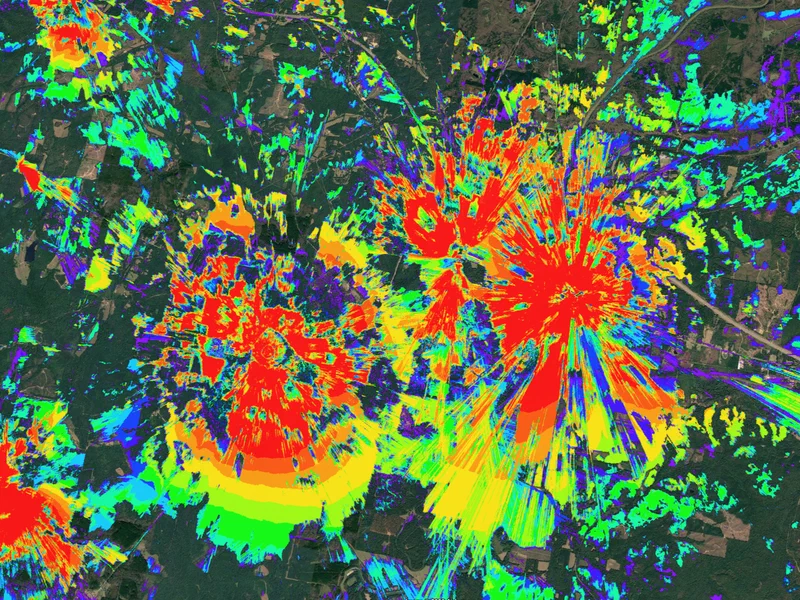
Site Design & RF Planning
Coverage planning, sector layouts, and pre-deploy mock-ups.
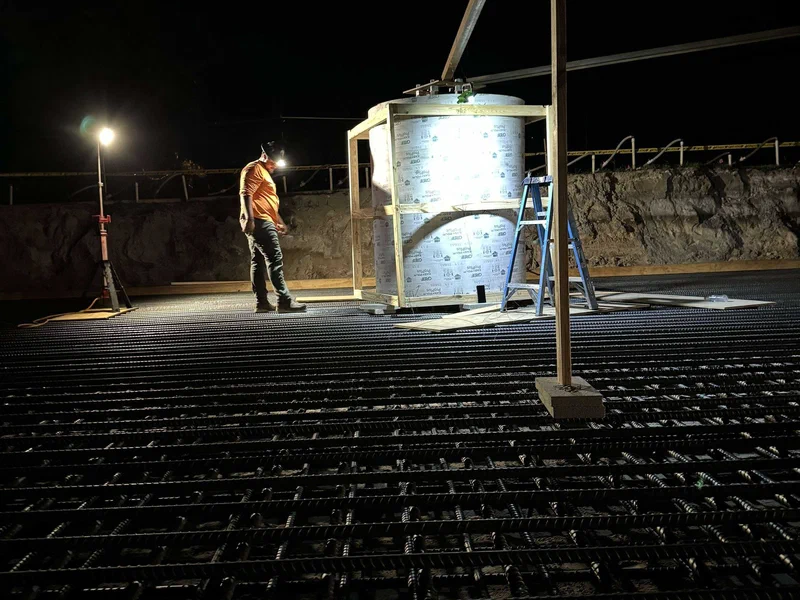
New Site Builds
Empty dirt to operational tower, one crew, one point of contact.
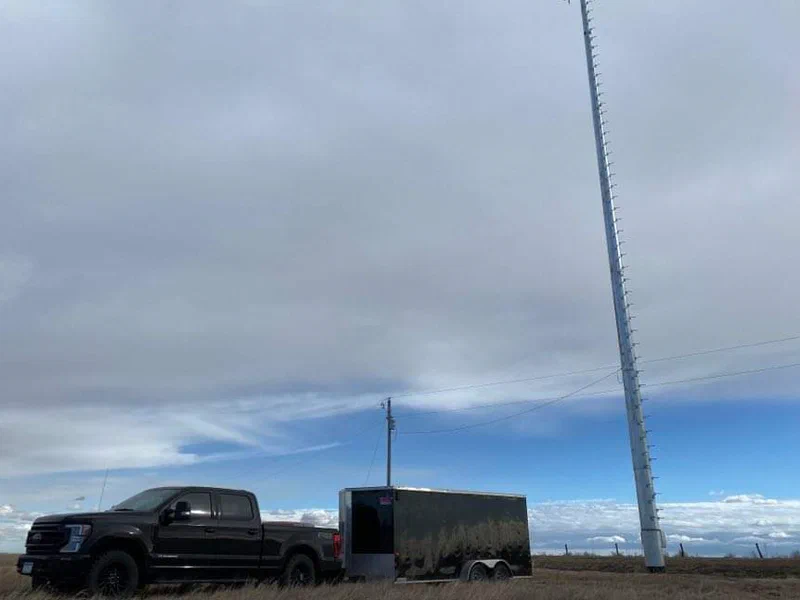
Direct Embedment Monopoles
Foundation-free monopoles set into augered holes. Fast to deploy.
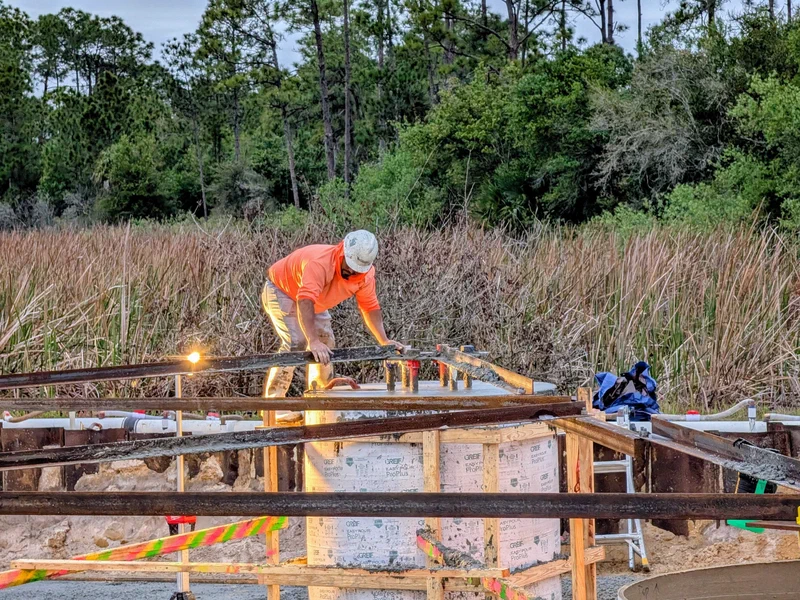
Foundations & Civil
Excavation, rebar, concrete, grading, fencing, and ground rings.
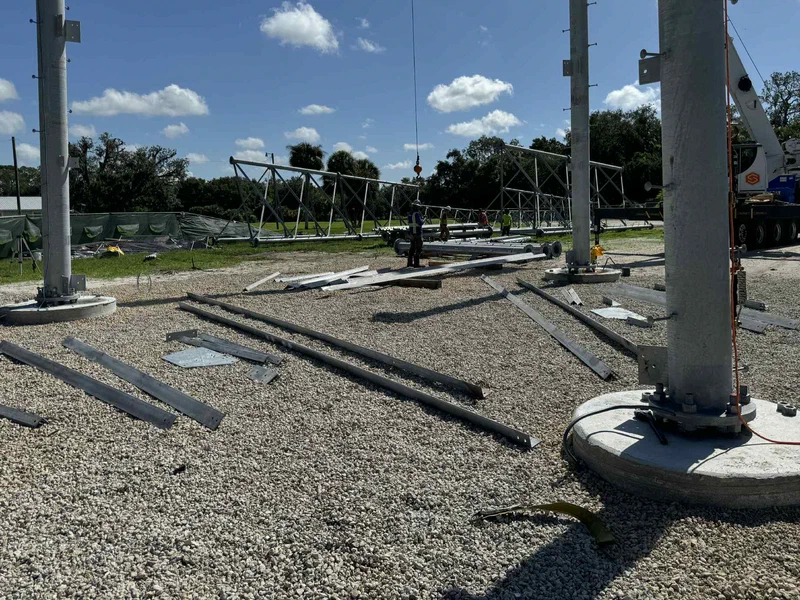
Tower Erection
Guyed, self-supporting, and monopole structures up to 300ft.
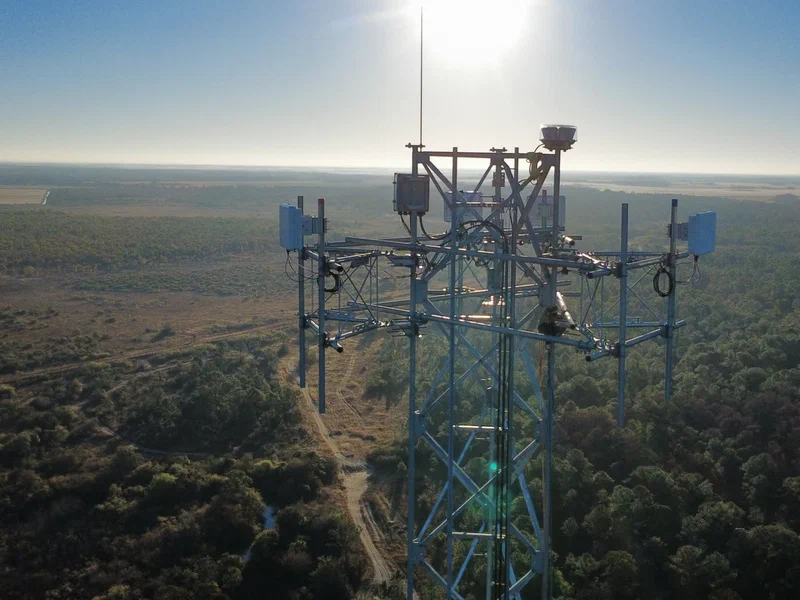
Sector & Backhaul
Sector antennas, backhaul dishes, horn arrays, aligned and sealed.
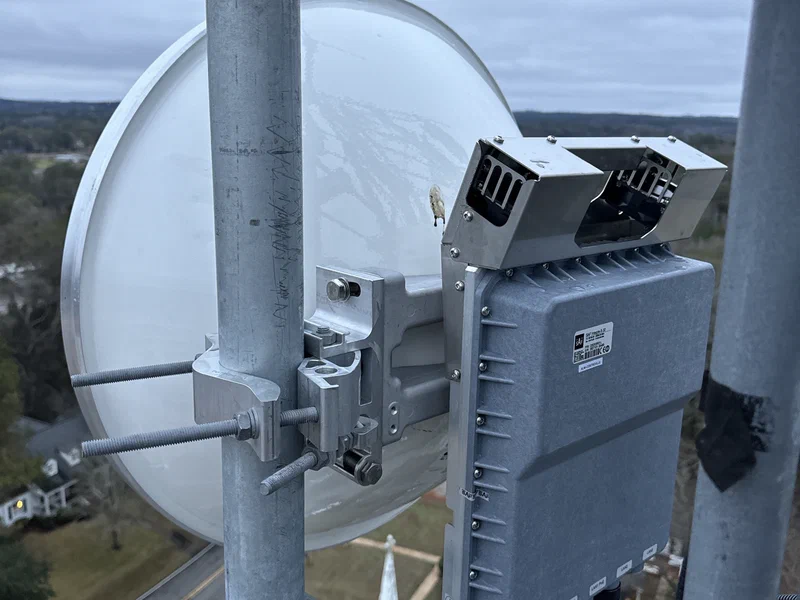
Microwave Backhaul
Point-to-point links, redundant rings, licensed and unlicensed.
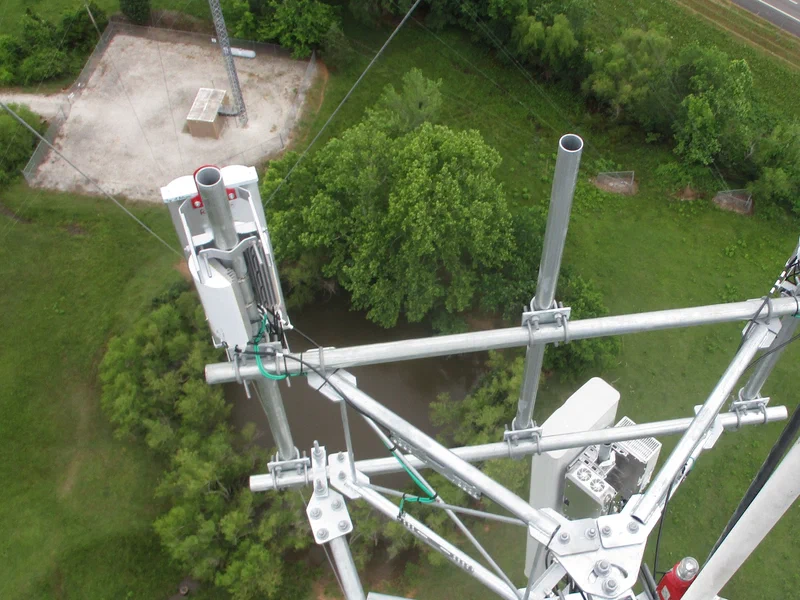
Maintenance & Inspection
Inspections, repairs, and post-storm response for a 20-year asset.
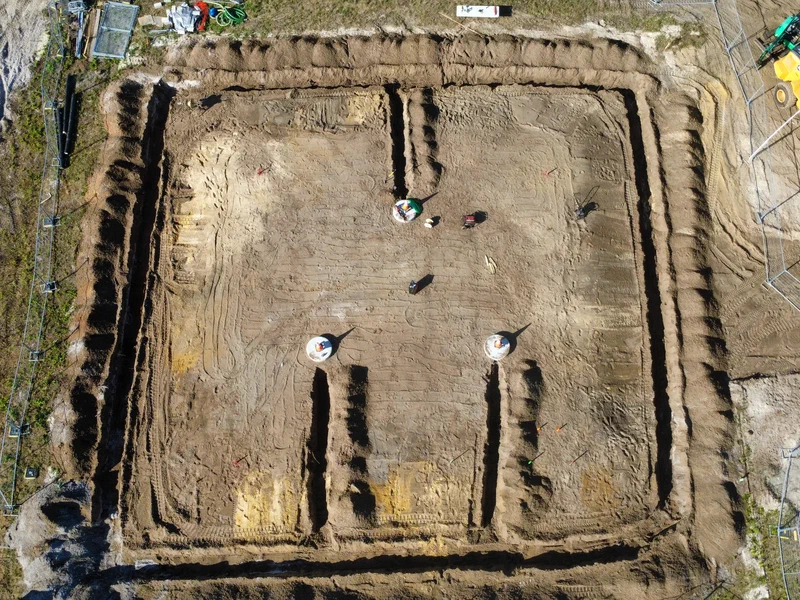
Grounding & Cadwelding
Ground rings, exothermic welds, bonding to NEC and manufacturer spec.
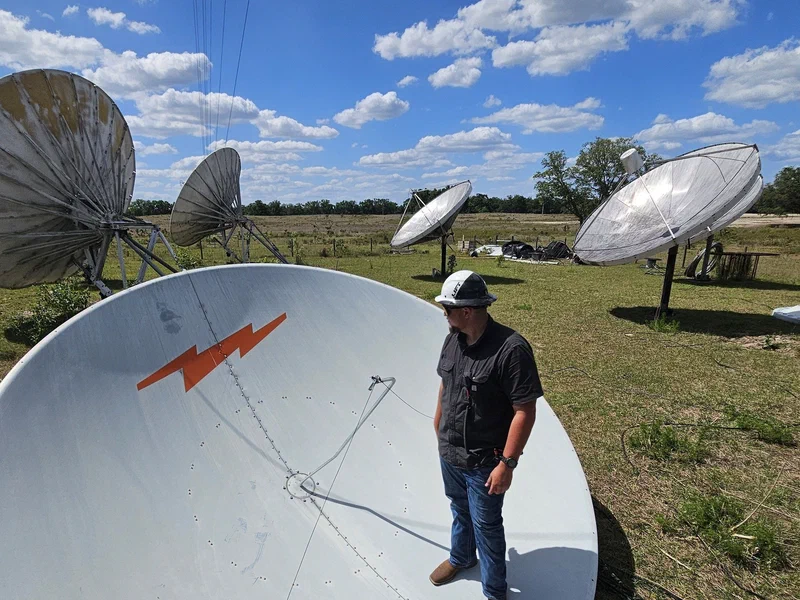
Decommissioning
Full teardown, equipment salvage, foundation removal, and FCC / FAA closeout.
How an engagement flows.
A tribal build runs the same engineering as any other tower project, plus a federal-paperwork layer that typically gates the schedule. Here is how an engagement flows from first call to commissioning.
Sovereignty-aware contracting
Contract structured with your tribe’s attorney, including sovereign-immunity language, tribal-court venue or mutually-agreed arbitration, and TERO fee schedules. We don’t push commercial boilerplate onto sovereign-land work. If this is your tribe’s first tower contract, we can share how we’ve structured it with other nations and let your attorney adapt.
Section 106 and environmental screen
FCC TCNS notification filed. Section 106 NPA review screen run against the site. THPO consultation initiated where the NPA requires it (and confirmed as not required where an exclusion applies). NEPA categorical-exclusion determination or Environmental Assessment prepared as the funding program requires.
BIA right-of-way (if applicable)
For sites on trust land requiring an access easement, a tower-pad lease, or a cable ROW crossing trust land, we coordinate the 25 CFR 169 application with your tribe’s realty office and the BIA regional office. Pre-application survey and legal description handled by our civil team. Plan on two to six months for a complex corridor ROW.
TERO compliance plan
Compliance plan filed with your tribe’s TERO office before mobilization. Native-preference hiring targets, TERO fee schedule, and on-site workforce coordination documented and approved. Our default posture is TERO-first: we scope the crew rotation to meet the tribe’s preference requirements, not to comply at the minimum.
FCC and FAA filings
FAA 7460-1 filed where structure height or airspace proximity triggers notification. FCC ASR registration where the tower will be lit. Part 101 licensing on any licensed microwave path. For 2.5 GHz deployments on Rural Tribal Window licenses, interim and final performance-showing plans sequenced against the license’s specific deadline.
Gear procurement and staging
Radios, antennas, cable, and mount hardware pre-tested on the ground at the site before anything climbs. For tribes running a sovereign-controlled network on 2.5 GHz or CBRS, we work with your RF integrator, or with partners like Tribal Ready, PBC on full-stack Sovereign Digital Hub deployments where the tribe keeps ownership and operational control of the network.
Mobilization and install
Crews roll from Alabama, Texas, or wherever we’re closest to your reservation. Civil, steel, RF, grounding, and weatherproofing all per manufacturer spec. TERO reporting maintained through the build. Safety program and crew conduct held to the standards your community has a right to expect from outside contractors on tribal land.
Commissioning and documentation handover
Commissioning runs the same way as any other build: alignment logs, fiber insertion-loss reports, RSL verification using the platform’s native diagnostics, and link-budget records. Plus tribal-specific paperwork: TERO closeout, Section 106 closeout letter, BIA ROW certificate if applicable, FCC performance-requirement records for 2.5 GHz licensees, and grant-program milestone files (TBCP, BEAD, ReConnect). Your tribal broadband office, your RF integrator, your successor contractor, and your federal program officer all have what they need.
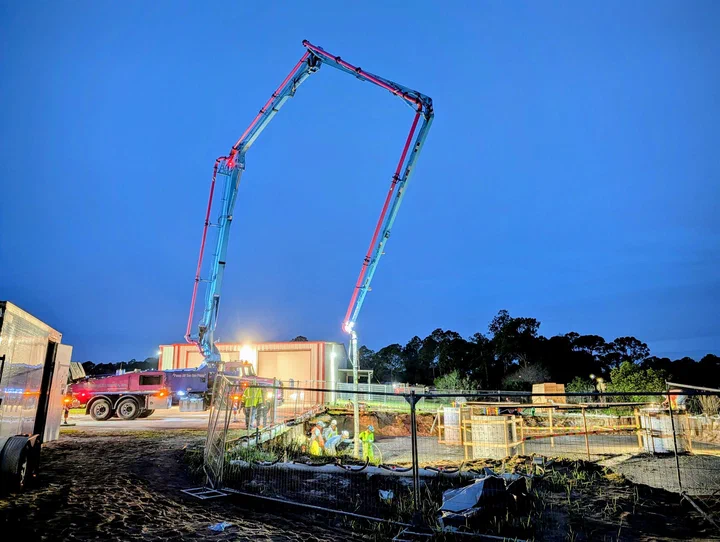
Built to standard. Held to sovereign and federal code.
Same engineering framework as any tower build, plus the tribal and federal layer specific to sovereign-land work.
FCC Nationwide Programmatic Agreement (NPA)
Section 106 NHPA streamlining for communication-tower construction. 47 CFR Appendix C to Subpart EE of Part 1. We run every site through the NPA screen. Classes of undertakings excluded from routine review, tribal consultation procedures, and timelines all drive our scheduling.
FCC 2.5 GHz Rural Tribal Window (47 CFR Part 27)
Build-out performance requirements for tribes holding 2.5 GHz licenses from the 2020 Rural Tribal Priority Window. Interim (4-year) and final (8-year) deadlines with specific coverage thresholds. We scope builds to document compliance in time, not after.
NHPA Section 106. THPO / SHPO consultation
National Historic Preservation Act. On tribal land, consultation runs through the Tribal Historic Preservation Office. On ancestral homeland off-reservation, consultation with affected tribes is still required. Off-reservation tribal notification handled through FCC TCNS.
25 CFR Part 169. BIA rights-of-way
Federal rules for rights-of-way over Indian land. Governs tower pad leases, access easements, and cable crossings on trust land. 60-day BIA review for new ROW applications, 30-day review for amendments. Pre-application survey and tribal realty-office coordination runs the real timeline.
NEPA / Categorical Exclusion
National Environmental Policy Act. Federally-funded tower builds on tribal land trigger NEPA. Many qualify for CatEx where the site is on previously disturbed ground and below size thresholds. Environmental Assessment is the fallback.
NTIA TBCP / BEAD / USDA ReConnect
Federal broadband program paperwork. Milestone reporting, speed-tier coverage verification, funding-acceptance paperwork, and audit trails on TBCP Round 1 and Round 2 projects, upcoming TBCP Round 3 (spring 2026 NOFO), state BEAD tribal-consent infrastructure, and ReConnect builds.
Tribal Employment Rights Ordinance (TERO)
Tribal sovereign employment code. Native-preference hiring, TERO fee payment, and compliance-plan approval before mobilization. Every tribe’s TERO is different. We work with your TERO office on the specific ordinance, not a generic template.
TIA-222-I
ANSI structural standard for antenna-supporting structures. Same on tribal land as anywhere else. Plumb tolerance, guy pre-load, bolt torque, and ice / wind loading.
Motorola R56 / IEEE 80 / IEEE 837
Grounding and bonding. R56 default, with IEEE 80 available on utility-adjacent sites (tribal utility authority towers, substation-adjacent comms).
OSHA 1926 / ANSI A10.48
Federal and industry safety standards for communication-tower work. 100% tie-off, authorized rescue, site-specific safety plan on every climb, including climbs that happen under tribal OSHA-equivalent codes where they apply.
Questions we get from tribal broadband directors.
Have you worked on tribal land before?
Yes. We’ve run tower scope on tribal-jurisdiction sites and with tribally-owned operators across our 2018-to-present history. The paperwork layer (sovereign contracting, TERO compliance, Section 106 / THPO consultation, BIA rights-of-way) is familiar. We partner with Tribal Ready, PBC on sovereign-controlled infrastructure deployments where the tribe maintains ownership and operational authority over data, network access, and the vendor stack.
Every tribe is different. No two TERO ordinances read the same, and no two tribal councils sequence approvals identically. Our posture is to listen first and adapt to your tribe’s process, not push a template.
We have a 2.5 GHz Rural Tribal Window license. What do we need to do to hit our build-out deadline?
Pull the license grant, check the grant date, and count four years. That’s your interim performance deadline, and you have to document either 50% population coverage (mobile / PtMP) or 20 fixed links per million persons in the license area by then.
If your license was granted in summer or fall 2020, your interim deadline fell in 2024 or early 2025 and you should already have filed. If your license was granted later (common for tribes that amended applications), you may be looking at 2026 or 2027.
Missing interim doesn’t kill the license immediately, but it accelerates the final deadline to year four, which is usually a much harder compliance cliff. Missing final cancels the license automatically, no FCC action required.
We scope 2.5 GHz build-out against your specific deadline. If you’re approaching interim with no infrastructure built, the right move is usually fast-deploy direct-embedment poles at a site count that documents the per-million threshold, then flow into a longer-term network plan. Send us your license grant and we can math out the minimum site count to meet interim and sketch the full plan from there.
What is TERO and how does it affect our contract?
TERO stands for Tribal Employment Rights Ordinance (or Office. The acronym is used for both). It’s a tribal sovereign code that requires contractors operating on the reservation to give hiring preference to qualified tribal members and to pay a TERO fee (typically a percentage of the total contract value) into the tribe’s workforce development fund.
Every federally-recognized tribe with a TERO runs it differently. Common elements:
- Compliance plan required before mobilization, reviewed and approved by the TERO office.
- Native-preference hiring targets for the project.
- TERO fee paid on the contract, usually 2 to 5 percent depending on the tribe’s ordinance.
- On-site workforce reporting throughout the build.
Our scope on tribal work includes TERO compliance as a standard deliverable, not an adder. We’ll work with your TERO office on the specific plan, hire qualified tribal members where they’re available, and document compliance through the build.
What about sovereignty and liability. How does the contract work?
Different from commercial contracts. Federally-recognized tribes are governments, not corporations, and they typically hold sovereign immunity from lawsuit absent an express waiver. Three things usually come up:
- Arbitration venue. Most tribal contracts we’ve seen call for either tribal court jurisdiction or mutually-agreed arbitration (commonly AAA or JAMS, sometimes with a tribal-member arbitrator option). Commercial-default court venue typically doesn’t apply.
- Sovereign immunity reservation. Standard commercial contracts often include broad waivers of immunity that your tribe’s attorney won’t accept. The right approach is typically a limited waiver for the specific contract, not a blanket waiver.
- Insurance. Our GL and workers’ comp carriers are familiar with tribal-land work, including sovereign-immunity reservations and tribal-court venue. Some commercial carriers aren’t, and that’s where contractor delays usually come from.
We’re comfortable signing contracts structured this way. If your tribe’s attorney is drafting the contract, share the first draft early. We review and come back with any carrier-driven adjustments (rare) rather than pushing back on the sovereignty framework.
Do we need BIA approval for every tower?
Depends on the land status.
- Tower on tribal trust land with a new easement or ROW? Yes. 25 CFR 169 right-of-way application to the BIA, with tribal realty office coordination. 60-day BIA review, plus pre-application work.
- Tower on tribal land with an existing ROW or on a tribal government’s own directly-owned site? Usually no new ROW needed. Internal tribal land-use approval typically suffices.
- Tower on allotted land (held by an individual Indian or heirs in trust)? Yes, BIA approval required, plus consent from the landowners. This is sometimes harder than tribal-trust ROW because multiple allottees have to consent.
- Tower on fee land inside reservation boundaries? State and local rules typically apply, though the tribe often has regulatory jurisdiction too.
Our civil team coordinates ROW applications as part of scope. For complex corridors (pipeline-scale backhaul, long distances across multiple allotments), allow two to six months of paperwork time.
How does Section 106 historic-preservation review affect our project?
Nearly every federally-funded tower project triggers Section 106 of the NHPA. On tribal land, the reviewing authority is the Tribal Historic Preservation Office (THPO), not the state SHPO.
The FCC’s Nationwide Programmatic Agreement (NPA) streamlines review significantly. Many tower classes. Replacements on existing sites, smaller structures in previously disturbed areas, collocations within defined envelopes. Are excluded from routine Section 106 review. For undertakings that require consultation, the NPA defines the timelines.
We run every project through the NPA screen and file FCC Tower Construction Notification System (TCNS) notices for tribal consultation both on and off reservation. Because off-reservation sites on ancestral homeland still require tribal consultation under FCC rules.
Typical timeline: four weeks on sites that qualify for exclusion. Two to four months on sites requiring consultation. Longer if a THPO identifies a traditional cultural property concern that requires field survey or mitigation.
NTIA TBCP funding is in flux. How does that affect our project?
Fair question to be asking in April 2026. The current state:
- TBCP Round 1 funds are awarded and in deployment.
- TBCP Round 2 NOFO closed March 2024. Approximately $360M was awarded through Equitable Distribution, but roughly $980M in awarded Round 2 funding remains unobligated as NTIA paused obligations in 2025 pending program reform.
- NTIA announced reforms in late 2025 with tribal consultations January 13 and 20, 2026, and a new NOFO planned for spring 2026 combining TBCP with the Digital Equity Act Native Entity set-aside. NTIA has signaled at least $500M in remaining tribal broadband funding will flow through the new NOFO.
For tribes mid-build on Round 1 or Round 2 awards: scope isn’t changing, but disbursement timing may. We scope to the grant’s milestone schedule regardless, and we document compliance on the assumption that program officers will audit when the program unfreezes.
For tribes waiting on the spring 2026 NOFO: the scope-development work (site selection, network design, preliminary cost estimates) is worth starting now. Application windows on NTIA programs are typically short, and tribes that come in with scopes already documented are at a real advantage.
Do you work with state BEAD programs when they touch tribal land?
Do you support sovereign-controlled tribal network deployments?
Yes. The sovereign-controlled network model (where the tribe owns the infrastructure, controls the data, and governs vendor participation rather than handing the network to a commercial ISP) is the posture most tribal broadband directors we talk to now are pursuing. It’s also the model our partner Tribal Ready, PBC builds around through their Sovereign Digital Hub architecture.
Our lane is the steel, the RF, and the construction layer. Towers, monopoles, sectors, backhaul, cabling, grounding, and commissioning. On sovereign-controlled builds, we hand operations back to your tribal network team (or to your integrator) once the site is built and RF-verified. The network-operations layer, the authentication stack, the data governance, and the subscriber-management side stay with the tribe and its sovereignty-focused partners.
For tribes doing a hub-and-spoke fixed-wireless buildout on 2.5 GHz RTPW spectrum (low site count, compact hardware budget per community), we can deliver the tower scope only and let your community network team run operations. For bigger multi-site reservation mesh or tribal-utility-owned fiber + wireless hybrids, we run the full construction scope and hand back a documented, as-built network to your team or your sovereignty-focused consultancy.
Can you connect our tribal schools, clinic, and government offices?
How tall do tribal broadband towers typically run?
Depends on terrain and network topology.
- Community-serving hub site on reservation housing: 80 to 120 ft direct-embedment monopole is common.
- Aggregation / long-haul relay: 180 to 300 ft self-supporting tower.
- Anchor-institution connectivity (single-building drop): roof-mount or 40 to 60 ft light pole.
Navajo Nation, Pine Ridge, Rosebud, and other large-footprint reservations often require line-of-sight chains of 200-plus-foot structures to bridge population clusters separated by dozens of miles of open terrain. We size the structure against the path, not a generic WISP template.
What about the Alaska Native Corporations?
How much does a tribal broadband tower build cost?
Fixed fee on defined scope, with unit rates and change orders for field conditions. Quoted against structure type, height, access, and the specific paperwork layer your project triggers. Rough order-of-magnitude:
- Direct-embedment 2.5 GHz hub site (100 ft, hub-and-spoke coverage): mid to upper five figures per site, depending on access.
- Self-supporting aggregation tower (180 ft) with sector and backhaul RF: low to mid six figures per site.
- Multi-site 2.5 GHz buildout to document interim FCC compliance: program rate per site, quoted against the site count needed.
- Anchor-institution drop (roof-mount or short pole, single building): low five figures per site.
- Section 106 / BIA / TERO paperwork coordination: typically 3 to 8 percent of construction cost on a standard engagement. Higher on sites that trigger full THPO field survey.
Multi-site programs see program-rate discounts on the construction scope and batched paperwork. Send us the project (with license grant dates if 2.5 GHz, grant program context, and target window), and you’ll have a line-itemed quote inside two weeks. Tribal projects take longer to quote than commercial because the paperwork is the harder part.
What's your service area for tribal work?
How do I get started?
Send us:
- The project. What you’re trying to build, the site or site list (coordinates preferred on rural sites), target window.
- The funding. TBCP round, BEAD coordination with your state, ReConnect, USDA, tribal gaming revenue, or a mix.
- The license if 2.5 GHz RTPW. The grant date matters for your deadline.
- TERO contact. So we can initiate the compliance plan early.
- Your tribe’s attorney contact. So the contract framework conversation can start in parallel with scoping.
Request a quote here or call us at (763) 280-6050. Tribal scopes typically quote in two weeks. The paperwork takes the time, not the steel.
Don't see your question? Ask us directly. We answer every scoping call.
Adjacent industries.
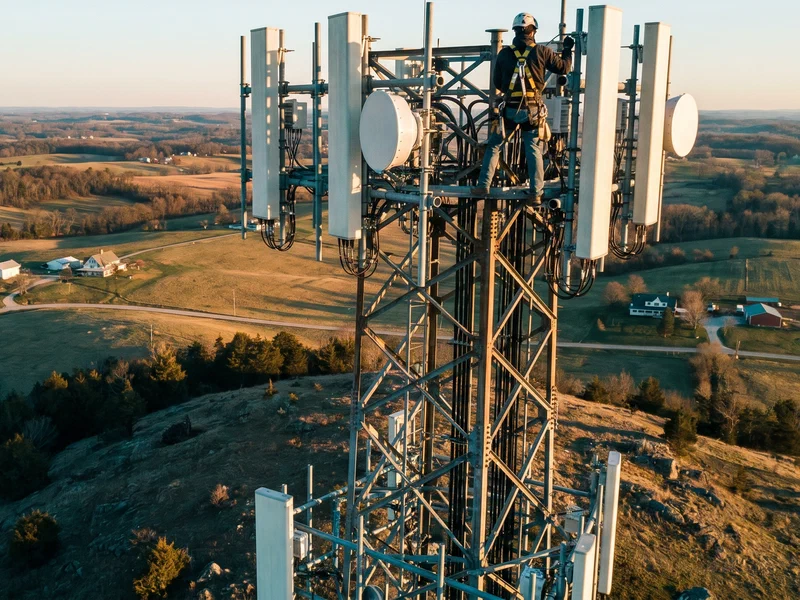
WISP / Wireless Internet
Fluent in WISP-scale gear: Ubiquiti, Tarana, Cambium, Mimosa, RF Elements. We know your margins and timelines, and we don't bill carrier rates for prosumer work.
Municipal & Rural Broadband
Co-ops, municipalities, and federally-funded broadband buildouts. BEAD, ReConnect, and grant-compliant project scopes.

Public Safety
Two-way and broadband infrastructure for counties, municipalities, and emergency agencies. 4.9 GHz public safety band experience.
Page last updated July 30, 2026.
Build sovereign.
Document every layer.
Send the project, the license or grant paperwork, and your tribe's TERO contact. We come back with a sovereignty-aware contract, a Section 106 plan, a BIA ROW timeline, and a line-itemed quote against your deadline.