
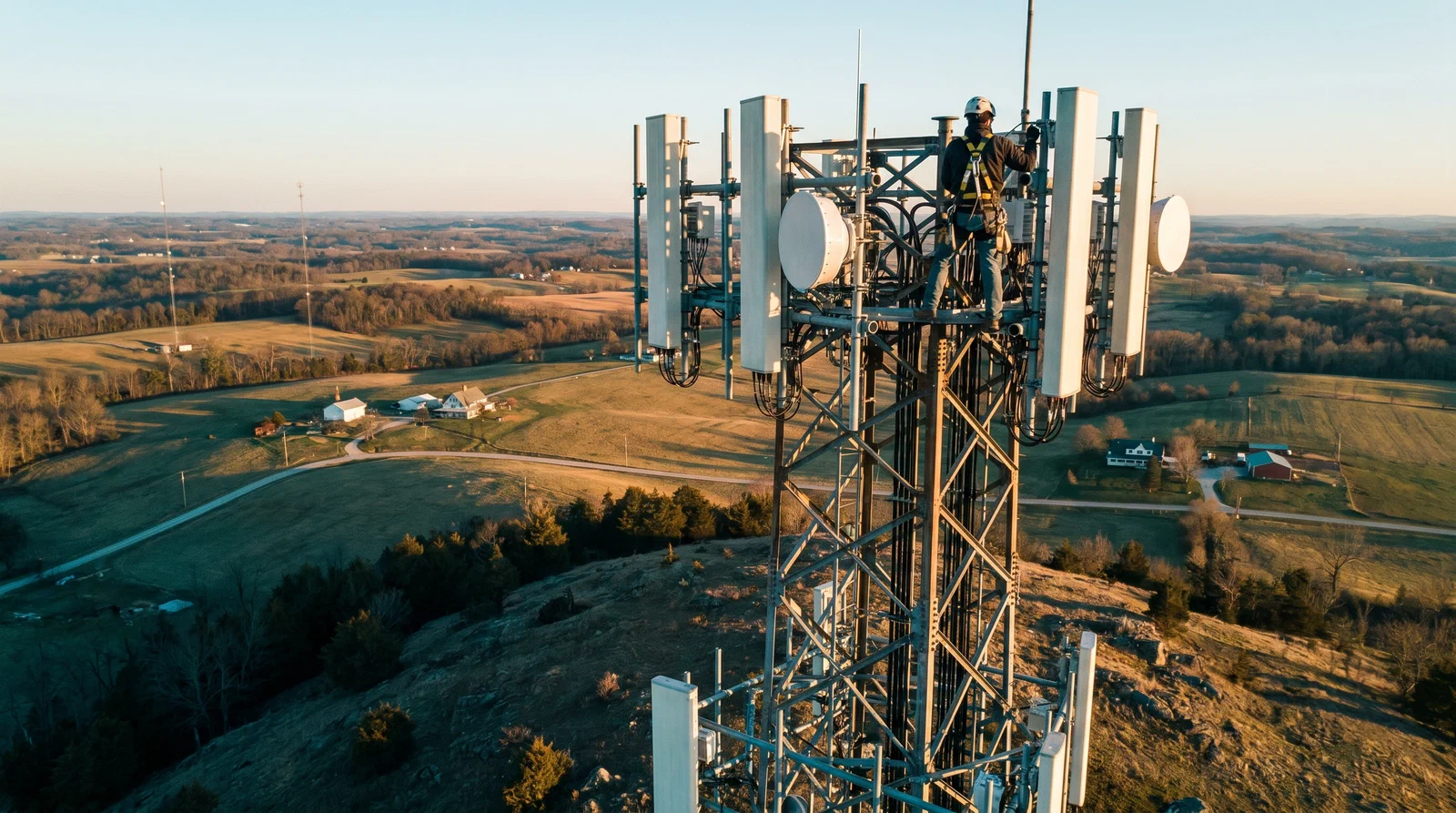
Tower Construction, RF Install & Lifecycle Maintenance for WISPs
WISP-grade work at WISP-grade pricing. Ubiquiti airFiber to the full Tarana G2 platform. Unlicensed 5 GHz PTP to licensed Part 101 microwave. 60 ft infill pole to a 300 ft multi-carrier self-support. 300+ ISPs served since 2018. Crews who know the difference between a carrier SLA and a 500-subscriber rural distribution tower, and who price accordingly.
The WISP install you wish you were getting from a carrier contractor.
Most tower contractors who advertise “WISP experience” are actually carrier crews pricing down a carrier job to bid a WISP. The scope gets delivered, but the crew size, the truck roll, the alignment tooling, and the hourly rate were all scoped for a macro-cell. The quote is two to three times what a real WISP crew would bill. The radios may be vendor-swapped the wrong direction because the carrier installer has never actually touched a Tarana or a TwistPort.
The other option is worse: a general contractor who has never tuned a radio. They can pour concrete and hang steel, but the RF side of your site shows up misaligned, un-weatherproofed, and not commissioned. You find out six months later when a customer calls in about a sector that’s been running at 40% below link budget since day one.
Vertical Axis exists as the third option. Built for WISPs, priced for WISPs, fluent on the gear your RF designer actually specs. 300+ ISPs served since the company’s Waldrop Wireless days. Every crew is a climb crew, every lead hand has alignment tooling for the radios on your pallet, and every quote is scoped against what the job actually needs, not what a carrier crew would burn through.
The platforms your RF designer actually picked.
Platform-fluent installers across the full WISP and CBRS RF stack:
- Ubiquiti. airFiber 5XHD, 4X (4.9 GHz public-safety PTP), 11, and 60. AirMAX sectors. UISP Wave. LTU access. NanoStation, LiteBeam, PowerBeam CPE.
- Tarana. The full G1 platform (G1 BN, G1 RN, G1 RN Mini) and the newer G2 platform. nLOS fixed wireless at scale, BEAD-common, state-grant-common. Full Tarana install across the completed 4-carrier sites on the Streamline Internet Hendry County buildout.
- Cambium Networks. ePMP, PMP, PTP 550 / 670, cnWave 60 GHz, cnMatrix tower-top switching, Force CPE.
- Mimosa (Airspan). A5 / A6 sector access. B5 / B11 backhaul. C-series CPE.
- Nokia. Carrier-grade microwave, Fastmile FWA, and Nokia AZQC CBRS site kits on CBRS LTE buildouts.
- Baicells. 436Q CBRS eNB and companion private-LTE gear.
- RF Elements. Full horn lineup (Symmetrical, UltraHorn, Asymmetrical), TwistPort shielding, StationBox enclosures, EasyBracket hardware for interference-dense sites.
- Carrier-grade microwave. Aviat, SAF Tehnika, Siklu for licensed Part 101 and lightly-licensed E-band paths where a WISP backhaul trunk needs carrier-grade availability.
If your platform isn’t on that list, we’ll learn it. RF install fundamentals don’t change brand to brand.
Scoped and priced like a WISP, not a carrier.
A WISP sector install is not a carrier macro-cell install. We size crew, truck roll, rigging, and schedule against the actual scope:
- Crew size against the work. A 2-sector airFiber or Force CPE add gets a tight climb team, not a five-person carrier crew billing a full day per hand.
- Truck roll optimized per visit. We stage tooling and spares for the gear on your pallet, not a generic carrier kit.
- Program rotation on multi-site. For WISPs running 10 to 100+ sites on a build schedule or a maintenance rotation, we move a dedicated crew site-to-site. Program rate pricing, not per-site mobilization.
- Same-day swap capability. Single radio swaps (airFiber, B5, ePMP Force, Tarana RN) are routine same-day scope when the replacement is pre-staged and the climb is straightforward.
The math says it clearly. If a job should cost $15,000 in WISP-crew hours and a carrier contractor is quoting $48,000, you don’t have a tower contractor problem, you have a tower contractor fit problem. That’s what this page is for.
BEAD, ReConnect, and state broadband program ready.
Most WISP buildout dollars in 2026 are flowing through NTIA BEAD, USDA ReConnect, and state-administered broadband programs. Every one of them comes with milestone reporting, speed-tier coverage verification, and audit-trail documentation that the underlying contractor is expected to support.
Our WISP scope on grant-funded programs includes:
- Grant-compliance documentation. As-builts keyed to the stamped RF design, coverage-verification test runs, and milestone-closure photo records per site.
- Milestone schedule discipline. Grant programs typically tie disbursement to on-time site-count milestones. Crew rotation is sequenced against those milestones, not against whatever slot was easiest.
- State-specific PE coordination where the program requires a state-registered structural or RF engineer’s stamp.
- Coverage obligation verification. On BEAD and state programs with speed-tier obligations (typically 100/20 Mbps fixed-wireless service at a specified latency), we commission and document to the obligation, not to a generic best-effort target.
If you’re running a WISP-scale BEAD project through your state broadband office, send us the project scope and the milestone schedule alongside the site list. We’ll scope against both.
The WISP scope we run every week.
The full tower and RF catalog, filtered to the mix WISPs actually buy. Every item on the list runs through to a detail page with the full scope, process, and pricing.
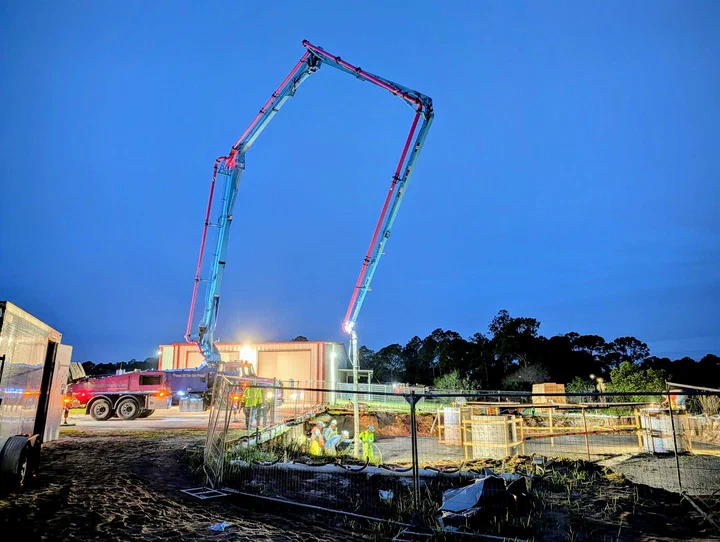
- Turnkey new site builds (site walk, permit, civil, steel, RF, commission) on greenfield WISP sites
- Direct embedment monopoles for fast-deploy infill and rural-corridor buildouts, typically 60 to 150 ft
- Guyed and self-supporting tower erection up to 300+ ft for distribution and aggregation sites
- Sector and backhaul install (multi-carrier sector arrays, horn arrays, backhaul dishes, aligned and sealed)
- Point-to-point microwave backhaul from prosumer PTP up to licensed Part 101 trunk paths
- Antenna and radio install for individual swaps, carrier adds, CPE deploys, and smaller-scope RF work
- CBRS LTE site deploys (Nokia AZQC, Baicells 436Q) with SAS registration and tight precision alignment
- Bulk CPE program rollouts (hundreds to thousands of LiteBeam / PowerBeam / Force / G1 RN Mini installs)
- Plumb and tension on aging WISP distribution towers (typical 5-to-7-year schedule on self-support)
- Tower modifications for added loading, feed-line swaps, or reloading an existing site
- Maintenance and inspection programs across multi-site WISP portfolios
- Decommissioning and site restoration on network consolidation or end-of-life tower retirement
- Grounding and bonding to Motorola R56 (or stricter IEEE 80 on utility-adjacent sites)
- Fiber, DC, and Cat6 cable plant down the tower, with weather-sealed terminations
- Obstruction lighting install and NOTAM-response climbs on registered WISP structures over 200 ft
- Post-storm response (plumb verification, guy correction, revenue-link restoration)
Need a WISP-fluent crew on a real deadline?
Send the site (or the site list), the gear list, and your window. We come back with a line-itemed quote, a crew, and a schedule.
Services WISPs buy most.
The 10 service lines on this page are what our WISP book typically runs through. Click any card for the full scope, process, standards, and price ranges.
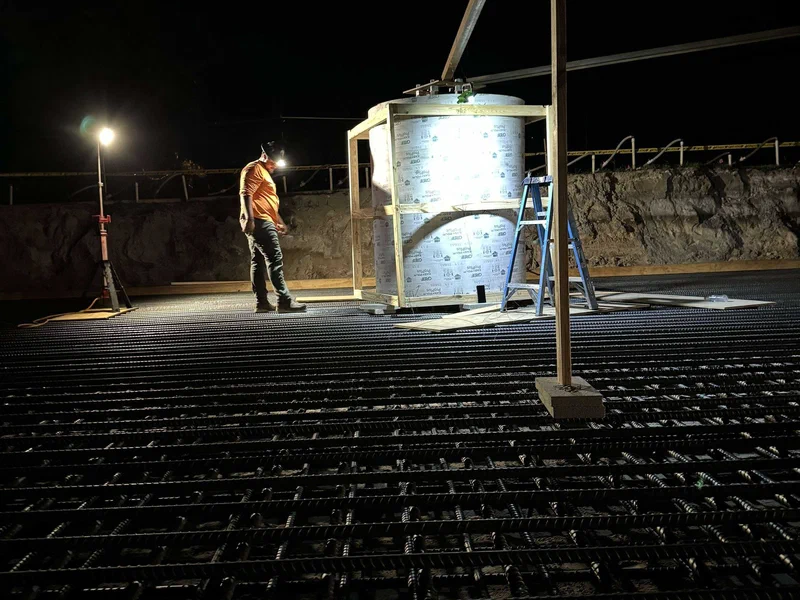
New Site Builds
Empty dirt to operational tower, one crew, one point of contact.
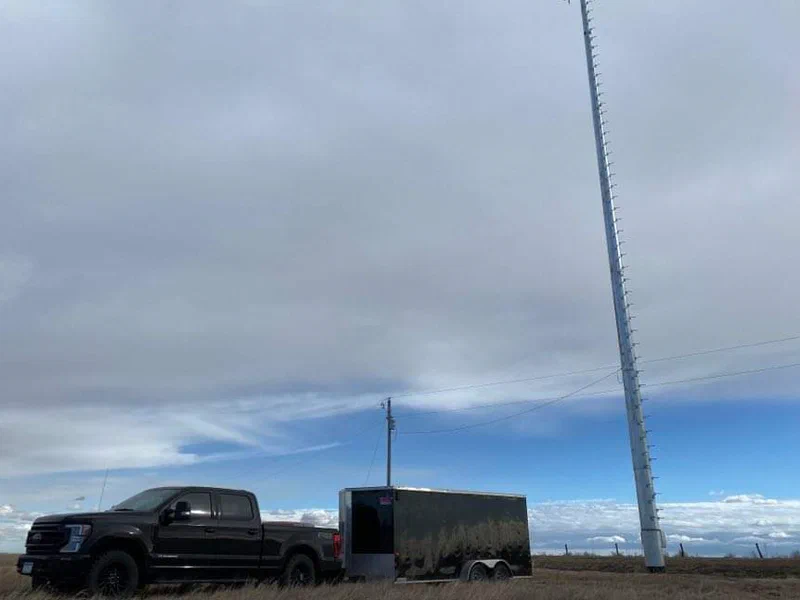
Direct Embedment Monopoles
Foundation-free monopoles set into augered holes. Fast to deploy.
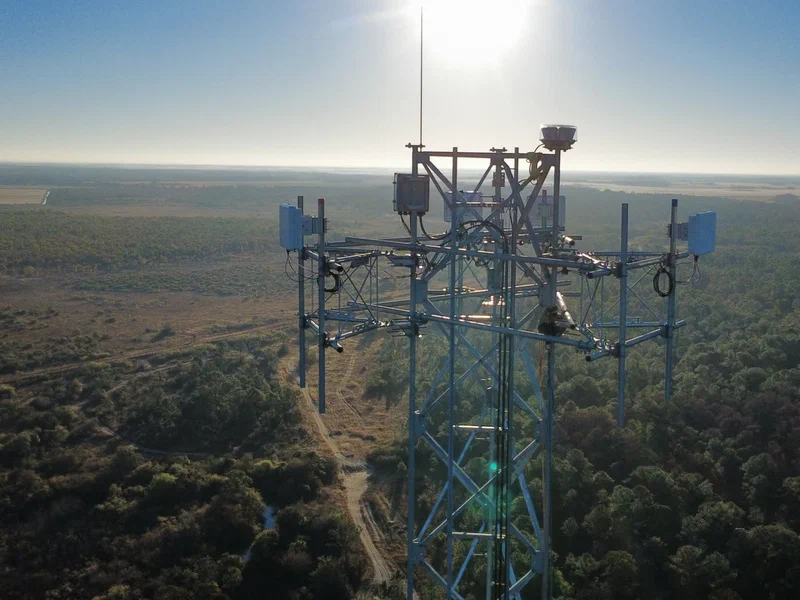
Sector & Backhaul
Sector antennas, backhaul dishes, horn arrays, aligned and sealed.
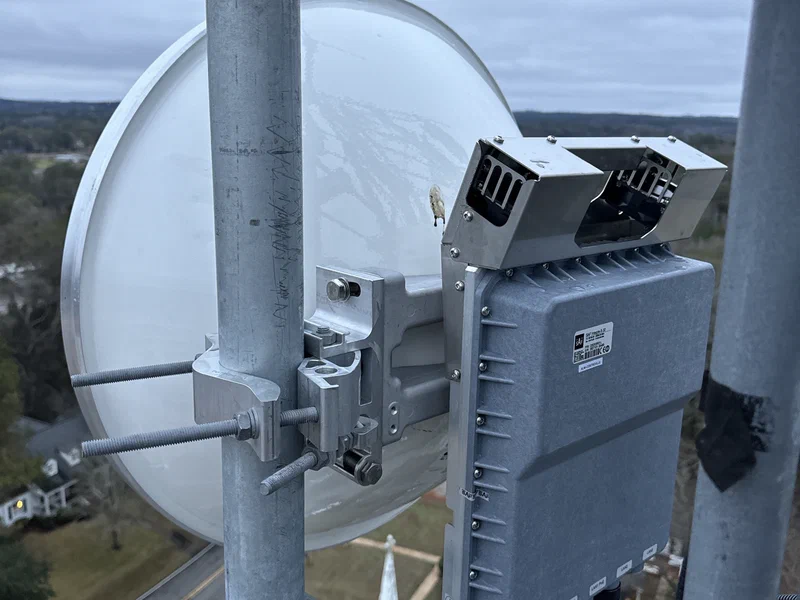
Microwave Backhaul
Point-to-point links, redundant rings, licensed and unlicensed.
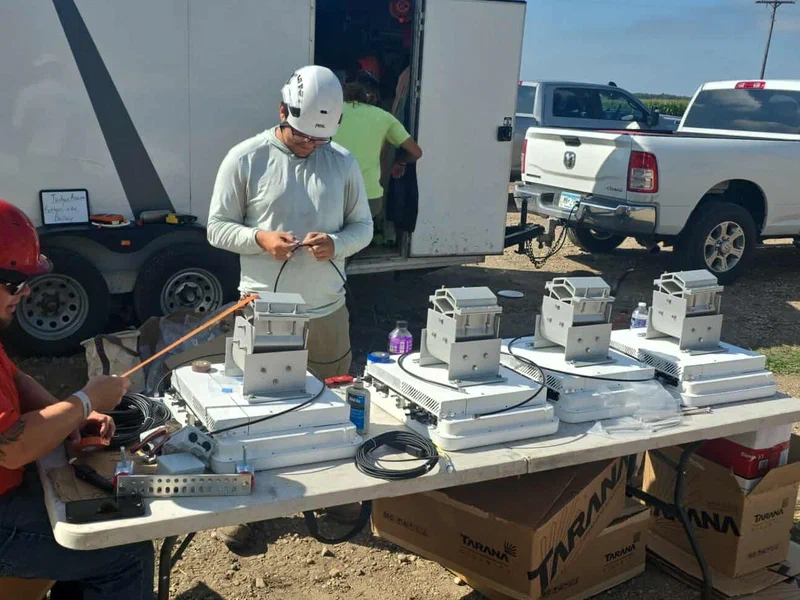
Antenna & Radio Install
Antennas, radios, fiber, DC, and Cat6. Ubiquiti, Cambium, Mimosa, Tarana, Nokia, and more.
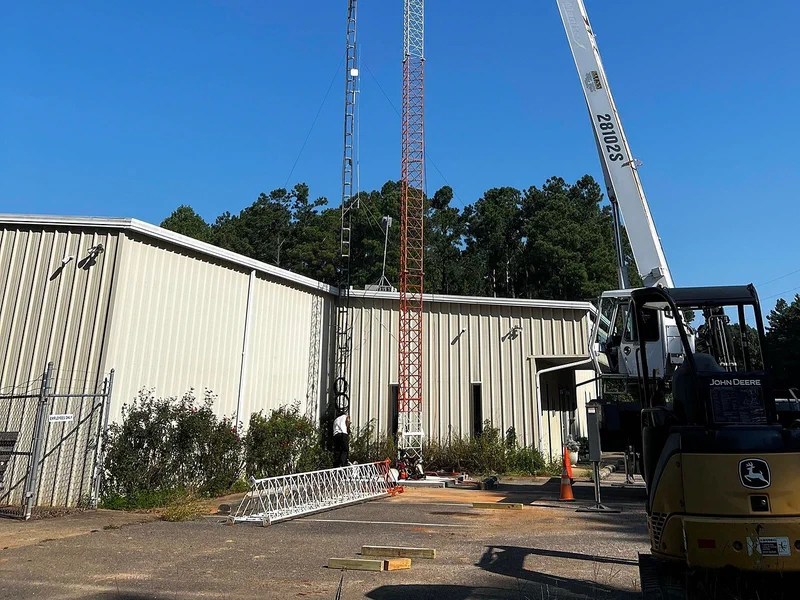
Tower Modifications
Antenna swaps, feed-line replacement, load-bearing upgrades.
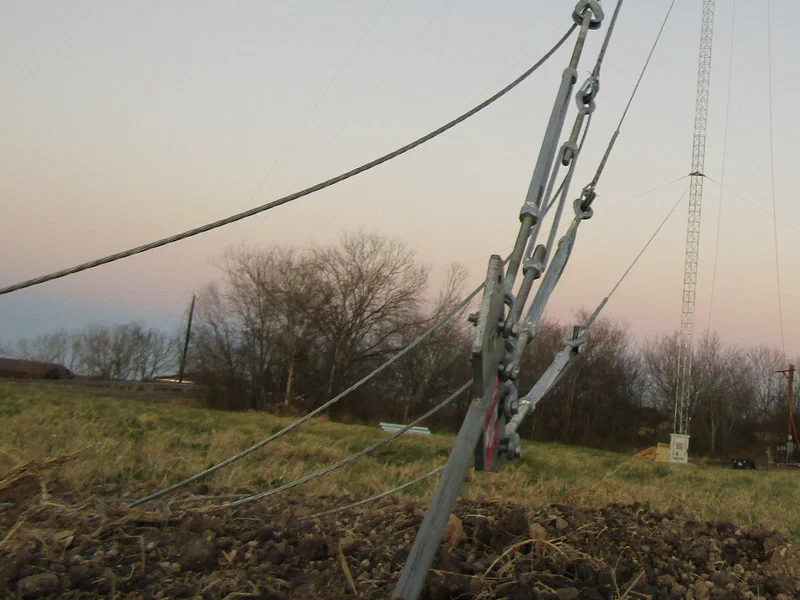
Plumb & Tension
Verify plumb, tension guys, correct storm-displaced structures.
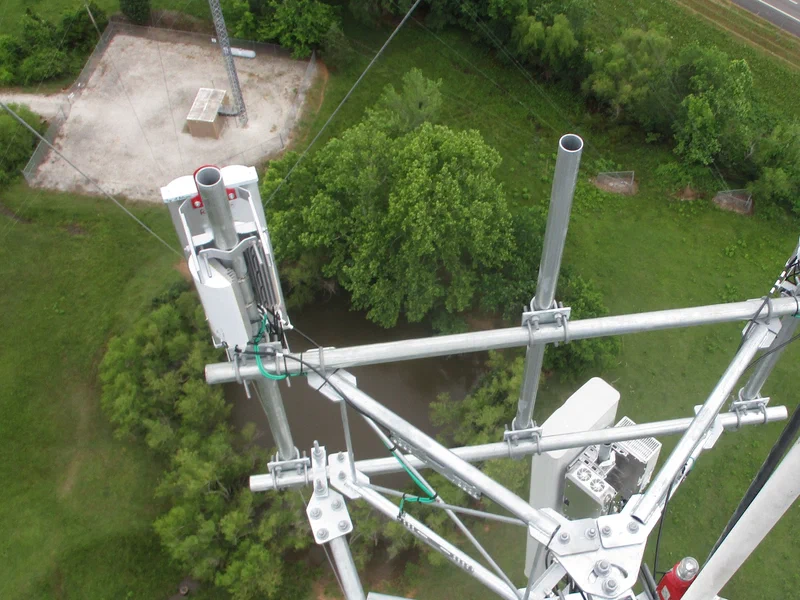
Maintenance & Inspection
Inspections, repairs, and post-storm response for a 20-year asset.
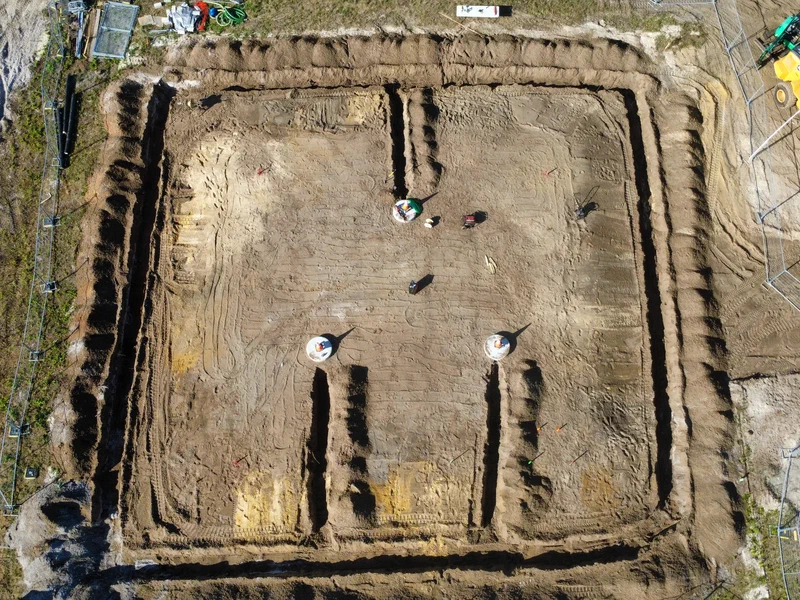
Grounding & Cadwelding
Ground rings, exothermic welds, bonding to NEC and manufacturer spec.
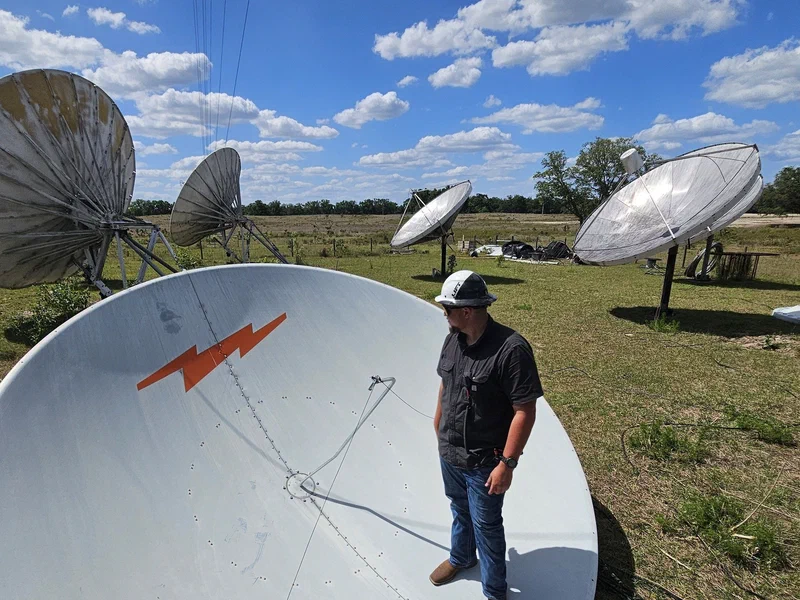
Decommissioning
Full teardown, equipment salvage, foundation removal, and FCC / FAA closeout.
How an engagement flows.
A typical WISP engagement runs from scoping call to on-site quote inside a week, with build scope ranging from 1-day swaps to multi-week new-site programs. Here is how engagements typically flow.
Scoping call
What are you building? What gear is on the pallet (or on the RFP)? What does the site look like? If you’re on a grant program, tell us which. We route the scope the same day, flag any structural or permitting lead time, and book a site walk if the scope calls for one.
RF design coordination
If you have a stamped RF design, we install to it. If you want us to design and build together, our site design service covers coverage modeling, sector layout, and pre-deploy mock-ups. No vendor pushing, and no RF design that doesn’t match your actual site conditions.
Permitting and regulatory
FAA 7460-1, FCC ASR, Part 101 license filings on licensed microwave paths, SAS registration on CBRS, and any local land-use or zoning filings the site triggers. Grant-program documentation (BEAD milestone, ReConnect funding acceptance, state program compliance) sequenced in parallel.
Gear procurement and staging
Radios, antennas, cable, and hardware bench-configured and pre-tested on the ground at the site before anything climbs. Nothing kills a WISP build like a DOA airFiber or a mis-shipped Tarana BN discovered at 150 ft. For critical paths we soak-test at ground level before the crane rolls.
Mobilization and install
Crew rolls from Alabama, Texas, or wherever we’re rotating closest to your footprint. Mount hardware, steel work, RF install, cabling, grounding, and weatherproofing all per manufacturer spec. No step cut.
Commissioning
Insertion-loss on fiber, RSL verification against link budget on every radio using the platform’s native diagnostics, SAS grant confirmation on CBRS, and sector alignment verified against the stamped RF design. Precision antenna alignment where the design specifies it.
Documentation handover
As-built drawings, fiber insertion-loss logs, alignment and link-budget logs, SAS registration confirmations, and grant-milestone records delivered. Your NOC, your RF integrator, your state broadband office, and your successor contractor all have what they need.
Built to standard. Held to the WISP operating envelope.
Same engineering framework as any tower contractor would build to, plus the FCC rules, grant requirements, and vendor specs specific to WISP and fixed-wireless work.
TIA-222-I
ANSI structural standard for antenna-supporting structures. Every WISP tower we build, modify, or inspect is analyzed against the current revision. Equipment-loading math done against actual gear on the pallet, not generic placeholders.
FCC Part 15
Unlicensed rules for 5, 24, and 60 GHz radio operation. EIRP caps, DFS behavior, and interference-avoidance respected at install. Most WISP access and short-range PTP traffic runs under Part 15.
FCC Part 101
Licensed fixed-microwave rules (6, 11, 18, 23, 32, 38, 42 GHz). Path coordination, interference analysis, and FCC license filing handled in scope on every licensed WISP backhaul trunk.
FCC Part 96 (CBRS)
Citizens Broadband Radio Service rules for the 3.55 to 3.7 GHz band. SAS registration, PAL / GAA tier coordination, and CPI-certified deployment on every CBRS LTE buildout.
NTIA BEAD / ReConnect / state programs
Grant-program documentation and milestone scheduling. Speed-tier coverage verification, audit-trail as-builts, and disbursement-aligned milestone closeout.
Motorola R56
Industry-standard grounding and bonding for communication sites. Default on WISP work, with IEEE 80 available for utility-adjacent sites (tower sharing with a substation, co-located with a utility SCADA pole).
NEC Article 810
National Electrical Code for radio equipment, feedline grounding, and lead-in conductors. Every WISP install documented against NEC.
NFPA 780
Lightning protection. Surge suppressors bonded to the tower ring before any radio goes on-air. Non-negotiable on WISP sites in lightning country.
OSHA 1926 / ANSI A10.48
Safety at height. 100% tie-off, authorized rescue, site-specific safety plan on every climb. NATE ClimberSafe / SafetyLMS on every lead hand.
WISP-specific questions we get a lot.
How big a WISP do you work with?
From startup operators with their first three towers to established WISPs running 200-plus sites across multiple states.
- Small operators (50 to 500 subs). We frequently run as the only tower contractor on the project. One crew, one point of contact, a fixed fee against the defined scope.
- Mid-size operators (500 to 5,000 subs). Typically running a multi-site build schedule or a rolling maintenance program. We rotate a dedicated crew through the footprint.
- Larger operators (5,000+ subs). Usually have one or two internal climbers and outsource the bigger scope. We slot in as the heavy-lift contractor for new builds, modifications, and program-scale RF.
Our typical WISP customer has somewhere between 3 and 50 towers. If your footprint is bigger, tell us and we’ll scale the crew rotation.
What platforms do you install?
Platform-fluent across:
- Ubiquiti. AirFiber (5XHD, 4X, 11, 60), AirMAX, UISP Wave, LTU, and the full CPE line.
- Tarana. The full G1 platform (G1 BN, G1 RN, G1 RN Mini) and the newer G2 platform.
- Cambium Networks. EPMP, PMP, PTP 550 / 670, cnWave 60 GHz, cnMatrix, Force CPE.
- Mimosa (Airspan). A5 / A6 access, B5 / B11 backhaul, C-series CPE.
- Nokia. Carrier-grade microwave, Fastmile FWA, AZQC CBRS site kits.
- Baicells. 436Q CBRS eNB and companion private-LTE gear.
- RF Elements. Symmetrical, UltraHorn, Asymmetrical, TwistPort, StationBox, EasyBracket.
- Carrier-grade microwave. Aviat, SAF Tehnika, Siklu for licensed / lightly-licensed paths when the WISP backhaul trunk needs carrier-grade availability.
If your platform isn’t on that list, we’ll learn it. RF install fundamentals don’t change brand to brand.
Do you run as prime to the WISP, or as a sub to our RF designer?
Direct embedment or self-support for a WISP infill site?
Direct embedment wins on most WISP infill. Specifically:
- Fast to deploy. 1 to 3 days on-site vs. 4 to 6 weeks for a spread-footing self-support (mostly concrete cure time).
- Smaller footprint. No spread-footing pad, no guy radius. A pole and a compound is all you need, which matters on leased land.
- Cheaper per site. Less civil, less concrete, less crew time. On a multi-site program the savings compound meaningfully.
The exception is sites that need 200+ ft or heavy multi-carrier loading, where a self-support is structurally more economical. Direct embedment monopoles has the full trade-off explained. If you’re scoping 10-plus WISP infill sites, we’ll model both and hand you the per-site math.
Do you do bulk CPE rollouts?
Can you run a CBRS LTE buildout for a WISP?
Yes. Vertical Axis is the primary construction partner for The Edge Mile, a private LTE consultancy specializing in Nokia AZQC and Baicells CBRS deployment with an in-house EPC. Edge Mile handles the radio-access layer, core network, and EPC integration. We handle the steel, the RF install, the fiber and DC cabling, SAS registration coordination, and the alignment.
If you’re a WISP moving into CBRS LTE, you’re likely going to end up talking to both teams. Private-LTE sites have more moving parts than a standard WISP install. A tower contractor who’s never handled a SAS registration or a Nokia AZQC precision alignment is the wrong team for that scope.
Are you ready for BEAD and state broadband program work?
Yes. Grant-compliant documentation and milestone scheduling are part of standard scope on grant-funded builds. Common elements:
- As-builts keyed to the stamped design, not to whatever the crew felt like changing.
- Coverage-verification test runs against the program’s speed-tier obligation (typically 100/20 Mbps for BEAD fixed-wireless).
- Milestone closeout photo records per site.
- State-registered PE coordination where the program requires a state stamp.
- Audit-trail package per site for the state broadband office or NTIA review.
If you’re running a WISP-scale BEAD project, send us the project scope, the RF design, and the milestone schedule. We quote against all three.
Do you do tower maintenance for WISPs on a rolling contract?
What about emergency response for a WISP?
Part of our 24-hour on-call rotation. Crews running out of Alabama and Texas typically mobilize within 24 hours for:
- Revenue-link restoration (radio, antenna, or backhaul failure on production traffic).
- Post-storm structural response (plumb verification, guy correction, anchor inspection).
- NOTAM-response climbs on registered WISP structures over 200 ft.
Same-day response common in the southeastern US. See our emergency tower services.
Do you work for WISPs on tribal land?
What if my WISP is also a co-op or a municipal operator?
How much does WISP tower work cost?
Fixed fee on defined scope, with unit rates and change orders for field conditions. Quoted against scope, tower height, gear list, and access. Rough order-of-magnitude, all subject to line-itemed quote:
- Single radio or CPE swap: low four figures per visit.
- Carrier add to existing sector: low five figures.
- Full sector and backhaul site install: mid five to low six figures, driven by sector count and backhaul topology.
- Ground-up new WISP site (direct embedment, 120 ft, 2-sector + 1 backhaul): high five to low six figures.
- Ground-up new WISP site (self-support, 250 ft, multi-carrier): mid six figures.
- CBRS LTE site (Nokia AZQC or Baicells with EPC integration): mid five to low six figures, driven by RAN complexity.
- Bulk CPE rollout: program rate per-door, quoted against portfolio scope.
For multi-site programs, program-rate discounts typically return 10 to 25 percent off one-off pricing depending on site density. Send us the scope and you’ll have a line-itemed quote inside a week.
Can I just hire you as a climb-only crew for some of the work?
What if I don't have stamped drawings on an older WISP tower?
What's your service area for WISP work?
How do I get started?
Send us the site or the site list (address or coordinates), the tower type and height, the gear list or stamped RF design, your grant-program context if any, and your target window.
Request a quote here or call us at (763) 280-6050. Most WISP scopes get a line-itemed quote inside a week. Multi-site programs typically take two weeks to quote because the schedule coordination is the harder part.
Don't see your question? Ask us directly. We answer every scoping call.
Adjacent industries.
Tribal Nations
Sovereign broadband buildouts and tower work on tribal lands. Scoped for NTIA Tribal Broadband Connectivity Program (TBCP) timelines and deliverables.

Municipal & Rural Broadband
Co-ops, municipalities, and federally-funded broadband buildouts. BEAD, ReConnect, and grant-compliant project scopes.

Public Safety
Two-way and broadband infrastructure for counties, municipalities, and emergency agencies. 4.9 GHz public safety band experience.
Page last updated July 30, 2026.
Tell us the WISP.
We'll bring the crew.
Send the site list, the gear list, and your target window. We come back with a line-itemed quote, a crew, and a schedule you can build a subscriber base around.