
Antenna & Radio Install
The one-thing work. A radio swap. A new antenna on an existing tower. A CPE integration. A carrier add-on to a standing sector. Smaller-scope RF installs done right the first time, with clean handoff to your network, your integrator, or your NOC.
What's included.
The individual RF install work that doesn’t need a full sector-deploy scope. Swaps, adds, upgrades, and single-item integrations into sites you already own.
- Radio swap-outs: failed units, firmware-revved upgrades, or capacity upgrades
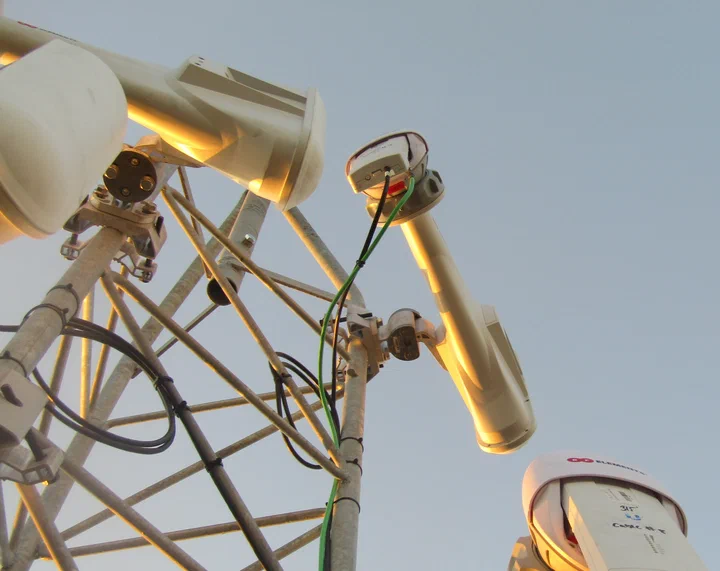
- New antenna adds on an existing tower (sector, omni, dish, horn, PTP)
- Single-link PTP adds or upgrades to an existing backhaul chain
- CPE installs and subscriber-side residential or business dish mounting
- Carrier adds: adding a second or third carrier to an existing sector mount
- Mount and bracket fabrication when the existing hardware won’t accept new gear
- Weatherproofing, drip loops, and seal work on connections per manufacturer spec
- Fiber, DC, and Cat6 jumpers and runs to match the rest of your site’s cabling
- Grounding and bonding of added equipment per Motorola R56 or your stricter spec
- Alignment and link-budget verification on every installed radio using the platform’s native diagnostics
- Coordination with your RF integrator, NOC, or managed-services provider
- As-built documentation for the specific items we installed
Need antenna & radio install on a real deadline?
Send your site details. We come back with a quote, a crew, and a schedule.
Smaller scope. Same install standards.
A lot of WISP and CBRS network work is one thing at a time. A sector radio burned out. A subscriber needs a better antenna. An operator is adding a carrier to a standing sector mount. A PTP link needs a replacement ODU because the manufacturer discontinued the old one.
That’s what this page is for. Not every visit is a ground-up build. Most days, it’s a climb, a cable, a swap, and a sweep. We dispatch a crew sized to the actual scope, not a five-person carrier crew priced to match.
For full-sector deploys, multi-carrier builds, and end-to-end RF commissioning, the broader scope lives on Sector & Backhaul. For licensed carrier-grade microwave paths, Microwave Backhaul is the right page. This page covers the individual-item work that falls between those.
Platforms we swap and install every week.
Brand-fluent across the full WISP, CBRS, and public-safety RF stack:
- Ubiquiti: airFiber (5XHD, 4X, 11, 60), AirMAX sectors, UISP Wave, LTU access, NanoStation, LiteBeam, PowerBeam CPE.
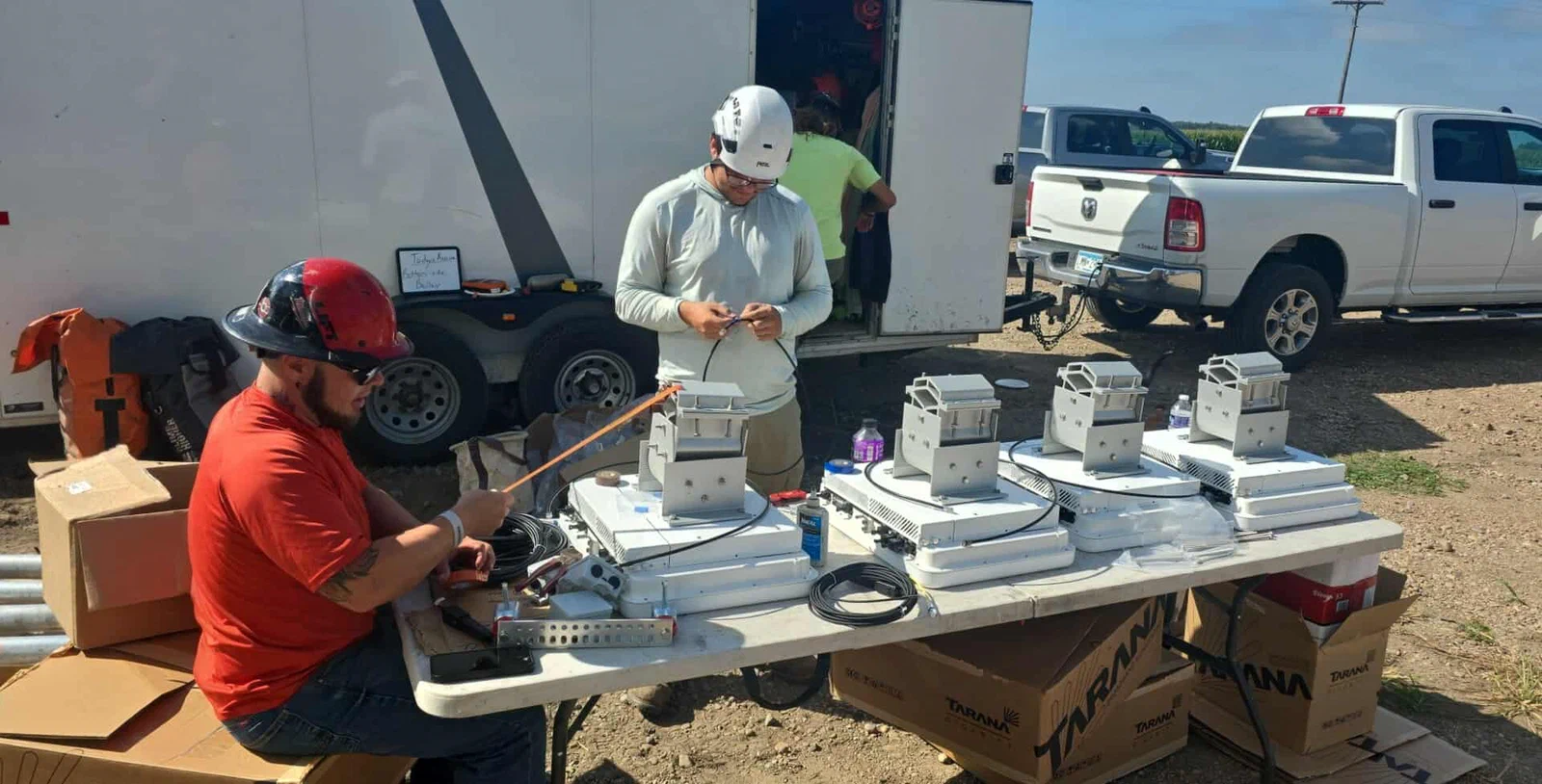
- Tarana: the full G1 platform (G1 BN, G1 RN, G1 RN Mini) and the newer G2 platform. The full Tarana RF install across Streamline Internet’s Hendry County buildout ran through this scope.
- Cambium: ePMP, PMP, PTP, cnWave 60 GHz, cnMatrix switching, ePMP Force CPE.
- Mimosa (Airspan): A5 / A6 sector access, B5 / B11 backhaul, C-series CPE.
- Nokia: licensed microwave, Fastmile FWA, and CBRS site kits via our Edge Mile partnership.
- Baicells: CBRS eNB and companion gear for private-LTE buildouts.
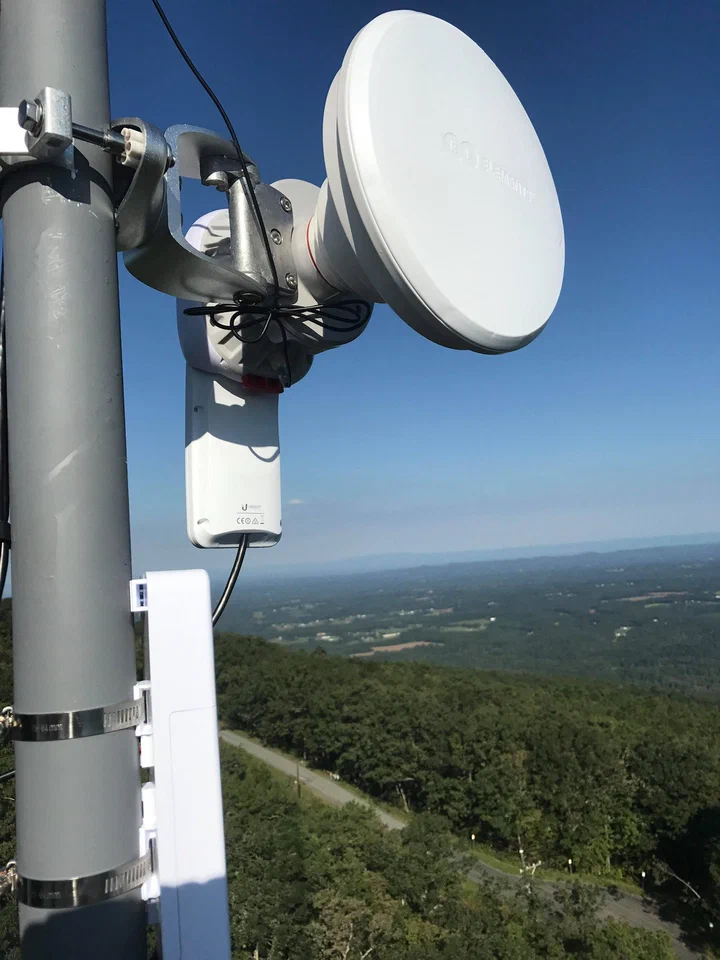
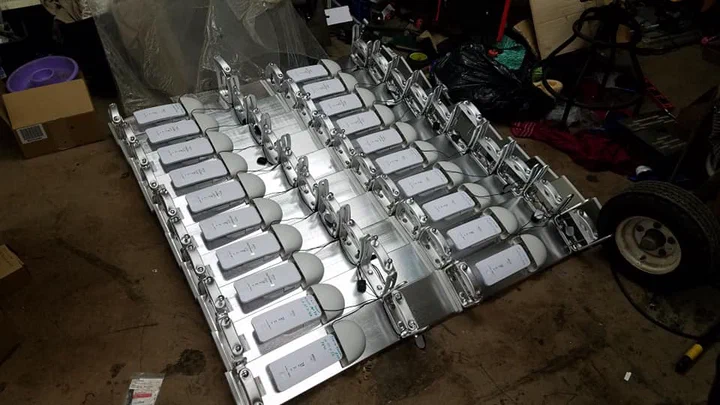
- RF Elements: horn antennas (Symmetrical, UltraHorn, Asymmetrical), TwistPort shielding, StationBox enclosures.
- Carrier-grade microwave: Aviat, SAF Tehnika, Siklu (see Microwave Backhaul for the licensed carrier scope).
If your platform isn’t on that list, we’ll learn it.
The craft is in the details nobody sees from the ground.
Most “mystery link failures” 18 months after install trace back to the details:
- Weatherproofing done to manufacturer spec. Mastic under tape. Two full wraps. No shortcut silicone.
- Drip loops on every cable entry so water doesn’t wick into the connector.
- Bend radius respected on every fiber run and every Cat6 drop.
- Grounding bonded at top of run, cabinet entry, and every 75 ft per manufacturer spec.
- Torque verified on every mount bolt. Alignment locked with bracket torque, not a cam-over kit that slips.
- Commissioning verified before demob: insertion-loss on fiber and RSL on every radio link, against the link budget.
The work that matters on a one-day visit is the same work that matters on a ten-day build. Scale changes, standards don’t.
Integration with your existing site.
Most antenna-and-radio work is on sites you already own, built by you, us, or somebody else entirely. That means working into existing power, existing cable trays, existing grounding, and existing network configuration. We don’t show up and rewire the site. We work cleanly into what’s there.
If something we encounter violates spec (undersized cabinet DC, missing surge protection, a bonding gap that’s been there for five years), we flag it in the punch list. Fix is your call. We can quote the remediation work, or you can hand it to someone else. Our job is to get the new gear in without creating new problems.
Handoff is clean. As-built doc lists exactly what we added, what we touched, and what we noticed. Your NOC, integrator, or managed-services provider gets a report they can act on.
How it goes.
A typical antenna-and-radio visit runs 1 to 2 days on-site per tower. Same-day turnaround possible on simple swaps with gear pre-staged.
Scoping call
What’s being installed, swapped, or added. What’s already on the tower. Your RF platform, your cabinet, your power, your network. If you have a wiring diagram or a tower-loading study, we want to see it before we climb.
Gear verification
Confirm we have the right part numbers, the right cables, the right connectors. Radios and alignment gear pre-tested on the ground at the site before anything climbs. Nothing kills a one-day visit like a DOA ODU you find out about at 200 ft.
Climb and install
Mount hardware up or verified. Antenna, radio, or CPE installed. Connections torqued. Weatherproofing applied to every RF and data connector per manufacturer spec. Cable runs (fiber, DC, Cat6) pulled, bracketed, and grounded where they transition.
Alignment and commissioning
Radio brought up, configured to your network’s IP and frequency plan, aligned against your RF design using the platform’s native diagnostics. Insertion-loss on fiber. RSL verified against the link budget. Ring-protection failover tested if the add is in a ring.
Handoff and documentation
Walk the install with your engineer or NOC on the phone. As-built doc delivered: what we added, what we touched, connector photos, alignment logs, and any punch-list items we flagged. Your integrator or NOC has what they need.
Built to standard. Installed to spec.
Same code and manufacturer-spec framework as our larger-scope installs. The work is smaller. The craft isn’t.
Manufacturer specifications
Every antenna, radio, fiber connector, and mount installed per its manufacturer’s published spec. Bend radius, torque, polish grade, weatherproofing, grounding. To spec, not close to it.
TIA-222-I
ANSI structural standard for antenna-supporting structures. If the gear you’re adding pushes loading above the tower’s original design, we flag it and loop in your structural engineer. See our tower modifications service for load-review and modification work.
FCC Part 15 / Part 101 / Part 96
Part 15 for unlicensed, Part 101 for licensed microwave, Part 96 for CBRS. We respect EIRP caps, coordination requirements, and SAS tier rules at install time.
Motorola R56 / IEEE 80
Grounding and bonding specs. R56 default on WISP and commercial; stricter IEEE 80 and 837 on utility-grade sites.
NEC Article 810
National Electrical Code for radio equipment, feedline grounding, lead-in conductors. DC runs, Cat6 shielding, and fiber-armor bonding installed per NEC.
NFPA 780
Lightning protection. Surge suppressors bonded to the tower ring before any added radio goes on-air.
OSHA 1926 / ANSI A10.48
Safety at height. 100% tie-off, authorized rescue, site-specific safety plan on every climb.
Gear & certifications.
Equipment
- Climb team with 100% tie-off and authorized rescue capability on every crew
- Platform-native alignment tooling for Ubiquiti, Cambium, Mimosa, Tarana, Nokia, and Baicells gear
- Precision antenna alignment for tight-tolerance sector and CBRS work
- Native-radio diagnostics for spectrum scan and link verification (Nokia, Airspan, Ubiquiti, Cambium, Tarana platform tooling), OLTS sets for fiber insertion-loss testing
- Fiber splicers, polish kits, and inspection microscopes
- Weatherproofing supplies: mastic, 3M temflex, butyl rubber (manufacturer-spec only)
- Cadweld and mechanical bonding tooling for grounding
- Self-contained crew trailers: climb gear, RF tooling, common connector inventory, and spares
Certifications & insurance
- NATE ClimberSafe and SafetyLMS-certified climbers
- Platform-fluent installers on Ubiquiti, Cambium, Mimosa, and Tarana platforms
- CBRS Certified Professional Installer (CPI) training on lead CBRS hands
- FCC General Radiotelephone Operator License (GROL) on lead RF hands
- OSHA 10 / 30 compliant crews
- Fully insured: general liability and workers’ compensation
Questions we get a lot.
What's the difference between this service and Sector & Backhaul?
Scope. This page covers individual RF installs and swaps. Changing out a radio. Adding one antenna to an existing tower. Integrating a single CPE or carrier add-on. The work that takes one or two days on-site.
Sector & Backhaul covers full-sector deploys and commissioning scope. Multi-carrier sector builds, backhaul ring topology, CBRS LTE sites with SAS registration, end-to-end RF commissioning on a new or modified tower. Multi-day scope, multiple crews.
Both pages run on the same standards and the same crews. The difference is scope size, not install quality.
Can you just swap one radio?
What platforms do you install?
Deep fluency across:
- WISP and CBRS radios: Ubiquiti (airFiber, AirMAX, LTU, Wave, CPE lines), Tarana G1 and G2, Cambium ePMP/PMP/PTP/cnWave, Mimosa A5/A6/B5/B11 and C-series CPE, Baicells CBRS eNB.
- Antennas: RF Elements horns (Symmetrical, UltraHorn, Asymmetrical) plus vendor-native sectors, dishes, and omni antennas.
- Carrier-grade microwave: Aviat, SAF Tehnika, Siklu. For licensed Part 101 paths specifically, see Microwave Backhaul.
- Nokia: carrier microwave, Fastmile FWA, CBRS AZQC site kits.
If your platform isn’t on that list, we’ll learn it. RF install fundamentals don’t change brand to brand.
Do you do CPE and subscriber-side installs?
How do you handle weatherproofing?
Per manufacturer spec, not by eye. Standard practice:
- Mastic compound applied to the connector body before tape.
- Two full wraps of vinyl tape (3M temflex or equivalent manufacturer-spec).
- Butyl rubber on spec where the manufacturer calls for it (some Ubiquiti and Cambium radios).
- Drip loop on every cable entry so water wicks away, not into, the connector.
This is the single most common reason “mystery link failures” happen 12 to 18 months after install. We don’t cut this step.
What if my tower doesn't have the structural capacity for more gear?
Do you coordinate with my RF integrator or NOC?
Can you do fiber, DC, and Cat6 cabling?
Yes, full stack:
- Single-mode fiber for radios with fiber optics, including splicing and insertion-loss testing.
- DC power for radios that need separate power, sized to run length with surge protection at both ends.
- Cat6 / Cat6A shielded Ethernet for PoE-fed radios with weather-sealed connectors.
Do you do grounding and bonding of the added equipment?
How long does a typical antenna-and-radio visit take?
- Single radio swap on an accessible tower: same-day, typically 4 to 6 hours on-site.
- New antenna or CPE install: 1 day.
- Single-link PTP install or carrier add to existing sector: 1 to 2 days.
- Bulk CPE program rollout: quoted per-visit with program rotation.
Scheduling is driven by weather, crane (if needed), and whether the climb is straightforward.
How much does this kind of work cost?
Fixed fee on defined scope, with unit rates and change orders for field conditions. Quoted against platform, tower height, and site access. Rough ranges:
- Single radio swap: low four figures per visit.
- New antenna add on existing tower: mid four figures.
- Carrier add to existing sector mount: low five figures.
- Bulk CPE rollout: program rate, quoted per-door.
Send us the scope and you’ll have a line-itemed quote inside a week.
What's your service area?
How do I get started?
Send us what you need done (platform, gear part numbers, tower location, any existing wiring diagrams), and your target window.
Request a quote here or call us at (763) 280-6050. Most customers have a quote back inside a week.
Don’t see your question? Ask us directly. We answer every scoping call.
Related services.
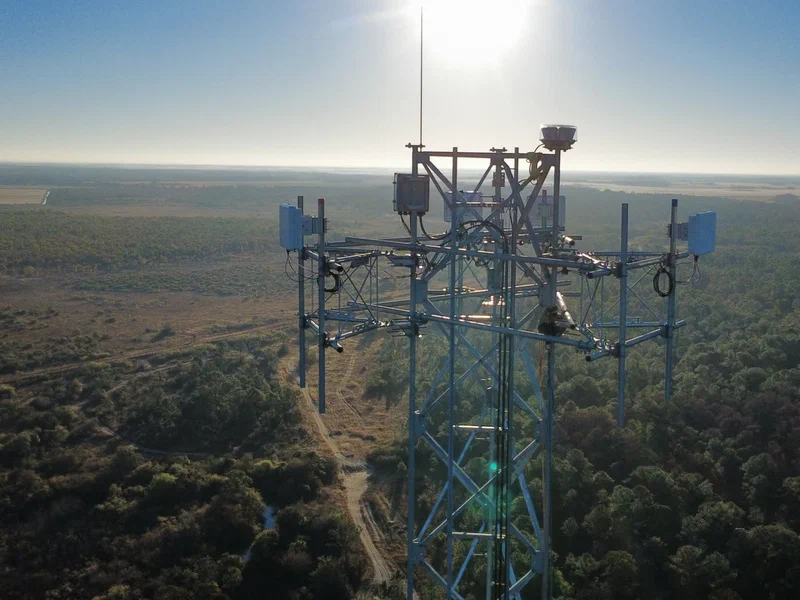
Sector & Backhaul
Sector antennas, backhaul dishes, horn arrays, aligned and sealed.
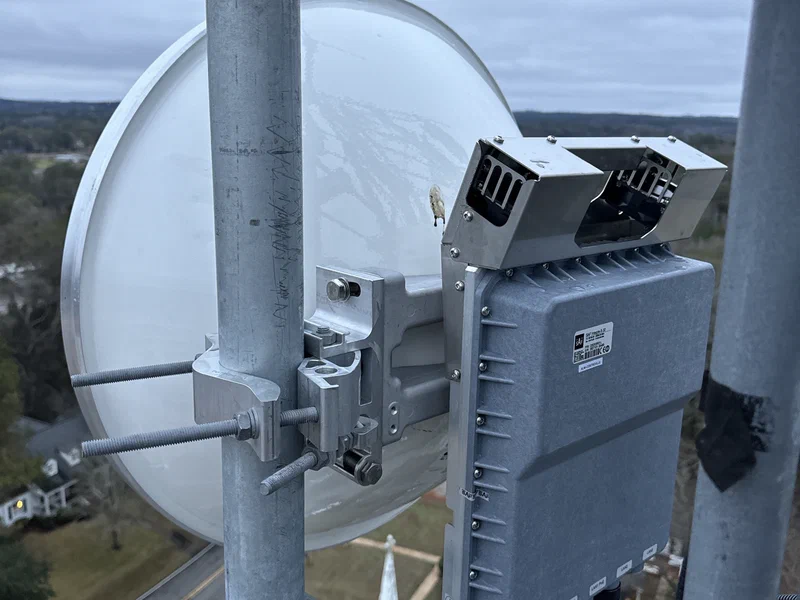
Microwave Backhaul
Point-to-point links, redundant rings, licensed and unlicensed.

Site Design & RF Planning
Coverage planning, sector layouts, and pre-deploy mock-ups.
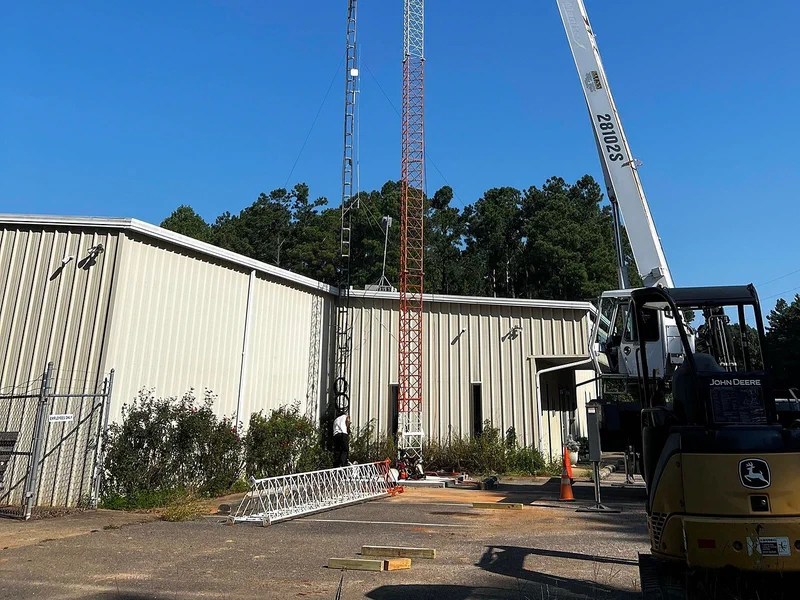
Tower Modifications
Antenna swaps, feed-line replacement, load-bearing upgrades.
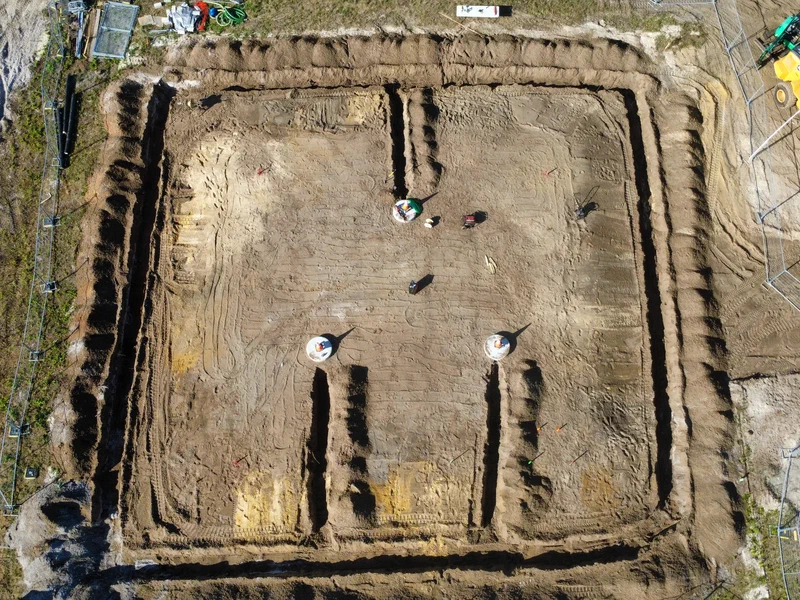
Grounding & Cadwelding
Ground rings, exothermic welds, bonding to NEC and manufacturer spec.
Page last updated July 30, 2026.
Tell us the site.
We'll bring the steel.
Send the location, tower type, scope, and timeline. We come back with a quote, a crew, and a schedule you can build a business around.