
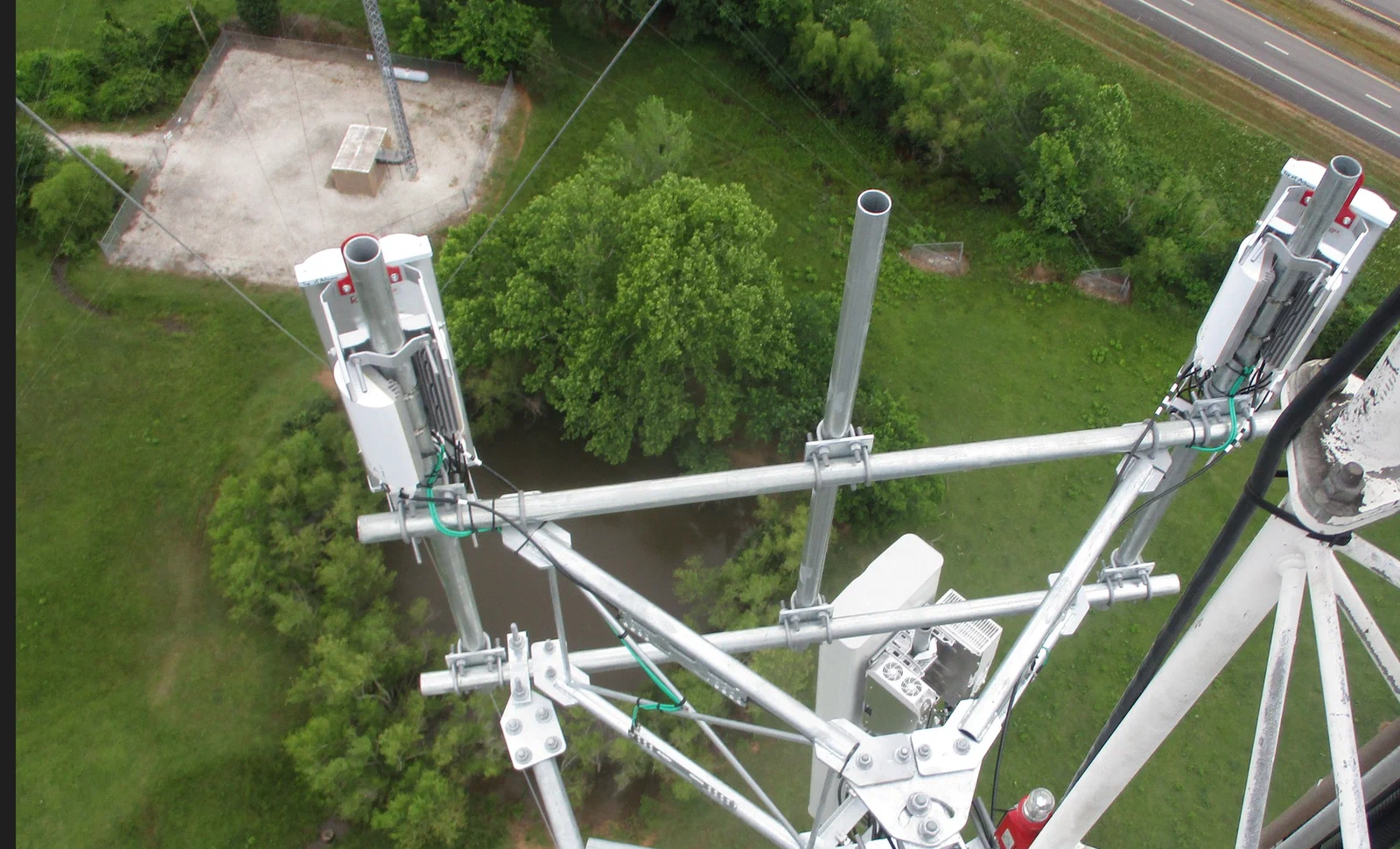
Tower Maintenance & Inspection
A tower is a 20-year asset, not a build-it-and-forget-it structure. Scheduled inspections to TIA-1019-A, condition reports your engineer and insurer can act on, and the remediation work to keep the structure in spec. Multi-year fleet programs — base year plus option years — that inspect every site on a published calendar. Utilities, WISPs, public-safety networks, and tribal-nation broadband operators.
What's included.
Every inspection delivers a signed condition report your engineer, insurer, or FCC / FAA auditor can act on. Findings rolled directly into a scoped remediation plan, not just a list of problems.
- Scheduled condition inspection to TIA-1019-A (ANSI standard for installation, alteration, and maintenance of antenna-supporting structures)
- Full-height climbing inspection with elevation-by-elevation photo record
- Structural-member condition: corrosion, coating failure, section loss, weld integrity
- Connection-plate and splice inspection with statistical bolt-torque sampling (ASTM A325 / A490)
- Guy-wire condition assessment: strand, grips, thimbles, terminations, turnbuckles
- Anchor-block inspection: concrete condition, rod corrosion, soil and drainage at the guy radius
- Foundation inspection: pier / pad condition, anchor-bolt torque, grout, settlement signs
- Plumb and guy-tension spot check (deep work handled on Plumb & Tension)
- Climb-system inspection: safety climb, step bolts, ladder continuity, fall-arrest anchorage
- FAA obstruction-lighting function verification and log reconciliation (see Obstruction Lighting for repairs)
- Grounding-system continuity and bond testing (see Grounding & Cadwelding for repair scope)
- Transmission-line and waveguide inspection: hangers, ice bridges, jumpers, weatherproofing
- Antenna-mount and sector-bracket condition, including aging weatherproofing and corrosion at dissimilar-metal joints
- Ice-bridge, cable-tray, and entry-port inspection from tower base to cabinet
- Compound condition: fencing, gates, access roads, signage, vegetation, and drainage
- Paint and coating condition with FAA-marking compliance check (see Tower Painting for recoat)
- Post-storm and post-event emergency inspection with damage photo record
- Insurance and reinsurance condition-audit inspections
- Multi-site fleet inspection programs: annual rotation across 10 to 500+ towers, typically a one-year term with option years (1+4 is a common utility buy)
- Utility fleet inspection contracts covering every comms site in a territory — substation towers, DA monopoles, relay sites — same template, year-over-year comparison
- Signed inspection report with prioritized punch list and scoped remediation plan
Need tower maintenance & inspection on a real deadline?
Send your site details. We come back with a quote, a crew, and a schedule.
Inspections that lead to a fix, not just a report.
Most tower operators have a file cabinet full of inspection reports. Red findings from 2019 that never got resolved. A carry-forward punch list with nothing carried forward. A photograph of a rusted strand that’s still there five years later because nobody followed up.
That’s not what we do. Our inspection scope ends with a prioritized punch list and a scoped remediation plan, not a PDF that sits in a folder. If something is red, we quote the fix in the same document. If it needs your structural PE involved, we flag that and coordinate the hand-off. If it’s safe to run through one more season but should be on the schedule for next spring, we say so in plain language.
That’s the difference between an inspection program and a compliance checkbox. You get a tower you can actually rely on, not a binder.
What we look at, top to bottom.
A full-height climbing inspection to TIA-1019-A covers the whole structure, not just the parts that are easy to photograph.
- Structural steel. Corrosion, coating failure, section loss, weld condition, member distortion, ice damage, bird-nest and rodent impact.
- Connections. Flange splices, diagonal connection plates, and leg splices. Visual condition of every bolt, statistical torque sampling per ASTM A325 / A490 grade, missing-fastener check, tell-tale washer check where present.
- Guy hardware (on guyed towers). Strand condition the full length, grips, thimbles, turnbuckles, end-point hardware, and a visual strand count per spec.
- Anchor blocks. Concrete condition, rebar corrosion where exposed, rod condition at the embedment line, soil condition, drainage, and any ground-level signs of movement.
- Climb system. Safety-climb cable continuity, lanyard-slot wear, step-bolt integrity, ladder cage where present, transition-point hardware.
- Obstruction lighting. Function check against the FCC / FAA requirement for the tower’s height class, beacon photocell and flash-head condition, wiring at junction boxes. Lighting log pulled and reconciled against the field check.
- Grounding system. Above-grade bond condition, cadwelds that were once made but now show green oxidation, surge-suppressor condition at cabinet entry, tower-ring continuity (we pull fall-of-potential or clamp-on ground-resistance readings on sites where the scope calls for it).
- Transmission plant. Hangers at spec intervals, jumpers, entry-port boots, ice bridge, and weatherproofing condition. We open a sample of weatherproofed connectors on every visit to check the real state under the tape.
- Antenna and mount condition. Bracket torque, dissimilar-metal corrosion, bird-deterrent condition, and alignment drift.
- Compound. Fencing, gates, access road, signage, vegetation encroachment, and the drainage around the foundation.
Everything gets photographed with an elevation reference. Findings get written up with a severity flag, a recommended action, and a quoted remediation scope where applicable.
TIA-1019-A and the recommended cadence.
ANSI/TIA-1019-A is the industry standard for installation, alteration, and maintenance of antenna-supporting structures. It’s the document your structural engineer, your insurer, and most state broadband programs default to. It defines condition-inspection scope, recommended inspection intervals, and the evidence a qualified inspector is expected to produce.
The recommended cadence varies with tower class and exposure:
- Class I / II towers (low-consequence): every 3 to 5 years under standard exposure.
- Class III towers (high-consequence, public-safety, transport carrier): every 1 to 3 years, often annually for operators with strict SLAs.
- Post-event: any named storm, earthquake, lightning strike, or equipment-loading change triggers an event-based inspection before the structure re-enters full service.
- FAA-lit towers: lighting observation quarterly at minimum, typically logged alongside annual or bi-annual condition inspection.
- Insurance-driven programs: carrier or reinsurer often sets the schedule inside the policy. We work to whichever is stricter — your engineer’s recommendation, the insurer’s schedule, or the TIA-1019-A floor.
We build the inspection schedule against whichever framework drives your compliance obligation. For multi-site fleets, the whole program rotates through our crews on a published calendar so nothing falls out of cycle.
Fleet inspection programs.
Single-site inspections are straightforward. Where the work gets interesting is running an annual condition-inspection program across a fleet of 10, 50, or 500+ towers without losing track of any of them.
How we run fleet programs:
- Tower register. A single source of truth per program: tower ID, coordinates, class, height, type, age, last-inspection date, open punch-list items, and next-due date.
- Rotating crew schedule. One or two crews rotate through the program on a published calendar. Travel and mobilization amortized across multiple sites per trip.
- Consistent reporting template. Every report built off the same schema so your engineer can compare tower-to-tower and year-over-year.
- Prioritized remediation plan. Findings ranked across the fleet by severity, not just per-site. Your capex planning gets a single document, not 200 separate reports to synthesize.
- Integration with your asset system. If you run a tower asset platform (Siterra, Accruent, Tower Numerics, or a home-grown tracker), we deliver in the format your system ingests.
Common programs we run:
- Electric utilities and multi-state IOUs. Inspect every comms site in the territory. Base year plus option years (1+4 is a normal buy). CIP-004 onboarding once, kept current through the options. Same report template in every operating company.
- WISP fleets (50 to 200+ towers).
- Rural electric cooperatives.
- State broadband grantee portfolios.
- County public-safety networks.
- Tribal-nation broadband operators with regional tower footprints.
The utility version of this contract is not a stack of one-off climbs. It is a published rotation, a tower register, and a year-over-year file your telecom director can hand to compliance without re-bidding the climbing contractor every April. Electric utility industry page has the CIP and multi-state layer.
Post-storm and event-based response.
After a named storm, microburst, earthquake, or lightning event that visibly moved or damaged the structure, you need a qualified-inspector condition assessment before the tower is declared safe to run at full load.
Event-based response scope:
- Expedited mobilization. Crews running out of Alabama and Texas typically on-site inside 24 to 48 hours in the lower 48, weather and access permitting.
- Damage assessment. Full-height climbing inspection with emphasis on structural members, guy hardware, anchor blocks, and foundations.
- Plumb-and-tension spot check to quantify any geometric displacement (deep correction work handled on Plumb & Tension).
- PE coordination for anything outside the engineer’s re-certification envelope. We don’t clear the structure for service until your PE has signed off on whatever the event produced.
- Documented condition report with photos, severity grading, and a remediation scope quoted at the same visit. Your insurer and your engineer get the evidence they need in one package.
For high-consequence infrastructure — public-safety transport, utility backhaul, hospital microwave — post-storm response is a planned capability, not a scramble. We pre-register on-call with the operators who want that coverage.
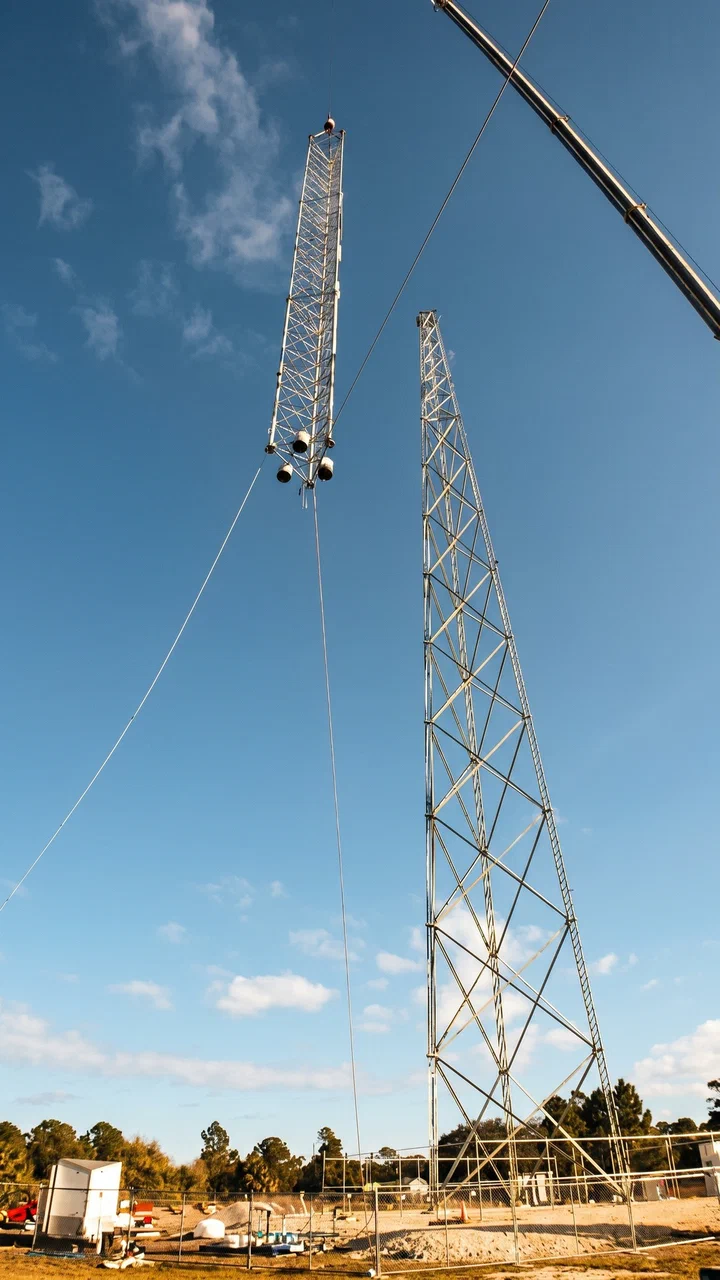
How it goes.
A scheduled condition inspection runs one day per standard tower, longer on tall guyed structures or sites with extensive remediation findings. Fleet-program visits amortize travel across multiple towers per trip.
Pre-visit prep
We pull the stamped drawings, prior inspection reports, the operator’s open punch list, and the obstruction-lighting log. For guyed towers we pull any prior plumb-and-tension data. For lit towers we pull the FAA study and the operator’s quarterly observation log. Everything the crew needs to compare against is in hand before they climb.
Ground-level walkthrough
Compound condition: fencing, gate, access road, signage, grounding ring above grade, foundation and anchor condition, and drainage. Lighting panel and cabinet interior. Photographed and logged before we touch the tower.
Full-height climbing inspection
Elevation-by-elevation inspection of structural members, connections, guy hardware (guyed), climb system, transmission plant, antenna mounts, and any aging weatherproofing. Statistical bolt-torque sampling per grade. Photo record with elevation reference at every finding.
Functional checks
Obstruction-lighting function verification against the FCC / FAA requirement. Grounding continuity and bond testing where scoped. Plumb and guy-tension spot checks where the structure flags anything visual. Any finding that needs instrument-grade measurement rolls into a follow-up scope on the appropriate service line.
Condition report and punch list
Signed condition report delivered: structural condition, connection condition, guy and anchor condition (guyed), foundation condition, climb system, lighting, grounding, transmission plant, antenna mounts, and compound. Findings graded red / amber / green with recommended action, suggested timeline, and quoted remediation scope where applicable.
Remediation plan
Red findings scoped with a quote. Amber findings scheduled against next visit or next season. Anything that needs structural PE coordination flagged, with a hand-off to your engineer of record or our partner PE network. Your capex planner, your engineer, and your insurer all get a document they can actually use.
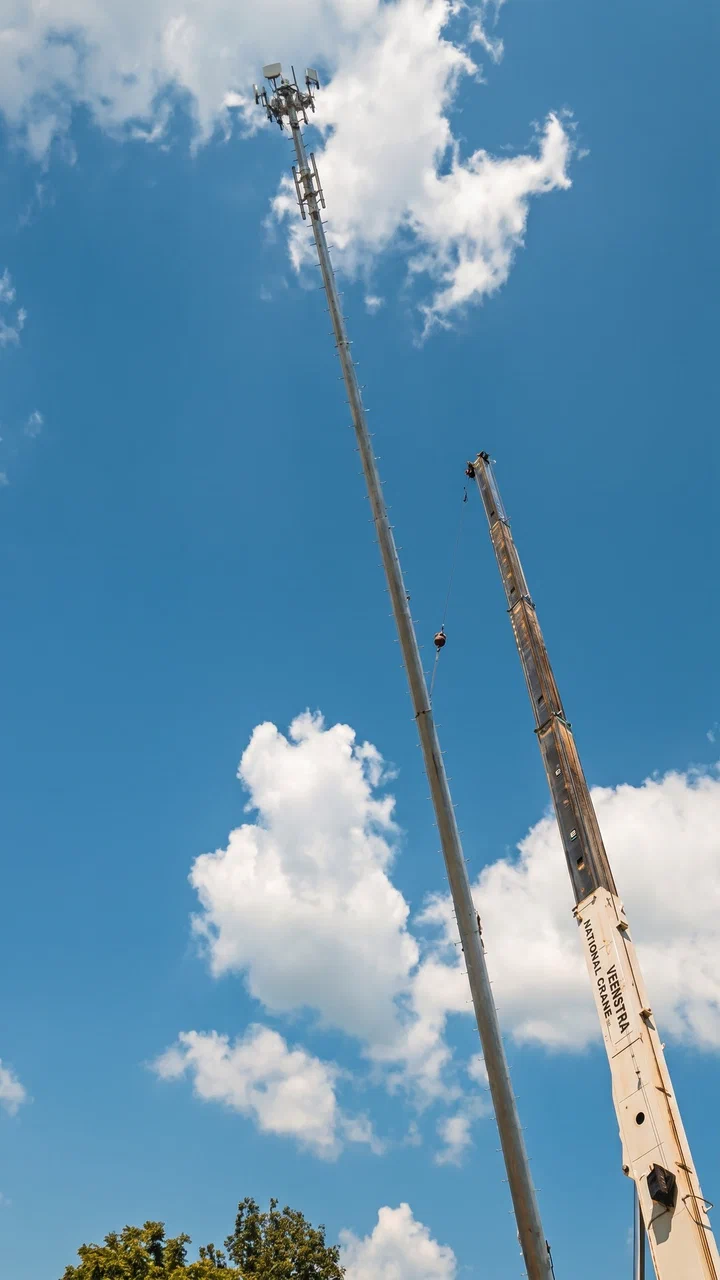
Inspected to standard. Reported to code.
Every inspection is held to the engineering framework your tower was built against, and the federal requirements that govern its operation.
TIA-1019-A
ANSI standard for installation, alteration, and maintenance of antenna-supporting structures. Defines inspection scope, interval recommendations, and the evidence a qualified inspector produces. This is the default framework we work to.
TIA-222-I
ANSI structural standard for antenna-supporting structures. Drives the design criteria your tower was built against — wind, ice, seismic, and equipment loading. Inspection findings are graded against the original design envelope.
ASTM A325 / A490
High-strength structural bolt specifications. Sample torque verification on every visit using calibrated tools, by grade and by connection class.
FCC Part 17 / FAA AC 70-7460
Federal rules for obstruction marking and lighting. Function verification against the lighting specification on the tower’s FAA study, and log reconciliation against the quarterly-observation requirement.
Motorola R56 / IEEE 80 / IEEE 81
Grounding and bonding standards. IEEE 81 ground-resistance and fall-of-potential measurement methodology applied when the scope calls for instrument-grade grounding verification.
NFPA 780
Lightning protection standard. Surge-suppressor condition and bond integrity checked at cabinet entry and tower ring on every inspection.
Insurance-carrier schedules
Where a tower is under an insurer- or reinsurer-required inspection schedule, we work to whichever is stricter: the policy schedule, the engineer’s recommendation, or the TIA-1019-A floor.
OSHA 1926 / ANSI A10.48
Federal and industry safety standards for communication-tower work. 100% tie-off, authorized rescue, site-specific safety plan on every climb.
Gear & certifications.
Equipment
- NATE-certified climb teams with 100% tie-off and authorized rescue on every crew
- Calibrated torque wrenches and impact tools for ASTM A325 / A490 bolt sampling
- Ultrasonic thickness gauges for section-loss measurement on aged steel
- Coating-thickness gauges for paint and galvanizing condition
- Digital cameras and elevation-reference systems for photo record
- Ground-resistance testers and clamp-on meters for grounding continuity (IEEE 81)
- Total stations for plumb spot-checks
- Load cells for guy-tension spot-checks (full scope on Plumb & Tension)
- Obstruction-lighting test gear and spare photocell / flash-head inventory
- Rope-access capability for specialty inspections where the standard climb path doesn’t reach
- Self-contained crew trailers: inspection tooling, PPE, and common-remediation spares travel with us
Certifications & insurance
- NATE ClimberSafe and SafetyLMS-certified climbers
- ANSI A10.48 qualified tower crews
- Qualified-inspector experience per TIA-1019-A
- Structural PE partner network for out-of-envelope coordination
- OSHA 10 / 30 compliant
- Fully insured: general liability and workers’ compensation
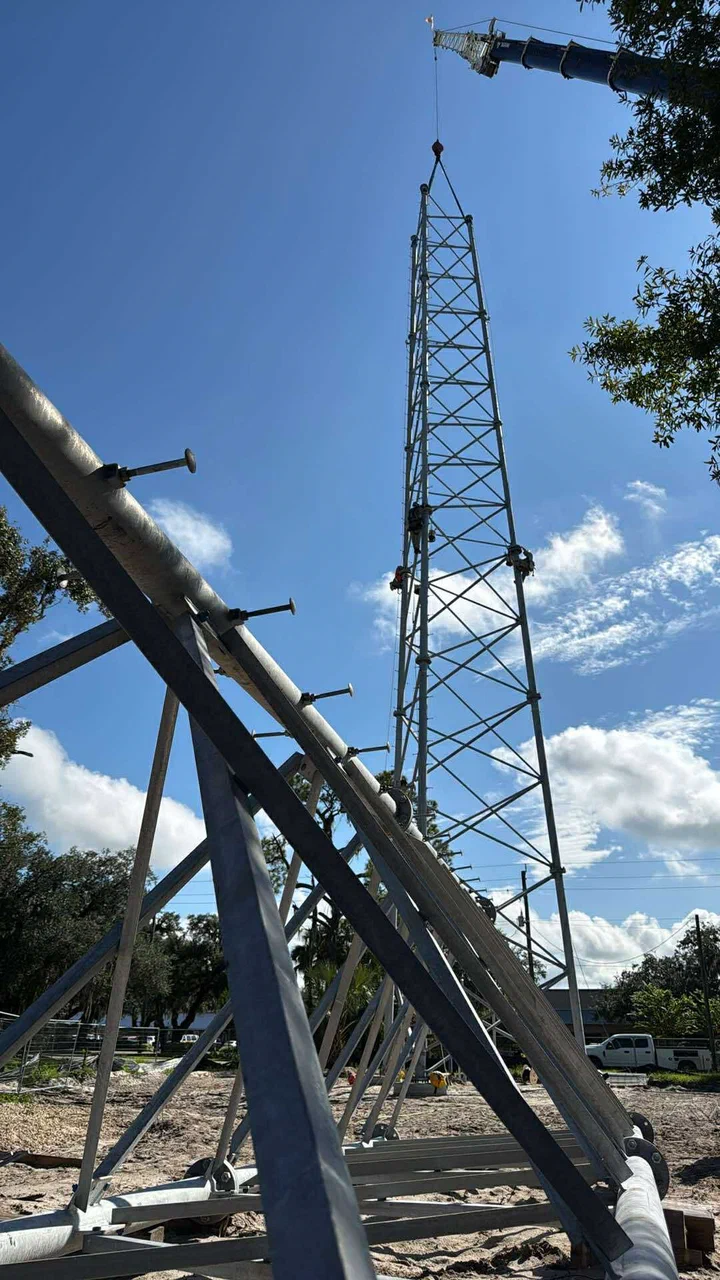
Questions we get a lot.
How often should I have my tower inspected?
Depends on the tower’s class, its exposure, and your compliance drivers. ANSI/TIA-1019-A recommended cadence, roughly:
- Class I / II towers (low-consequence): every 3 to 5 years under standard exposure.
- Class III towers (high-consequence, public-safety, carrier transport): every 1 to 3 years, annually for strict-SLA operators.
- Guyed towers in high-wind, icing, or high-salt environments: every 2 to 3 years regardless of class.
- FAA-lit towers: quarterly lighting observation required by FCC Part 17, typically bundled with annual or bi-annual condition inspection.
- After any significant event: named storm, earthquake, lightning strike that visibly moved the structure, or a known equipment-loading change.
Insurers, reinsurers, and state broadband programs often have their own schedules written into the policy or grant. We work to whichever is stricter.
What's the difference between this and Plumb & Tension?
Scope.
Maintenance & Inspection is the broad annual (or multi-year) condition assessment — every part of the tower, the compound, the grounding, the lighting, the transmission plant, and the mounts. You get a signed condition report with a prioritized punch list.
Plumb & Tension is the specific instrument-grade measurement and correction of tower plumb and guy-wire tension to TIA-222-I L/1500. Load cells on every guy, total station on every elevation, corrected back to stamped pre-load.
Most fleet programs run both together: an annual inspection, with plumb-and-tension on the cycle the engineer specifies for guyed towers in the fleet.
What do you cover in a climbing inspection?
Full-height elevation-by-elevation inspection:
- Structural members (corrosion, coating, section loss, welds).
- Connection plates and splices with bolt-torque sampling.
- Guy strand, grips, thimbles, turnbuckles, and end-point hardware on guyed towers.
- Safety-climb system, step bolts, and ladder continuity.
- Antenna mounts, sector brackets, and dissimilar-metal joints.
- Transmission-line hangers, jumpers, ice bridge, and entry-port weatherproofing.
- Obstruction-lighting function and wiring condition.
- Grounding continuity and surge-suppressor condition.
Plus a ground-level walkthrough of the compound, foundation, guy anchors, fencing, and drainage. Everything photographed with an elevation reference.
Do I get a report I can hand to my engineer or insurer?
Yes. Every inspection delivers a signed condition report with:
- Structural-member condition by elevation, graded red / amber / green.
- Connection and bolt-sampling results.
- Guy-hardware condition (guyed towers).
- Foundation and anchor condition.
- Climb-system, lighting, grounding, transmission-plant, and mount condition.
- Compound condition.
- Photo record with elevation references for every finding.
- Prioritized punch list with recommended action, suggested timeline, and quoted remediation scope.
Your structural PE, your insurer’s engineer, and your state broadband-program auditor have the evidence they need in one package.
Do you handle the remediation work too?
Yes, on most scopes. Remediation hand-offs by service line:
- Guy re-tension or plumb correction → Plumb & Tension.
- Antenna swaps, feed-line replacement, load-bearing upgrades → Tower Modifications.
- Beacon, strobe, and side-light repairs → Obstruction Lighting.
- Ground-ring repair or expansion, exothermic welds, bonding → Grounding & Cadwelding.
- Paint and FAA-marking recoat → Tower Painting.
- Anything outside the engineer’s re-certification envelope → structural PE coordination before any correction work.
You can take the inspection report and hand it to another contractor if you prefer, but most of our inspection clients keep the remediation on the same crews for continuity.
Do you do post-storm emergency inspections?
Do you run multi-tower fleet programs?
Yes, and a lot of them. Fleet inspection programs are a big share of our recurring work. Typical clients:
- Electric utilities and multi-state IOUs that want every comms site inspected under one contract — substation towers, DA monopoles, relay sites, generation sticks.
- WISP operators with 50 to 200+ towers on a rotating schedule.
- Rural electric cooperatives running utility-communications towers.
- State broadband grantees with reporting obligations under the grant.
- County public-safety networks and regional LTE/5G operators.
- Tribal-nation broadband operators with regional tower footprints.
Fleet programs get a tower register, a published rotation calendar, a consistent reporting template, and a prioritized remediation plan across the whole footprint. Pricing runs on a per-tower program rate with travel amortized across the rotation.
Can you do a one-year inspection contract with option years, covering every site?
Yes. That is how utilities usually buy this. One-year term, four additional one-year options is a normal shape. Three-plus-two is another.
Year one is onboarding and the baseline rotation: every site on the list, TIA-1019-A, same template, CIP and contractor-prequal done once. Option years are the comparison — what moved, what was supposed to get fixed, what is still red. We crew and price the program so exercising the option is cheaper and cleaner than re-bidding.
Send the site list, last-inspection dates if you have them, and the term you want on paper. Utility inspection programs cover the CIP and multi-state layer on top of this.
What standards do you inspect to?
Can you do grounding-resistance testing?
Do you work on towers you didn't build?
Does my tower have to come off-air for an inspection?
How much does an inspection cost?
Fixed fee on defined scope, with unit rates and change orders for field conditions. Quoted against tower height, type, and access. Order of magnitude:
- Routine scheduled inspection on a standard self-supporting or monopole tower (100 to 200 ft): mid four figures per visit.
- Guyed tower scheduled inspection (150 to 300 ft): mid four figures.
- Tall guyed tower inspection (400 to 700 ft): upper four to low five figures.
- Fleet-program inspections: per-tower program rate with travel amortized across the rotation, typically 30 to 50% below the one-off rate.
- Post-storm emergency response: low to mid five figures per site depending on damage scope.
- Remediation work: quoted separately on the relevant service line, with a package discount when scoped alongside the inspection.
Send us the site (or the fleet list) and you’ll have a line-itemed quote inside a week.
What's your service area?
How do I get started?
Send us the tower site (address or coordinates), the tower type and height, the last inspection date if you have it, and whether this is a scheduled visit, a fleet-program setup (include the site list and the term you want — base year plus options), or a post-event response.
Request a quote here or call us at (763) 280-6050. Scheduled and fleet-program work typically quoted inside a week. Storm response quoted the same day.
Don’t see your question? Ask us directly. We answer every scoping call.
Related services.
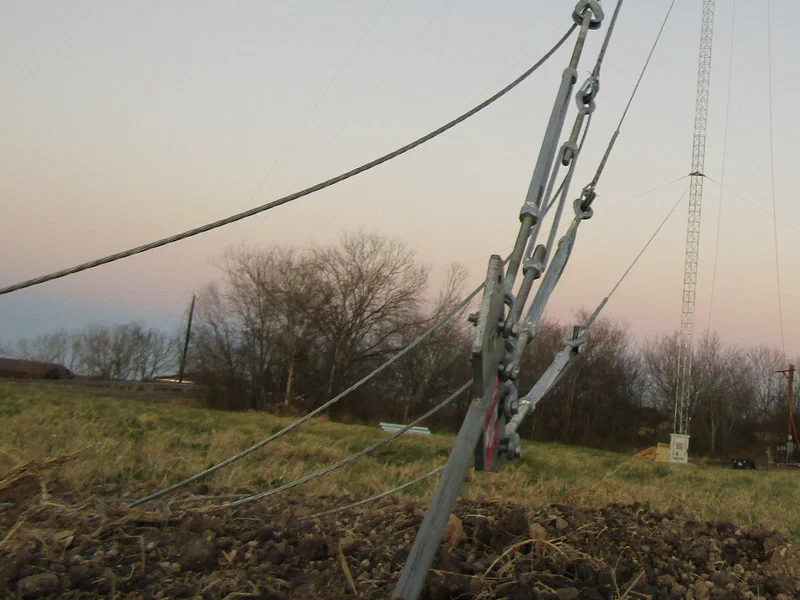
Plumb & Tension
Verify plumb, tension guys, correct storm-displaced structures.
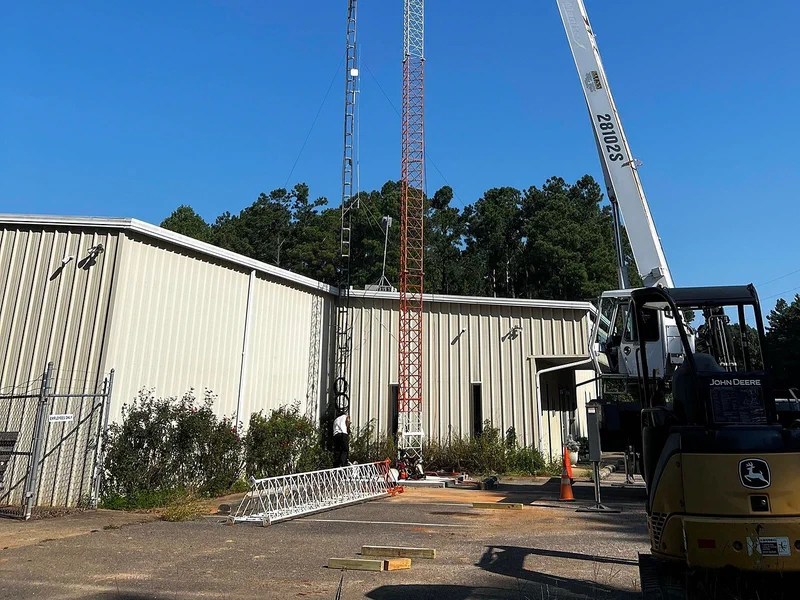
Tower Modifications
Antenna swaps, feed-line replacement, load-bearing upgrades.
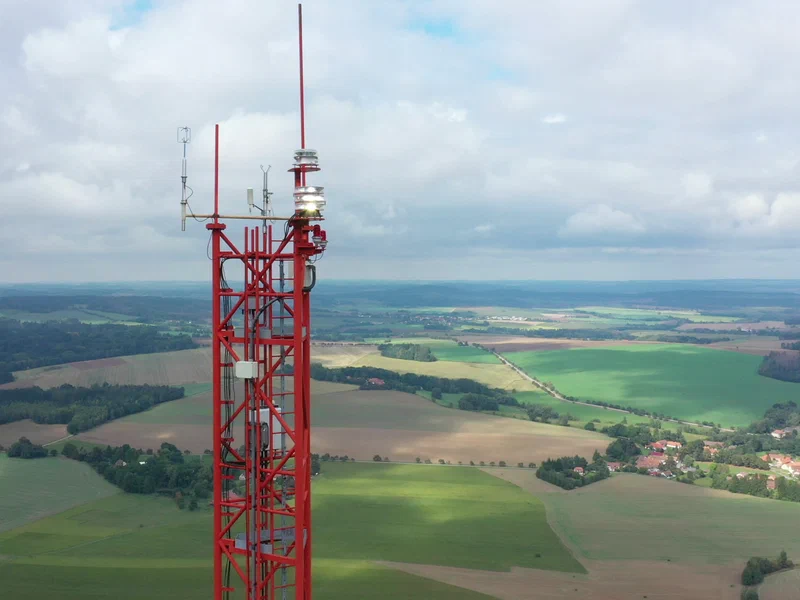
Obstruction Lighting
FAA-compliant beacon, strobe, and side-light repairs. Bulb and LED replacement.
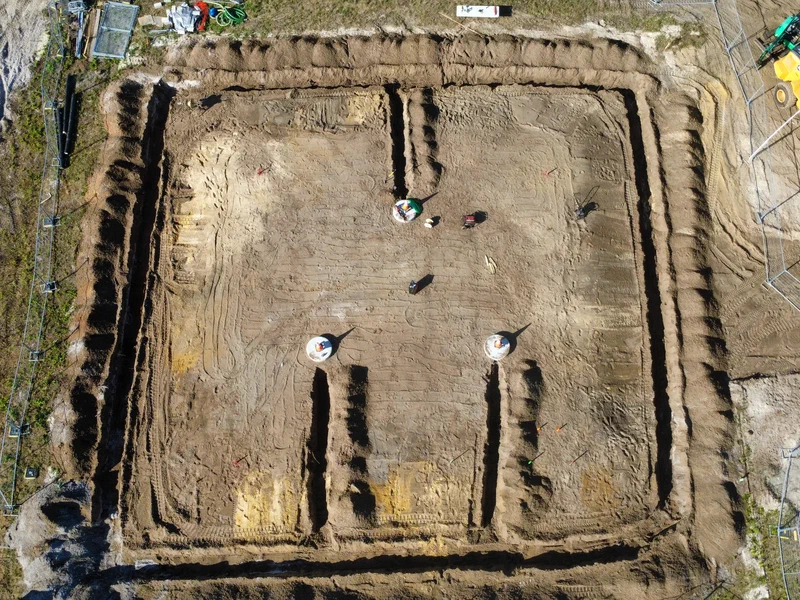
Grounding & Cadwelding
Ground rings, exothermic welds, bonding to NEC and manufacturer spec.
Tower Painting
FAA-marked aviation orange and white, re-coats, and rust abatement.
Page last updated August 21, 2026.
Tell us the site.
We'll bring the steel.
Send the location, tower type, scope, and timeline. We come back with a quote, a crew, and a schedule you can build a business around.