
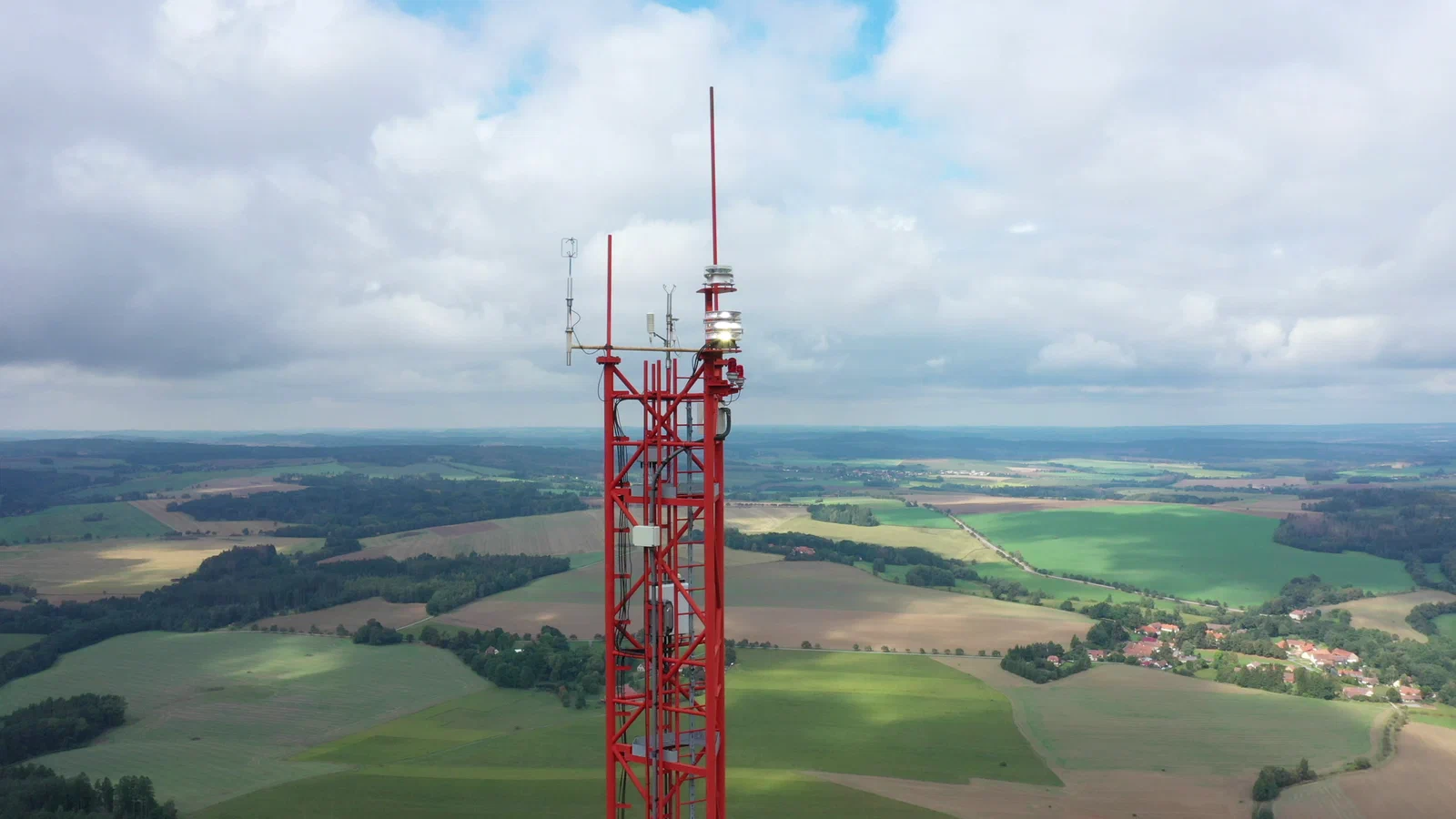
Obstruction Lighting
A dark tower is an FAA violation and a liability. L-810 side markers, L-864 red beacons, L-865 white strobes, dual systems, LED retrofits, photocell and controller repair, and emergency NOTAM-response climbs. Per FAA AC 70/7460-1M, per 14 CFR Part 77, documented every visit.
What's included.
The full scope of obstruction-lighting work, from an emergency NOTAM-response climb on a failed beacon to a full LED retrofit across a fleet of towers.
- Emergency outage-response climbs for failed beacons, strobes, or side markers (open NOTAMs cleared the same trip)
- L-810 red side-marker light install, repair, and replacement (steady-burn 32 cd)
- L-864 red flashing beacon install and repair (night-only 2,000 cd)
- L-865 white medium-intensity flashing strobe install and repair (day/twilight 20,000 cd, night 2,000 cd)
- L-856 / L-857 high-intensity white strobes for structures over 700 ft (day 270,000 cd)
- L-866 / L-885 dual red and white combined systems
- Full LED retrofit of legacy incandescent systems (Hughey & Phillips, Flash Technology, Dialight, Drake, Unimar, SPX Flash)
- Photocell install, replacement, and sensitivity calibration
- Lighting controller and alarm-contact replacement at the ground cabinet
- Remote monitoring integration (NOMS / alarm-contact bridging to your NOC)
- Pulse-per-second timing on dual-system sites where synchronized flash is required
- Wiring inspection, conductor replacement, and weatherhead repair
- Surge protection and bonding of the lighting plant to the tower ground ring
- FAA / FCC ASR registration verification and lighting-spec confirmation
- FAA Flight Service notification coordination on outage and restoration per 47 CFR § 17.48
- Documentation: as-built lighting plan, lamp-type register, and post-repair photo record
Need obstruction lighting on a real deadline?
Send your site details. We come back with a quote, a crew, and a schedule.
An unlit tower is a NOTAM waiting to happen.
If your tower is over 200 ft AGL, or if it’s inside an FAA Part 77 imaginary surface near an airport, the FAA has told you in writing how it needs to be lit. The federal framework runs through 14 CFR Part 77 (which structures the FAA evaluates as obstructions) and 47 CFR Part 17 (FCC’s registration and lighting rules for those structures). The how-to standard is FAA AC 70/7460-1M, the current advisory circular that supersedes 70/7460-1L that a lot of existing plants were built to.
When a top beacon or flashing obstruction light fails on a registered structure and isn’t restored within 30 minutes, 47 CFR § 17.48 requires the owner to notify the nearest FAA Flight Service Station immediately, by the quickest means available. Flight Service then issues the NOTAM. The notification stands until the light is restored or an alternate system is energized. That’s the compliance baseline. The liability clock is shorter. A blacked-out tower near a flight path is the kind of problem that becomes somebody else’s case study in a federal register.
Vertical Axis rolls obstruction-lighting crews today. Scheduled replacement, emergency NOTAM climbs, full fleet LED retrofits, and dual red/white system installs on structures that outgrew their original lighting. Field-experienced across Hughey & Phillips, Flash Technology, Dialight, Drake, and Unimar. Documented per FAA spec, delivered with the paperwork your ASR auditor needs.
The lighting catalog, plain-English.
Obstruction lighting is a lettered-designator system. Here is what actually sits on your tower:
- L-810. Red steady-burn side-marker lights. 32 candela minimum. Mounted at intermediate elevations on any structure over ~200 ft. These are the little red dots you see on guy lines and at mid-height on a monopole.
- L-864. Red flashing beacon. 2,000 cd, night-only. The classic red “strobe” on top of older lit structures. Cheap to install, invisible during the day (which is why it’s often paired with paint instead of daytime lighting).
- L-865. White medium-intensity flashing strobe. 20,000 cd daytime and twilight, 2,000 cd at night. The white-only alternative that replaces the need to paint the tower aviation orange and white.
- L-864 / L-865 dual. Combined red-night, white-day system. You get the softer red glow at night (neighbor-friendly) and the bright white strobe during the day (no paint required).
- L-856 / L-857. High-intensity white strobes for structures above 700 ft. 270,000 cd daytime. Required on the tallest guyed towers and broadcast structures.
- L-866 / L-885. Newer dual-mode and catenary-specific designators under the current AC.
The right system depends on the structure height, the location, and whether you want to paint the tower. We work from your ASR filing and the stamped lighting plan. If you don’t have one, we’ll build one against AC 70/7460-1M and your tower’s actual AGL and AMSL.
LED retrofits are how you stop climbing twice a year.
A legacy incandescent L-864 beacon runs a PAR-56 lamp (typically 300 W on standard L-864 platforms; PAR-64 1,000 W lamps on some L-865 plants) that lasts 4,000 to 8,000 hours. On a 24/7 duty cycle, that’s roughly 6 to 11 months before it burns and Flight Service has a notification on file against your tower. Lamps also fail without warning. The first time you know is when the remote monitor trips or the neighbor calls.
LED beacon and strobe modules run 100,000+ hours. That’s 11+ years of 24/7 operation, typically with graceful degradation rather than hard failure. For a fleet of lit towers, the math is easy:
- Fewer outage-response climbs per year
- Lower power draw (one third to one fifth of an incandescent beacon)
- Better remote-monitoring telemetry (most LED controllers report per-module health, not just “on/off”)
- No PAR-56 lamp inventory to manage
Retrofit kits exist for nearly every legacy platform: Hughey & Phillips Flash 1000 and FTS 2700, Flash Technology FTS 371 and FTB 224, Drake light systems, Dialight RTO/RTR. We install the correct retrofit module, verify the controller supports the LED duty cycle, and certify the installation to AC 70/7460-1M photometric requirements.
Fleet retrofits pay back on avoided climb labor. We’ll model your fleet’s annual lamp-replacement labor, the outage-notification exposure, and the projected LED-retrofit payback as part of scoping. Most owners find the payback lands between 2 and 4 years on a 20+ tower fleet.
Outage response. Monitoring. Documentation.
The compliance workflow for a lit tower has three legs:
1. Monitoring. The lighting plant needs to tell someone when it fails. At minimum that’s an alarm contact at the ground cabinet tied to an autodialer or a remote-monitoring bridge. On modern sites it’s a NOMS-compatible telemetry feed to your NOC. We install or integrate both.
2. FAA Flight Service notification. When a top beacon or flashing obstruction light fails and isn’t restored within 30 minutes, 47 CFR § 17.48 requires the owner to notify the nearest FAA Flight Service Station immediately, by the quickest means available. Flight Service then issues the NOTAM. We coordinate with your network ops or notify directly (ASR number in hand) on your behalf, then call Flight Service again to clear the notification once the light is restored.
3. Restoration documentation. Every repair or replacement comes with photos, the lamp or module serial number, the measured post-repair photometric output where applicable, and a signed service report. Your ASR audit package, your insurance file, and your successor contractor all have what they need.
Emergency response: obstruction-lighting climbs are part of our standard storm-response and 24-hour on-call rotation. Crews running out of Alabama and Texas typically mobilize within 24 hours for an open NOTAM in the lower 48.
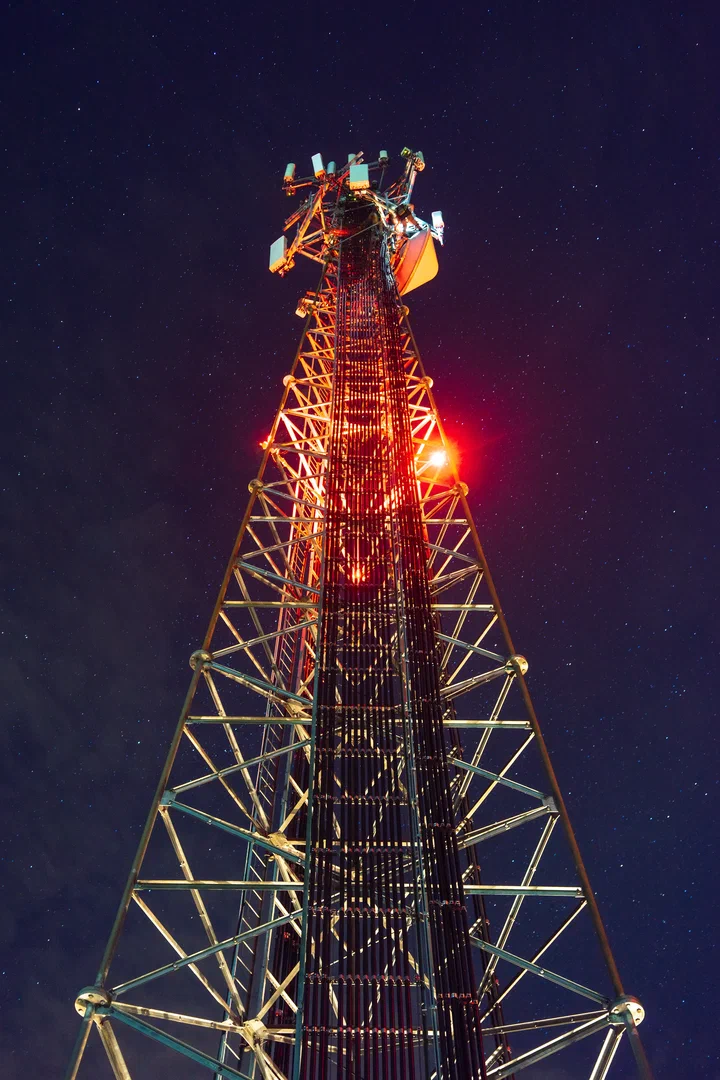
Airfields, launch ranges, and military lighting are a different job than a rural WISP tower.
Most of the obstruction-lighting work on this page is a registered communications structure in the FCC ASR database. A dark beacon, a 30-minute notification clock, a Flight Service NOTAM. That’s the commercial and WISP version of the job.
Airfield-adjacent, launch-range, and military lighting sits inside a tighter envelope. The structure may be inside a 14 CFR Part 77 imaginary surface around a runway. It may sit on a range where night operations, range safety, and a facilities shop — not a WISP NOC — own the outage. It may not have an ASR number at all. The lighting spec still comes from FAA AC 70/7460-1M, or from the installation’s own lighting plan. The phone call still sounds the same: the light is out, and someone who flies near it needs it back.
We take that work. L-810 / L-864 / L-865 / dual systems, LED retrofits, controller and photocell service, emergency outage climbs. Documented to the spec on the drawing, whether that drawing came from an FAA determination, an installation design standard, or a prime’s lighting package. Federal, military, and government is the industry page for how we show up on those sites.
Part 77 surfaces don't care what you use the tower for.
A structure inside the approach, transitional, or horizontal surface of a public-use airport, a joint-use airfield, or a launch range gets evaluated as an obstruction whether it carries WISP radios, a weather sensor, a range camera, or a lighting plant and nothing else. Height thresholds drop well below the 200-ft AGL default. The lighting designator is whatever the FAA determination (or the installation lighting plan) filed.
We work from that determination. If you don’t have one, we pull Part 77 against the coordinates as part of scoping and tell you what the lighting plant has to be before we order parts.
Range and airfield outages don't wait on a commercial NOTAM window.
On a registered civil structure, 47 CFR § 17.48 is the clock: 30 minutes, then Flight Service. On an airfield or a range, the facilities shop, airfield operations, or range safety may have a tighter internal clock, a different notification tree, and an escort requirement before anyone climbs.
We sequence the climb against that tree, not against a WISP-NOC default. Badging and escort time go in the mobilization plan. The repair is still a beacon, a photocell, or a controller. The site is not.
How it goes.
A routine lamp-replacement or photocell service visit runs half a day on-site. A full LED retrofit runs 1 to 2 days per tower. Emergency NOTAM response is same-day-plus-travel.
Scoping and ASR review
We pull your ASR registration, the stamped lighting plan (if you have one), and any recent service history. If the site has no current lighting plan, we build one against FAA AC 70/7460-1M and the tower’s actual AGL and AMSL. Scope comes back with a line item per light, per lamp, and per controller component.
Parts staging
Lamps, LED modules, and full beacon heads are sourced per job from the OEM (Hughey & Phillips, Flash Technology, Drake, Dialight, Unimar, SPX Flash) and pre-tested at the shop or on-site before the crew climbs. We don’t keep a rolling-stock lamp inventory on the truck. For platform-specific or long-lead parts, the order goes in as soon as the scope is locked so we’re not waiting on a back-ordered module after we mobilize.
Ground-side service
Lighting controller, photocell, alarm contacts, and conductor inspection done at the cabinet before any climb. A lot of reported ‘beacon failures’ are actually a tripped controller, a failed photocell, or a corroded alarm contact. Ground-side service first saves climb time and finds root cause.
Climb and light service
Side markers, beacons, and strobes inspected, cleaned, and repaired or replaced per the scope. Lamps changed or LED modules swapped. Weatherheads, pigtails, and drain holes verified. Every lamp or module photographed with serial before and after the work.
Photometric verification
On LED retrofits and full-head replacements, we verify the installed system’s photometric output meets AC 70/7460-1M for the designator (L-810, L-864, L-865, etc.). Dual-system sync timing verified where the spec calls for synchronized flash between beacon and side markers.
NOTAM cancel and documentation
If a NOTAM was open for the outage, we coordinate the cancellation with FAA Flight Service once the light is restored and tested. Service report delivered: lamp/module serials, photometric verification where applicable, photos of the repair, and updated lighting-plan markup.
Built to standard. Lit to code.
Every obstruction-lighting install, repair, and retrofit is held to the current FAA and FCC framework your ASR was registered against.
FAA AC 70/7460-1M
Current FAA advisory circular for obstruction marking and lighting. Supersedes 70/7460-1L. Specifies the lettered-designator system (L-810, L-864, L-865, L-856, L-857, L-866, L-885), photometric output requirements, and dual-system configurations. The baseline for every install we do.
14 CFR Part 77
Federal rule for which structures must be marked and lit. Applies to structures over 200 ft AGL and structures inside the Part 77 imaginary surfaces around airports. We verify every site against current Part 77 before we touch the lighting plan.
FCC ASR registration
Antenna Structure Registration. Every lit tower has an ASR number, and the lighting spec on the ASR filing is the binding requirement for that site. We confirm the filed spec matches the installed plant on every visit and flag drift.
47 CFR § 17.48 (FCC outage-notification rule)
The owner of any registered structure must immediately, by the quickest means available, notify the nearest FAA Flight Service Station of any extinguishment or improper functioning of a top steady-burning light or any flashing obstruction light, regardless of position on the structure, that is not corrected within 30 minutes. Flight Service issues the NOTAM. We coordinate the notification and the post-repair clearance on every outage response.
Manufacturer specifications
Lighting plants installed and serviced per the manufacturer’s current published spec. Hughey & Phillips, Flash Technology, Dialight, Drake, Unimar, SPX Flash. LED retrofit modules certified against the OEM controller before going into service.
NEC Article 810 / NFPA 70
National Electrical Code for conductors, grounding, and bonding of the lighting plant. Every lit system bonded to the tower ground ring, with surge protection at the cabinet entry and at the top-of-run where the spec calls for it.
NFPA 780
Lightning protection. Lighting plants are a common lightning target. Surge suppressors on the feed and at the top of run, bonded through the tower grounding system, installed per NFPA 780.
OSHA 1926 / ANSI A10.48
Safety at height. 100% tie-off, authorized rescue, site-specific safety plan on every climb, including emergency NOTAM-response climbs.
Gear & certifications.
Equipment
- OEM-sourced LED retrofit modules and lamps per job (Hughey & Phillips, Flash Technology, Dialight, Drake, Unimar, SPX Flash) pre-tested at the shop before mobilization
- Photometers and calibrated light meters for post-retrofit output verification
- Photocells, controllers, and alarm-contact ground-side parts ordered against the scope
- Climb team with 100% tie-off and authorized rescue on every crew
- Surge suppressors, conductor, and bonding hardware for feed-line remediation
- FAA Flight Service direct-notification capability on outage and post-repair clearance per 47 CFR § 17.48
- Self-contained crew trailers: climb gear, scope-specific lamps and modules, tooling, and consumables
Certifications & insurance
- NATE ClimberSafe and SafetyLMS-certified climbers
- Platform-experienced installers on Hughey & Phillips and Flash Technology platforms
- FAA Part 77 / AC 70/7460-1M working familiarity on every lead technician
- OSHA 10 / 30 compliant
- Fully insured: general liability and workers’ compensation
Questions we get a lot.
When does my tower need obstruction lighting?
Two triggers under federal rule:
- Height. Structures over 200 ft AGL default to lighting and marking requirements under 14 CFR Part 77.
- Proximity to airports. Structures inside the Part 77 imaginary surfaces (typically within a few miles of a public-use airport, with sloped and conical surfaces extending further out) may require lighting at much lower heights.
If your tower is registered on an FCC ASR with a lighting spec, that spec is the binding requirement regardless of height. When in doubt, we run a Part 77 check against your site coordinates as part of scoping.
What's the difference between L-810, L-864, and L-865?
They’re different lighting designators under FAA AC 70/7460-1M:
- L-810. Red steady-burn side markers, 32 cd minimum. Mounted at mid-height on a tall structure. These are the intermediate red dots, not the top beacon.
- L-864. Red flashing beacon, 2,000 cd, night only. Classic red “flasher” on top of an older lit structure. Typically paired with aviation-orange-and-white paint for daytime marking.
- L-865. White medium-intensity flashing strobe, 20,000 cd daytime / 2,000 cd nighttime. The white-only alternative that replaces daytime painting.
Beyond those three, AC 70/7460-1M also covers L-856 and L-857 (high-intensity white for structures over 700 ft), L-866/L-885 (newer dual-mode and catenary designators), and combined L-864/L-865 dual systems.
What is a dual red and white lighting system?
How fast do I have to report a light outage?
Immediately, by the quickest means available, under 47 CFR § 17.48. The exact text: the owner must notify the nearest FAA Flight Service Station of any top steady-burning light or any flashing obstruction light failure that is not corrected within 30 minutes. The 30 minutes is a grace window to attempt restoration before the notification obligation kicks in. It is not a deadline to file a NOTAM.
Once notified, Flight Service issues the NOTAM. The NOTAM stays active until the light is restored or an alternate system is energized, at which point you (or we) call Flight Service back to clear it.
We either coordinate the notification with your NOC, or notify directly on your behalf if you have the ASR number on hand and we have a standing authorization. Either way, we coordinate the post-repair clearance the same way.
Do you do emergency outage-response climbs?
Should I retrofit my incandescent lighting to LED?
For most owners with more than 3 to 5 lit towers, yes. The math usually works out. Incandescent obstruction lamps last 4,000 to 8,000 hours (roughly 6 to 11 months on 24/7 duty). LED modules last 100,000+ hours (11+ years). Every lamp replacement avoided is a climb and an outage-notification exposure avoided.
LED retrofit kits exist for nearly every legacy platform:
- Hughey & Phillips Flash 1000, FTS 2700, FTR/FAS series
- Flash Technology FTS 371, FTB 224, OL1, OL2
- Dialight RTO and RTR beacon series
- Drake obstruction lighting systems
- Unimar and SPX Flash platforms
Scoping includes the retrofit kit, any controller work needed to support the LED duty cycle, and photometric verification. Fleet-scale retrofits typically pay back in 2 to 4 years on avoided climb labor alone.
What lighting brands do you work on?
Deep service experience across:
- Hughey & Phillips. Flash 1000, FTS 2700, and the FTR / FAS side-marker series. Field-experienced install and retrofit.
- Flash Technology (a Dialight company). FTS 371, FTB 224, OL series medium-intensity beacons.
- Dialight. RTO / RTR red beacons, white-only RTW series, side markers.
- Drake Lighting. Legacy incandescent and newer LED beacon systems.
- Unimar. Side-marker and beacon plants common on older installs.
- SPX Flash. Legacy systems still in service on older broadcast and utility structures.
If your platform isn’t on that list, we’ll learn it. The install fundamentals (photometric output, controller sync, duty cycle, grounding) are the same brand to brand.
Can you install a monitoring system that reports outages automatically?
What if my tower isn't on an ASR but is over 200 ft?
Do you do full lighting plant replacements?
How long does a typical lighting service visit take?
- Routine lamp replacement or side-marker service: half-day on a typical 200 to 300 ft tower.
- Full LED retrofit (top beacon and side markers): 1 to 2 days per tower.
- Full plant replacement (controller, conductor, top head, side markers): 2 to 4 days.
- Emergency outage-response climb: same-day-plus-travel.
Weather (lightning, ice, high wind) sets the schedule more than scope size. Lighting work doesn’t tolerate a weather window the way a cable pull does.
How much does this kind of work cost?
Fixed fee on defined scope, with unit rates and change orders for field conditions. Quoted against tower height, scope, and access. Rough ranges:
- Emergency outage-response climb with lamp replacement: low four figures per visit.
- Routine annual lighting service (inspect, clean, replace consumables): low four figures.
- LED retrofit of a single tower (top beacon and side markers): mid four to low five figures per tower, depending on platform and height.
- Full plant replacement: mid five figures per tower.
- Fleet LED-retrofit program (10 to 50+ towers): program-rate per tower, quoted against the fleet scope.
Send us the site and you’ll have a line-itemed quote inside a week.
Do you coordinate with my insurance auditor or ASR filings agent?
Do you do obstruction lighting on airfields, launch ranges, or military sites?
Yes. The lighting catalog is the same (L-810, L-864, L-865, dual red/white, LED retrofit, controller and photocell). The site is not.
Airfield-adjacent and range structures often sit inside 14 CFR Part 77 imaginary surfaces, which means lighting can be required well below the 200-ft AGL default. Some of those structures are in the FCC ASR database. Some are not — they’re on an installation lighting plan, a range-safety drawing, or a prime’s package. We work from whichever spec is binding, coordinate the outage against airfield ops / range safety / the facilities shop (not just Flight Service), and badge in however the installation requires.
The federal and military industry page covers access, escorts, and how we show up on those sites. This page is the lighting plant.
What's your service area?
How do I get started?
Send us the tower site (address or coordinates or ASR number), the tower height and type, and the reason for the visit (routine service, outage response, LED retrofit, or full plant replacement).
Request a quote here or call us at (763) 280-6050. Routine work typically quoted inside a week. Emergency outage response quoted the same day.
Don’t see your question? Ask us directly. We answer every scoping call.
Related services.
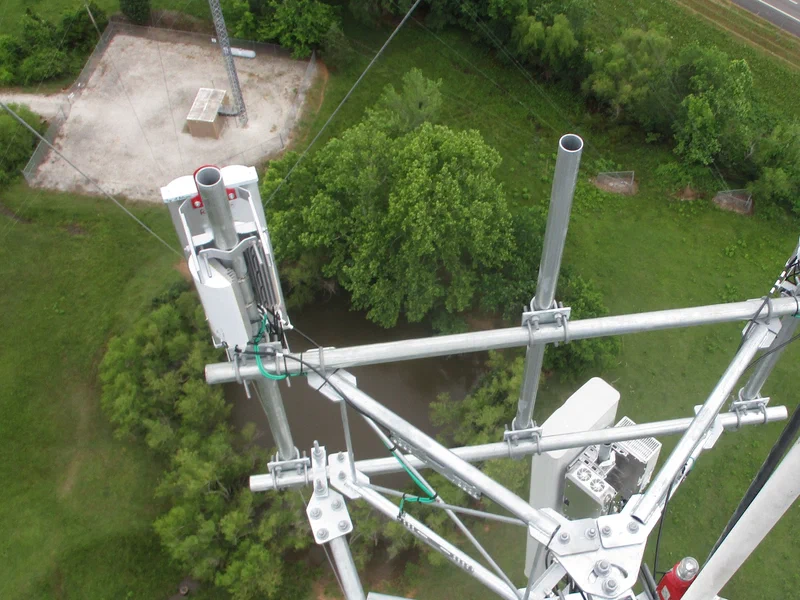
Maintenance & Inspection
Inspections, repairs, and post-storm response for a 20-year asset.
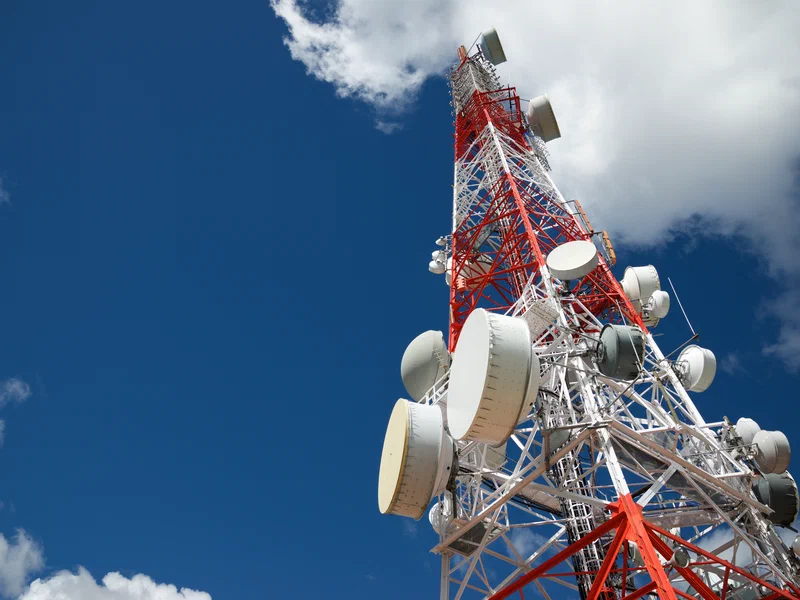
Tower Painting
FAA-marked aviation orange and white, re-coats, and rust abatement.
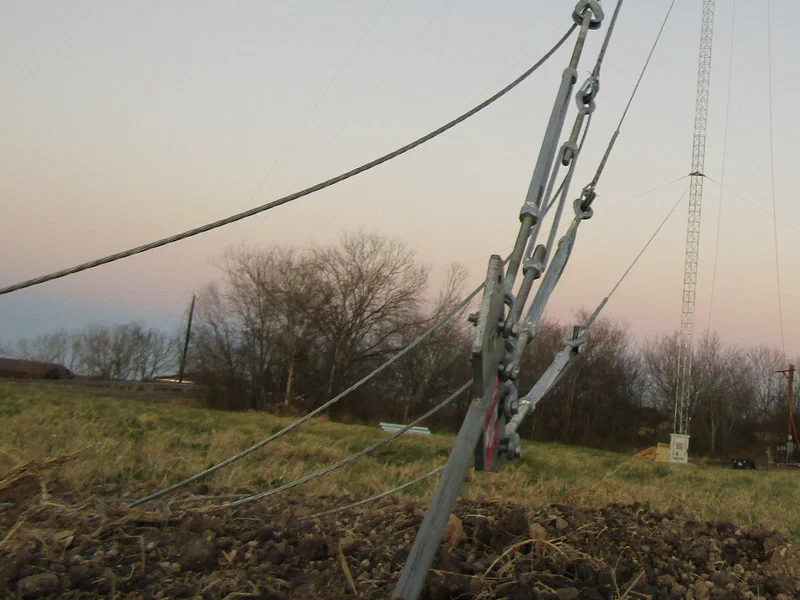
Plumb & Tension
Verify plumb, tension guys, correct storm-displaced structures.
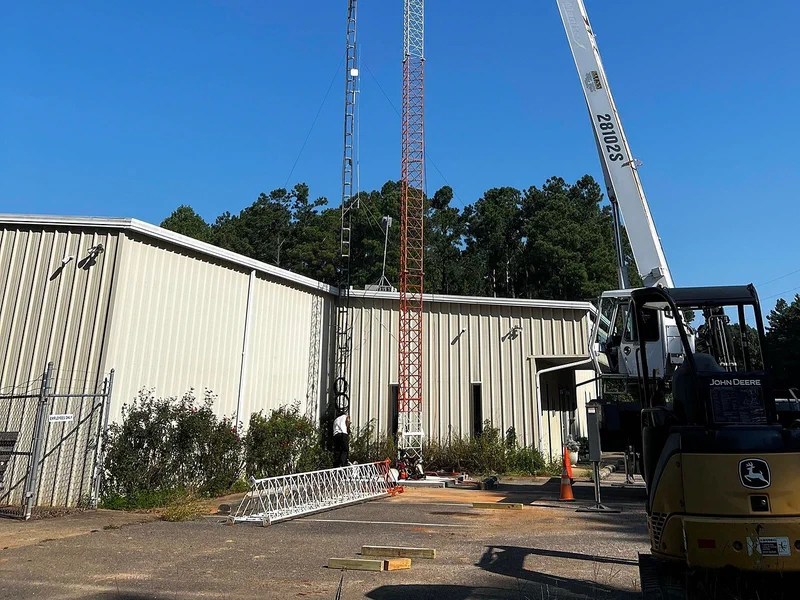
Tower Modifications
Antenna swaps, feed-line replacement, load-bearing upgrades.
Decommissioning
Full teardown, equipment salvage, foundation removal, and FCC / FAA closeout.
Page last updated August 21, 2026.
Tell us the site.
We'll bring the steel.
Send the location, tower type, scope, and timeline. We come back with a quote, a crew, and a schedule you can build a business around.