
Tower Modifications & Antenna Swaps
The job nobody wants to botch: working on a live tower without taking it out of service. Antenna swaps, feed-line replacement, structural upgrades for added loading, and full repurpose-and-reload scopes. Documented modification experience up to 690 feet.
What's included.
The full modification scope for existing towers. Everything from a single antenna swap to a full reload of the top 200 feet of a broadcast structure, without dropping the site’s live traffic.
- Pre-modification structural analysis coordination with your PE of record
- Equipment-loading review against TIA-222-I design and current revision
- FCC Form 854 or Form 854R modification filings where applicable
- Antenna decommissioning: controlled removal and crane or rig-down
- Feed-line and cabling decommissioning (fiber, DC, Cat6) for the section being modified
- Radio and equipment decommissioning with client inventory return or disposal
- Mount and bracket modification, fabrication, and re-installation
- New antenna install (sector, dish, horn, omni, panel) with alignment
- New radio install (Ubiquiti, Tarana, Cambium, Mimosa, Nokia, Baicells, RF Elements)
- New fiber, DC, and Cat6 runs for the modified layout
- Load-bearing structural modification: leg reinforcement, gusset plates, diagonal bracing
- Guy-wire replacement, tension re-setting, and anchor rework on guyed structures
- Safety climb, step-bolt, and fall-arrest system upgrades to current spec
- Obstruction-lighting replacement or addition per current FAA AC 70/7460-1
- Grounding and bonding upgrades to current Motorola R56 or IEEE 80
- Commissioning and as-built documentation for the modified state
Need tower modifications & antenna swaps on a real deadline?
Send your site details. We come back with a quote, a crew, and a schedule.
Modifications are harder than new builds. Done right, clients don't know we were there.
A new-site build is civil, steel, RF, commission, demob. Linear. You own the site, you own the schedule, and the only thing on the structure is what your crew puts on it.
A modification is a different problem. The tower is already up. It already has live carriers, live traffic, live revenue on it. Every mistake a crew makes gets measured in dropped SLA minutes and angry phone calls from the operator whose sector just went dark. The structure was designed 15 or 30 years ago against a different loading envelope than what you’re trying to add to it. And half the time the stamped drawings are incomplete, out-of-date, or missing entirely.
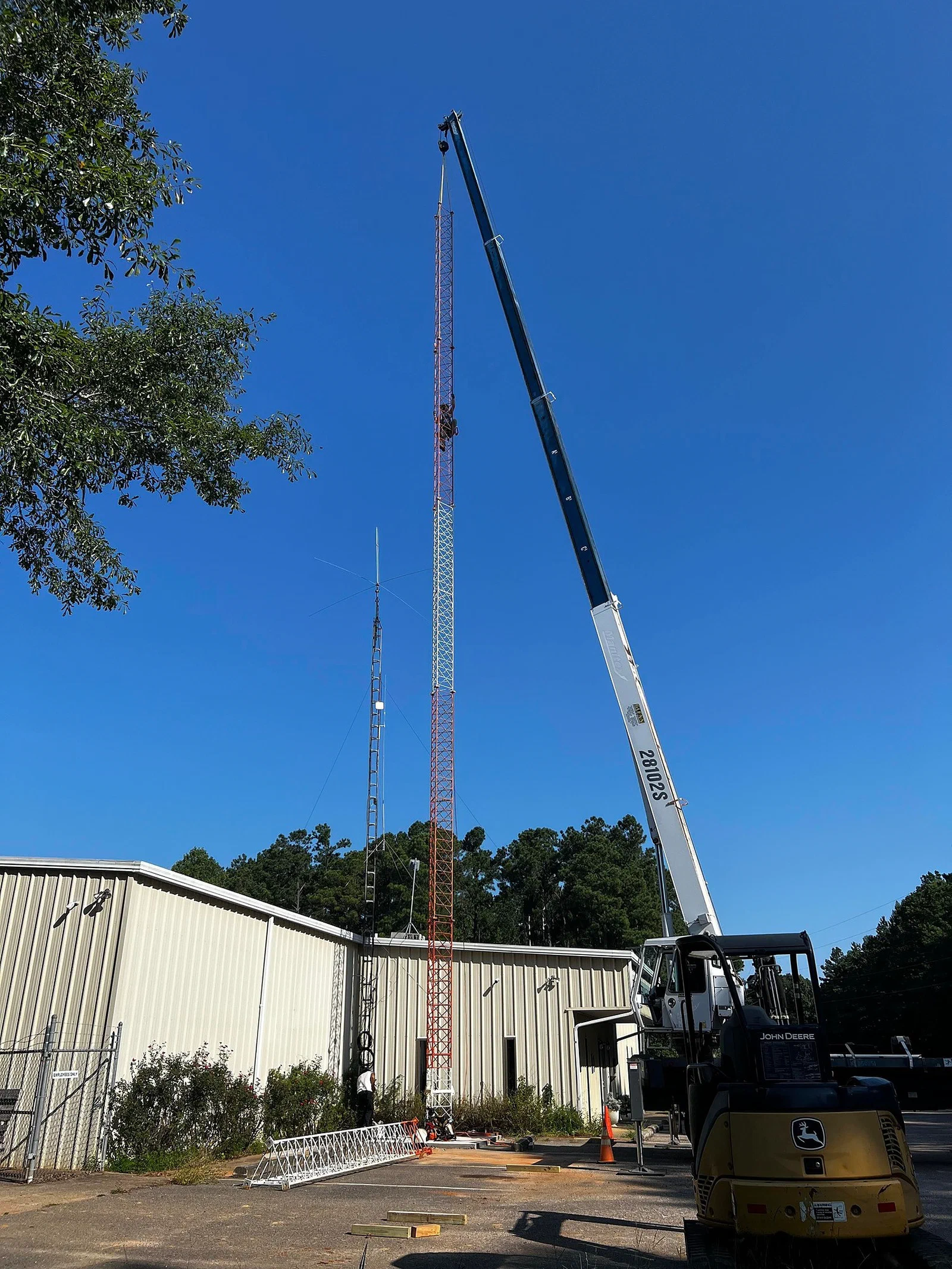
That’s where our post-construction work lives. The Dothan AL job (Feb 2019) is still the one we reference: 690 ft two-way communications tower, 11 antennas decommissioned, 9 new antennas flown, all without taking the site’s primary service down. That’s the skillset. That’s what this page is.
The structural review nobody wants to skip.
Every modification starts with the same question: does the tower support the added load you want to put on it?
TIA-222-I is the current revision, continuing the trend of meaningfully stricter wind and ice loading from prior revisions. Towers built under TIA-222-F or G are often running with less margin than the current standard would require for the same equipment. Adding a 30-pound sector antenna to a tower designed for a 15-pound antenna cluster may not fail day one, but it reduces the structure’s safety factor against the next significant wind event.
Before we touch anything, we coordinate with your structural PE (or bring in a PE from our partner network) to run a structural analysis against the proposed modified loading. If the tower needs reinforcement, we scope the reinforcement into the quote. Gusset plates, diagonal bracing, leg doublers, and guy upgrades are all part of this work. We don’t tell you the tower can carry what it can’t.
Working live without taking the site down.
The reason modifications are a different skillset: the tower is already in service. Typically that means:
- Existing carriers’ traffic is live. We can’t sweep their feed lines. We can’t de-rig their antennas. We coordinate with the site manager and the active carriers, who may send their own techs out to supervise anything near their gear.
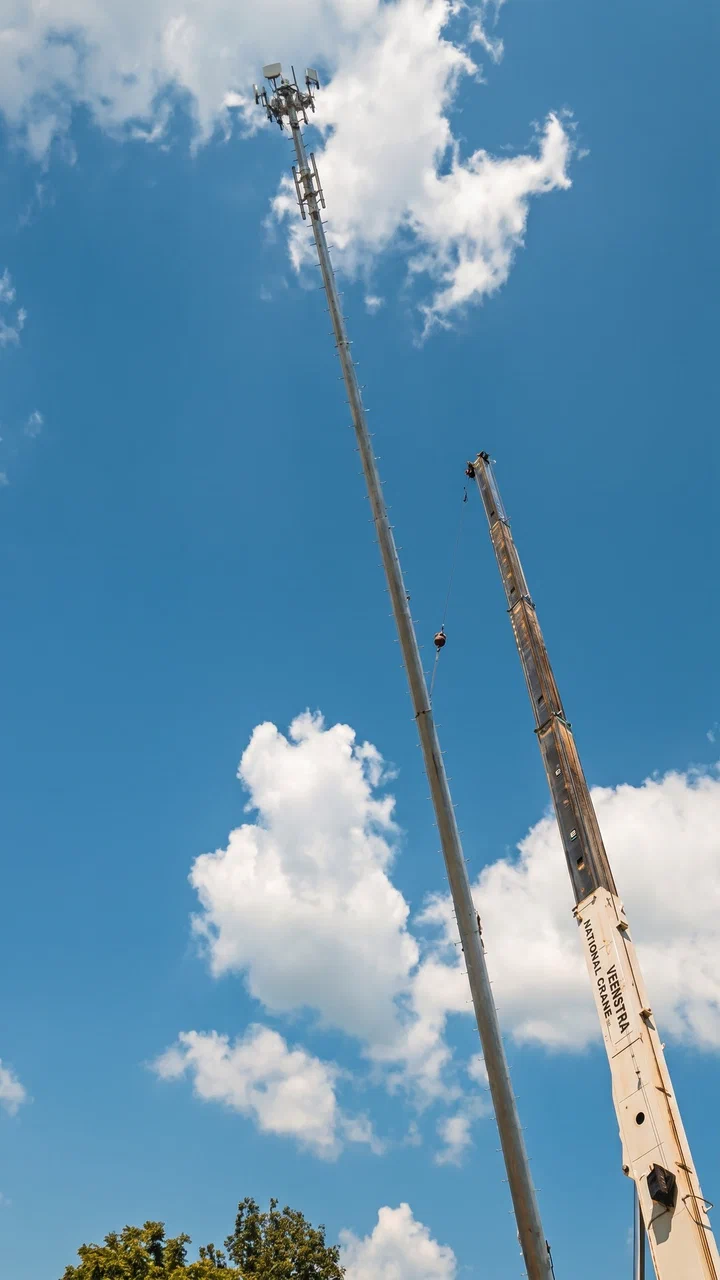
- Crane positioning is constrained. The site has existing compound, cabinets, ice bridges, and fencing. You don’t get the clean greenfield swing you’d have on a new build.
- Work-at-height is around live RF. Climbers follow FCC OET-65 RF exposure guidelines and coordinate with the operator to lower transmit power or schedule short outages for work near live antennas.
- Down-the-tower cabling is full. The ice bridge and cable tray probably have no slack for new runs. We plan the cable path and any tray or bridge modifications as part of scope.
This is a different job than new construction. Our modification foremen are the climbers with the most time on live sites, because this is where experience becomes the job.
FCC Form 854 and the paperwork that matters.
If the tower is registered under the FCC’s Antenna Structure Registration (ASR) system, modifications often require a Form 854 or Form 854R filing before construction. Changes that typically trigger a filing:
- Adding height to the structure.
- Changing the overall lighting configuration.
- Changing the painting or marking configuration.
- Adding structures to the compound that could interact with FAA obstruction standards.
We track when a modification triggers Form 854, coordinate the filing with your ASR holder (which may be you or a tower-owner REIT), and stage construction against the determination date. Nothing gets added to an ASR’d tower without the paperwork closed out.
For un-registered structures (most towers under 200 ft AGL that aren’t near public-use airports), Form 854 doesn’t apply, but the structural analysis and carrier-coordination scope still does.
How it goes.
A typical modification runs 2 to 10 days on-site depending on scope, not counting structural-analysis and permit lead time.
Scoping and structural review
We walk the tower (or review photos and drawings), inventory existing loading, and spec the proposed modified loading. Structural PE runs the analysis against TIA-222-I current revision. If reinforcement is needed, it gets scoped into the quote, not discovered after mobilization.
Permits, ASR, and carrier coordination
Form 854 filed if the tower is ASR-registered and the modification triggers it. Active carriers on the structure contacted and coordinated for work windows. Any local permits pulled. RF exposure assessment and OET-65 compliance plan documented before a climber goes up.
Gear staging and rigging plan
New antennas, radios, and feed-line staged at the site. Rigging plan walked, crane positioning confirmed around the existing compound. Decommission inventory planned against client disposal or return preference.
Decommission
Legacy antennas, radios, and feed lines removed in controlled sequence. Cabling rigged down without letting anything drop. Sometimes decommission happens on a different day than the install to minimize tower down-time.
Structural modification (if needed)
Leg doublers, gusset plates, diagonal bracing, or guy-anchor upgrades installed per the stamped modification drawing. Bolt torque verified on every new connection. This is a whole other scope layered into the work, priced separately on the quote.
New install and commissioning
New antennas flown. New feed lines run. Radios installed and brought up. Alignment and link-budget verified using the radio’s native diagnostics. Weatherproofing applied to every new connector. Commissioning records generated for every new line.
Handover
Walk the site with your engineer, the tower owner, and any involved carriers. As-built drawings reflect the modified state. Form 854R closeout filed if applicable. Commissioning records, structural mod documentation, and photo record delivered.
Built to current code. Modified to current standard.
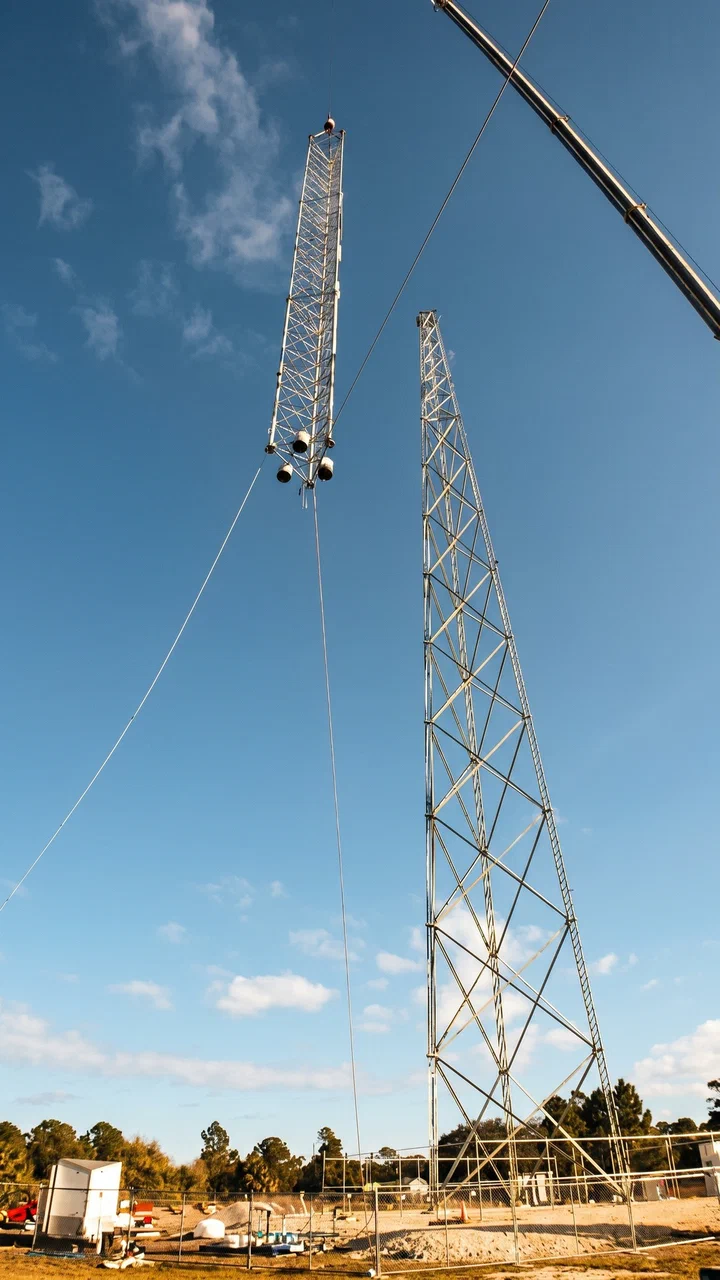
Modifications bring older towers forward to today’s codes. The standards framework matters even more when you’re changing a structure that was originally designed against something older.
TIA-222-I / TIA-222-H
Current ANSI structural standard for antenna-supporting structures. Every modification is analyzed against the revision your jurisdiction has actually adopted — TIA-222-I where it is in force, TIA-222-H where the building code still points there — even if the tower was originally built under G, F, or earlier. Brings the modified envelope forward.
FCC Part 17 / ASR
Antenna Structure Registration rules. Form 854 modification filings handled as part of scope when the structure is registered and the modification triggers review.
FCC OET-65
FCC rules on RF exposure. We assess exposure at modification sites with live RF, coordinate with active carriers to lower power or schedule outages, and document compliance.
FAA AC 70/7460-1M
FAA advisory circular on obstruction marking and lighting. Modifications that change height, lighting, or painting get coordinated through the FAA process.
ASTM A325 / A490
High-strength structural bolt specifications. Every new structural connection installed and torqued to spec with calibrated tooling, verified per connection.
Motorola R56 / IEEE 80
Grounding and bonding for communication sites. Modifications bring existing grounding up to current spec where the original install predates it.
NFPA 780
Lightning protection. Surge suppressors updated and bonded per current spec as part of any RF modification.
OSHA 1926 / ANSI A10.48
Safety at height and around live RF. 100% tie-off, authorized climber rescue, RF exposure plan, and site-specific safety plan on every modification.
Gear & certifications.
Equipment
- 60–80 ton mobile cranes sourced through pre-qualified regional rental partners
- Gin-pole rigging for tight-access and crane-impractical modifications
- In-house climb team with live-site experience on carrier, WISP, and broadcast structures
- Torque-calibrated impact tools and tension-measuring load cells
- Total station for plumb verification
- Fusion splicers and OLTS (optical light-source / power-meter) sets for fiber pulls and insertion-loss testing
- RF exposure meters for OET-65 compliance at work zones near live antennas
- Rigging inventory staged for controlled decom of legacy gear
- Self-contained crew trailers with modification-specific tooling
Certifications & insurance
- NATE ClimberSafe and SafetyLMS-certified climbers
- Platform-fluent installers across Ubiquiti, Cambium, Mimosa, Tarana, Nokia, Baicells
- OSHA 10 / 30 compliant crews with authorized climber rescue
- FCC GROL on lead RF hands for OET-65 and licensed modifications
- Structural PE partner network for modification-analysis coordination
- Fully insured: general liability and workers’ compensation, umbrella coverage available
Questions we get a lot.
What's the biggest modification you've done?
How tall a tower can you modify?
Does the tower have to go off-air?
Usually no. Live-site modification is the core skill of this service. We work around active carriers’ traffic by:
- Coordinating work windows with the tower owner and each active operator.
- Lowering transmit power on nearby sectors during work-at-height per FCC OET-65, or scheduling short outages if the work is directly adjacent to a live antenna.
- Sequencing decommission and install so critical carriers stay up continuously.
Exceptions: some structural modifications (leg reinforcement at the working level, guy-wire replacement on a critical structure) may require scheduled brief outages. Those are coordinated with the operator and the tower owner well in advance.
Can you add load to a tower that wasn't designed for it?
Sometimes yes, sometimes no. Depends on what the structural analysis says.
Before we touch anything, your structural PE (or one from our partner network) runs a modified-load analysis against the current TIA-222-I revision. Three outcomes:
- Passes as-is. Tower has margin for the added load. We install and go.
- Passes with modification. Tower needs reinforcement (leg doublers, gusset plates, diagonal bracing, or guy-wire upgrades) to carry the added load safely. We scope the reinforcement work into the quote.
- Fails. The tower cannot carry the added load even with reinforcement. We tell you before we quote the work. Sometimes the answer is “build a second tower” or “reduce the proposed loading.”
We don’t tell you the tower can carry what it can’t. That’s how towers fail.
Do you do the structural analysis yourself?
What about FCC Form 854 filings?
We handle them. If the tower is registered under the FCC Antenna Structure Registration (ASR) system, modifications that change height, lighting, painting, or certain structure-to-airspace interactions require a Form 854 (pre-construction) and Form 854R (reporting) filing.
We track when a proposed modification triggers a filing, coordinate with the ASR holder (you or the tower-owner REIT), file the forms, track the determination, and stage construction around the date. Nothing goes up on an ASR’d tower without the paperwork closed out.
Can you modify guyed towers?
Do you remove old equipment for disposal?
How long does a modification take?
On-site time depends on scope:
- Single antenna swap or radio replacement: 1 to 2 days.
- Multi-antenna swap with feed-line re-runs: 3 to 6 days.
- Full reload of a broadcast or multi-carrier site (Dothan-scale work): 5 to 10 days.
- Structural modification with reinforcement install: add 3 to 7 days depending on the scope of gusset, diagonal, or leg-doubler work.
Structural analysis and Form 854 lead time (when applicable) is 2 to 6 weeks upfront. We sequence that into the program timeline.
How much does a tower modification cost?
Fixed fee on defined scope, with unit rates and change orders for field conditions. Quoted off the stamped scope. Rough order:
- Antenna or radio swap (1 to 3 items): low five figures per visit.
- Multi-antenna reload with feed-line changes: mid five to low six figures, driven by antenna count and line lengths.
- Full broadcast or multi-carrier reload (690-ft-class scope): upper six figures, driven by height, crane days, and carrier coordination complexity.
- Structural reinforcement as an add-on: quoted separately based on engineered scope.
Send us the drawings and you’ll have a line-itemed quote inside a week.
Do you work on broadcast towers?
What about upgrading grounding or lighting on a modification?
Both are common modification add-ons. Modifications are the natural time to bring an older tower’s:
- Grounding up to current Motorola R56 or utility-grade IEEE 80 spec. Grounding and cadwelding details here.
- Obstruction lighting up to current FAA AC 70/7460-1M (LED, monitored, dual-light where required).
- Safety climb up to current OSHA 1926 Subpart R requirements (continuous cable, updated attachment points).
These often get bundled into the modification scope because the crew is already at height.
Do you work on towers you didn't build?
What's your service area?
How do I get started?
Send us the tower (address or coordinates), the current and proposed loading (drawings or an equipment list), the tower owner, any active-carrier contacts, and your target schedule.
Request a quote here or call us at (763) 280-6050. Most customers have a quote inside a week, with structural-analysis lead time noted separately on the schedule.
Don’t see your question? Ask us directly. We answer every scoping call.
Related services.
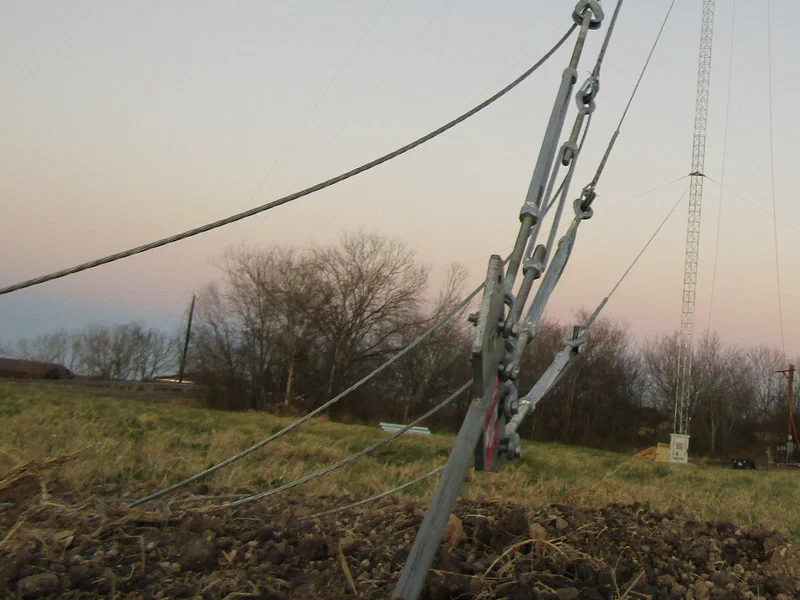
Plumb & Tension
Verify plumb, tension guys, correct storm-displaced structures.
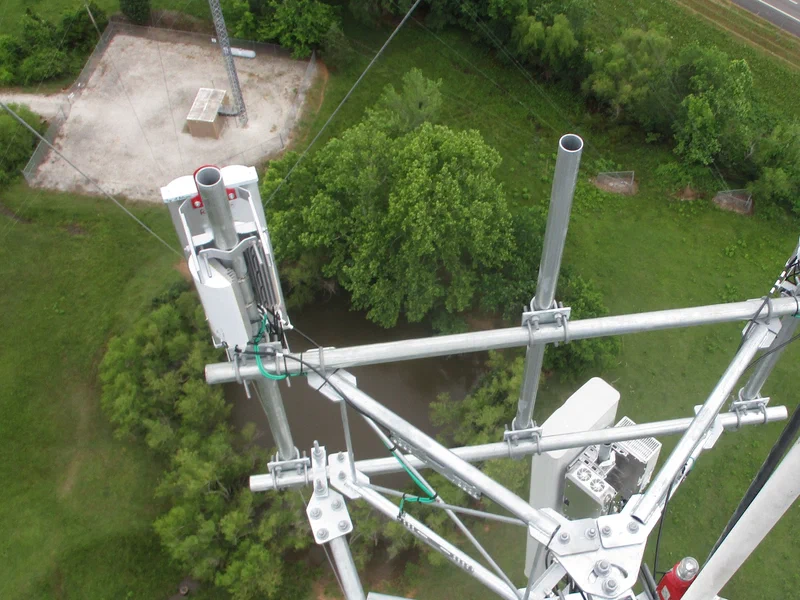
Maintenance & Inspection
Inspections, repairs, and post-storm response for a 20-year asset.
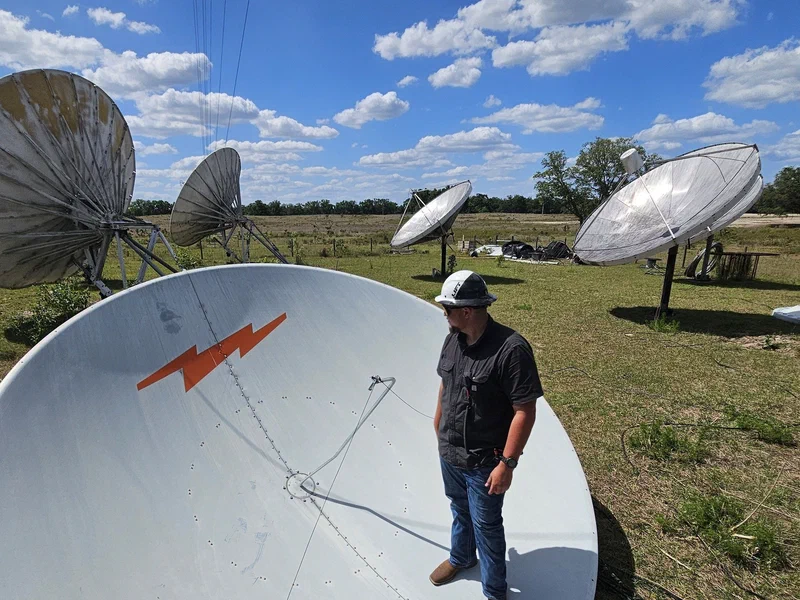
Decommissioning
Full teardown, equipment salvage, foundation removal, and FCC / FAA closeout.
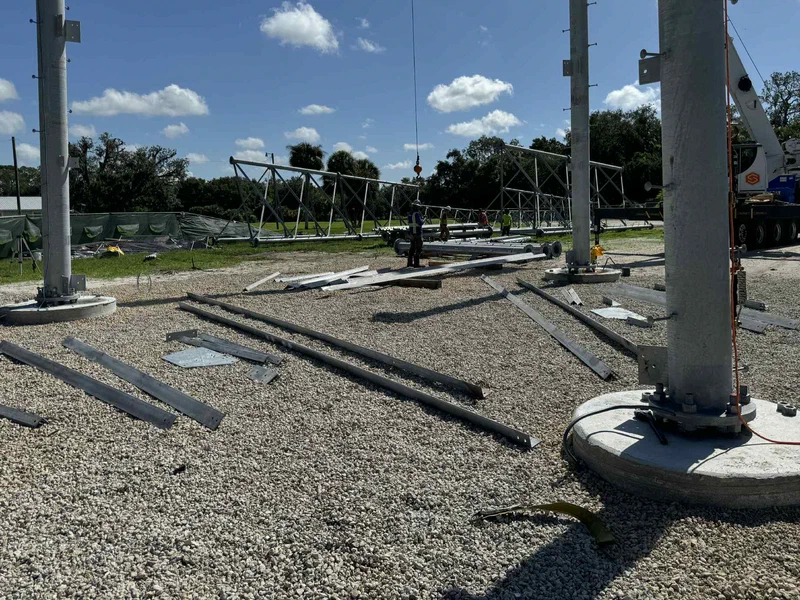
Tower Erection
Guyed, self-supporting, and monopole structures up to 300ft.
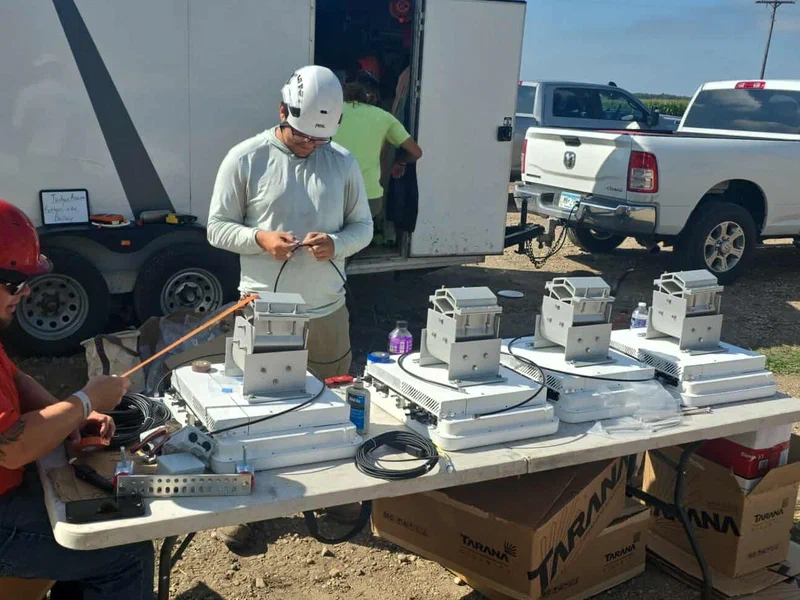
Antenna & Radio Install
Antennas, radios, fiber, DC, and Cat6. Ubiquiti, Cambium, Mimosa, Tarana, Nokia, and more.
Page last updated July 30, 2026.
Tell us the site.
We'll bring the steel.
Send the location, tower type, scope, and timeline. We come back with a quote, a crew, and a schedule you can build a business around.