
Tower Construction for Municipal Broadband, Co-op, and State-Grant Networks
Tower infrastructure for the networks that aren’t a commercial ISP: a city-owned fiber utility, an electric co-op broadband subsidiary, a county broadband authority, a multi-co-op middle-mile consortium, a state-administered BEAD build, a USDA ReConnect rural deployment. We’re not the fiber contractor. We’re the tower contractor that handles the hybrid fiber + fixed-wireless sites, the middle-mile microwave where fiber hasn’t caught up, the grain-silo and water-tower collocations, and the community-owned private LTE where the program specifies it. BEAD milestone-aware, ReConnect-disbursement-aware, and fluent in the paperwork that federal broadband grants demand.
BEAD changed the game, then the 2025 restructure changed it again.
The Broadband Equity, Access, and Deployment (BEAD) program is the largest federal broadband investment in U.S. history: $42.45 billion administered by NTIA through state broadband offices. After the June 2025 BEAD Restructuring Policy Notice, NTIA re-opened the door to technology-neutral deployments, which means fixed wireless is explicitly a qualifying technology for unserved and underserved locations, not just the fiber-only default most states had originally planned around.
As of early 2026, 54 of 56 state and territory proposals have been submitted to NTIA, with 32+ plans approved. Louisiana, Delaware, and Nevada were the early leaders; Louisiana was first to receive final NTIA approval, and Massachusetts received its notice of award on February 6, 2026. The NTIA BEAD Progress Dashboard tracks state-by-state status in real time.
The technology mix varies significantly by state:
- Fiber still dominates most state plans (often 80%+), for the future-proof capability and long-term economics.
- Nevada stands out with a 51% fiber / 41% fixed wireless / 9% satellite mix, leaning into the BEAD tech-neutral policy to reach hard-to-serve terrain economically.
- Texas combines fiber, LEO satellite, and fixed wireless.
- Mountain-West, Plains, and Appalachian states are leaning more heavily on fixed wireless for the cost-to-reach-per-location math, especially for the last 5 to 15 percent of addresses where fiber economics don’t close.
This is where Vertical Axis fits. We’re not the fiber contractor. There’s a separate ecosystem of fiber splice, aerial, and underground-construction firms for that. We’re the tower and fixed-wireless infrastructure contractor for the hybrid deployments, the rural fixed-wireless endpoints, the aggregation towers that feed fiber middle-mile into wireless distribution, and the tower collocations on grain silos, water towers, and co-op poles that make the rural deployment math close. On BEAD-funded builds specifically, we run to the program’s milestone schedule, speed-tier verification (100/20 Mbps minimum for fixed wireless), and Build America / Buy America (BABA) domestic-content requirements.
What 'BEAD-ready' actually means on a tower contractor's scope.
- Milestone documentation. BEAD disbursement ties to site-count and geographic-coverage milestones. We deliver as-builts keyed to the state broadband office’s milestone framework, with photo records and coordinate records per site.
- Speed-tier coverage verification. For fixed-wireless locations reached under BEAD, we commission to the 100/20 Mbps minimum throughput target under the program’s test methodology, not a generic best-effort commissioning target.
- NTIA BroadbandUSA audit-trail documentation. Every site’s regulatory filings (FAA, FCC ASR, Part 101 if licensed microwave), license grants, and alignment records bundled into an audit-ready deliverable.
- Build America / Buy America (BABA) compliance. Structural steel and manufactured products on BEAD-funded sites must meet BABA domestic-content requirements. We source tower steel and hardware against the program’s domestic-content thresholds and document the supply chain on the closeout.
- State-specific requirements. Each state layers its own rules on top of the NTIA baseline. State PE stamp requirements, state-specific environmental review, utility coordination. We scope to the state the project sits in, not a generic template.
Electric co-op broadband is one of the biggest infrastructure stories nobody is writing about.
More than 200 electric cooperatives in the United States are now building or operating broadband networks, most as subsidiaries or affiliates of the parent co-op. The business logic is clean: the co-op already has a utility-grade right-of-way across every mile of its electric service territory, already owns the poles, already runs fiber for its own SCADA and distribution automation (or is about to), and already has the membership trust and billing relationships to turn broadband into a durable revenue line.
The scale of the work is meaningful. NRTC member co-ops have been deploying broadband for well over a decade. Two recent examples at program scale:
- Alabama Fiber Network. A coalition of eight electric co-ops (including PowerSouth and Alabama Power) deploying a 6,600-mile middle-mile network, with completion expected Q1 2026.
- MS Fiber. All 17 electric co-ops in Mississippi forming a joint entity to build a statewide middle-mile network, fourth and final phase complete in 2026.
Our intersection with electric co-op broadband is the tower and fixed-wireless infrastructure layer. On a co-op build:
- Fiber runs along the co-op’s electric distribution poles. A separate fiber contractor typically handles that, in coordination with the co-op’s make-ready process.
- Tower aggregation sites collect fiber middle-mile and distribute it wirelessly to locations where pole-by-pole fiber economics don’t close.
- Direct-embedment monopoles on co-op substation property (or on leased tower sites) serve as fixed-wireless hubs for the last-mile coverage.
- Microwave backhaul fills gaps where the fiber middle-mile hasn’t yet reached.
Co-op engineering teams usually already understand grounding and utility-grade infrastructure. Our electric utility industry page explains the IEEE 80 / NERC CIP posture we default to on utility-adjacent sites. The overlap with broadband builds is substantial.
Where direct embedment monopoles shine on co-op broadband.
Co-op broadband deployments frequently need tens to hundreds of small aggregation sites across the service territory to reach non-fiber-adjacent members with fixed wireless. The economics of a 4-to-6-week spread-footing foundation per site don’t work at that scale.
A direct embedment monopole on the same site is one to three days from auger rig arrival to backfilled pole. Engineered embedment (10 to 15% of pole height), backfilled with flowable fill, structural concrete, or compacted native material per the stamped detail. For a 50-site or 100-site rural co-op fixed-wireless rollout, that timeline difference is measured in program months pulled out of schedule.
And because co-ops already run utility-grade grounding on their substation property, integrating a direct-embedment pole’s ground ring into the existing IEEE 80 grid is straightforward. We scope the tie-in as part of the install.
Middle-mile is where rural broadband math breaks, and carrier-grade microwave is the fix.
The NTIA Enabling Middle Mile Broadband Infrastructure program awarded $980 million to 36 entities across 40 states and territories in 2023. Demand vastly exceeded funding. Most middle-mile applications went unfunded, and in 2026 the Middle Mile for Rural America Act (Sen. Slotkin) proposed a five-year reauthorization of the program through 2031.
The gap in the market is real. Most rural broadband providers lack access to affordable middle-mile fiber unless their network sits along an interstate corridor or close to a major metro. The last-mile economics can pencil out, but if the middle-mile backhaul cost per Gbps dwarfs the last-mile revenue per subscriber, the program stalls.
Licensed FCC Part 101 microwave is a real answer for middle-mile where fiber isn’t available (or not diversely routed enough for reliability):
- Long-haul licensed paths (6, 11, 18 GHz) reach 20 to 30+ miles per hop with 99.999% availability in most rain zones.
- Ring topology across 4 to 8 towers delivers redundant-path middle-mile without buying second-fiber to every drop.
- Carrier-grade gear (Aviat, SAF Tehnika, Siklu, Nokia) with adaptive modulation, 1+1 hot-standby, and TDM / E1 legacy emulation where the downstream network needs it.
- Part 101 licensing coordinated through an FCC-approved frequency coordinator, filed under the program’s construction timeline.
Our microwave backhaul service runs the full licensed-microwave scope. For rural broadband programs that need middle-mile between fiber endpoints. Especially where topography, environmental review, or land-use paperwork make fiber construction unrealistic on the timeline. Licensed microwave is often the clean answer. We’ve designed, licensed, and commissioned these paths across rural service territories.
Community-owned private LTE: sovereign networks on CBRS spectrum.
A growing number of municipal broadband programs, county broadband authorities, and co-op broadband subsidiaries want a private LTE layer on top of (or in parallel with) their fiber and fixed-wireless infrastructure. The drivers are familiar:
- Sovereignty. Community-owned networks exist precisely so that control stays local. A private LTE layer on CBRS spectrum keeps authentication, SIM provisioning, data routing, and outage response inside the community’s own operations.
- Coverage economics. CBRS spectrum (3.55–3.7 GHz) reaches farther per site than 5 GHz unlicensed fixed wireless in most terrain, and the GAA tier is free to deploy on with SAS registration. For a county or co-op that already owns tower infrastructure, CBRS lets them reuse that infrastructure for a second revenue layer.
- Integration with existing operations. A community-owned private LTE network integrates with the municipality’s dispatch (where the utility or city runs a public safety comms footprint), the co-op’s SCADA / DA infrastructure, and the broadband subsidiary’s subscriber-management systems. All under local ownership.
This is where our partnership with The Edge Mile matters on municipal scope. The standardized deployment (Nokia AZQC 3-sector CBRS site kits paired with the Rapid5GS Pro EPC for the core network, deployed on community-owned tower infrastructure) is exactly the pattern Edge Mile and Vertical Axis work together on. See the partner strip below for the details.
For municipal broadband programs that haven’t scoped private LTE yet but are increasingly being asked to (by public safety agencies in the same jurisdiction, by smart-city sensor operators, or by their own board looking for incremental revenue), we can scope the infrastructure side of that conversation. The commercial logic for adding a private LTE layer to a fiber + fixed-wireless municipal network is increasingly compelling.
What we build for municipal and rural broadband programs.
Tower and RF infrastructure for the hybrid networks federal and state broadband programs actually fund. We’re the tower contractor, not the fiber contractor. But we work cleanly alongside the fiber team on every hybrid build.
- Tower aggregation sites for hybrid fiber + fixed-wireless networks (BEAD, ReConnect, state-grant, and privately-funded)
- Direct embedment monopoles for rural infill. 60 to 150 ft, fast deploy, small footprint, IEEE 80 ground-grid integration on co-op substation sites
- Middle-mile licensed microwave (FCC Part 101) between fiber endpoints where fiber gaps remain
- Fixed-wireless sector and backhaul install on community-owned towers. Ubiquiti, Tarana (G1, G2), Cambium, Mimosa, RF Elements, Nokia, Baicells
- Community-owned private LTE deployment (through our Edge Mile partnership. Nokia AZQC, Baicells 436Q, Rapid5GS Pro EPC)
- Electric co-op broadband aggregation sites. Co-op substation or utility-adjacent tower property, IEEE 80 grounding, make-ready coordination with the co-op’s engineering team
- Grain silo, water tower, and rooftop collocations. Common in rural broadband deployments where existing structures reduce capital cost
- Tribal-adjacent municipal broadband coordination where the service territory crosses tribal land (see our tribal nations page)
- Anchor-institution connectivity. Schools, libraries, community health centers, fire halls, municipal government offices
- Carrier-grade availability commissioning (99.99% to 99.999%) on middle-mile and backhaul paths
- BEAD milestone documentation. Site-count, coverage, speed-tier verification, and audit-trail as-builts
- Build America / Buy America (BABA) compliance on federally-funded structural steel and manufactured products
- FCC filings. ASR, Part 101 license coordination, Part 96 (CBRS) SAS registration
- FAA 7460-1 filing for structures triggering notification (typically 200+ ft AGL or near public-use airports)
- Environmental review (NEPA categorical exclusion or Environmental Assessment) on federally-funded sites
- Tower maintenance programs across multi-site rural broadband networks
- Post-storm response and revenue-link restoration on rural networks where a single tower outage affects hundreds of subscribers
- Grant-program milestone reporting. NTIA BEAD, USDA ReConnect, Middle Mile Broadband Infrastructure, state-specific programs
Scoping a BEAD buildout, a co-op broadband subsidiary, or a community-owned LTE network?
Send the program, the site count, the grant framework, and your target disbursement milestones. We come back with a BEAD-ready scope, a BABA-documented supply chain, and a line-itemed quote.

End-to-end private LTE and 5G through our partnership with The Edge Mile.
Vertical Axis is the primary construction partner for The Edge Mile, a private LTE consultancy specializing in Nokia and Baicells CBRS deployments with the Rapid5GS Pro EPC core network. Edge Mile designs the RAN, configures the EPC, coordinates SAS registration, and hands off network operations. Vertical Axis builds the towers, runs the RF install, pulls the fiber and DC cabling, and commissions the site to radio-design spec.
Edge Mile sells:
- Nokia AZQC 3-sector CBRS site kits 4T4R RRHs, pre-tested, with Rapid5GS consulting bundled for the EPC integration.
- Refurbished Baicells 436Q CBRS eNB Rapid5GS-ready for fast private LTE standup.

“Vertical Axis understands private LTE and 5G RAN deployment at a level very few tower contractors do. They've been in the trenches on every CBRS build we've scoped together: mount fabrication, laser alignment for single-channel reuse on AZQC sites, fiber and DC cabling to our EPC cabinets, SAS coordination on deployment day. I recommend them without reservation to any agency or operator scoping a private LTE buildout.”
Josh Lambert CEO of The Edge Mile
Services municipal and rural broadband programs buy most.
The services below are the mix municipal, co-op, and grant-funded engagements typically run through. Click any card for the full scope, process, standards, and pricing.
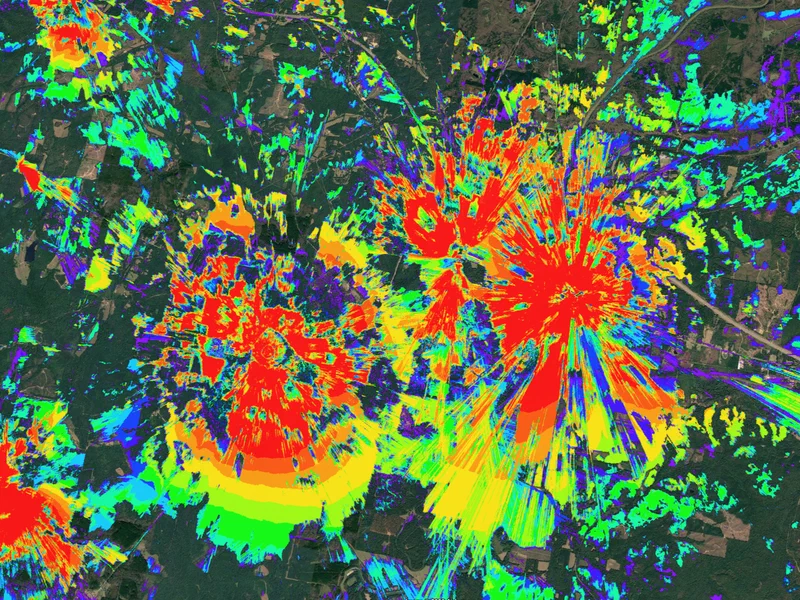
Site Design & RF Planning
Coverage planning, sector layouts, and pre-deploy mock-ups.
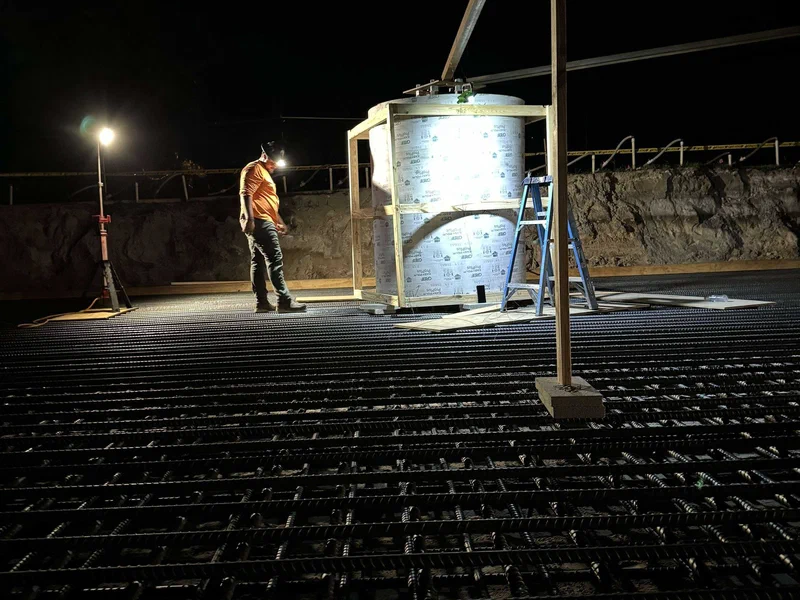
New Site Builds
Empty dirt to operational tower, one crew, one point of contact.
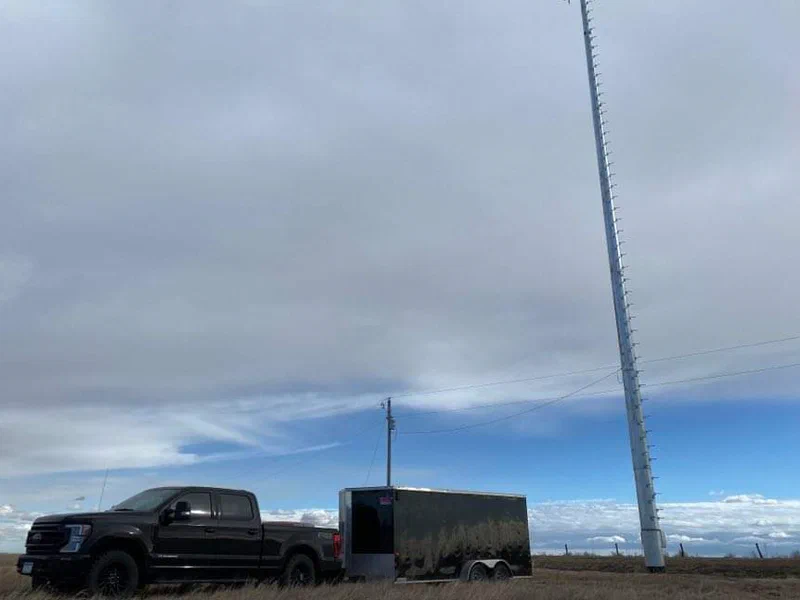
Direct Embedment Monopoles
Foundation-free monopoles set into augered holes. Fast to deploy.
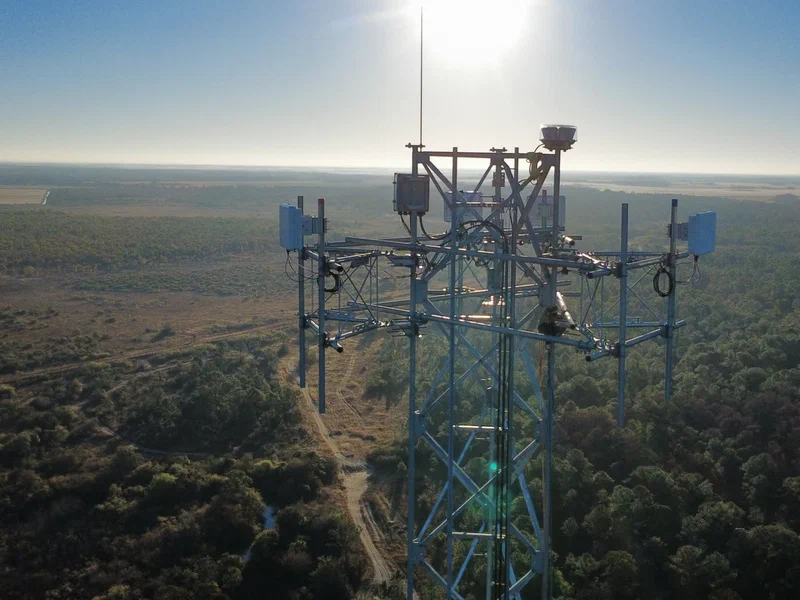
Sector & Backhaul
Sector antennas, backhaul dishes, horn arrays, aligned and sealed.
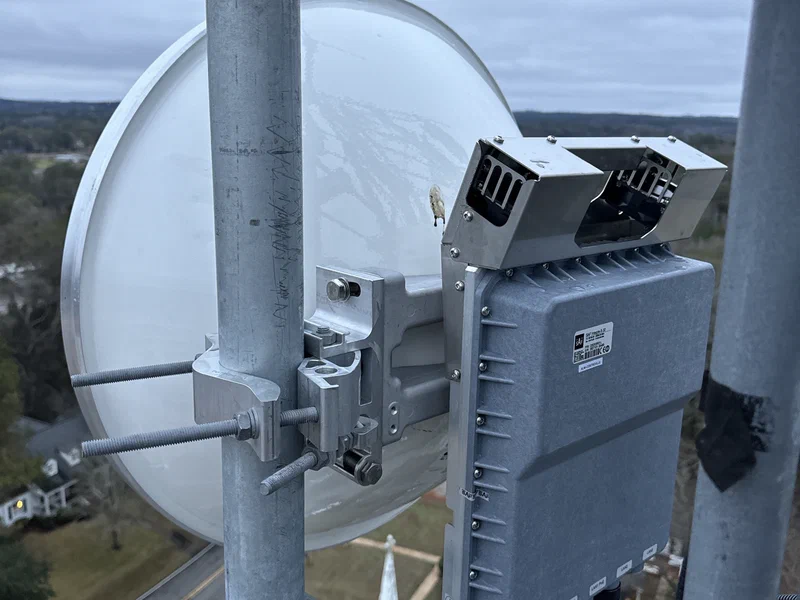
Microwave Backhaul
Point-to-point links, redundant rings, licensed and unlicensed.
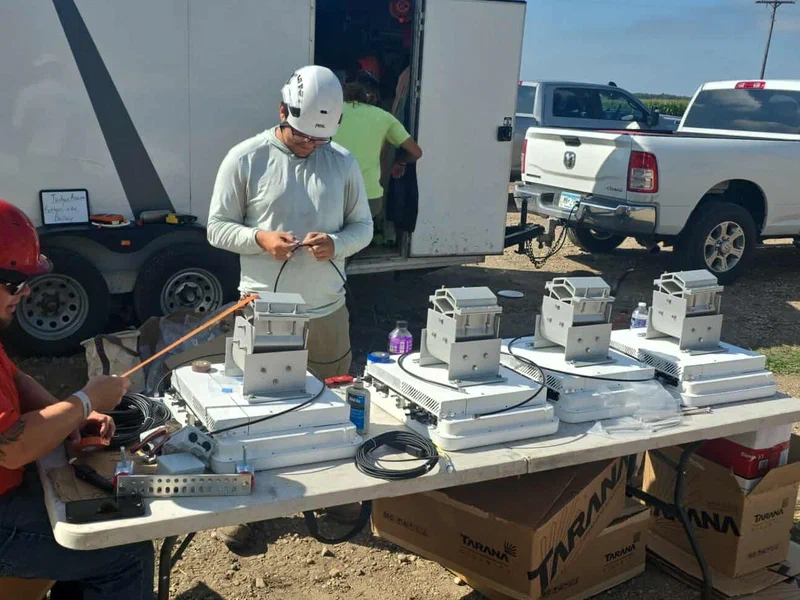
Antenna & Radio Install
Antennas, radios, fiber, DC, and Cat6. Ubiquiti, Cambium, Mimosa, Tarana, Nokia, and more.
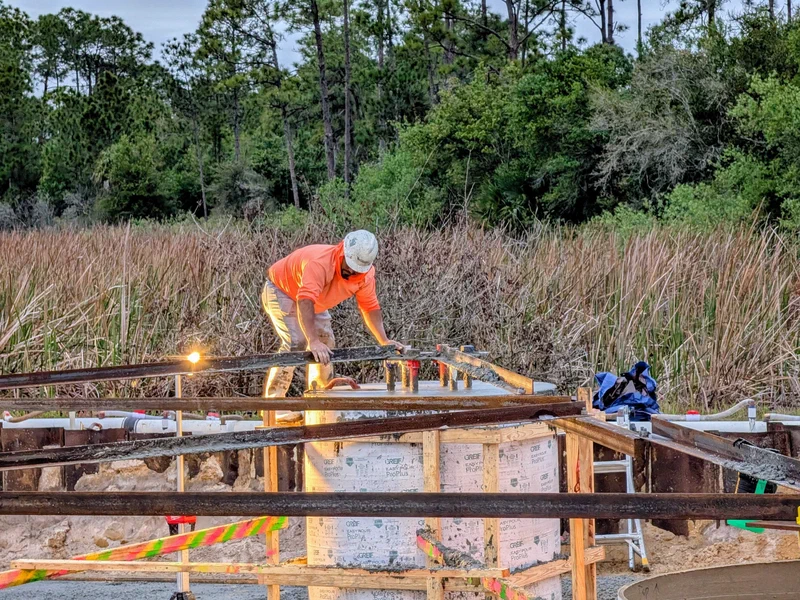
Foundations & Civil
Excavation, rebar, concrete, grading, fencing, and ground rings.
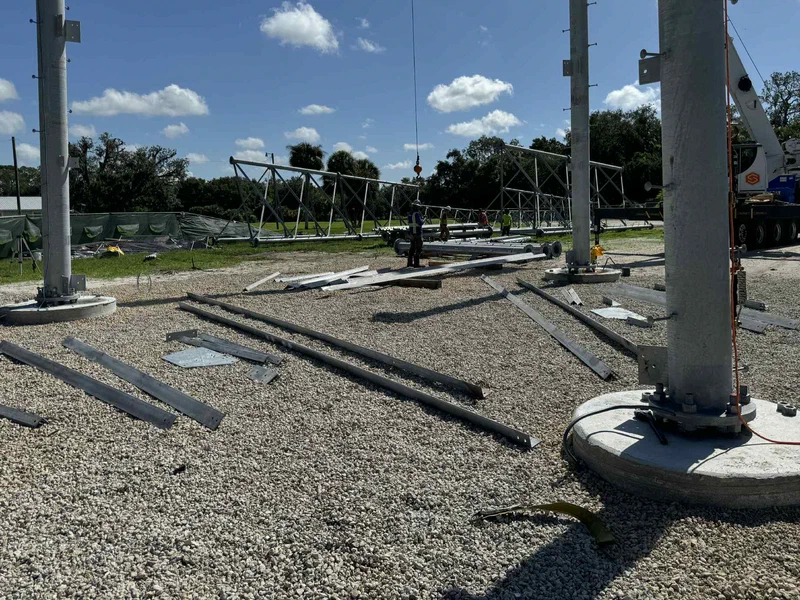
Tower Erection
Guyed, self-supporting, and monopole structures up to 300ft.
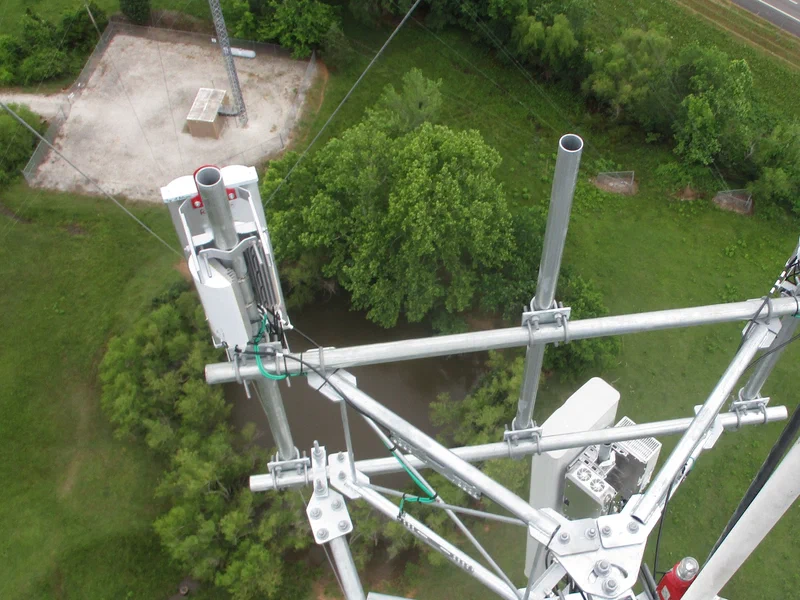
Maintenance & Inspection
Inspections, repairs, and post-storm response for a 20-year asset.
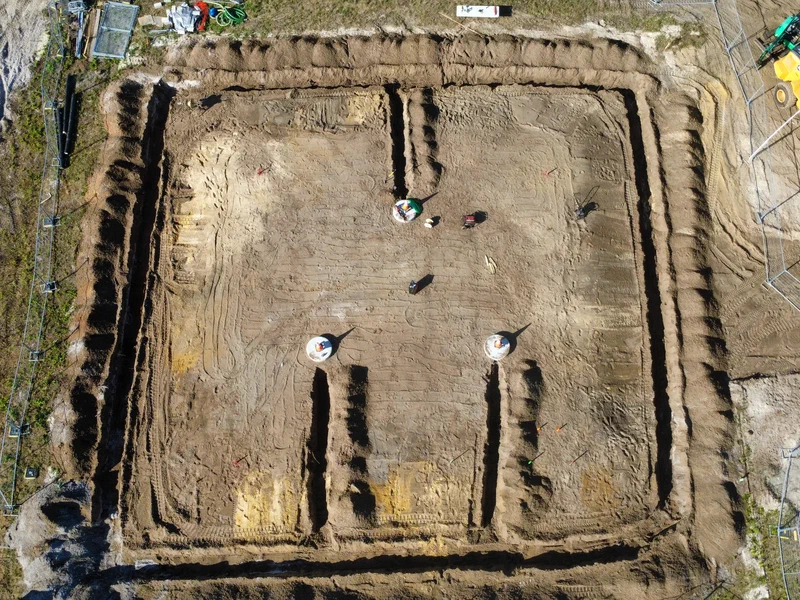
Grounding & Cadwelding
Ground rings, exothermic welds, bonding to NEC and manufacturer spec.
How an engagement flows.
A municipal or rural broadband build runs the same engineering as any tower project, plus a grant-program compliance and milestone-discipline layer that defines the schedule. Here is how an engagement flows.
Program scoping and grant alignment
Conversation with the right team: state broadband office, county broadband coordinator, co-op broadband subsidiary GM, municipal utility director, or the project’s grant administrator. Scope defined against the specific program (BEAD, ReConnect, Middle Mile, state broadband grant, or private capital), the milestone schedule, and the coverage obligations. BABA domestic-content requirements confirmed up front on federally-funded scope.
Site selection and RF planning
For state / federal grant builds where the award specifies location types (BEAD eligible locations, ReConnect service areas), we walk candidate tower sites against RF coverage, terrain, access, and structural fit. For hybrid fiber + fixed-wireless programs, tower placement aligned with the fiber contractor’s middle-mile endpoints. RF design from your integrator or our site-design team.
Permits, licensing, and environmental
FAA 7460-1 filing where structure triggers notification. FCC ASR where the tower will be lit. Part 101 licensing on any licensed microwave middle-mile paths (6 to 12 weeks upfront). Part 96 SAS registration where CBRS applies. Environmental review (NEPA CatEx or EA) on federally-funded sites. State-specific environmental and land-use coordination.
Supply chain and BABA compliance
Structural steel and manufactured products sourced to meet Build America / Buy America domestic-content requirements on federally-funded sites. Supply-chain documentation assembled for the program closeout. For BABA-exempt scope (private capital or non-BABA grants), standard supply chain applies.
Mobilization, civil, and steel
Crew rolling from Alabama or Texas to the site. Direct-embedment monopole or spread-footing foundation civil per the stamped drawing. Steel up with crane sized to the pole. Grounding installed with exothermic welds, integrated into existing co-op or municipal utility grounding where applicable.
RF install and commissioning
Antennas, radios, and cable plant installed to manufacturer spec. For hybrid fiber + FWA sites, fiber tie-in to the middle-mile endpoint coordinated with the fiber contractor. For licensed microwave middle-mile, RSL verified, 72-hour soak test on critical paths, adaptive modulation tuned. For BEAD-reached locations, speed-tier coverage verified against the program’s test methodology.
Documentation and milestone closeout
As-built drawings, sweep reports, FCC license grants, BABA supply-chain records, environmental compliance records, and milestone-verification photos delivered. Closeout package aligned with the specific grant program’s reporting framework. NTIA BEAD, USDA ReConnect, NTIA Middle Mile, state-specific programs. Your state broadband office, program administrator, and funding agency auditor have everything they need.
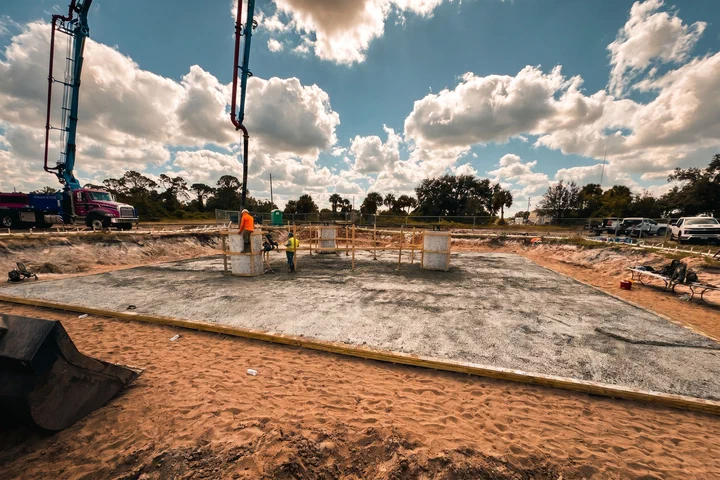
Built to federal program standard. Documented for every auditor.
Same tower and RF engineering baseline as any broadband project, plus the federal-program and state-grant compliance layer specific to publicly-funded work.
NTIA BEAD (Broadband Equity, Access, and Deployment)
$42.45 billion federal broadband program, state-administered, with 100/20 Mbps minimum speed obligation on fixed-wireless locations. Tech-neutral policy after June 2025 restructuring. Milestone reporting, speed-tier verification, and audit-trail documentation part of standard scope on BEAD builds.
USDA ReConnect Program
USDA Rural Utilities Service (RUS) rural broadband grant and loan program. Borrower technical and construction standards (RUS bulletins) apply. Closeout documentation aligned with RUS bulletin requirements.
NTIA Enabling Middle Mile Broadband Infrastructure
$980M awarded 2023 across 40 states and territories. Reauthorization proposed through 2031 under the Middle Mile for Rural America Act. Middle-mile infrastructure (including licensed microwave paths) built to the program’s grant-compliance framework.
Build America, Buy America (BABA)
Domestic-content requirements on federally-funded infrastructure. Structural steel and manufactured products on BEAD, ReConnect, and Middle Mile projects sourced and documented against BABA thresholds.
NEPA / Categorical Exclusion
National Environmental Policy Act review on federally-funded sites. Many tower builds qualify for CatEx (previously disturbed ground, below size thresholds). Environmental Assessment as fallback. Section 106 NHPA consultation coordinated in parallel.
FCC Part 15 / Part 101 / Part 96
Unlicensed (Part 15) for most fixed-wireless access paths, licensed fixed microwave (Part 101) for carrier-grade middle-mile backhaul, CBRS (Part 96) for community-owned private LTE deployments.
TIA-222-I
ANSI structural standard for antenna-supporting structures. Governs plumb, loading, bolt torque, and ice / wind loading on every tower.
Motorola R56 / IEEE 80
Grounding and bonding. R56 default on municipal and community fixed-wireless sites; IEEE 80 on electric co-op substation-adjacent sites or sites with integrated utility grounding.
NEC Article 810 / NFPA 780
National Electrical Code for radio equipment feedlines and lightning protection. Surge suppressors bonded to the tower ring before any radio goes on-air.
FAA 7460-1 / FCC ASR
FAA notification and FCC Antenna Structure Registration where structure height or airspace proximity triggers. Sequenced into the construction timeline.
OSHA 1926 / ANSI A10.48
Federal and industry safety standards for communication-tower work. 100% tie-off, authorized rescue, site-specific safety plan on every climb.
Questions state broadband offices and co-op broadband GMs ask.
Are you BEAD-ready?
Yes. We’ve delivered on State and Local Fiscal Recovery Funds (SLFRF) rural broadband infrastructure already; see the Streamline Internet Hendry County case study for an ongoing 4-carrier buildout under federal SLFRP0125, with four sites turned up and more in development. Our scope on BEAD-funded sites routinely includes:
- Milestone documentation keyed to the state broadband office’s reporting framework.
- Speed-tier coverage verification at the 100/20 Mbps minimum (or stricter, where the state requires it).
- Build America / Buy America (BABA) compliance on structural steel and manufactured products, with supply-chain documentation for the closeout.
- NEPA review coordination (CatEx or EA as applicable).
- Section 106 NHPA coordination through the FCC Nationwide Programmatic Agreement.
- State-specific requirements. State PE stamp, state environmental review, utility coordination. Scoped state-by-state, not to a generic template.
With 54 of 56 state proposals submitted to NTIA and the program moving into active construction, we’re ready to rotate a dedicated crew onto your state’s BEAD build as it mobilizes. Send us the site list and the milestone schedule.
What's the BEAD June 2025 restructuring and does it affect our scope?
In June 2025 NTIA issued a BEAD Restructuring Policy Notice that materially changed the program’s technology posture. Key effects:
- Tech neutrality restored. Fixed wireless is explicitly a qualifying technology for unserved and underserved locations, not just the fiber-only default most states had planned around.
- Program timelines adjusted to accommodate states reopening provider selection.
- Simplified compliance paperwork for some categories of deployment.
For a state that’s already completed provider selection and submitted a final proposal (Louisiana, Delaware, Nevada, Massachusetts, and others), the construction-phase rules are largely stable. For states still in provider selection or early deployment, the restructure opened the door to fixed-wireless-heavy proposals that weren’t viable under the original framework.
We scope to the current rules, not the pre-restructure rules. Nevada’s 41% fixed-wireless mix is a leading indicator of where states in tough-to-fiber terrain are likely heading.
Do you work on electric cooperative broadband projects?
Yes, frequently. Over 200 electric co-ops are now in broadband, and the work overlaps substantially with both our electric utility industry page scope (IEEE 80 grounding, utility-grade infrastructure, NERC CIP awareness on utility-adjacent sites) and our WISP scope (fixed-wireless sector install, CBRS, fiber + FWA hybrid builds).
On a co-op build, we commonly run:
- Tower aggregation sites on co-op substation property or leased tower pads, with IEEE 80 ground grid integration to existing utility grounding.
- Direct embedment monopoles on remote co-op territory where fast-deploy economics matter.
- Middle-mile microwave paths between fiber endpoints across the co-op’s service territory where fiber build timelines don’t close against the grant milestone.
- Fixed-wireless distribution sector install on rural fixed-wireless aggregation points.
- Private LTE on CBRS where the co-op’s broadband subsidiary or affiliated public safety operation wants sovereign-controlled cellular.
Alabama Fiber Network and MS Fiber are two of the largest multi-co-op middle-mile programs in the country. We’re based out of Alabama and Texas, so multi-co-op consortium work across the Southeast is our home footprint.
Can you run as prime to the broadband subsidiary, or only as a sub?
Do you handle USDA ReConnect projects?
What about the Middle Mile Broadband Infrastructure program?
The NTIA Middle Mile program awarded $980M across 40 states and territories in 2023 for middle-mile backhaul (the network between local access infrastructure and the backbone internet). Most applications went unfunded. Demand vastly exceeded supply. Sen. Slotkin’s Middle Mile for Rural America Act proposed a five-year reauthorization through 2031 in early 2026.
Our fit on middle-mile work is the licensed microwave layer, not the fiber layer. Where a program needs middle-mile between fiber endpoints and fiber construction is on a longer timeline than the grant milestones allow (topography, environmental review, land-use paperwork), carrier-grade licensed Part 101 microwave is often the clean answer. We’ve designed, licensed, and commissioned these paths across rural territories.
Can you build community-owned private LTE?
Yes, through our partnership with The Edge Mile. See the partner strip below for the full framework.
The typical deployment: Nokia AZQC 3-sector CBRS site kits for macro coverage, Rapid5GS Pro EPC for the core network, Baicells 436Q eNB for small-cell infill, tower construction and RF install by Vertical Axis, RAN design and EPC integration by Edge Mile.
For a municipal broadband program, a county broadband authority, or a co-op broadband subsidiary that wants a private LTE layer on top of (or in parallel with) fiber and fixed-wireless. For dispatch handoff, smart-city sensor aggregation, incremental subscriber revenue, or public-safety integration. The two teams work together end-to-end.
Our state has preemption laws that restrict municipal broadband. Does that matter for our scope?
Probably not for your tower and RF scope, but it’s worth flagging.
16 states still have laws that restrict or preempt local municipalities from building or operating community-owned broadband networks. Over 160 state broadband bills passed in 2025, some tightening preemption and some loosening it. The preemption rules generally apply to the operating entity (who owns and runs the network, who bills subscribers, what business model is allowed). Not to the physical infrastructure or the contractor building it.
In a preemption state, municipal projects typically route through:
- Electric co-op subsidiaries (most preemption laws don’t apply to electric cooperatives).
- Public-private partnerships with a licensed private ISP operating the retail side.
- Wholesale-only open-access networks.
- Non-profit or authority structures carved out by state law.
The tower and RF scope looks the same regardless. We build the infrastructure per the stamped design and the grant-program requirements. Your attorney will already have sorted the operating structure before we scope.
Can you do grain-silo, water-tower, or rooftop collocations?
Yes, all three. Municipal and rural broadband programs frequently leverage existing elevated structures to reduce capital cost:
- Grain silos. Common in agricultural states (Plains, Midwest, some of the South and West). 60 to 120 ft working heights, concrete structures, usually require custom mount fabrication.
- Water towers. Municipal-owned, typically 100 to 200 ft heights, common in every state. Mount coordination with the municipal water department, including structural review for added loading.
- Rooftops. County government buildings, hospitals, schools, anchor-institution buildings. Structural review for loading, ballast or penetration mounts per the roof system.
- Utility transmission towers. On co-op or utility-partner territory where a dual-use agreement is in place.
Mount fabrication, structural coordination with the existing structure’s owner, and weatherproofing per the manufacturer spec are all part of scope on collocation work.
What happens when our service territory crosses tribal land?
How much does municipal / rural broadband tower work cost?
Fixed fee on defined scope, with unit rates and change orders for field conditions. Quoted against scope, tower type, site access, and grant-program compliance layer. Rough order-of-magnitude (all subject to line-item quote):
- Direct embedment monopole (100 ft, rural FWA hub, IEEE 80 ground-grid tie-in): upper five figures to low six figures per site.
- Self-supporting aggregation tower (180 ft, fiber tie-in, multi-sector RF load): low to mid six figures per site.
- Licensed Part 101 middle-mile microwave path (single licensed link, 99.999% availability): mid to upper six figures per path.
- Water-tower / grain-silo / rooftop collocation install: mid five figures per site.
- Multi-site co-op broadband rollout (30 to 100+ aggregation sites): program rate per site, with dedicated crew rotation.
- Community-owned private LTE on CBRS (via Edge Mile. Nokia AZQC, Rapid5GS Pro EPC, multi-site deployment): mid six figures to low seven figures for a typical county-scale program.
- BEAD compliance overhead (BABA supply chain, NEPA, Section 106, milestone reporting): priced into the quote, not billed separately.
Multi-site state-grant programs see program-rate discounts. Send us the project and you’ll have a line-itemed quote inside two weeks. Complex grant-funded programs take three weeks because the compliance coordination is the harder scoping work.
What's your service area for municipal / rural broadband?
How do I get started?
Send us:
- The program. BEAD (state?), USDA ReConnect, NTIA Middle Mile, state broadband grant, co-op subsidiary capex, or a mix.
- The site list or service territory. Coordinates on rural sites where available.
- The milestone schedule. Grant disbursement dates, speed-tier coverage deadlines.
- The technology mix. Fiber-only, hybrid fiber + FWA, FWA-only, or private LTE component.
- Your program admin, engineering consultant, and fiber contractor contacts. So our scope coordinates cleanly with the rest of the program team.
Request a quote here or call us at (763) 280-6050. Simple scopes take one week to quote. Grant-funded multi-site programs typically take two to three weeks because the compliance and milestone coordination is where the scoping time lives.
Don't see your question? Ask us directly. We answer every scoping call.
Adjacent industries.
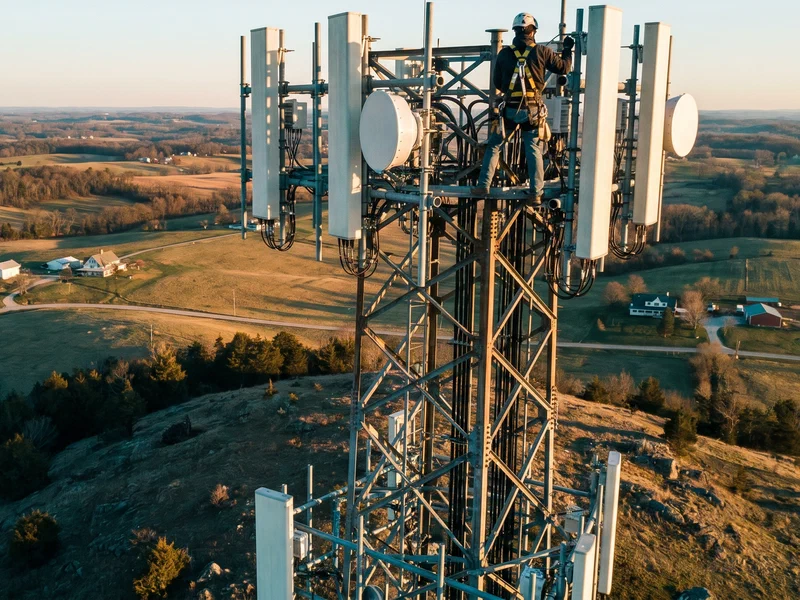
WISP / Wireless Internet
Fluent in WISP-scale gear: Ubiquiti, Tarana, Cambium, Mimosa, RF Elements. We know your margins and timelines, and we don't bill carrier rates for prosumer work.

Electric Utility
SCADA backhaul, distribution automation, and substation communications. Multi-state programs, IEEE 80 grounding, teleprotection-grade microwave.
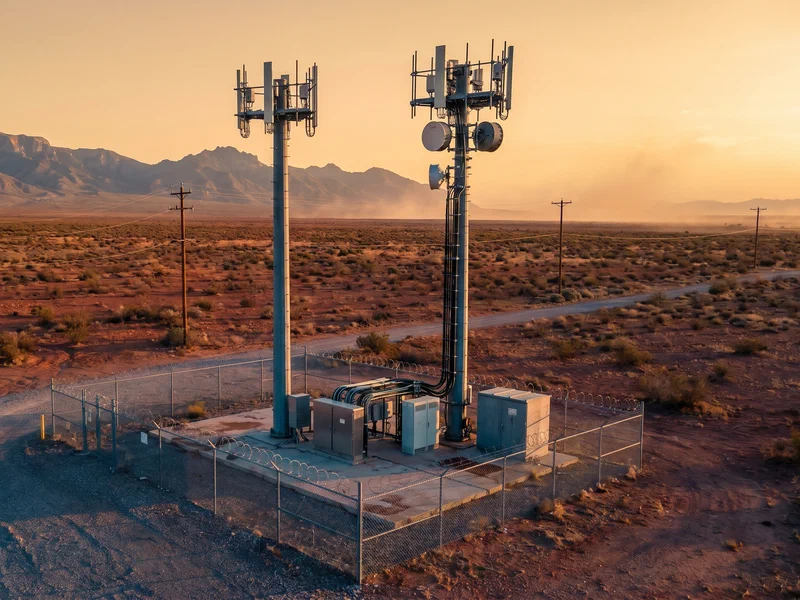
Tribal Nations
Sovereign broadband buildouts and tower work on tribal lands. Scoped for NTIA Tribal Broadband Connectivity Program (TBCP) timelines and deliverables.
Page last updated August 21, 2026.
BEAD, ReConnect, co-op subsidiary, or community-owned.
One crew book, every grant framework.
Send the program, the site list, the grant framework, and your milestone schedule. We come back with a BEAD-ready scope, a BABA-documented supply chain, a line-itemed quote, and a schedule built around your disbursement dates.