

Oilfield communication towers
and private wireless networks.
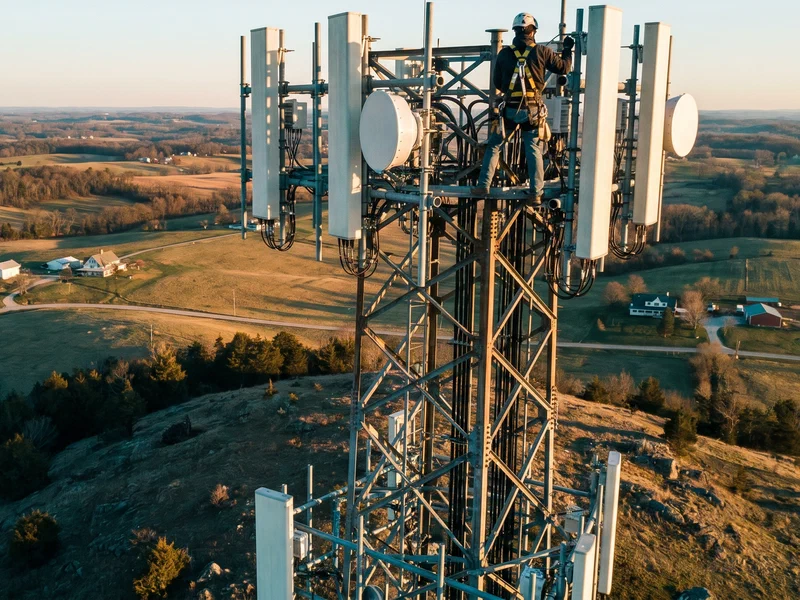
We build the oilfield communication towers that carry SCADA, telemetry, and private wireless — and three customers in one industry each want a different stack. Upstream wants wireless internet at a pad before the frac crew shows up. Midstream wants carrier-grade SCADA backhaul along a remote pipeline corridor that survives the next PHMSA audit. Downstream wants private LTE blanketing a refinery or terminal. All three want crews who know the Class I Div 2 perimeter, understand production-sensitive schedules, and won’t cause the outage they were hired to prevent. Full partnership with The Edge Mile on private LTE and 5G deployment gives operators a sovereign-controlled cellular stack end-to-end.
Oilfield communication towers are three different jobs under one industry.
An upstream operator drilling and producing in the Permian Basin, the Bakken, or the Eagle Ford wants comms at a wellhead pad in days, not months. The drilling rig is on site for two to four weeks. The frac crew comes and goes in one to three. Production starts the week after that, and the SCADA, tank telemetry, cathodic protection monitoring, and lease-automatic-custody-transfer (LACT) data needs to be flowing from day one. The capital discipline that took hold after the last commodity cycle means the operator cares about cost per pad for comms, not about having the world’s fanciest network.
A midstream operator running pipeline gathering, transmission, storage, or a compressor station wants comms that survives a PHMSA audit. The January 2025 PHMSA final rule on gas pipeline leak detection (in response to Section 113 of the PIPES Act of 2020) now requires advanced leak-detection programs across 2.8 million miles of gas transmission, distribution, and gathering pipeline, with continuous monitoring systems, reduced reporting thresholds, and mandatory repair timelines. That rule runs on communications infrastructure, and the infrastructure has to document its availability and performance.
A downstream operator at a refinery, tank farm, or liquids terminal wants private LTE or CBRS blanketing the facility, connecting thousands of IIoT sensors, workforce tablets, video surveillance, wearable safety devices, and (increasingly) drones and autonomous inspection vehicles. Chevron acquired 26 CBRS PAL licenses focused on the Permian Basin and has publicly estimated that 50-60% of its operational footprint is outside reliable public wireless coverage. Chevron-Phillips Chemical runs 8+ CBRS networks at petrochemical facilities.
Different jobs. Same tower contractor, scoped differently for each. We don’t send a pipeline-SCADA crew to install CBRS at a refinery, and we don’t run a carrier-grade Part 101 microwave team at a one-pad wellhead comms install.
Upstream: speed, cost, and schedule around the rig.
Upstream pad comms lives under three constraints:
- Speed to first production. The operator’s capital model starts earning return the day hydrocarbons flow. Every day of comms delay is a day of production data not getting to the control room, LACT not calibrating, tank levels not monitored, H2S alarms not broadcasting. We size tower construction to finish before production starts, not after.
- Cost per pad. A single-well SCADA tower priced like a carrier macro-cell is a non-starter. Upstream math works at WISP-class economics with carrier-grade reliability on the critical sensors. That typically means a fast-deploy direct embedment monopole, a compact compound, and an RF stack sized for the actual traffic (wellhead RTU, tank level radar, H2S monitor, cathodic rectifier telemetry, sometimes a pad-level private LTE small cell).
- Scheduling around the rig and frac crew. We don’t shut in the well for the tower job. Construction sequenced around drilling, fracking, and production schedules, with clear safety coordination at the pad’s existing Class I Div 2 perimeters.
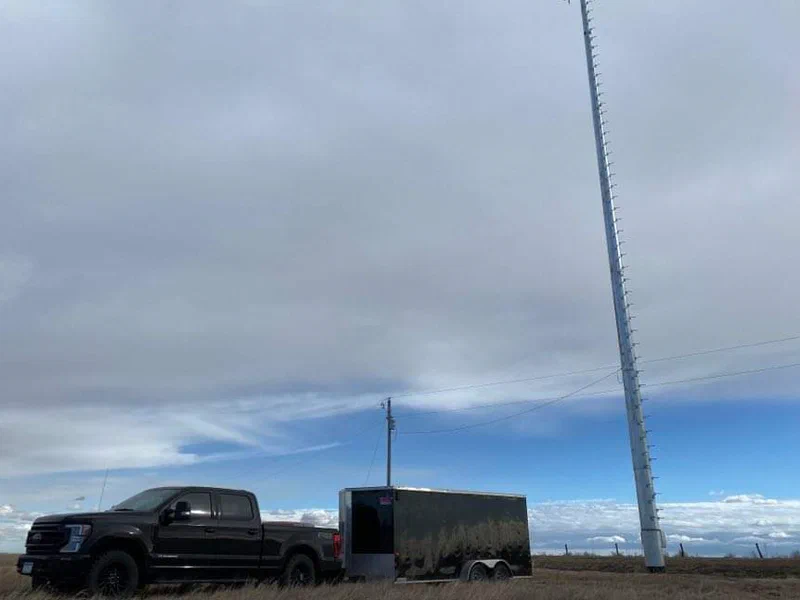
Our direct embedment monopole service is the right default structure for most upstream pad comms: 60 to 120 ft pole, one-to-three-day install from auger rig arrival to pole set, IEEE 80 ground-grid tie-in if the pad has utility comms at the same site.
Midstream: PHMSA, API standards, and carrier-grade paths.
Pipeline SCADA is a compliance asset, not just an operations tool. The rules that drive communications scope:
- 49 CFR 192 (natural and other gas pipelines) and 49 CFR 195 (hazardous liquid pipelines) are the PHMSA safety frameworks.
- §192.631 and §195.446 govern Control Room Management (CRM), including SCADA alarm management, operator training, and shift-handover procedures. The communications layer feeding the control room is scoped into the CRM plan.
- API 1130 (computational pipeline monitoring) and API 1149 (pipeline variable uncertainties) govern design and performance of leak-detection systems.
- API 1164 governs SCADA cybersecurity for pipeline systems.
- API 1165 governs human factors for SCADA HMI design.
- The PHMSA Advanced Leak Detection final rule (submitted to the Federal Register January 2025) requires operators to establish advanced leak-detection programs with continuous monitoring, aerial or vehicle surveys, handheld detection devices, and reduced reporting thresholds.
That means pipeline SCADA backhaul needs to be carrier-grade. Not prosumer PTP. Typical stack: licensed FCC Part 101 microwave (6, 11, 18, 23 GHz) from pipeline telemetry points to the control room, with 1+1 hot-standby on critical single paths and ring topology where the route allows it. Our microwave backhaul service runs the full Part 101 licensing, coordination, and commissioning scope.
For compressor stations, metering and regulating stations, and block valve sites, we install tower or pole-mounted communications with hazloc-aware siting (stay outside the Class I Div 2 perimeter), cathodic protection monitoring, and PHMSA-documentable availability performance.
Downstream: private LTE over a refinery or terminal footprint.
Refineries, tank farms, petrochemical plants, and liquids terminals are moving hard toward private LTE and CBRS-powered private networks for workforce connectivity, machinery monitoring, video surveillance, wearable safety, and autonomous inspection. The economics are clear: a single private LTE network replaces a patchwork of Wi-Fi, handheld radio, and carrier-cellular, with vastly better coverage in the steel-and-concrete interference environment of a process unit.
The tower infrastructure for private LTE at a refinery scale is carefully sited. Outside Class I Div 1 zones, typically outside Div 2 if coverage allows, with RF design that accounts for the massive scattering environment of tanks, distillation columns, and process vessels. Antennas, radios, and cabling selected against the site’s hazardous-area classifications where proximity to classified zones is unavoidable.
Our partnership with The Edge Mile (see below) gives downstream operators an end-to-end private LTE stack: the Edge Mile designs the RAN, configures the EPC and core network, and coordinates SAS registration where CBRS is involved. We build the towers, pole-mount the radios, install the fiber and DC cabling, ground and bond the plant, and commission the RF. The operator ends up with a sovereign-controlled private cellular network on spectrum they control (CBRS PAL or GAA, Anterix 900 MHz, or operator-licensed private spectrum).
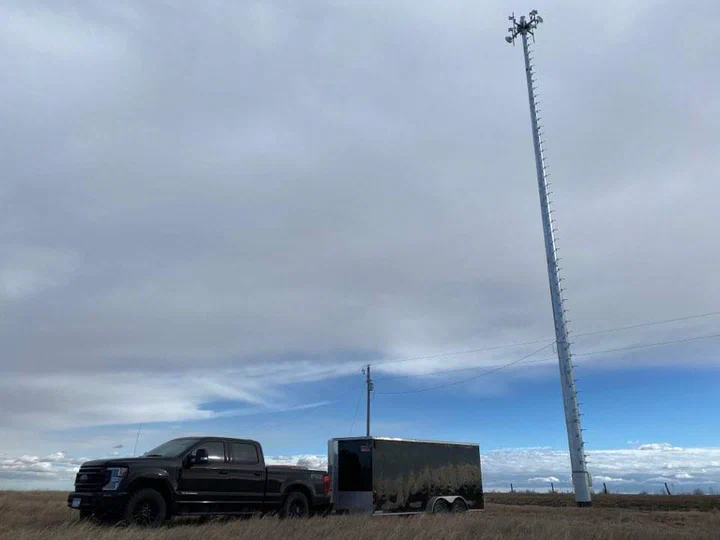
Private LTE and 5G through our partnership with The Edge Mile.
Oil and gas operators deploying private cellular face the same problem every new industry deploying private cellular faces: nobody makes turnkey private LTE the way someone sells you a SaaS subscription. The RAN comes from one vendor. The EPC or 5G core comes from another. The SAS registration runs through a third party. The tower contractor is a fourth. The fiber integration is a fifth. Coordination across the stack is where private LTE projects die.
Vertical Axis is the primary construction partner for The Edge Mile, a private LTE consultancy specializing in Nokia and Baicells CBRS deployments with an in-house EPC. The two teams work hand-in-hand. Edge Mile handles the radio-access layer, the core network, EPC integration, SAS registration, and the operations hand-off. Vertical Axis handles the steel, the RF install, the fiber and DC cabling, IEEE 80 grounding, and the site work.
For an oil and gas operator, that pairing delivers:
- Single-point procurement. One conversation, one commercial framework, one schedule.
- End-to-end sovereign network. The operator owns the network, the data, and the access policy. No carrier middleman.
- Spectrum flexibility. CBRS GAA for fast deploy, CBRS PAL for protected coverage on acquired licenses, Anterix 900 MHz for sites where utility-adjacent deployment applies, or operator-licensed private spectrum (e.g., on existing Part 90 holdings) where applicable.
- Class I Div 2 aware siting. Antennas and radios selected and positioned to respect the hazardous-area classifications at the facility.
- Integration with existing SCADA and IT. Our install hands off cleanly to the operator’s SCADA integrator (WellAware, eLynx, Zedi, CygNet, or in-house) and IT security team.
If you’re scoping a CBRS or Anterix private LTE deployment at a pad, a gathering system, a compressor station, a tank farm, or a refinery, the conversation usually runs through both teams. Edge Mile gives you the network. We give you the infrastructure that carries it.
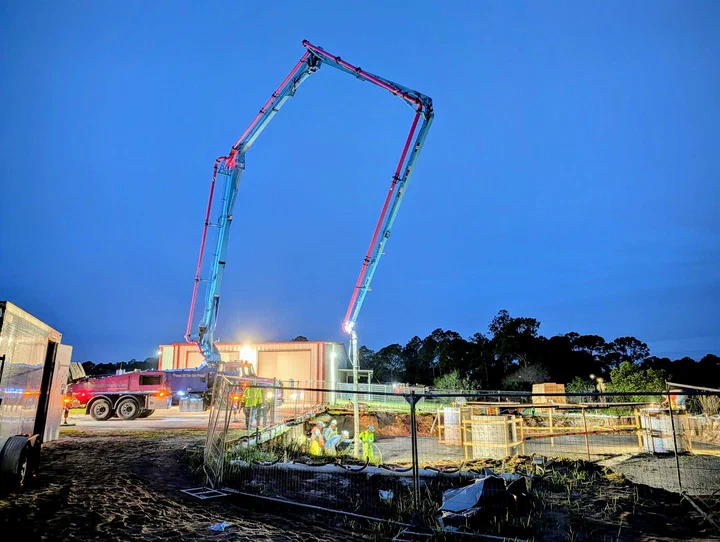
Licensed Part 101 microwave for carrier-grade pipeline backhaul.
Prosumer fixed-wireless PTP works for pad comms where best-effort data is fine. Pipeline SCADA is different. A transmission pipeline carrying a few hundred thousand barrels a day of crude or a few hundred MMcf of gas has communications availability requirements measured against PHMSA audit response, not against WISP rule-of-thumb.
Licensed FCC Part 101 microwave is the carrier-grade backhaul answer for long-haul pipeline SCADA, compressor station consolidation, metering station backhaul, and pump-station-to-control-room paths. The value:
- Protected spectrum. 6, 11, 18, 23, 32, 38, 42 GHz licensed bands. Path coordination through an FCC-approved frequency coordinator, granted license, no “someone dropped a WISP next to us and took our noise floor.”
- 99.999% availability target. Achievable when band selection, fade margin, and adaptive modulation are sized against the local rain zone via ITU-R P.530.
- Adaptive modulation with robust QPSK fallback under rain fade, so the link drops capacity but keeps SCADA traffic flowing.
- 1+1 hot-standby on critical single paths, ring topology on multi-site backhaul where the route allows.
- TDM / E1 legacy circuit emulation on some carrier-grade platforms (Aviat WTM, SAF Integra) for operators running legacy RTU protocols inherited from pre-IP SCADA.
Our long-term installer relationships with Aviat, SAF Tehnika, and Siklu let us cut through the vendor marketing. If Aviat’s WTM is the right call for your path but a lower-cost platform would meet your availability target, we’ll say so. Our microwave backhaul service has the full band / vendor / path trade-off walkthrough.
For PHMSA-regulated operators specifically, we deliver commissioning documentation against the availability and performance targets the CRM plan calls for, not against a generic commissioning checklist. Your reliability engineer, your control-room team, and your PHMSA auditor all have what they need.
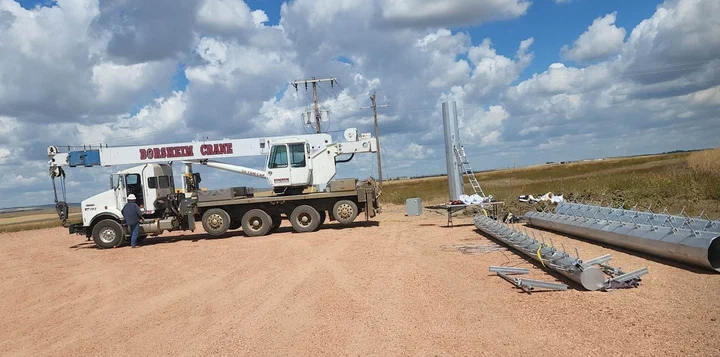
Getting wireless internet and broadband to an oil field site.
Ask four people how to get broadband for oil fields and you get four answers, because there are four honest options and the right one depends on how far the site is from something you already own.
- Satellite (GEO or LEO). The default when nothing else exists. Fast to stand up, no tower needed, and it keeps costing you every month forever. LEO has fixed most of the latency complaint; it has not fixed the per-site monthly.
- Carrier LTE / 5G. Free to try, and the coverage map lies. Chevron has publicly estimated 50 to 60% of its operational footprint sits outside reliable public wireless coverage. Test at the pad, not on the map.
- Fixed wireless backhaul to a tower you own. One structure in the right place can feed a cluster of pads. This is where the economics turn: the capital goes in once instead of into a monthly bill per site.
- Private LTE or CBRS across a footprint. The answer when you have dozens of sites, mobile assets, and workforce devices, not just a handful of RTUs.
What we build is the layer underneath all of it — the steel, the RF, the grounding, and the backhaul that turn a pad into a connected site. Most operators land on a hybrid: satellite as the failover, wireless internet for oil field operations carried over microwave or private LTE as the primary.
The build-versus-buy math is usually simpler than people expect. Add up the monthly satellite spend across every site in the cluster, multiply by the years the field will produce, and compare that to one direct embedment monopole and a backhaul radio. On a multi-pad program the crossover often lands inside two years.
Power is the part nobody scopes until it's late.
A remote corridor comms site — a block valve, an M&R station, a cathodic rectifier, a pad two hours from the nearest meter — usually has no utility drop. The radio is the easy part. Keeping it powered through a week of overcast in January is the part that decides whether your SCADA link is actually available when PHMSA asks.
- Solar and battery. Sized against the real load and the worst month at that latitude, not the annual average. A SCADA-only load is a very different array from one feeding a private LTE radio and a camera.
- Thermoelectric generators. Still the honest answer on sour-gas and low-insolation sites where solar can’t carry the winter.
- Utility drop. Cheapest to run, expensive to reach. The trenching and easement usually decide it, not the meter.
- Hybrid. Solar primary with a generator or TEG backstop, which is what most corridor sites end up with.
We do the DC-plant side of this as part of the build — rectifier and battery-string sizing, enclosure, bonding, and cabling — the same scope we ran on the Alabama Lightwave network where the DC plant had to carry a full RAN load, not just a controller.
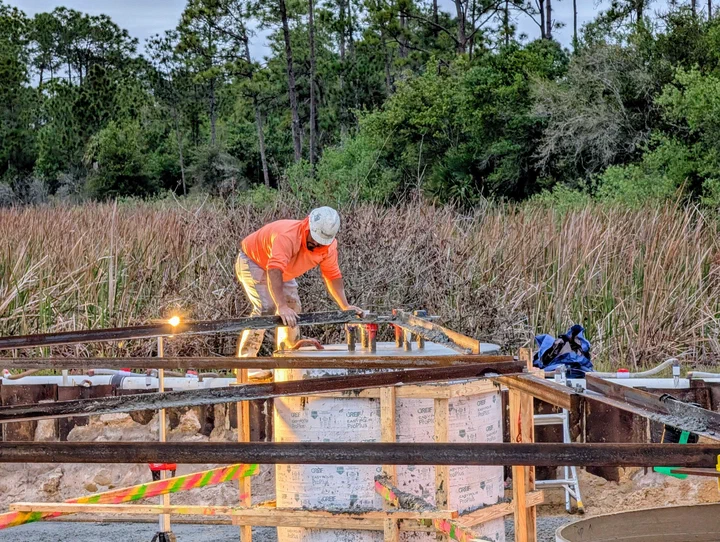
Hazloc awareness: we know the Class I Div 2 perimeter.
Most oil and gas infrastructure sits inside or adjacent to a classified hazardous area under the National Electrical Code (NEC) Article 500 series and OSHA 1910.307. The classifications that matter for comms tower siting:
- Class I Division 1. Area where flammable gases, vapors, or liquids can be present under normal operating conditions. Inside vent lines, immediately adjacent to open valves, near continuously venting equipment. Tight zones, typically very small.
- Class I Division 2. Area where flammable gases might be present under abnormal conditions. Wellhead perimeters, tank battery perimeters, loading / unloading stations, process-area perimeters. Typical extent: 10 to 25 feet from the source, with vertical extensions above and below.
A tower contractor who doesn’t know the difference is a contractor who will try to site a compound in a Div 2 zone, install non-rated antennas and junction boxes inside a classified area, or (worst case) dig a foundation through underground classified infrastructure.
Our scoping runs an area-classification review on every site. Compound and tower siting confirmed outside the Div 2 perimeter wherever possible. Where proximity to a Div 2 zone is unavoidable (typical on compressor-station proximity sites), Division-certified equipment selected for antennas, junction boxes, cabinet enclosures, and cable glands. Conduit and cable entry paths that cross classified area boundaries sealed per NEC 501.15.
Our crews come with Class I Div 2 hazloc awareness training as a baseline. Hot-work permits, gas monitors on pad perimeters, coordination with the operator’s safety officer before any torch-cut or welding on infrastructure, and respect for the operator’s existing JSA and stop-work procedures.
What we build for oil and gas operators.
The full tower and RF catalog, filtered to the scope upstream, midstream, and downstream oil and gas actually buy. Hazloc-aware, PHMSA-aware, schedule-aware.
- Wellhead pad communications towers (direct embedment monopole, typical 60 to 120 ft, fast mobilization)
- Tank battery telemetry backhaul with weather-sealed, vibration-rated mount hardware
- LACT unit (Lease Automatic Custody Transfer) communications integration
- Cathodic protection rectifier telemetry backhaul
- H2S monitoring backhaul for sour-gas pads and gathering lines
- Compressor station communications with hazloc-aware tower siting
- Metering and regulating (M&R) station backhaul for PHMSA-compliant pressure and flow data
- Pipeline SCADA carrier-grade microwave (licensed Part 101, Aviat, SAF, Siklu, Nokia)
- Block valve site telemetry backhaul across pipeline corridors
- Refinery and terminal private LTE / CBRS towers and RF install through our Edge Mile partnership
- Gas processing plant communications (amine units, dehy units, compressor trains)
- Multi-site gathering-system backhaul with ring topology and redundant paths
- Direct embedment monopoles for fast-deploy remote-pad SCADA and pipeline corridor repeaters
- Guyed and self-supporting tower erection for regional aggregation and long-haul backhaul
- Private LTE infrastructure (CBRS Part 96, Anterix 900 MHz, operator-licensed spectrum) with Edge Mile EPC integration
- Fiber plant down-tower with armored OSP fiber and EMI-hardened terminations
- Class I Div 2-rated equipment installation where proximity to classified areas requires it
- Grounding and bonding to Motorola R56 default (or IEEE 80 on utility-adjacent / cathodic-intensive sites)
- Obstruction lighting install and NOTAM-response climbs on registered oil & gas structures over 200 ft
- Post-storm response and revenue-link restoration for outages affecting SCADA availability
- Documentation for PHMSA audit response, API 1164 cybersecurity, and operator CRM program files
Pad comms on a drilling schedule? Pipeline SCADA on a PHMSA audit?
Send the site list, the production timeline or compliance deadline, and whether you want private LTE over the footprint. We come back with a hazloc-reviewed scope, a schedule that respects the rig, and a quote.
Services oil and gas operators buy most.
The services below are the mix oil and gas engagements typically run through. Click any card for the full scope, process, standards, and pricing.
Direct Embedment Monopoles
Foundation-free monopoles set into augered holes. Fast to deploy.
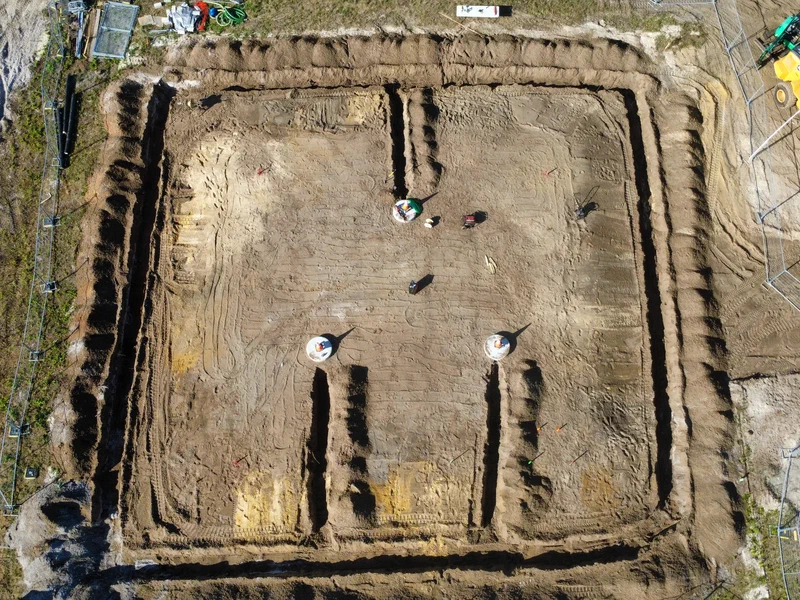
New Site Builds
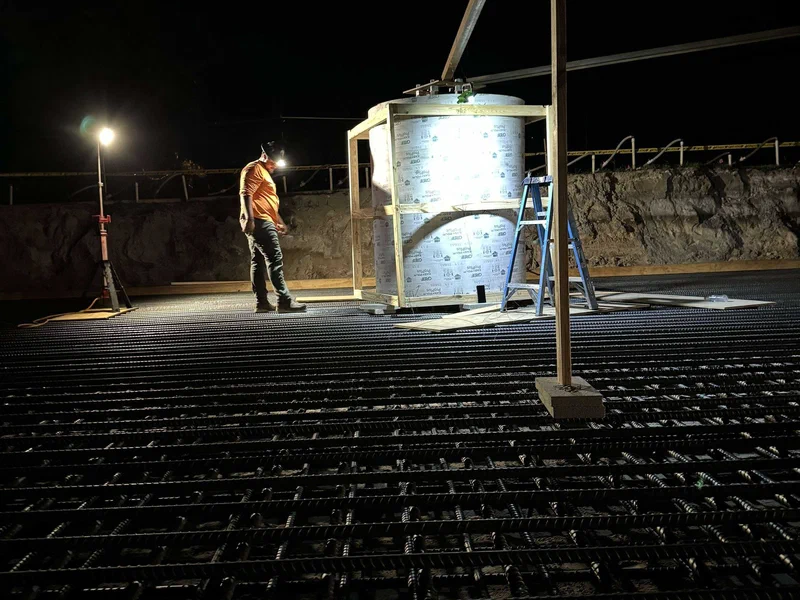
Empty dirt to operational tower, one crew, one point of contact.
Microwave Backhaul
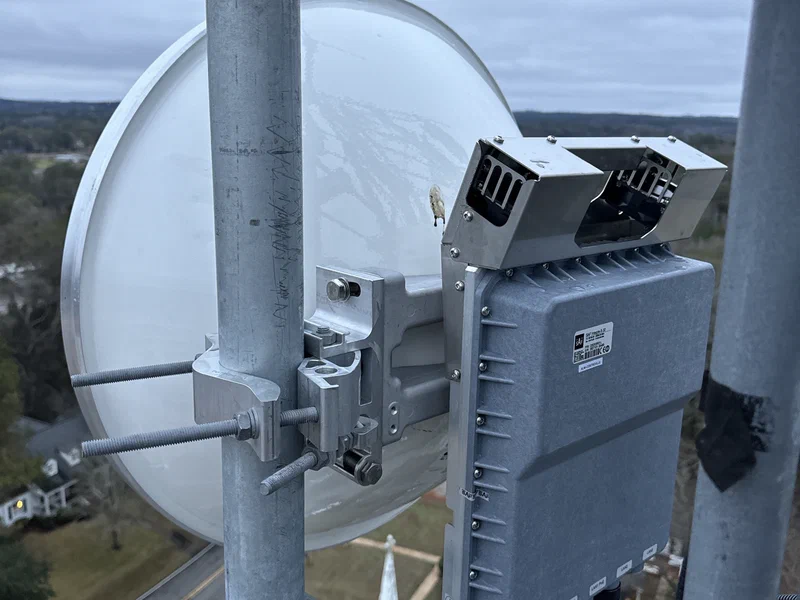
Point-to-point links, redundant rings, licensed and unlicensed.
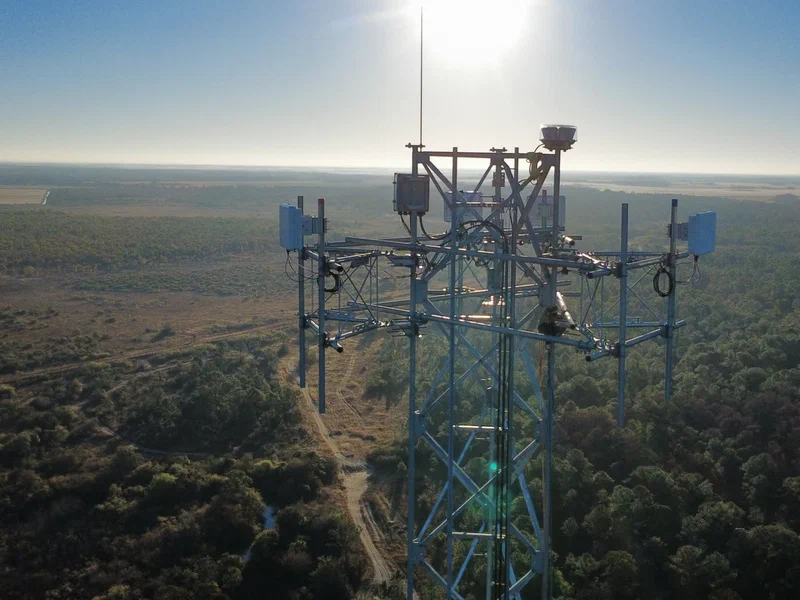
Sector & Backhaul
Sector antennas, backhaul dishes, horn arrays, aligned and sealed.
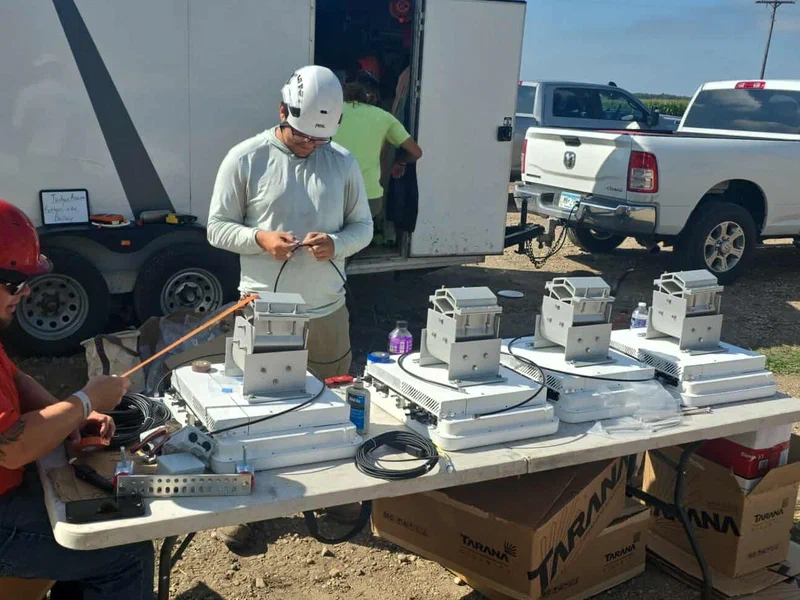
Antenna & Radio Install
Antennas, radios, fiber, DC, and Cat6. Ubiquiti, Cambium, Mimosa, Tarana, Nokia, and more.
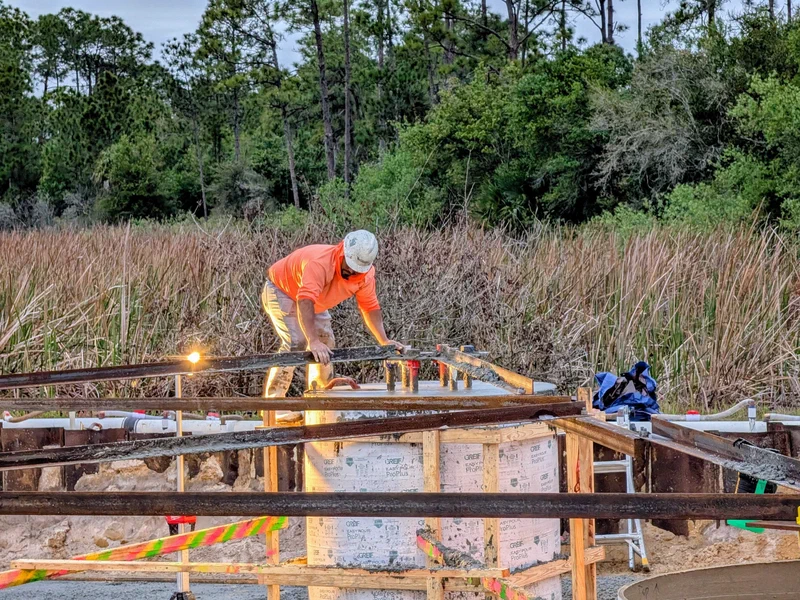
Foundations & Civil
Excavation, rebar, concrete, grading, fencing, and ground rings.
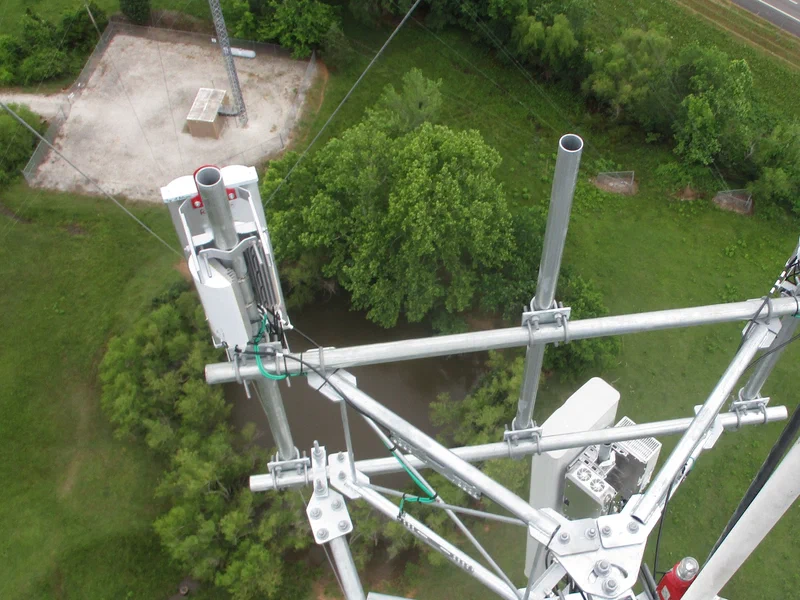
Maintenance & Inspection
Inspections, repairs, and post-storm response for a 20-year asset.
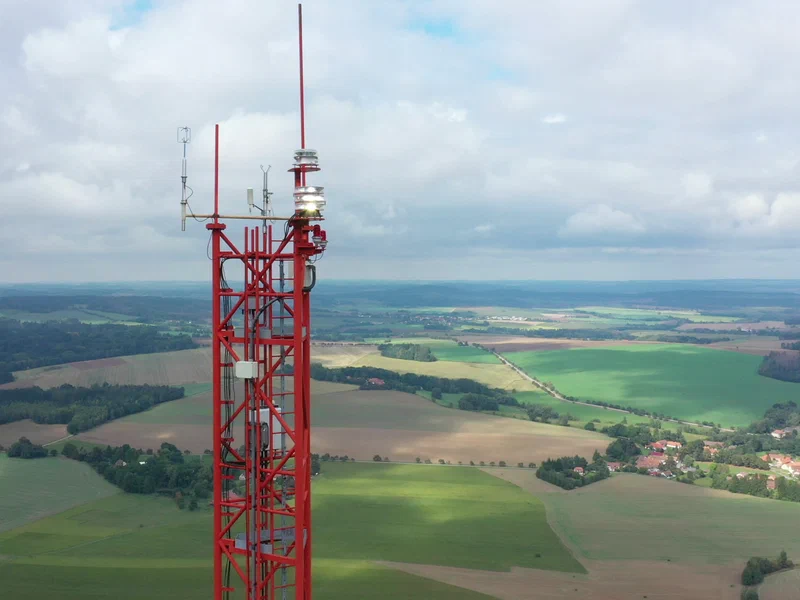
Obstruction Lighting
FAA-compliant beacon, strobe, and side-light repairs. Bulb and LED replacement.
Grounding & Cadwelding
Ground rings, exothermic welds, bonding to NEC and manufacturer spec.
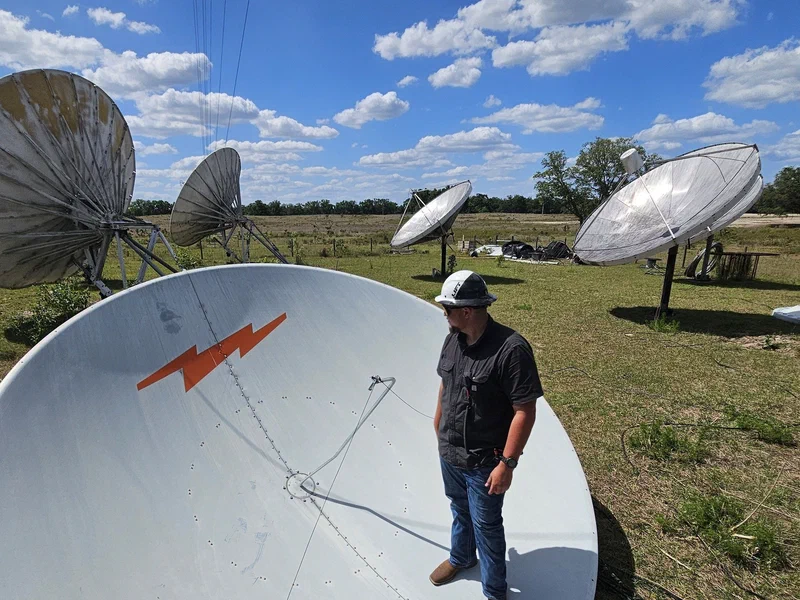
Decommissioning
Full teardown, equipment salvage, foundation removal, and FCC / FAA closeout.
How an engagement flows.
An oil and gas engagement runs the same engineering as any tower build, plus a hazloc, scheduling, and compliance layer unique to oil and gas. Here is how an engagement flows from first call to commissioning.
Operator pre-qualification and safety alignment
Most operators run a formal contractor-prequalification program (ISNetworld, Avetta, PEC Safety, Veriforce). We maintain active enrollments across the major platforms and complete operator-specific onboarding before site mobilization. Safety alignment includes JSA review, stop-work authority acknowledgment, permit-to-work protocol review, and (where applicable) operator-specific hazloc training.
Hazloc and area-classification review
Every site walked against the operator’s area classification drawings. Compound and tower siting confirmed outside Class I Division 2 zones where possible. Where proximity is unavoidable, Division-certified equipment specified for antennas, junction boxes, and cable entries. Conduit sealing per NEC 501.15 documented in the install plan.
Structural and RF engineering coordination
Structural drawing from the operator’s PE or our partner network. Tower type selected against pad layout, soils, and production schedule (direct embedment monopole is the common upstream answer). RF design from the operator’s SCADA integrator or our Edge Mile partner team on private LTE scope. Path study and fade-margin calculation per ITU-R P.530 on licensed microwave paths.
Permits, FCC licensing, and BLM ROW
FAA 7460-1 filing where structure height triggers notification. FCC ASR registration on lit structures. FCC Part 101 licensing and frequency coordination on licensed microwave paths (6 to 12 weeks upfront). BLM right-of-way coordination on federal-land sites. State PUC or oil & gas commission filings where the jurisdiction requires them.
Production-schedule coordination
Construction window sequenced around the operator’s drilling, completion, and production schedule. For tower work that intersects with active operations, our crew schedule respects the operator’s JSA, hot-work permits, and shut-in procedures. We don’t take the pad offline for the tower job.
Mobilization, civil, and steel
Crew rolling from Texas or Alabama to the site. Civil work sized to the structure (auger rig on direct embedment, spread-footing excavation on self-support). Steel up with crane sized to pole weight. Ground ring installed with exothermic welds and bonded to any existing pad grounding (pipeline cathodic protection isolation coordinated where the site has CP infrastructure).
RF install, cable plant, and commissioning
Antennas, radios, ODUs installed to manufacturer spec. Fiber and DC cabling to the operator’s comms cabinet or SCADA building. For private LTE sites, coordination with Edge Mile on RAN commissioning and EPC integration. For carrier-grade microwave, RSL verified against path budget, 72-hour soak test on critical paths, adaptive modulation tuned, BER measured.
Documentation and handover
As-built drawings, alignment and link-budget logs, fiber insertion-loss logs, FCC license grants, BLM ROW documentation, hazloc equipment certifications, and grounding inspection delivered. For PHMSA-regulated operators, commissioning documentation aligned with the operator’s CRM plan and API 1130 leak-detection program. Your SCADA integrator, your control-room team, and your compliance office all have what they need.
Built to code. Hazloc-aware. PHMSA-documentable.
Same TIA-222-I, Part 101, and OSHA baseline as any tower contractor. Plus the hazardous-area, pipeline-safety, and operator-specific layers that apply to oil and gas.
49 CFR 192 / 49 CFR 195. PHMSA pipeline safety
Federal safety rules for gas pipelines (Part 192) and hazardous liquid pipelines (Part 195). Governs Control Room Management, SCADA requirements, leak detection, and reporting. Communications infrastructure feeds directly into the operator’s CRM and leak-detection programs.
PHMSA Advanced Leak Detection Rule (Jan 2025)
Final rule submitted January 2025 under Section 113 of the PIPES Act of 2020. Requires advanced leak-detection programs across 2.8 million miles of gas pipeline. Communications infrastructure feeding continuous monitoring and reduced-threshold detection is scoped into the rule.
API 1130 / API 1149. Computational pipeline monitoring
American Petroleum Institute standards for design (1130) and performance uncertainty (1149) of pipeline leak-detection systems. Communications availability directly affects CPM performance.
API 1164. SCADA cybersecurity
API recommended practice for cybersecurity of SCADA systems in the pipeline industry. Network segmentation, remote-access controls, and comms-layer authentication commonly referenced in operator CRM plans.
API 1165. SCADA HMI design
API recommended practice for human factors in SCADA HMI design. Relevant when comms-layer latency or reliability affects alarm rates and operator workload.
NEC Article 500 / 501 / 505. Hazardous (classified) locations
National Electrical Code provisions for hazardous area classification and equipment suitability. Drives equipment selection and conduit sealing for installations inside or adjacent to Class I Div 1 / Div 2 zones.
OSHA 1910.307. Hazardous (classified) locations
OSHA workplace safety provisions for hazardous locations. Mirrors NEC 500 series with workplace-specific emphasis.
FCC Part 101
Licensed fixed microwave (6, 11, 18, 23, 32, 38, 42 GHz) for carrier-grade pipeline SCADA backhaul. FCC coordination and license filing handled as part of scope.
FCC Part 96 (CBRS)
Citizens Broadband Radio Service (3.55–3.7 GHz). SAS registration, PAL / GAA tier coordination, and CPI-certified deployment on CBRS private LTE builds at refineries, pads, and gathering systems.
FCC Part 90 / Anterix 900 MHz
Private Land Mobile Radio bands and Anterix 900 MHz broadband (expanded to 10 MHz / 5x5 LTE in February 2026). Deployment coordination on Anterix-enabled operator builds.
ITU-R P.530
Rain-fade, fade-margin, and availability modeling for licensed microwave paths. Every carrier-grade path analyzed against P.530 using local rain-rate data.
TIA-222-I
ANSI structural standard for antenna-supporting structures. Plumb tolerance, guy pre-load, bolt torque, and ice / wind loading on every tower.
Motorola R56 / IEEE 80
Grounding and bonding for communication sites. R56 default on pad comms; IEEE 80 on utility-adjacent or cathodic-protection-intensive sites where ground grid integration is required.
OSHA 1926 / ANSI A10.48
Safety at height. 100% tie-off, authorized rescue, site-specific safety plan on every climb. Plus operator-specific JSA, hot-work permit, and gas-detection protocols on active pad work.
Questions oil and gas operators ask.
What is an oilfield communication tower?
An oilfield communication tower is a structure built on or near a production site to carry the radio links that move SCADA, telemetry, and voice traffic off the pad. In practice it is one of three things: a direct embedment monopole at a wellhead or tank battery, typically 60 to 120 ft; a repeater structure along a pipeline right-of-way linking block valves and M&R stations back to the control room; or a coverage structure at a refinery or terminal carrying private LTE or CBRS across the facility.
What separates it from an ordinary comms tower is the environment around it: a classified hazardous area under NEC Article 500, a production schedule that does not stop for construction, and an availability requirement that may be written into a PHMSA control-room management plan.
Can you put up a portable or mobile tower for oil and gas work?
Sometimes, and often you shouldn’t. Trailer-mounted and mobile masts genuinely earn their place on short-duration work — a drilling campaign that will move in six weeks, a temporary link during a turnaround, storm or outage response. They go up in hours and leave with the rig.
For anything that outlives the rig, a direct embedment monopole is usually the better buy. No spread footing, no 28-day cure, 1 to 3 days on site per pole from auger rig to backfill, and it carries a real antenna loadout at a real height instead of whatever a mast will hold in wind. If the pad is going to produce for a decade, the permanent structure is cheaper inside the first year.
Tell us the duration and the loading and we will tell you which one the site actually wants.
How do you get wireless internet to a drilling operation?
Test the carrier signal at the pad first, then pick between satellite, a backhaul link to a tower you own, or private LTE across the footprint. For a single isolated pad that will move, satellite or carrier LTE is usually right and no tower is needed. For a cluster of pads that will produce for years, one structure carrying a licensed or unlicensed microwave link back to fiber typically beats paying a monthly satellite bill per site.
The sequence we run: signal survey at the pad, path study back to the nearest point of presence, structure sized for the antenna loadout and the wind zone, then RF install, grounding, and commissioning. If the operator is standing up private LTE or CBRS across a field, we build the tower and RF layer and The Edge Mile builds the RAN and core.
Do you work in the Permian, Bakken, Eagle Ford, and the major shale plays?
Yes. Crews running out of Texas and Alabama cover the Permian Basin (West Texas and southeast New Mexico), the Eagle Ford (South Texas), SCOOP/STACK (Oklahoma), and the Haynesville (East Texas / Louisiana) with typical 24-hour mobilization. The Bakken (North Dakota and Eastern Montana) and DJ Basin (Colorado) run on nationwide mobilization. Typically 48 hours. Marcellus and Utica (Pennsylvania, West Virginia, Ohio) the same.
For multi-site program work across a basin or a pipeline corridor, we stage a dedicated crew closer to the program footprint. Midland, Williston, or a pipeline-right-of-way camp town are all common operating bases for a rotation.
How fast can you have comms at a new pad?
Depends on the structure and the paperwork. Typical direct embedment monopole pad comms:
- Pole delivery and auger rig mobilization: 1 to 2 weeks after quote acceptance, faster if we can draw from an existing pole inventory.
- On-site install: 1 to 3 days from auger rig arrival to pole set and backfilled.
- RF install and commissioning: 1 to 2 days after the pole is set.
- FCC licensing (if licensed microwave backhaul): 6 to 12 weeks upfront, sequenced against the construction schedule.
For an upstream operator with a drilling schedule already set, we typically have the comms tower up, commissioned, and feeding the SCADA integrator before production starts, with an appropriate buffer for the rig and frac windows.
Can you run private LTE at a pad, a compressor station, or a refinery?
Yes, through our partnership with The Edge Mile. Edge Mile handles the RAN, the EPC and core, SAS registration (on CBRS), and the operations hand-off. We handle the steel, the RF install, the fiber and DC cabling, grounding, and site construction.
For an oil and gas operator, that combination delivers a sovereign-controlled private cellular network on the operator’s own spectrum (CBRS PAL or GAA, Anterix 900 MHz on utility-adjacent sites, or operator-licensed private spectrum on existing Part 90 holdings). The operator owns the network, the data, and the access policy. No carrier middleman, no monthly per-device fee.
Common deployments:
- Pad-level private LTE for wellhead sensor aggregation, field-worker tablets, and pad video surveillance.
- Compressor station coverage for workforce devices, machinery monitoring, and safety wearables.
- Refinery or terminal blanket coverage for IIoT, workforce mobility, video surveillance, and autonomous inspection (drones, ground robots).
The sweet spot for private LTE in oil and gas is sites where public wireless coverage is poor or unreliable and the operator has dense on-site connectivity needs. Chevron has publicly stated that 50-60% of its footprint is outside reliable public wireless coverage, which is why they acquired 26 CBRS PAL licenses focused on the Permian.
What hazardous-area certifications do your crews and equipment have?
Our crew posture on oil and gas sites:
- Class I Div 2 hazloc awareness as a baseline on every crew member assigned to oil and gas work, including awareness of the Division boundaries on typical wellhead, tank battery, loading/unloading, and process-perimeter layouts.
- Hot-work permit protocol. We don’t torch, weld, or grind inside a classified area without the operator’s hot-work permit, gas monitor, and safety officer on site.
- Gas detection. Four-gas monitors on the lead hand on any pad entry where H2S, LEL, or similar is a risk.
- Stop-work authority respected at operator-specific training level.
For equipment, antennas, junction boxes, cabinet enclosures, and cable entries in or immediately adjacent to a classified area are selected for the applicable Class and Division. Conduit and cable entries crossing classification boundaries are sealed per NEC 501.15. Our siting practice is to place the compound and tower outside the Div 2 perimeter wherever site layout allows (cheaper, safer, simpler), and use Division-certified equipment only where proximity is unavoidable.
How does the PHMSA January 2025 leak-detection rule affect my communications infrastructure?
The final rule strengthens leak-detection requirements across 2.8 million miles of gas transmission, distribution, and gathering pipeline. Key elements that touch comms infrastructure:
- Advanced leak-detection programs with continuous monitoring systems, reduced reporting thresholds, and mandatory repair timelines.
- Communications layer feeding continuous monitoring. Fiber-optic distributed sensing, acoustic emission monitoring, drone / aerial survey comms backhaul, vehicle-mounted detection survey upload.
- SCADA availability performance documented against the CRM plan.
- Reduced reporting threshold to detect smaller leaks sooner. More sensor points, more comms links to carry them.
Operators running pipeline modernization in response to the rule typically need additional comms capacity at metering stations, block valves, and compressor stations to carry higher-resolution leak-detection data back to the control room. We run that scope across gathering systems, interstate transmission, and distribution corridors, and we document commissioning against your CRM plan’s availability targets, not a generic commissioning checklist.
Do you do carrier-grade microwave for pipeline SCADA?
Yes. Licensed FCC Part 101 microwave (6, 11, 18, 23, 32, 38, 42 GHz) is the carrier-grade answer for pipeline SCADA backhaul where prosumer PTP doesn’t meet the availability requirement.
Typical oil and gas pipeline microwave scope:
- Path study against ITU-R P.530 with local rain-rate data, fade-margin verification, and availability calculation against the operator’s SLA target (commonly 99.99% to 99.999%).
- FCC Part 101 licensing filed, coordinated through an FCC-approved frequency coordinator, granted license in hand before on-air.
- Carrier-grade radio selection. Aviat WTM / Eclipse, SAF Tehnika Integra / CFIP, Siklu EtherHaul, Nokia licensed microwave.
- 1+1 hot-standby on critical single paths; ring topology on multi-site gathering or transmission-line corridors.
- Adaptive modulation with robust QPSK fallback and forward error correction so rain events drop capacity but keep SCADA signaling flowing.
- TDM / E1 legacy circuit emulation for operators with legacy RTU protocols.
- Commissioning against the CRM plan’s availability targets, documented for PHMSA audit.
See our microwave backhaul service for the full walkthrough.
Can you work in or around BLM and tribal lands?
Yes. Federal-land oil and gas operations (BLM leases) require BLM right-of-way coordination for tower pads and comms infrastructure. We run the ROW application timeline in parallel with structural and RF engineering so the paperwork finishes in sync with the construction schedule.
For oil and gas operations on tribal land (Navajo, Osage, Southern Ute, MHA Nation, and others), tribal jurisdiction applies on top of federal oil and gas rules. Our tribal nations industry page has the full Section 106 / THPO / TERO / 25 CFR 169 BIA ROW framework. We scope tribal-jurisdiction oil and gas work to both the tribe’s sovereign framework and the federal oil and gas compliance layer.
Do you integrate with existing SCADA integrators?
Yes. Clean hand-off to SCADA integrator is part of standard scope. We work routinely alongside:
- WellAware, eLynx Technologies, Zedi, CygNet, Ignition, Trihedral / Inductive Automation. Common SCADA platforms for upstream and midstream.
- In-house SCADA teams at major operators (Chevron, ConocoPhillips, EOG, Pioneer, Diamondback, and similar).
- Midstream operator control-room teams (Energy Transfer, Enterprise Products, Kinder Morgan, Williams, and similar).
Our lane is the tower, the RF install, the cabling, and the commissioning to the RF spec. Your SCADA integrator owns the RTU configuration, the protocol gateway, the control-room HMI integration, and the alarm architecture. We hand off at the demarc (fiber patch panel or Cat6 termination at your cabinet) with documented link budgets, sweep reports, and alignment logs. Your SCADA team picks it up from there.
Can you run as prime direct to the operator, or as a sub to an EPC?
How do you price oil and gas tower work?
Fixed fee on defined scope, with unit rates and change orders for field conditions. Quoted against scope, tower type, site access, schedule constraints, and hazloc layer. Rough order-of-magnitude:
- Direct embedment pad comms site (100 ft, compact compound, standard antenna load): upper five figures to low six figures per site, program-rate discounts on multi-pad rollouts.
- Compressor station or M&R station tower with hazloc-aware siting: low to mid six figures per site.
- Licensed Part 101 pipeline SCADA microwave path (single link, carrier-grade, licensed): mid to upper six figures per path.
- Refinery or terminal private LTE (through Edge Mile partnership, multi-tower coverage): quoted against facility size and coverage design. Commonly mid six figures to low seven figures for a full private-LTE footprint.
- Multi-pad program rollout across a basin: program rate per pad, with dedicated crew rotation.
- Pipeline corridor SCADA modernization (multi-tower backhaul plus metering / block-valve backhaul): program rate quoted against site count and path complexity.
Hazloc-rated equipment (where required) priced into the quote, not an adder. FCC licensing, BLM ROW, and operator-prequalification onboarding handled as part of scope. Send us the project and you’ll have a line-itemed quote inside two weeks. Multi-basin programs typically take three weeks because the site-level coordination is the harder part.
What's your service area?
How do I get started?
Send us:
- The project scope. Upstream pad comms, midstream pipeline SCADA, downstream refinery private LTE, or a combination.
- The site list. Coordinates preferred on rural and remote sites, paper addresses fine on refinery and terminal.
- The compliance posture. PHMSA-regulated midstream, BLM ROW, state oil & gas commission, tribal jurisdiction if applicable.
- The schedule. Drilling window, frac schedule, production date, pipeline inspection window, or PHMSA audit target.
- Your SCADA integrator or internal team contact. So integration coordination can start in parallel.
- Your safety and prequalification team contact. So onboarding runs in parallel with scoping.
Request a quote here or call us at (763) 280-6050. Most upstream pad scopes quote inside a week. Midstream pipeline SCADA and downstream private LTE typically take two to three weeks because the engineering and compliance coordination is where the time goes.
Don't see your question? Ask us directly. We answer every scoping call.
Adjacent industries.

Electric Utility
SCADA backhaul, distribution automation, and substation communications. Multi-state programs, IEEE 80 grounding, teleprotection-grade microwave.
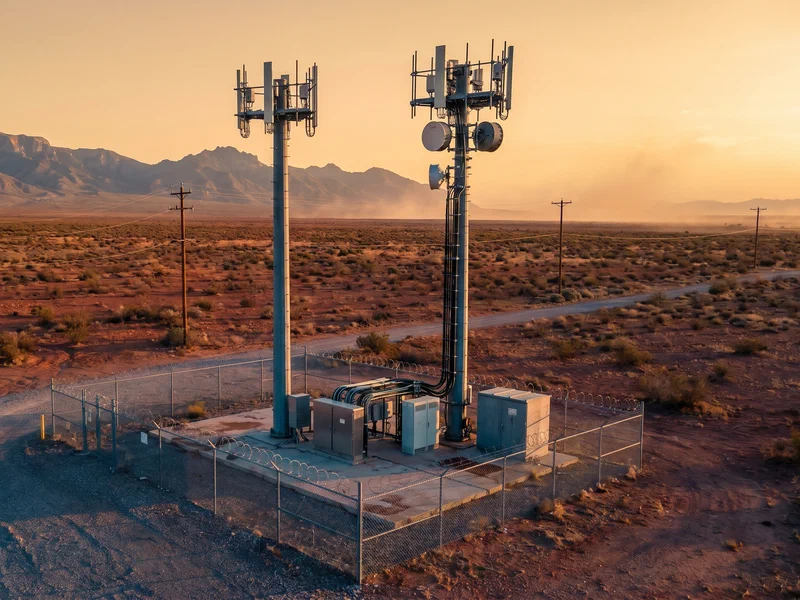
Tribal Nations
Sovereign broadband buildouts and tower work on tribal lands. Scoped for NTIA Tribal Broadband Connectivity Program (TBCP) timelines and deliverables.
WISP / Wireless Internet
Fluent in WISP-scale gear: Ubiquiti, Tarana, Cambium, Mimosa, RF Elements. We know your margins and timelines, and we don't bill carrier rates for prosumer work.
Page last updated July 30, 2026.
Wellheads, pipelines, refineries.
Three customers, one crew book.
Send the pad, the corridor, or the facility. Along with your production timeline or PHMSA audit window, and tell us whether you want private LTE over the footprint. We come back with a hazloc-reviewed scope, a line-itemed quote, and a schedule built around your operations.