
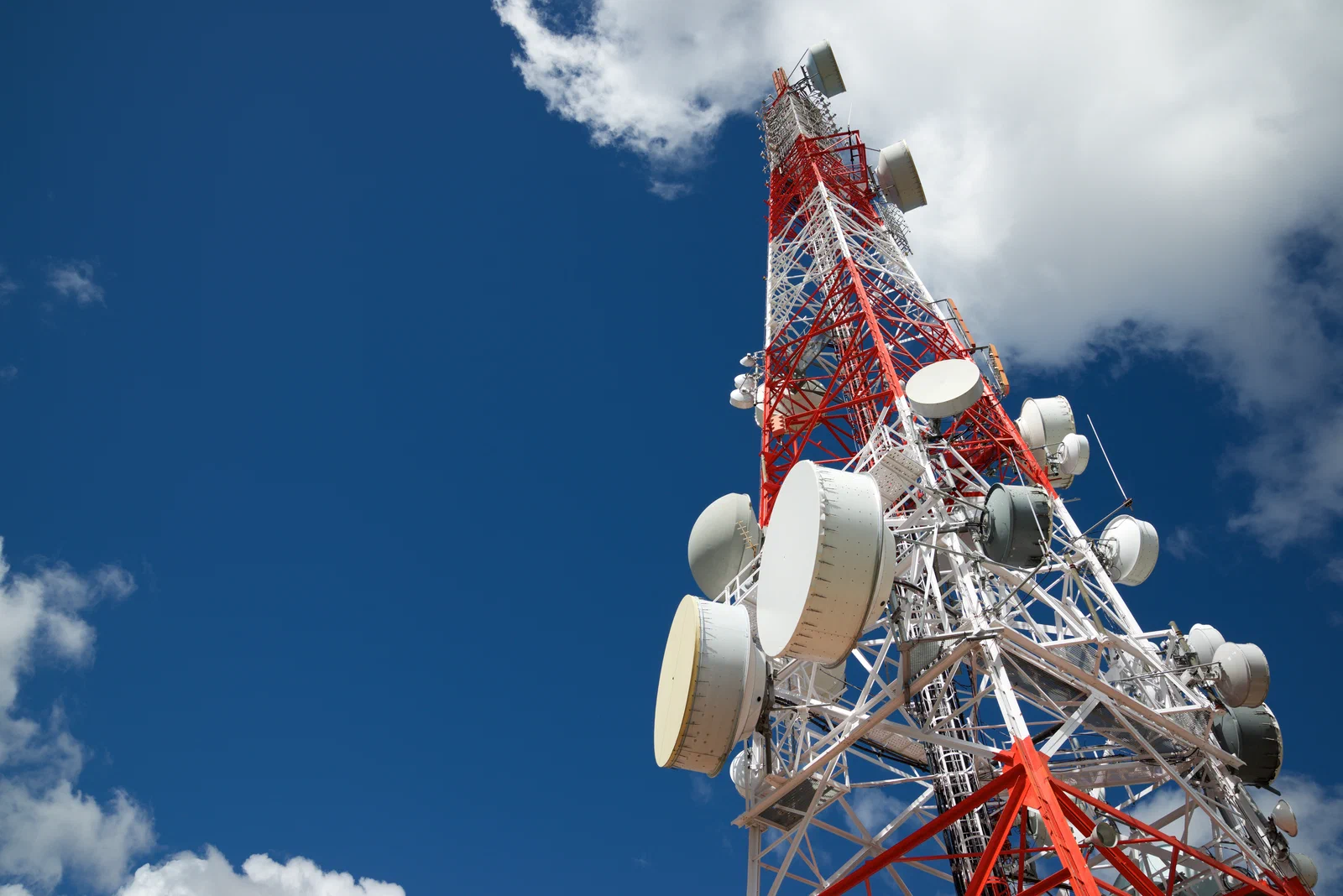
Tower Painting & FAA Aviation-Orange Marking
Paint is the cheapest structural repair you will ever buy. FAA-spec aviation-orange and white obstruction marking, full three-coat re-coats, rust abatement on coastal and salt-exposed towers, and spot-repair work on known damage. Done to SSPC surface-prep standards, with DFT verified and photographed, on a coating system your tower manufacturer will honor.
What's included.
Full painting scope from surface-prep planning to signed DFT report. New-build prime and topcoat, scheduled re-coat, rust abatement, and spot-repair work under one scope.
- FAA obstruction marking to AC 70/7460-1M: aviation-orange and white alternating bands, color-matched to FED-STD-595 chip 12197 (orange) and 17875 (white)
- Seven-band marking pattern on towers requiring dual marking (paint + lighting), verified against the FAA determination for your ASR
- New-tower prime and topcoat, factory-applied when tower sections ship uncoated
- Scheduled full re-coats on a 10 to 20 year cycle depending on coating system and environmental exposure
- Rust abatement on coastal, industrial, or salt-exposed towers: surface-prep, rust conversion, and recoat
- Spot-repair painting for localized damage, cadweld burn-through, or coating failures
- Three-coat systems: zinc-rich primer, epoxy intermediate, polyurethane or acrylic topcoat (UV-stable, color-retentive)
- Surface prep to SSPC-SP 2, SP 3, SP 6, SP 10, or SP 11 depending on the coating spec and substrate condition
- Abrasive blasting (SSPC-SP 6 commercial or SP 10 near-white) with containment where surface condition requires it
- Power-tool cleaning (SSPC-SP 3 or SP 11) for standard re-coat work where blasting isn’t needed
- Lead-paint abatement on pre-1978 towers per OSHA 1926.62 and EPA rules
- Containment systems (netting, tarp enclosures) to control overspray and debris on sensitive sites
- Airless spray application per the coating manufacturer’s data sheet (pressure, tip size, fan)
- Brush and roller for tight areas, members inside containment, and touch-up
- Dry-film-thickness (DFT) measurement with calibrated mil gauges, logged per tower elevation
- Holiday testing on critical coatings (low-voltage wet-sponge or high-voltage spark) where the spec calls for it
- Coordination with your structural PE on any rust-related section loss flagged during surface prep
- Documentation: SSPC-prep log, DFT report per elevation, coating manufacturer’s batch numbers, photo record, signed completion report
Need tower painting & faa aviation-orange marking on a real deadline?
Send your site details. We come back with a quote, a crew, and a schedule.
The paint isn't the finish. It's the structure.
A properly coated tower is a 20-year asset. A neglected one is a 7-year liability. The difference is the coating system and the surface prep under it, not the color of the topcoat.
Steel lattice towers corrode from the inside out. Water finds the overlap joints, the splice plates, and the undersides of the angle members. Without a barrier coating, section loss starts inside the first year of service, and by the time you see surface rust on the outside, the steel underneath has already lost material your engineer modeled the tower against.
We paint towers like we’re protecting steel, not decorating it. Zinc-rich primer for the barrier. Epoxy intermediate for the chemistry. UV-stable urethane topcoat for the color. DFT measured and logged at every elevation. If the surface condition requires abrasive blasting and the budget didn’t plan for it, we flag it before we open a can.
What FAA marking actually requires.
FAA Advisory Circular AC 70/7460-1M (“Obstruction Marking and Lighting”) is the current governing document. It specifies:
- Color. Aviation Orange, FED-STD-595 color chip 12197. Safety White, chip 17875. Chromaticity and reflectance tolerances published in the AC. Not “close to orange.” The specific federal-standard chip.
- Banding. For standard marking, seven equal horizontal bands running top-to-bottom, with aviation orange at the top band and bottom band, alternating with white. Some towers use three-band or five-band patterns on shorter structures per the same AC.
- Determination. The FAA determination issued on your Form 7460-1 tells you exactly which marking scheme your tower requires, based on height, proximity to airports, and whether you also have lighting. We paint to that determination, not to a generic assumption.
- Re-coat threshold. The AC treats weathered, faded, or chalking paint as non-compliant. If the orange isn’t orange enough to pass a chromaticity meter reading, the tower is out of compliance even if it still has paint on it.
For towers using dual marking (paint plus obstruction lighting), the lighting side of the scope lives on Obstruction Lighting. The two scopes go together on most structures over 200 ft AGL.
The coating system matters more than the color.
Every coating we apply is a three-coat system specified by a coatings manufacturer (Tnemec, Sherwin-Williams, Carboline, PPG, or similar) whose data sheet we follow to the letter.
- Zinc-rich primer (coat 1). Either organic (epoxy-based) or inorganic (ethyl silicate) zinc, depending on surface and exposure. The zinc is sacrificial: it corrodes instead of the steel underneath. On a blasted near-white substrate, a zinc primer will protect steel for 15 to 25 years by itself.
- Epoxy intermediate (coat 2). The chemistry layer. High-build epoxy gives the system its chemical resistance, adhesion to the zinc primer, and bulk DFT. This is where the coating system’s durability lives.
- Polyurethane or acrylic topcoat (coat 3). The color layer and the UV barrier. Aliphatic polyurethane holds gloss and color through direct sun. Acrylic is less expensive but fades faster. Aviation-orange specifically fades fast under UV if the topcoat chemistry isn’t right, so we specify urethane on marked towers as a default.
DFT matters. Each coat has a manufacturer-specified minimum and maximum dry-film thickness. Too thin and you lose barrier performance. Too thick and you risk cohesive failure (the coating pulls itself off the substrate under temperature cycling). We measure DFT with a calibrated magnetic mil gauge at every elevation, log the readings, and re-spray where we’re under-spec before moving to the next coat.
Surface prep is where the money lives.
If you paint over bad prep, the coating will fail inside three years regardless of how expensive the paint is. The prep specification drives both the performance life and a meaningful fraction of the job cost.
SSPC / AMPP prep standards we work to:
- SSPC-SP 1 (solvent cleaning). Removes oil, grease, and soluble contaminants. First step on every job before mechanical prep starts.
- SSPC-SP 2 (hand tool) / SP 3 (power tool). Removes loose rust, scale, and failing coating. Used on overcoat work where the substrate is stable and existing coating is intact.
- SSPC-SP 11 (power tool to bare metal). Power tools taken down to clean steel with a minimum surface profile. Used where abrasive blasting isn’t practical but we need bare steel.
- SSPC-SP 6 / NACE 3 (commercial blast). Abrasive blast to remove all rust, scale, and old coating with allowable light staining. Standard spec for re-coat of a moderately corroded tower.
- SSPC-SP 10 / NACE 2 (near-white blast). Abrasive blast to near-white metal. Standard spec for new steel in aggressive service or for coastal re-coats where long-term corrosion protection is the requirement.
Which standard your tower gets depends on substrate condition, the coating system selected, and the service life target. We specify prep in writing before the job starts, and we photograph the prepared substrate at every elevation before the first coat goes on.
Lead paint is a different job.
Towers built or re-coated before 1978 frequently have lead in the topcoat. Any disturbance of that coating is a regulated activity under OSHA 1926.62 (lead in construction), EPA disposal rules, and state environmental programs.
A proper lead-paint job includes:
- Pre-job sampling to confirm lead content and concentration.
- Containment to capture all blast debris and paint chips. Full negative-pressure enclosure on aggressive removal, tarp-and-netting on less aggressive.
- Air monitoring of worker exposure during removal.
- HEPA-filtered vacuum collection of all debris.
- Certified disposal of spent abrasive and paint residue as hazardous waste where the TCLP result requires it.
- Worker medical surveillance per OSHA for any crew member above the action level.
That scope adds meaningfully to cost and schedule. We scope it honestly on the front end. If your tower is pre-1978 and hasn’t been confirmed lead-free, assume lead until sampling proves otherwise.
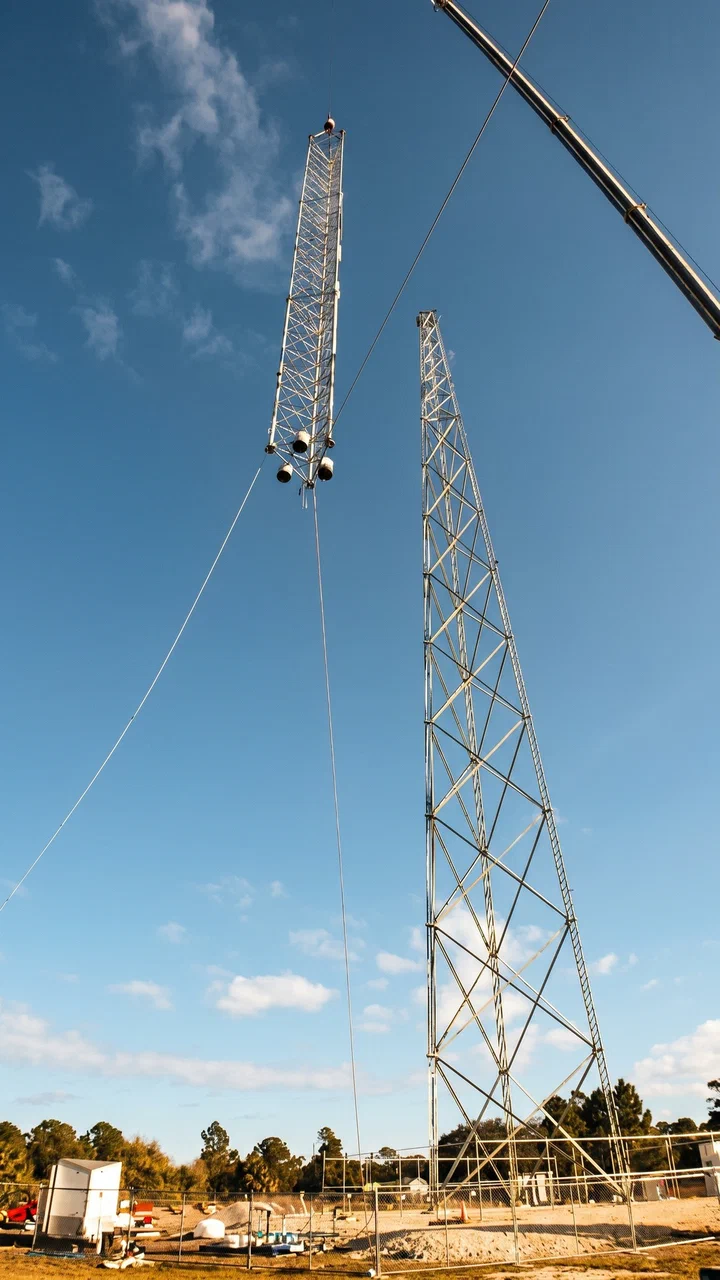
How it goes.
A scheduled full re-coat runs 2 to 4 weeks on-site on a typical 200 to 400 ft tower, driven by surface-prep scope, weather windows, and containment requirements. Spot-repair work runs 1 to 3 days. FAA-marking repaints on new builds coordinate with the erection schedule.
Pre-paint survey and spec
Site walk and tower-top inspection. Existing coating condition graded per ASTM D610 (rust grade) and ASTM D714 (blister). Substrate profile measured on sample coupons. For FAA-marked towers, chromaticity of existing orange checked against FED-STD-595 chip 12197. Lead content sampled on pre-1978 towers. Coating manufacturer’s system spec selected and written up. Prep standard, DFT targets, and application windows documented before mobilization.
Containment and access
Rope-access anchors set or climb system verified. Containment installed per the environmental scope: full enclosure for aggressive blast on sensitive sites, tarp-and-netting for standard work, minimal containment for light re-coat in non-sensitive areas. EPA-compliant debris collection staged at grade. For towers near airports, FAA Part 77 notice filed if the containment itself becomes a temporary obstruction.
Surface preparation
Solvent-clean per SSPC-SP 1. Mechanical prep to the specified SSPC standard (SP 2, SP 3, SP 6, SP 10, or SP 11). Surface profile verified with replica tape against the coating manufacturer’s required anchor pattern. Blast debris and loose material collected per the environmental plan. Prepared substrate photographed at every elevation before the first coat goes on. Coat-up window respected so the clean substrate doesn’t flash-rust before primer lands.
Prime coat
Zinc-rich primer applied per the coating manufacturer’s data sheet. Airless spray with the specified tip size, pressure, and fan pattern. Wet-film thickness checked during application, dry-film thickness measured with a calibrated mil gauge after cure. Low and high readings re-sprayed to spec before the intermediate coat goes on.
Intermediate coat
Epoxy intermediate applied over the cured primer within the manufacturer’s recoat window. DFT measured and logged per elevation. Overcoat window respected so the topcoat bonds properly without surface contamination.
Topcoat and FAA-marking bands
Polyurethane or acrylic topcoat applied. For FAA-marked towers, band boundaries measured and masked per the AC 70/7460-1M pattern on the tower’s FAA determination. Aviation-orange sprayed to chip 12197, white sprayed to chip 17875. Band edges cut clean. Final DFT measured and logged. Chromaticity verified where specified.
Holiday and DFT verification
Low-voltage wet-sponge or high-voltage spark test on critical coatings where the spec calls for it. Full DFT walk-down per elevation. Any under-spec readings identified, re-prepped, and re-coated to the manufacturer’s repair procedure. Nothing gets signed off with a pinhole or a thin spot.
Demobilization and report
Containment removed, debris disposed per the environmental scope (hazardous on lead jobs, construction debris on standard). Walk the tower with your engineer or site owner. Final report delivered: SSPC prep log, coating manufacturer batch numbers, DFT readings per elevation, holiday-test results (if applicable), photo record before and after, and a re-coat-cycle recommendation based on the system installed and the exposure environment.
Built to standard. Coated to spec.
Every painting job is held to the FAA marking standard, the coating manufacturer’s data sheet, and the SSPC / AMPP surface-prep framework. Shortcuts here show up as coating failures in year three.
FAA AC 70/7460-1M
Advisory Circular governing obstruction marking and lighting. Specifies aviation-orange and white band patterns, FED-STD-595 color chips, chromaticity tolerances, and re-coat thresholds. We paint to the determination issued on your Form 7460-1, not to a generic assumption.
FED-STD-595
Federal color standard. Aviation Orange is chip 12197. Safety White is 17875. We buy coatings certified against those chips, not color-matched approximations.
SSPC / AMPP surface-prep standards
SSPC-SP 1 solvent cleaning, SP 2/3 hand and power tool, SP 11 power tool to bare metal, SP 6 commercial blast, SP 10 near-white blast. The correct standard is picked against substrate condition, coating selection, and service-life target. AMPP (Association for Materials Protection and Performance) is the current governing body since the 2021 SSPC/NACE merger.
Coating manufacturer data sheets
Every coating installed per the manufacturer’s published product data sheet: mixing ratio, induction time, pot life, application method, wet-and-dry film thickness targets, recoat windows, and cure schedule. Tnemec, Sherwin-Williams ProIndustrial, Carboline, PPG, Jotun, and Hempel are typical systems we run.
TIA-222-I
ANSI structural standard for antenna-supporting structures. Painting scope respects the tower’s structural condition. Any rust-related section loss flagged during prep is routed to your structural PE before we recoat over it. Painting a tower that needs re-steeling is painting a tower that is still going to fail.
OSHA 1926.62
Lead in Construction. Applies to any pre-1978 tower and any re-coat work that disturbs existing lead-containing paint. Pre-job sampling, containment, air monitoring, PPE, medical surveillance, and certified disposal handled in scope on lead jobs.
EPA RCRA and state environmental
Hazardous-waste disposal for spent blast abrasive and paint debris when TCLP results trigger it. Non-hazardous disposal otherwise. Permits pulled where state or local rules require them.
OSHA 1926 / ANSI A10.48
Safety at height. 100% tie-off, authorized rescue, hot-work permits where spark-producing tools are in use, and respiratory protection per the coating manufacturer’s material data sheet and OSHA exposure limits.
Gear & certifications.
Equipment
- Rope-access climb teams (IRATA / SPRAT trained) for scaffold-free prep and paint work
- Airless spray rigs sized for tower-top application (Graco King, GH series, and comparable)
- HEPA-filtered vacuums, needle scalers, and power wire brushes for SSPC-SP 3 and SP 11 prep
- Abrasive blast pots, hose, and nozzles for SSPC-SP 6 and SP 10 prep
- Containment netting, tarp enclosures, and debris-capture systems
- Calibrated DFT gauges (magnetic, eddy-current) for wet-and-dry film thickness measurement
- Replica tape and surface profilometers for SSPC prep verification
- Chromaticity meters for FAA-color verification on re-coat work
- Holiday detectors (low-voltage wet-sponge and high-voltage spark) for coating integrity testing
- Lead-test kits and sampling media for pre-job lead screening on pre-1978 towers
- Temperature-controlled induction mixing stations per coating-manufacturer spec
- Self-contained crew trailers: coatings inventory, climb gear, spray rigs, and PPE
Certifications & insurance
- NATE ClimberSafe and SafetyLMS-certified climbers
- SSPC / AMPP-trained coating application supervisors on every lead paint or full re-coat job
- SSPC C3 Supervisor / Competent Person for Deleading of Industrial Structures on lead-abatement jobs
- OSHA 1926.62 Lead Competent Person on lead-in-construction projects
- Experienced applicators across major coating systems (Tnemec, Sherwin-Williams, Carboline)
- EPA Lead Renovator / RRP certification where applicable
- OSHA 10 / 30 compliant crews
- Fully insured: general liability, pollution liability, and workers’ compensation
Questions we get a lot.
When does my tower need to be repainted?
A few different triggers. The most common:
- FAA compliance. AC 70/7460-1M treats faded, chalking, or peeling aviation-orange as non-compliant marking. If the orange isn’t orange enough to pass a chromaticity meter, the FAA considers your tower unmarked. A field inspection or a complaint can trigger a compliance letter.
- Coating-system end of life. A three-coat zinc/epoxy/urethane system typically runs 15 to 20 years before full re-coat is due. A two-coat system runs 10 to 15. Coastal exposure, industrial exposure, and salt spray shorten those windows.
- Visible rust on the structure. Surface rust means the coating barrier has failed and the steel underneath is losing section. Past surface rust, you’re not painting, you’re re-steeling.
- After a storm event or equipment swap that damaged coating on specific members. Spot-repair work is fine when the rest of the coating system is still inside its service life.
- New build. We paint new towers before or during erection so the whole structure goes on-air with a fresh factory-grade coating system.
What FAA colors do you paint to?
Aviation Orange, federal standard color chip FED-STD-595 12197. Safety White, chip 17875. Both specified in FAA Advisory Circular AC 70/7460-1M for obstruction marking.
We buy coatings certified against those chips (not color-matched approximations) from the major industrial coating manufacturers. On re-coat work we verify the existing color against the chip before committing to “match existing” or “repaint to full spec.”
Do I need the whole tower painted, or just the bands?
Depends on what the FAA determination on your Form 7460-1 requires. Common patterns:
- Seven-band alternating orange-and-white top-to-bottom is the FAA default on structures over 200 ft AGL that require dual marking.
- Three or five bands are used on shorter structures per the same AC.
- Aviation-orange-only marking is used on some shorter structures without intermediate white.
- “Lighting-in-lieu-of-marking” is also allowed on some structures, where dual-mode FAA-approved obstruction lighting replaces daytime paint marking. If that’s your scope, the paint job may be limited or not required, but the obstruction lighting still has to be dead-accurate.
We paint to the specific scheme on your determination. If you’re unsure which determination you’re under, we’ll pull it.
What is SSPC and why does prep matter so much?
SSPC (now part of AMPP, the Association for Materials Protection and Performance) publishes the industry-standard surface-preparation specifications. The relevant ones for tower work:
- SSPC-SP 1 — solvent cleaning (removes oil and grease).
- SSPC-SP 2 / SP 3 — hand or power tool cleaning.
- SSPC-SP 11 — power tool clean to bare metal.
- SSPC-SP 6 / NACE 3 — commercial abrasive blast.
- SSPC-SP 10 / NACE 2 — near-white abrasive blast.
The coating manufacturer’s data sheet specifies a required prep level for a given coating system and service environment. You can install the best coating on the market over bad prep and get a three-year coating failure. Or you can install a modest coating over excellent prep and get 20 years. Prep is the job. The paint is what we put on top of the job.
What coating system do you use?
The standard spec is a three-coat system:
- Zinc-rich primer (organic epoxy-zinc or inorganic ethyl-silicate zinc, depending on exposure).
- Epoxy intermediate coat (high-build polyamide or novolac epoxy for chemistry and DFT).
- Polyurethane topcoat (aliphatic urethane for UV stability and color retention).
Typical manufacturers: Tnemec, Sherwin-Williams ProIndustrial, Carboline, PPG, Jotun, Hempel. Which system we spec depends on the tower’s service environment (coastal, industrial, inland), the substrate condition, and the owner’s prior coating history if we’re overcoating. Two-coat systems (no intermediate) are sometimes appropriate for maintenance re-coats in benign exposure.
We don’t paint with hardware-store enamel. Every coating we apply is an industrial-grade system with a published product data sheet and a batch number logged against your job.
What about lead paint on older towers?
Any tower built or last re-coated before 1978 may have lead in the topcoat, the primer, or both. Lead paint is regulated under OSHA 1926.62 (Lead in Construction), EPA disposal rules, and state environmental programs.
A proper lead job includes:
- Pre-job lead sampling and concentration testing.
- Containment to capture all blast debris.
- Air monitoring of worker exposure.
- HEPA-vacuum debris collection.
- TCLP testing of spent abrasive.
- Hazardous-waste disposal where required.
- Medical surveillance of any crew member above the OSHA action level.
This scope costs real money and real schedule. We scope it honestly on the front end. If you’re not sure whether your tower has lead, we’ll sample before we quote.
Can you paint without scaffolding?
How long does the paint last?
Depends on system, prep, and exposure:
- Three-coat zinc / epoxy / urethane over near-white blast (SP 10) in typical inland exposure: 15 to 25 years to first full re-coat.
- Three-coat zinc / epoxy / urethane over near-white blast in coastal or industrial exposure: 10 to 15 years.
- Two-coat epoxy / urethane over commercial blast (SP 6) in typical inland exposure: 10 to 15 years.
- Overcoat of an existing intact system over SP 3 prep: 5 to 10 years depending on what’s under it.
We recommend a coating-condition assessment every 5 years after install so you catch deterioration before the orange fails a chromaticity check.
What about the rust on my tower?
We handle it. Surface prep is where rust abatement happens. Rough categories:
- Light surface rust on an otherwise intact coating. SSPC-SP 2 or SP 3 hand/power tool cleaning, spot prime, and overcoat.
- Moderate rust across multiple members. SSPC-SP 6 commercial blast, full three-coat system.
- Heavy rust with pitting or visible section loss. SSPC-SP 10 near-white blast, full three-coat system, and structural review of the affected members before we recoat. Painting over section loss just hides the problem. We don’t do that.
Rust conversion chemistries (phosphoric-acid-based converters) work on very light corrosion but aren’t a substitute for mechanical prep on anything meaningful. We’ll tell you honestly which category your tower is in after the pre-paint survey.
Do you coordinate with the structural engineer on rust findings?
How long does a tower painting job take?
On-site time runs:
- FAA-marking repaint on new tower sections (factory before erection): under a week for a standard package, coordinated with your erection schedule.
- Spot-repair painting on localized damage: 1 to 3 days.
- Two-coat maintenance re-coat over SP 3 prep on a 200 to 400 ft tower: 1 to 2 weeks.
- Full three-coat system with SP 6 or SP 10 blast on a 200 to 400 ft tower: 3 to 5 weeks, weather-dependent.
- Lead-abatement full strip and recoat on a pre-1978 tower: 5 to 10+ weeks with containment, air monitoring, and hazardous-waste disposal in scope.
Weather is the dominant schedule variable. Coatings have specific application windows (surface temp, air temp, humidity, dew-point spread). A wet spring or a hot-humid summer adds days.
Does the tower have to come off-air during painting?
How much does tower painting cost?
Fixed fee on defined scope, with unit rates and change orders for field conditions. Quoted against height, substrate condition, prep spec, and containment scope. Rough order-of-magnitude:
- New-tower FAA marking on factory-coated steel at the fabricator: modest scope, tied into your erection contract.
- Spot-repair painting on localized damage: low four to low five figures per visit.
- Two-coat maintenance re-coat on a 200 to 400 ft tower with SP 3 prep: mid five to low six figures.
- Full three-coat system with SP 6 or SP 10 blast on a 200 to 400 ft tower: low to mid six figures, driven mostly by prep and containment.
- Lead-abatement strip and recoat with full containment and hazardous disposal: mid six to low seven figures on larger structures.
Send us the tower and you’ll have a line-itemed quote inside two weeks (single-tower) or four weeks (fleet program).
Do you do fleet or multi-tower paint programs?
What's your service area?
How do I get started?
Send us the tower (location, height, type), the trigger for the job (FAA compliance letter, scheduled re-coat, rust-driven, new build, or storm repair), and any prior paint records or coating specs you have. For pre-1978 towers, tell us whether the paint has been tested for lead.
Request a quote here or call us at (763) 280-6050. Most customers have a quote inside two weeks. Lead-abatement quotes add time for sampling and hazardous-waste scoping.
Don’t see your question? Ask us directly. We answer every scoping call.
Related services.
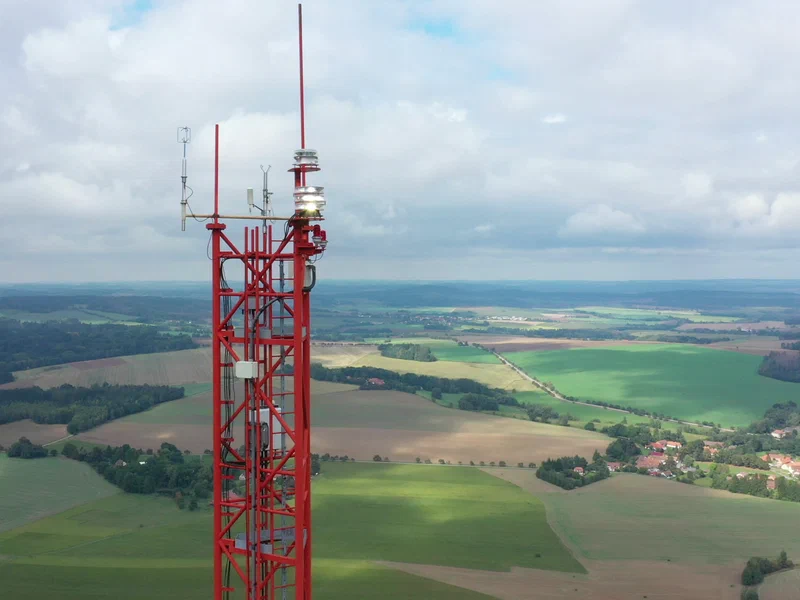
Obstruction Lighting
FAA-compliant beacon, strobe, and side-light repairs. Bulb and LED replacement.
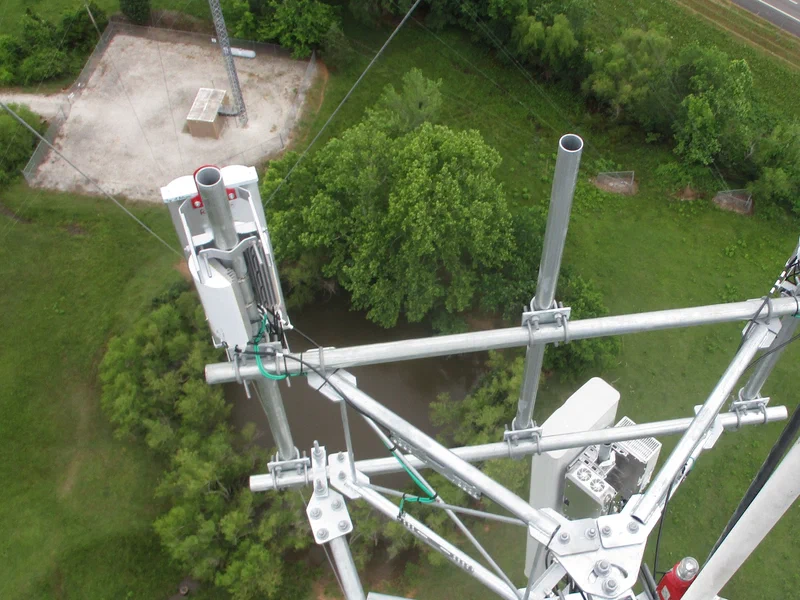
Maintenance & Inspection
Inspections, repairs, and post-storm response for a 20-year asset.
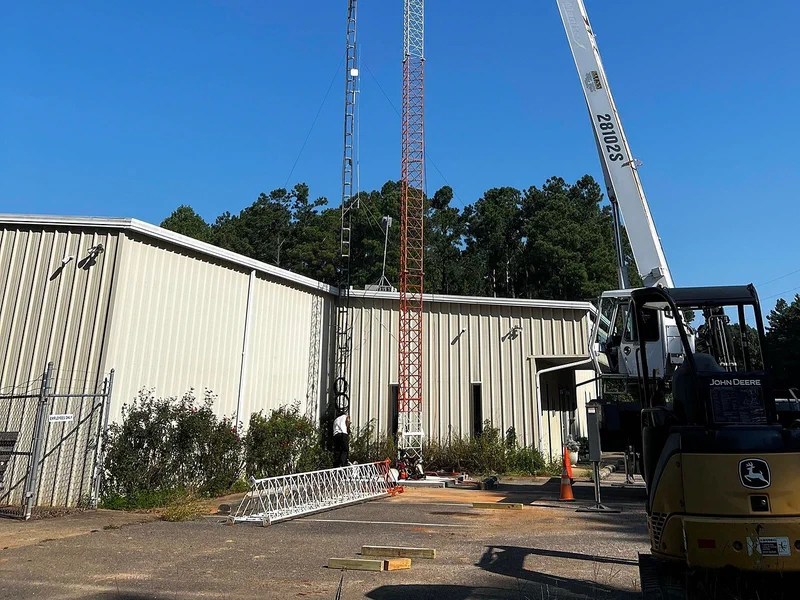
Tower Modifications
Antenna swaps, feed-line replacement, load-bearing upgrades.
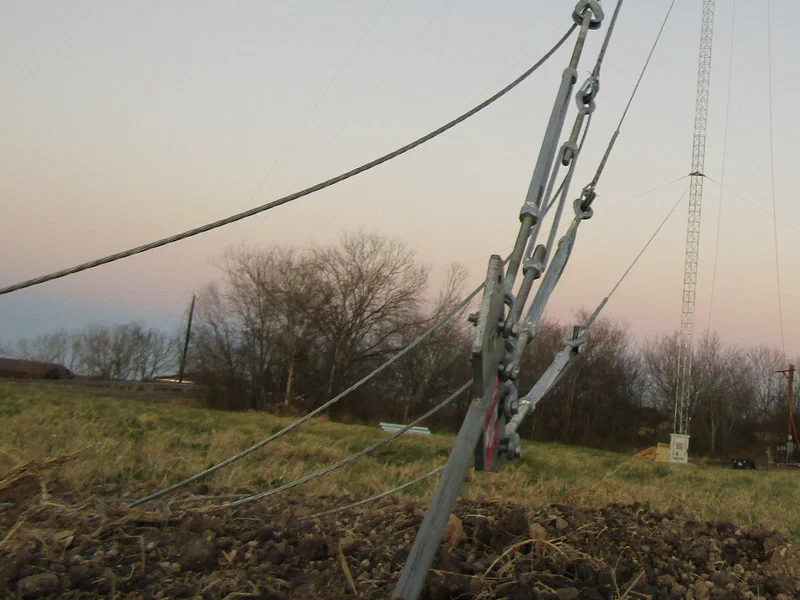
Plumb & Tension
Verify plumb, tension guys, correct storm-displaced structures.
Tower Erection
Guyed, self-supporting, and monopole structures up to 300ft.
Page last updated August 21, 2026.
Tell us the site.
We'll bring the steel.
Send the location, tower type, scope, and timeline. We come back with a quote, a crew, and a schedule you can build a business around.